“We still teach traditional techniques, even though they are no longer part of the curriculum”
Text Wendy ThijsImage Óscar Romerocollege
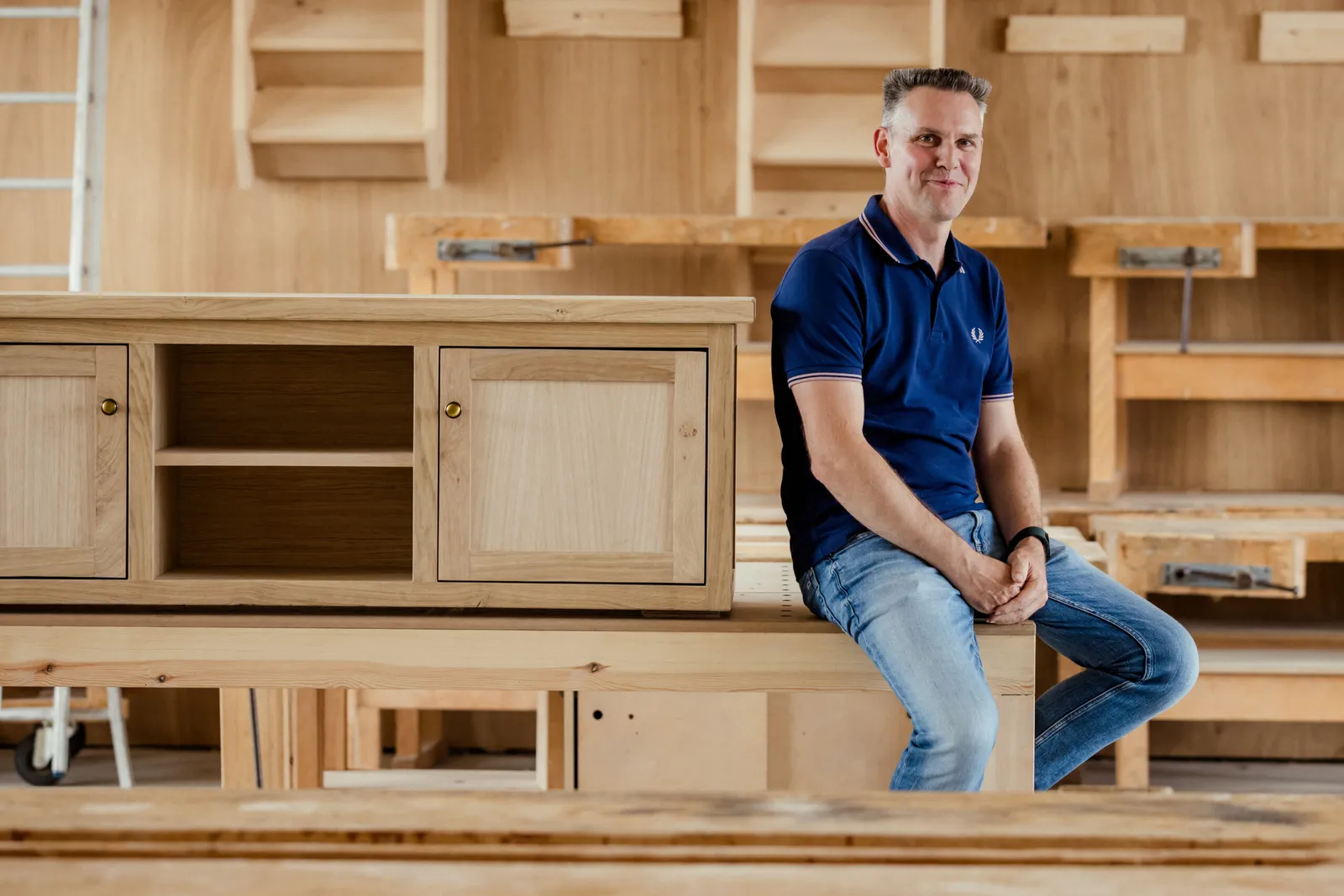
It is easier to pass on a passion for the trade if you have worked in it yourself. Sven Arys spent eleven years in the sector before getting the chance to take over from the practical teacher at Óscar Romerocollege, who had trained him years earlier. Twenty-one years on, he is still teaching with great enthusiasm and places dual-learning students with former pupils who now run thriving businesses of their own.
“My practical experience has been invaluable,” says practical teacher Sven Arys. “I spent six years working for a joiner who did everything, from wine cellars to roofs. After that, I worked for NMBS for a number of years. I laid wenge parquet flooring in the old bar-dancing and restaurant carriages, and produced full-size versions of architects’ interior designs before they went into production. In my view, it is very difficult to teach a practical subject if you have never worked in the field yourself. You have to be able to demonstrate what you are talking about, otherwise the students will see through it straight away. On the other hand, it can be challenging to explain actions that seem completely obvious to you. You cannot skip a single step, because for them that one small step is a leap.”
Keeping up to date
He cannot imagine losing touch with the business world as a teacher. “I visit companies every week, and it is valuable for both sides. I learn a lot, but I also bring new insights with me. What is more, we are constantly updating our skills. For example, I am currently taking a Korpus course with Vlecad because we will be using it at school. We chose that package because many of the companies where we place students use it too. That means the students are well prepared.”
That is not the only collaboration with companies in the sector. “Dewalt, Klingspor, Gyproc and Rectavit come here to give demonstrations and workshops,” says Arys, “and we visit Engels to learn how to work with HI-MACS. The students also get to try augmented and extended reality, so we make sure they are up to speed with the latest developments. Although we do not have time to cover everything in depth.”
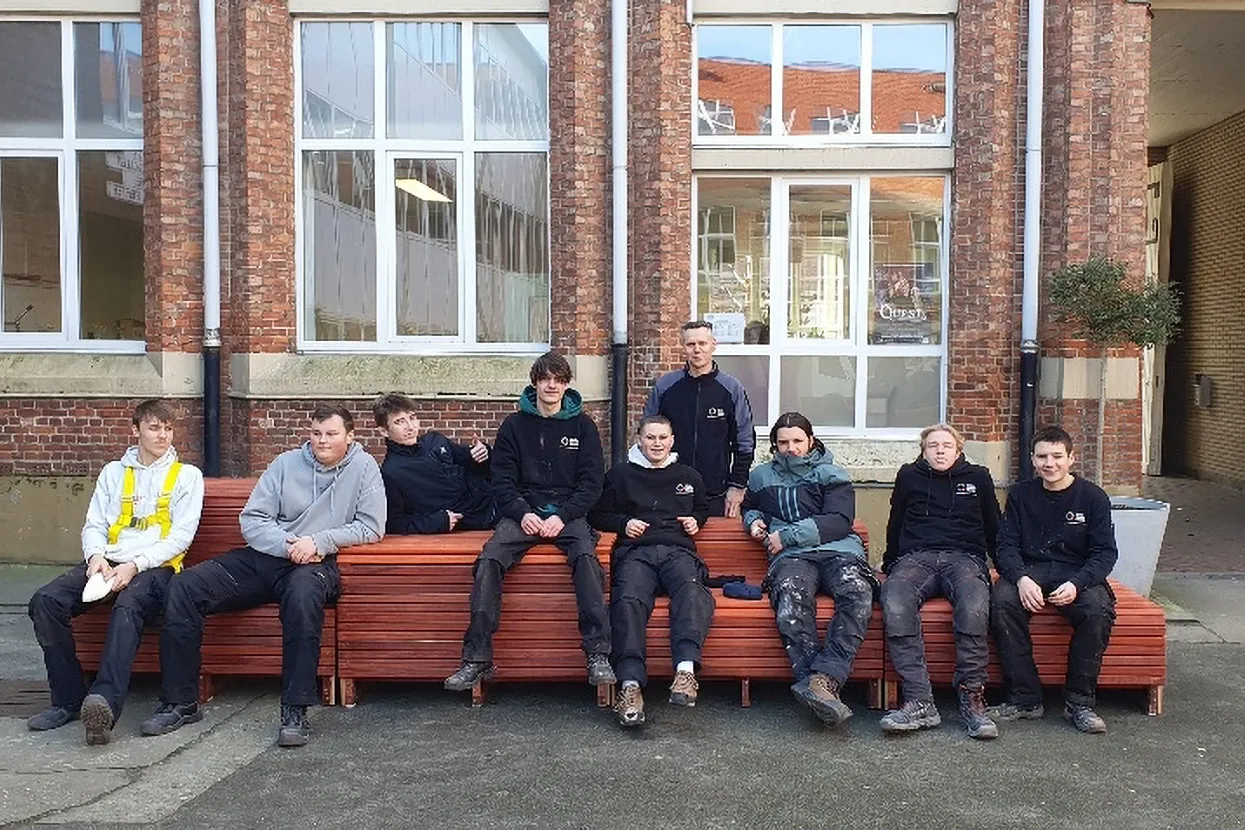
In 2023, Arys was named Teacher of the Year by education magazine Klasse. It was the first time the title had gone to a practical teacher, and it made a real impact in and around the school. “We received a lot of donations from companies. We even have wenge in our well-stocked timber shed. Stad Dendermonde regularly donates felled logs to the school, and we have also received several logs from a private wood. In return, the students made a bench from the timber, which will be given a place at the donors’ premises after our open campus day.
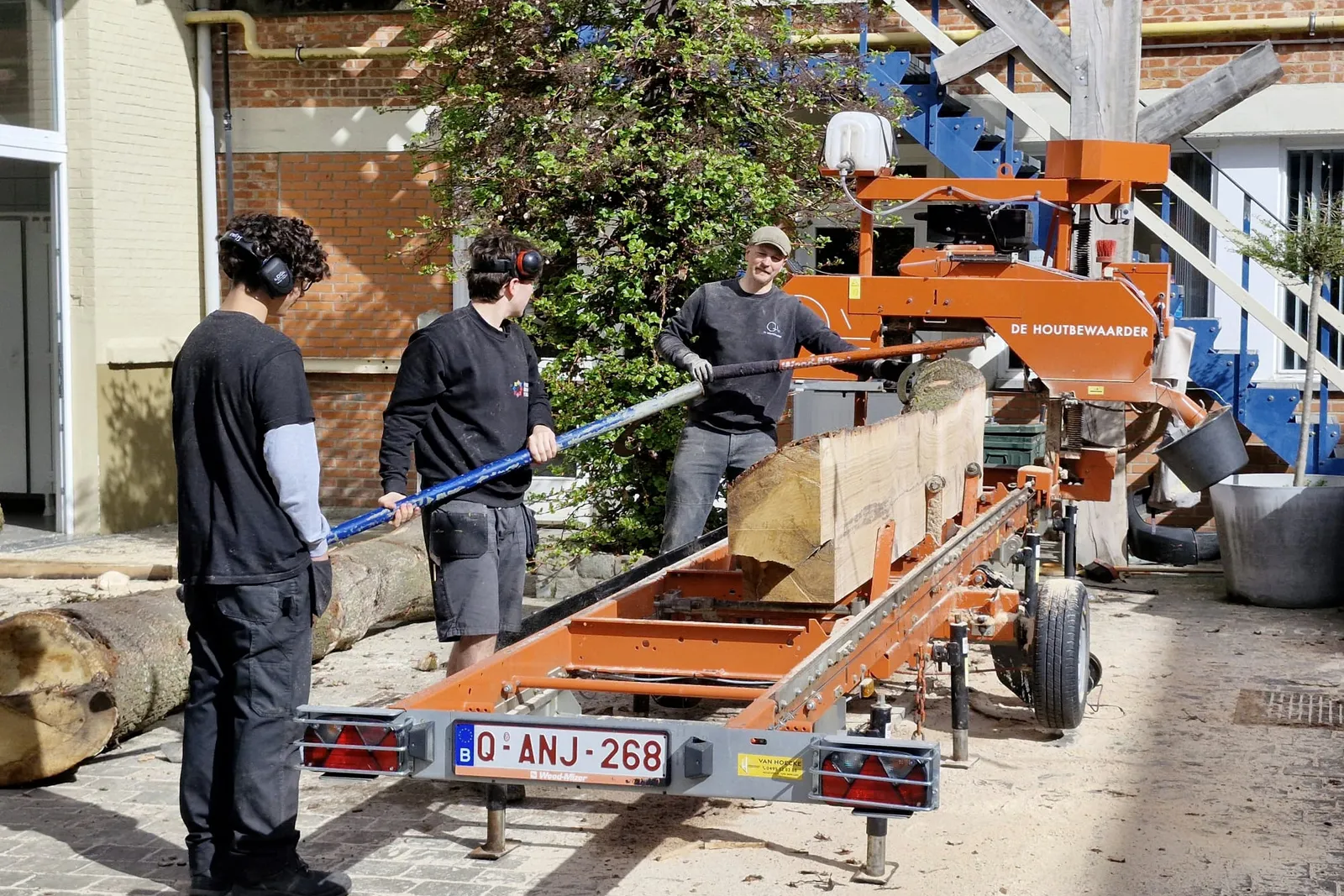
Every year, a mobile sawmill visits the school for the feast of Saint Joseph, the patron saint of joiners. Students in the second stage then learn all about sawing, stacking and drying timber. Once the timber has dried, they work with the wood they helped saw themselves.”
Long-term partnerships with companies
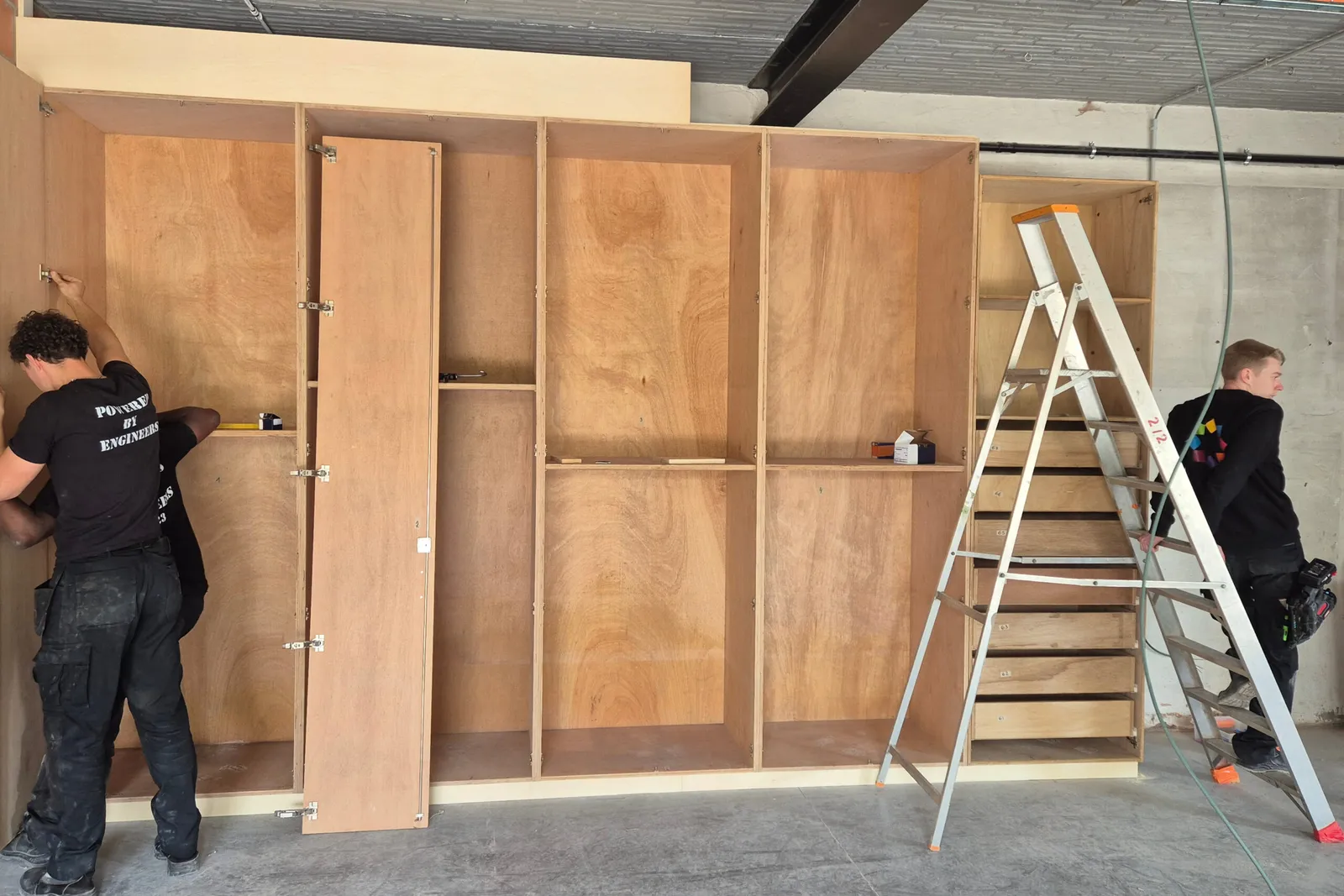
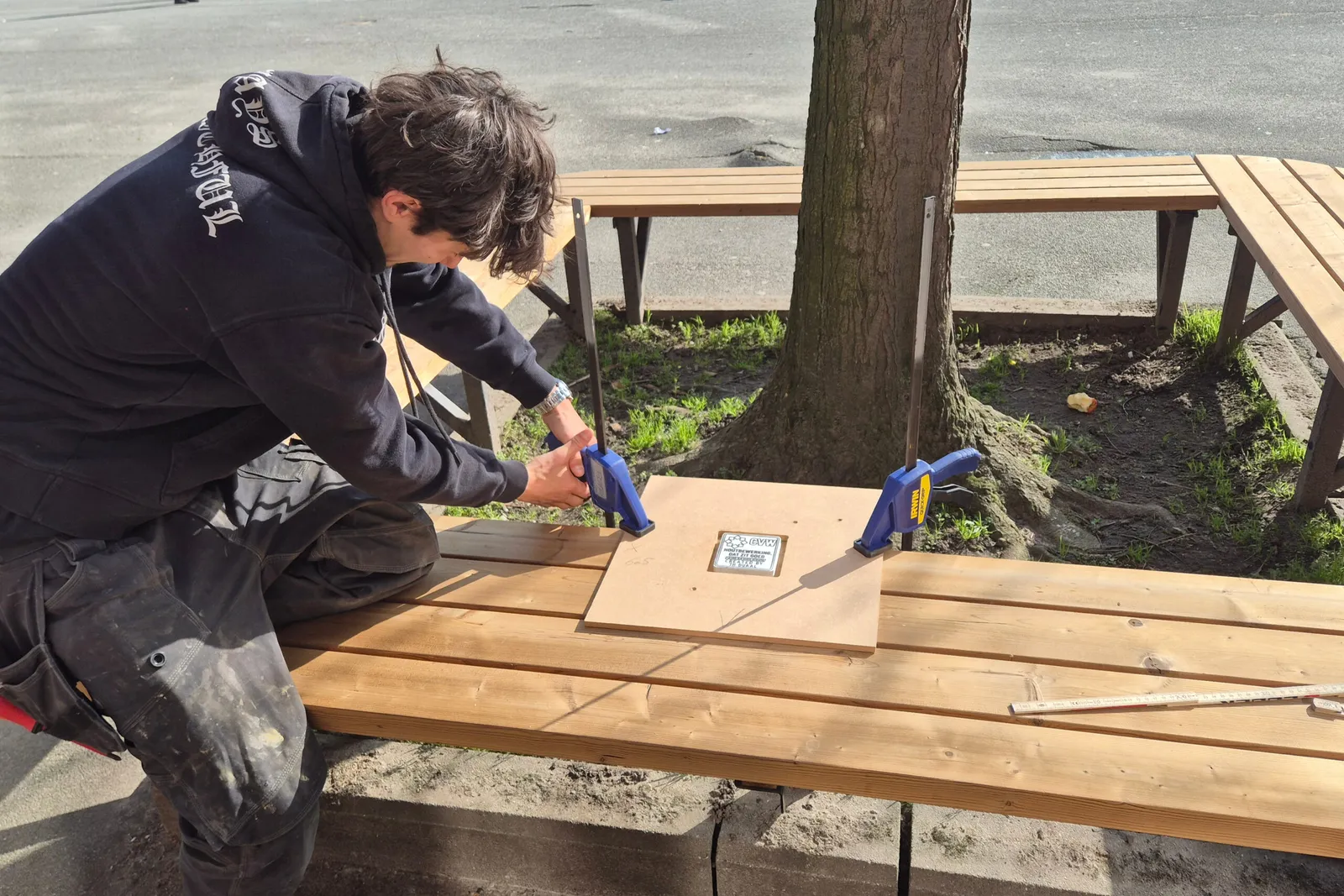
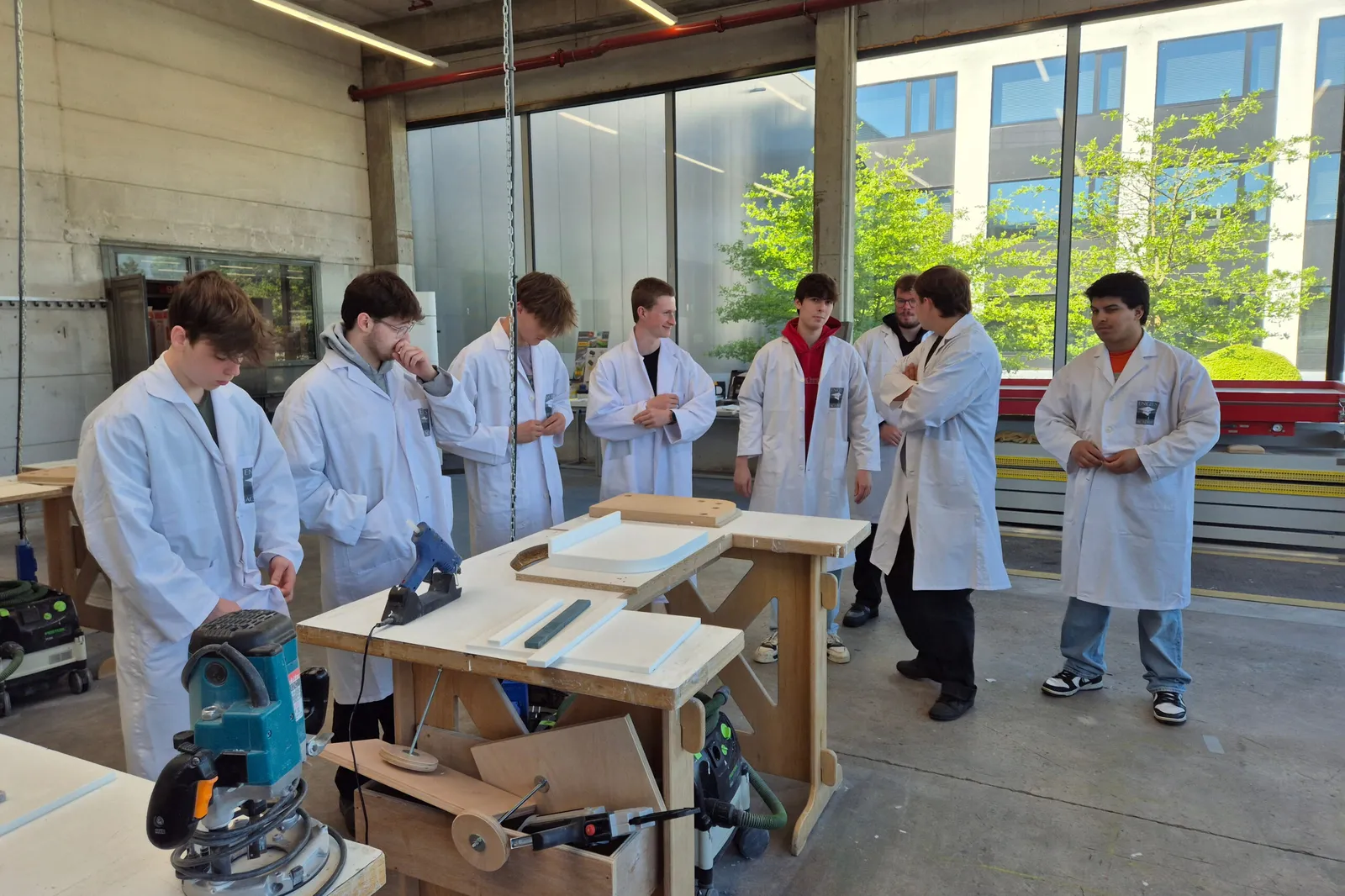
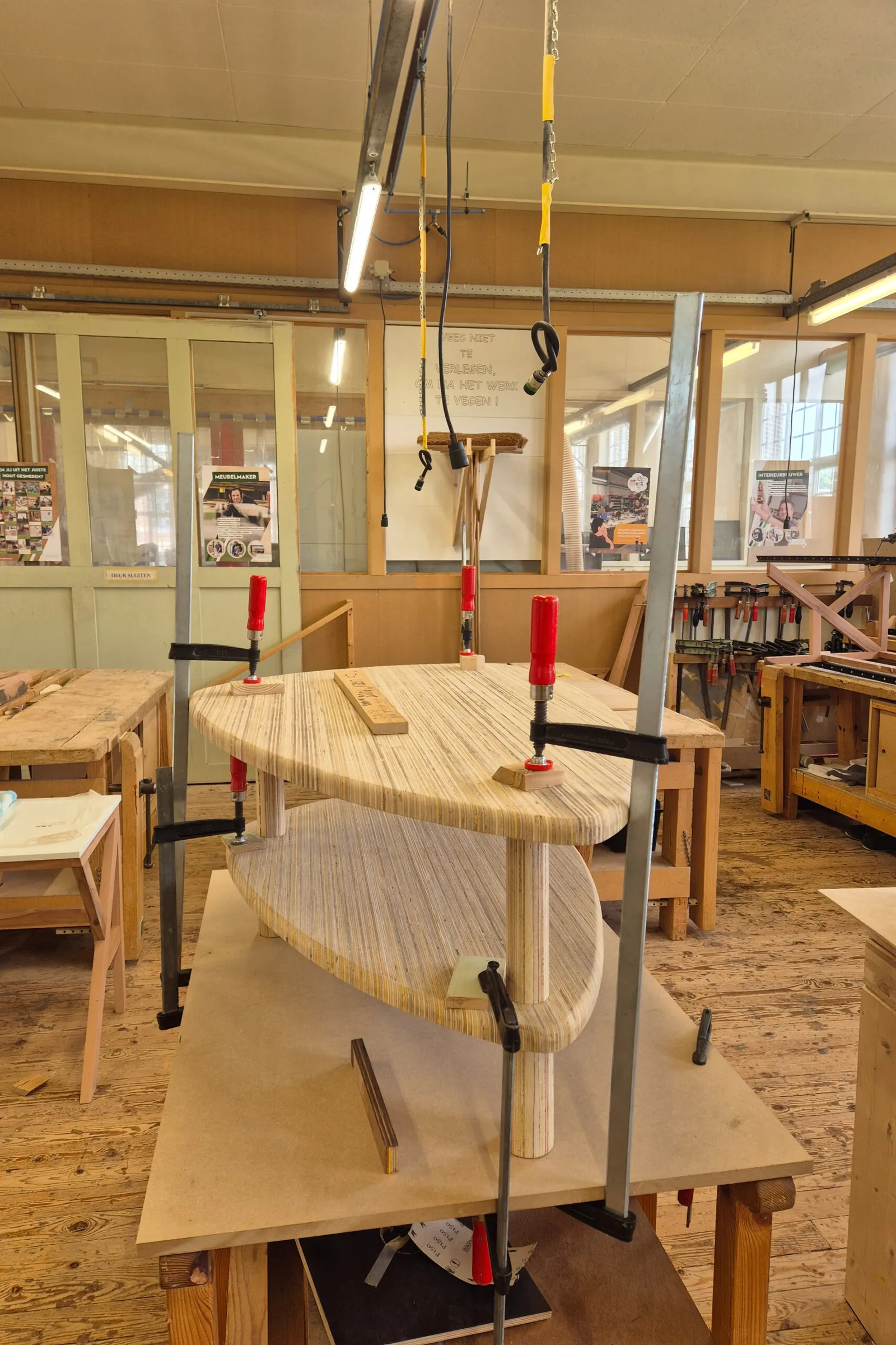
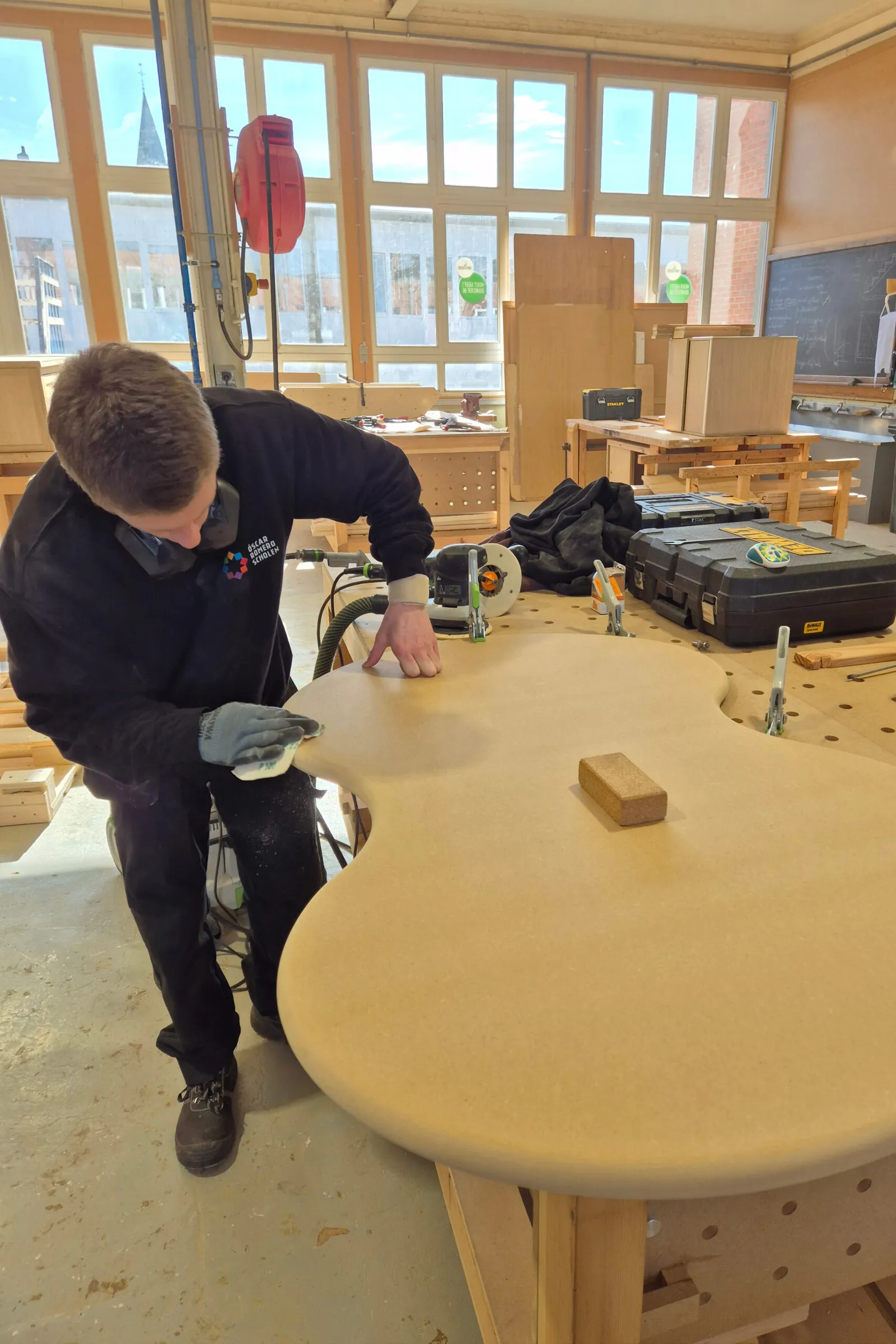
Schools are now very much in need of donations like these. With timber prices soaring, it is not always feasible for parents to fund a large final project for their child. “These days, students make a small individual project and also take part in group projects. For example, we have made a large meeting table for a company that donated the timber, as well as benches for the playground at another campus.”
Projects like these have an interesting side effect: they bring students closer together. “Latin students are impressed when they see their classmates at work. Instead of feeling inferior, they have developed a sense of pride,” says Arys. “Teachers in the staff room no longer look down on practical teachers either. Klasse has played a major role in that, and the RTCs, Constructiv and Woodwize have also made a significant contribution to raising the profile of practical education.”
A healthy stubbornness
There are challenges, of course. Practical lesson hours have been cut significantly in recent years. “With more emphasis being placed on general education, we went from eighteen to fourteen practical lesson hours. Extrapolated across their entire course, that amounts to a full year of full-time work. Companies naturally notice that trainees and dual-learning students can do less than they used to. On top of that, the curricula keep changing, and not always in the most logical way. Our team continues to incorporate traditional techniques into lessons, even though they are no longer part of the attainment targets. We believe our students need them to be able to work effectively in companies. Fortunately, we are all pulling in the same direction as a subject department, and we have the support of our school management.”
Óscar Romerocollege is one of the few schools that has not scaled back dual learning, now that students receive their diploma after the sixth year of secondary school rather than the seventh. “A seventh year remains extremely valuable. It gives students a chance to develop further and gain much-needed practical experience under the school’s guidance. It makes no difference to their diploma, but we try to give them as many additional certificates as possible that will be an asset in the workplace.”
“Day after day, we practical teachers try to find a happy medium between the curricula and what we ourselves believe is valuable,” Arys concludes. “Despite the lack of time, we still want to give our students a solid foundation, and above all, make them feel that they are well prepared to enter the workplace. It is a challenge, but when I place students with former pupils who have since built thriving businesses of their own, I see just how valuable our work is.”
Question about this story? Ask your question
Companies in this story

Keep following this
Get an email when a new story is published. No account needed.
- ThemeStrong and safe trade businesses
- SubjectWoodworking
- CompanyVlecad
- CompanyDEWALT
- CompanyRectavit
- CompanyWoodwize