The edge follows the character of the board
Text and images Ostermann
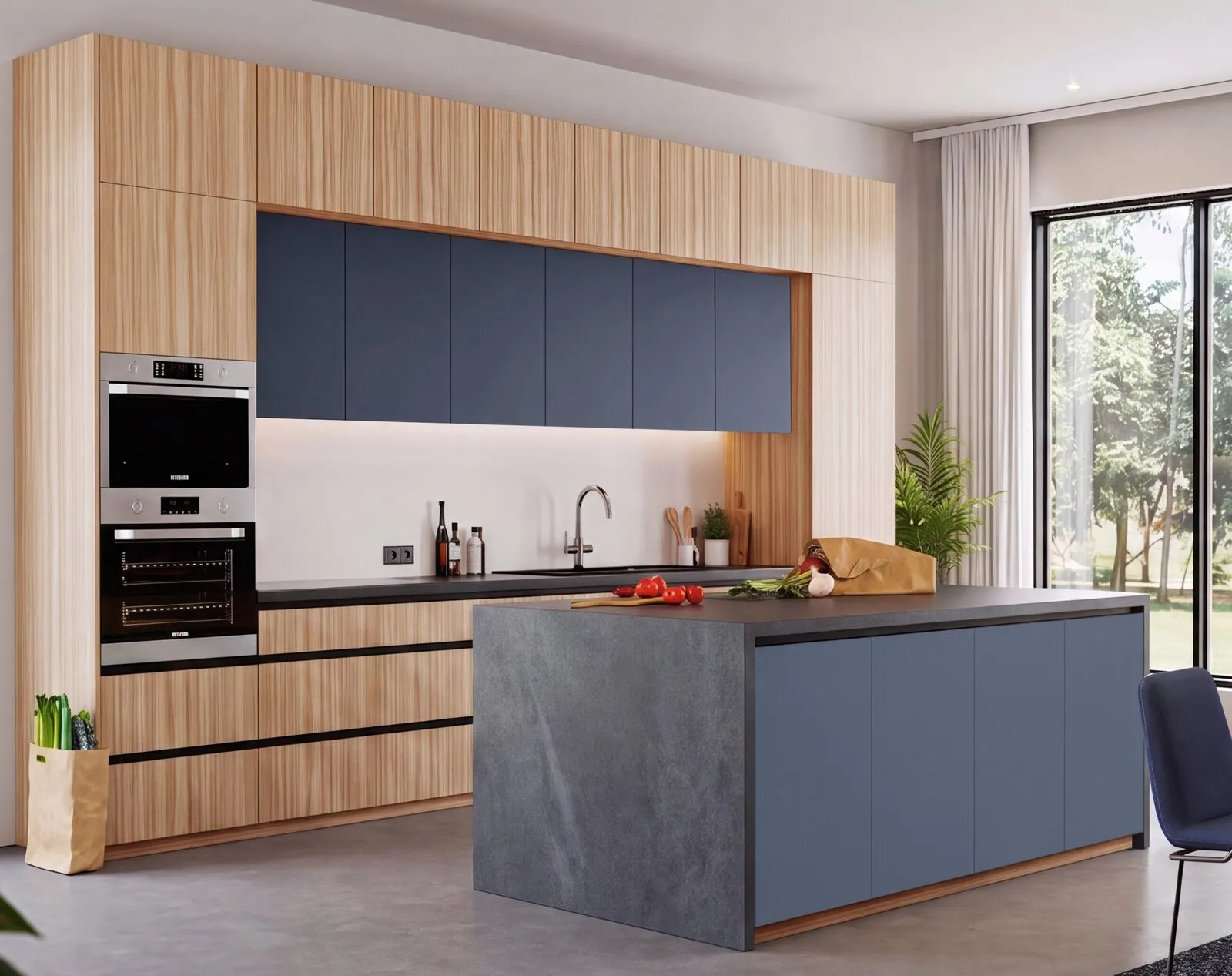
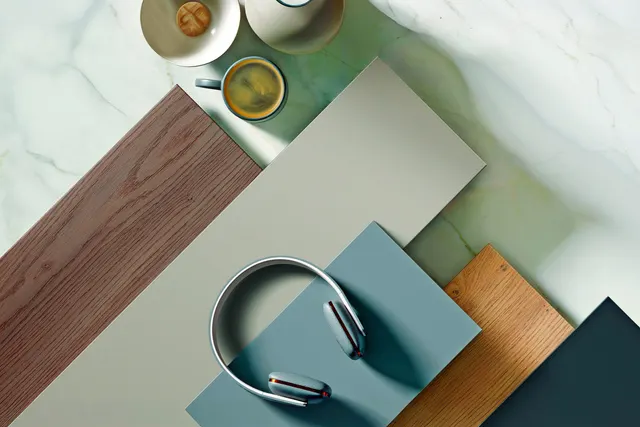
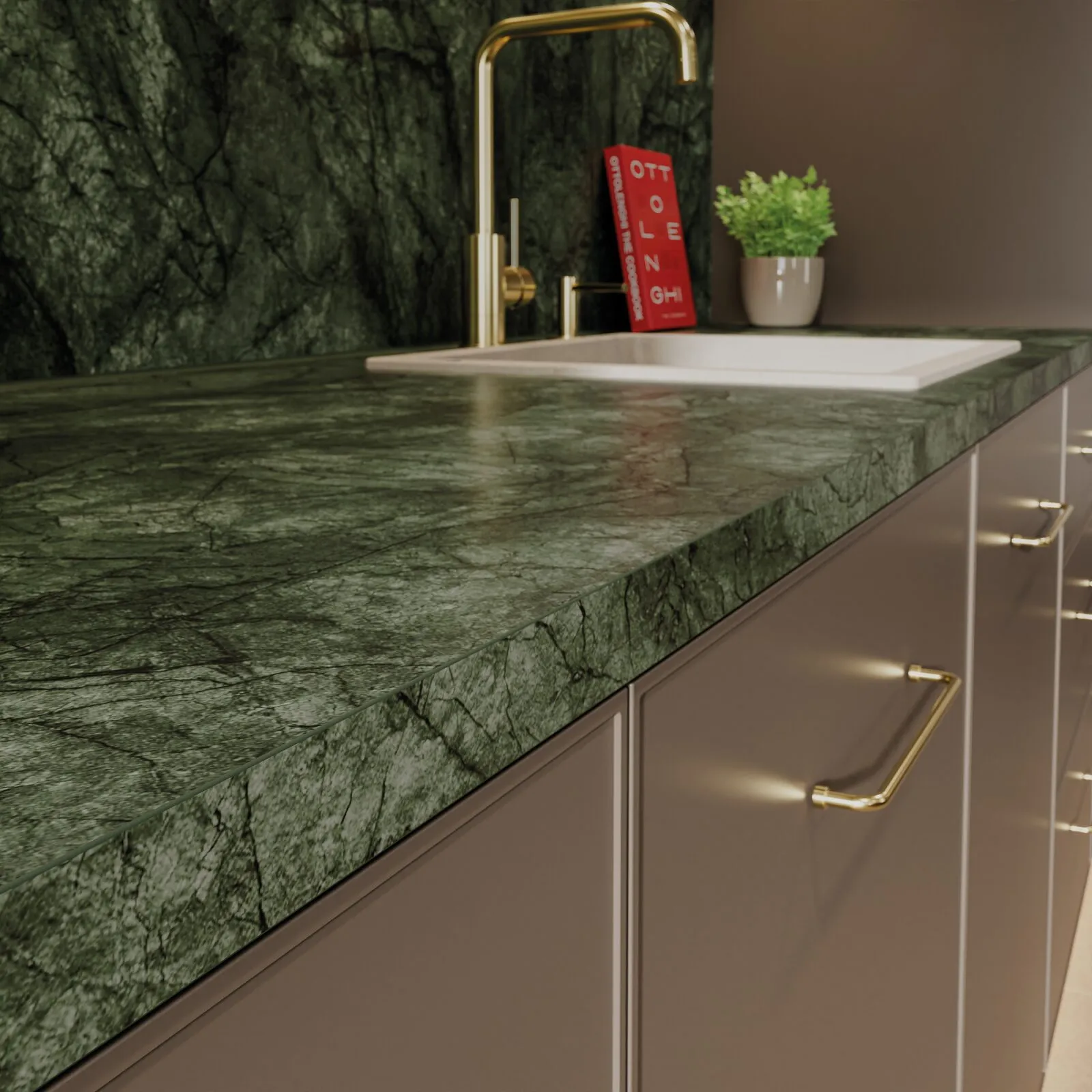
A kitchen worktop has a major influence on the look of an interior. While solid colours retain their place, wood and stone decors now play a prominent role. Warm oak tones sit alongside distinctive marble, granite and terrazzo looks. Naturally, this variety extends beyond the surface of the board. A matching edge band carries the chosen material look through to the smallest detail.
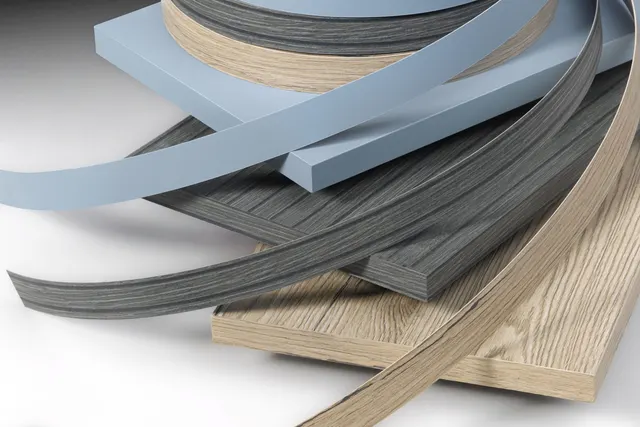
That is why edge band manufacturers keep a close eye on board manufacturers’ collections. Ostermann aligns its range with current board decors and supplies edge bands for kitchen worktops in a standard width of 43 millimetres, among others. Other widths, from 12 to 100 millimetres, make it possible to finish less common board thicknesses and specific applications too.
Oak remains a firm favourite
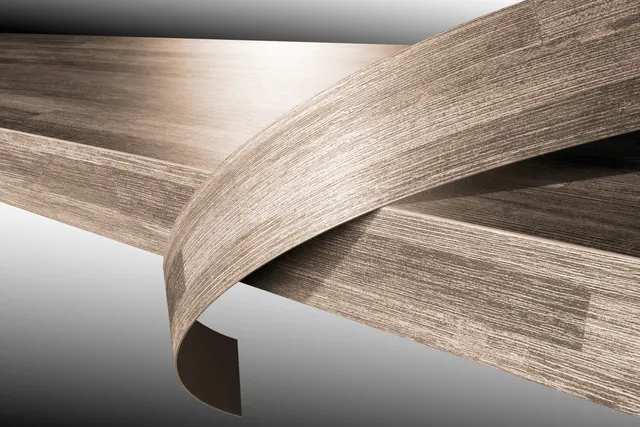
Oak continues to feature strongly among wood decors. Its natural appearance works with a wide range of interior styles, while variations in colour and grain pattern offer plenty of scope. A light, neutral finish such as Master Oak Light Natural captures the character of natural oak. Ristretto Baroque Oak creates a bolder look with dark brown tones and a combination of straight and slightly wavy grain.
For the interior contractor, the challenge lies in matching the board and the edge. Colour alone is not enough: the pattern, sheen and texture also determine whether the transition reads as a seamless whole. This attention to detail is particularly important on worktops, where the edge can be highly visible, and becomes an essential part of the finished result.
Stone without a jarring change in style
Stone reproductions also remain prominent in kitchen worktops. The range spans everything from natural stone looks to terrazzo and distinctive marble designs. Caviar, for example, combines a marble structure with metallic veins, while White and Black Andromeda play with high-contrast stone looks. In the darker version, aluminium particles create a granite-like effect.
For edge banding, this decorative richness means the finish has to do more than conceal a sawn edge. The edge becomes part of the design and must convincingly carry the look of the worktop around its sides.
Real wood on the roll too
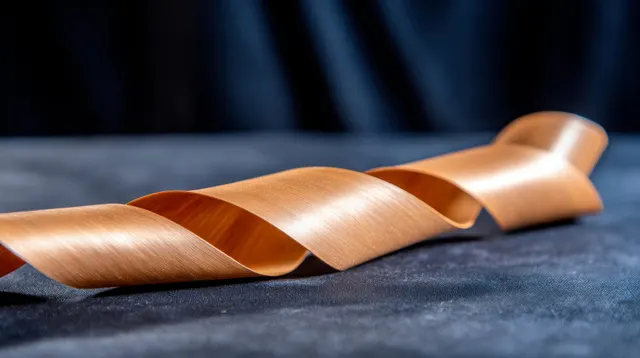
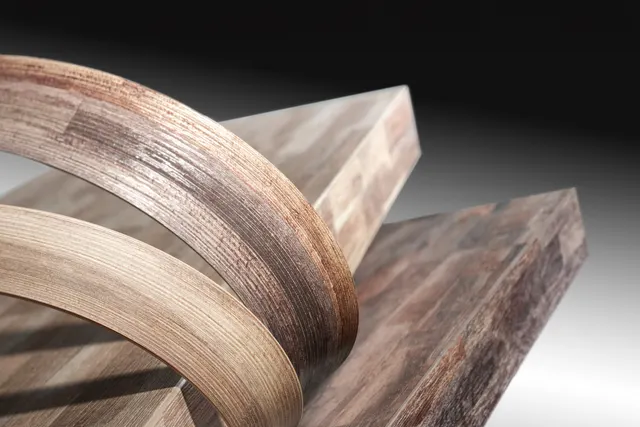
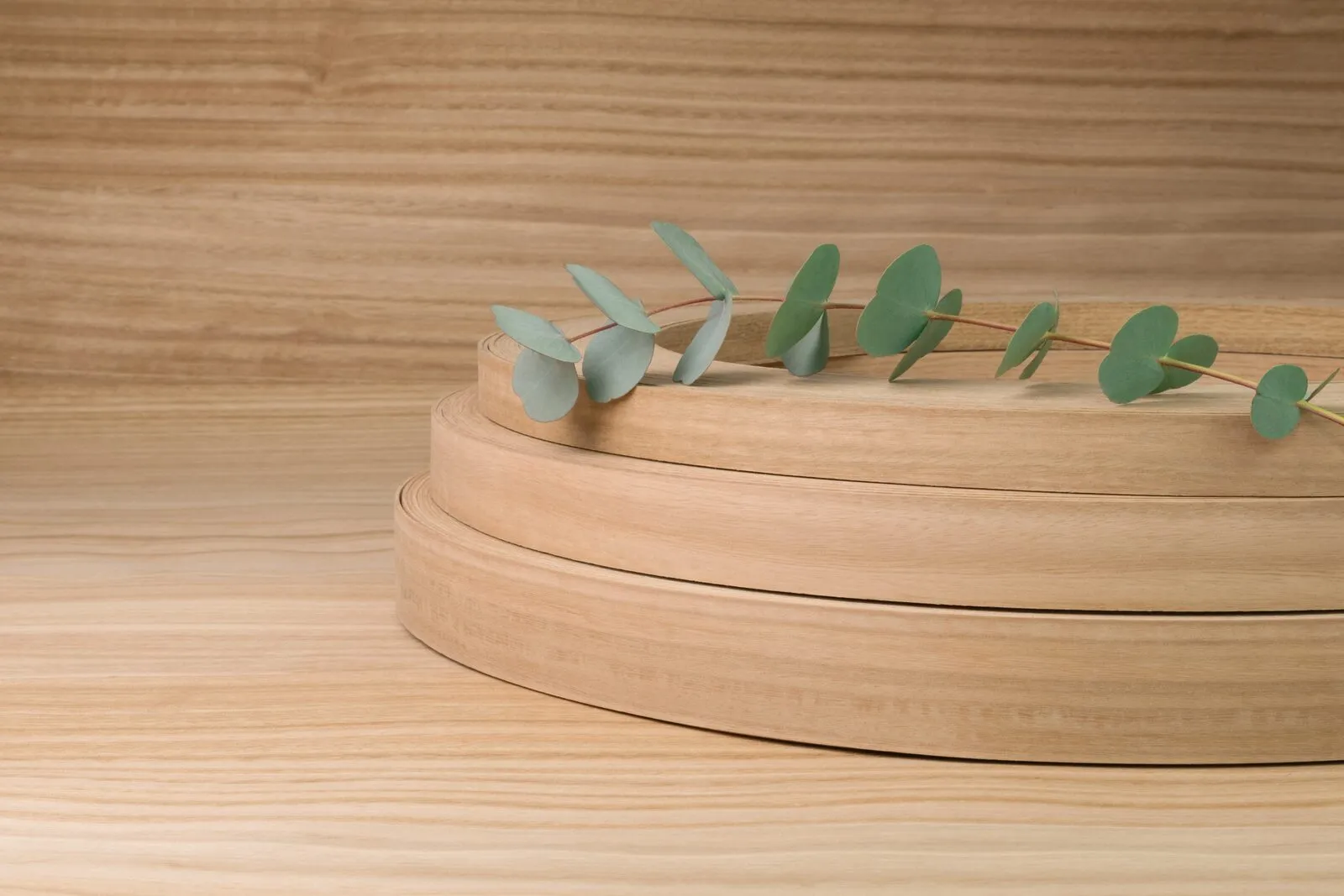
Alongside plastic edge bands, veneer edging remains an attractive option when real wood is part of the material concept. A recent addition to the range is sanded eucalyptus veneer. It is available in three standard widths and two thicknesses. Its subtle grain makes it suitable for kitchens, furniture and interior fit-outs.
The veneer edges consist of two or four wood layers, each 0.5 millimetres thick, bonded with dispersion adhesive. The surface is sanded with 180-grit abrasive, allowing it to be further finished or lacquered after application. An adhesion primer on the back helps bond it to the board material. For specific applications, veneer edging supplied oversize, up to 100 mm wide, can be cut to size.
Detail becomes a design feature
The development of edge banding is following the same trajectory as decorative board materials. As reproductions become more realistic and textures more pronounced, consistent edge finishing becomes increasingly important. Plastic edge bands can carry through the decor and effect of the surface, while veneer edges bring real wood right to the edge of the furniture.
This gives kitchen and interior contractors a wider, yet more precise, choice. The edge has long ceased to be an afterthought, considered only at the end of the production process. When the board has character, the edge must continue that story.
Een zakelijke vraag aan Ostermann Groep? Get in touch
Companies in this story

Keep following this
Get an email when a new story is published. No account needed.
- ThemeSustainable surface and edge finishing
- SubjectEdgebanding
- CompanyOstermann Groep