Beech: a popular timber for contemporary interiors
Text Wendy ThijsImage Hout Info Bois
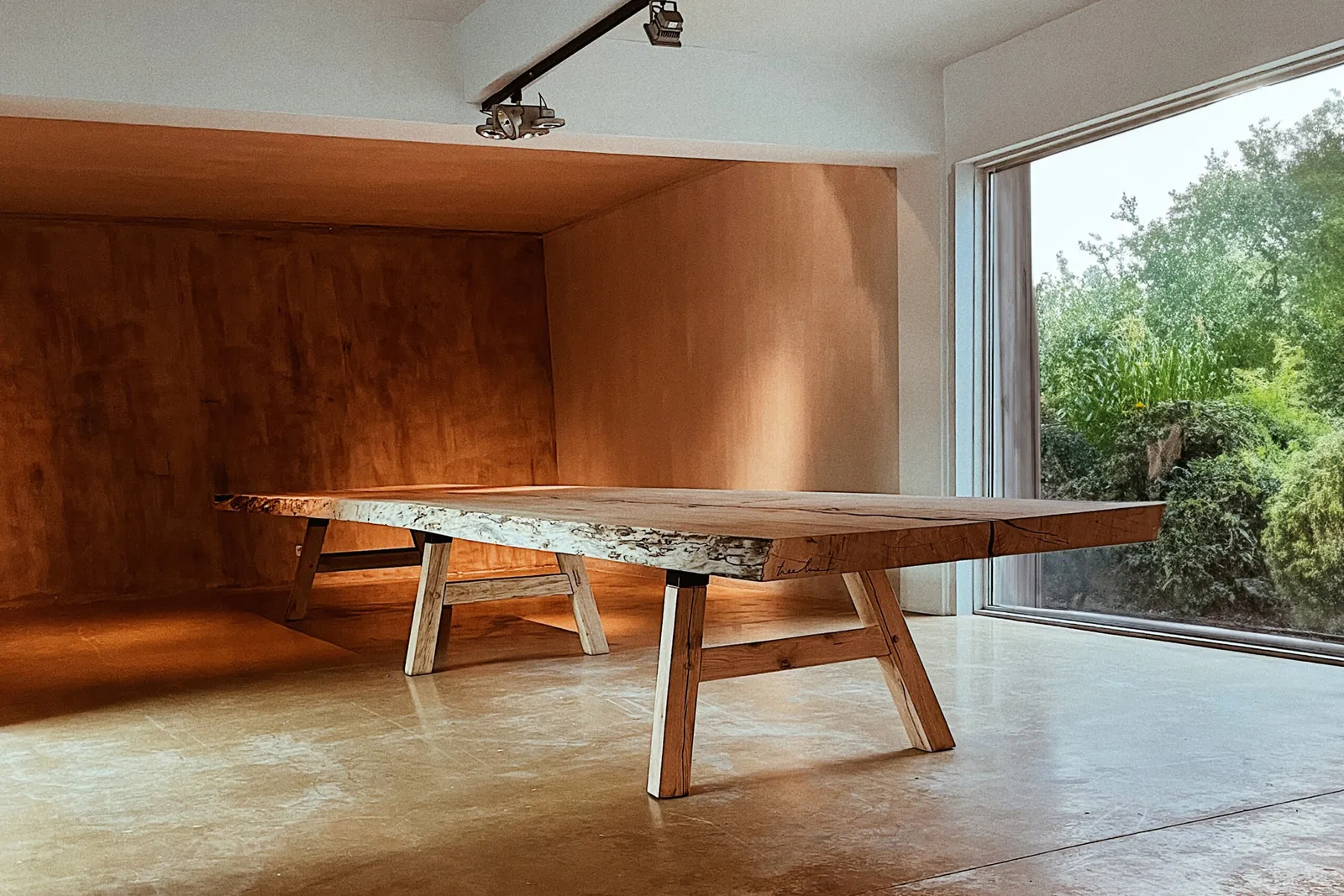
Like oak, beech is a mainstay of interior design. The beech timber available on the market almost always comes from the common or European beech. Fagus sylvatica thrives almost everywhere, as long as conditions are neither too dry nor too wet. It grows well across large parts of Western and Central Europe, with its range extending as far as the Black Sea.
Beech grows particularly abundantly in the French Massif Central and the southern Bosnian Carpathians, but the tree also thrives in Belgium. Belgian Lorraine and the Sonian Forest, for example, are dotted with beech trees. Timber is naturally an environmentally friendly building material. Choosing locally sourced beech makes the environmental benefits even greater, as less transport means lower emissions.
A light, even appearance
Freshly sawn beech timber is whitish to very light brown. The heartwood sometimes has a red tint, but this is quickly regarded as inferior and used less often. Exposure to light and air gradually turns the colour light yellow-brown. Beech is also available steamed, resulting in a warmer, slightly pinkish hue and a more uniform colour.
There is little visual difference between the heartwood and sapwood. The grain is fine and the texture even, with little pronounced figuring. Flatsawn surfaces show soft flame patterns, while fine flecks lend character to quartersawn surfaces. This understated aesthetic makes beech a popular choice for modern, minimalist interiors.
Given how widely this timber is used, a Belgian standard is in place to assess its appearance quality: NBN EN 975-1: 200. It specifies how often and to what extent visible defects, such as knots, splits or sapwood, may occur within a given grade.
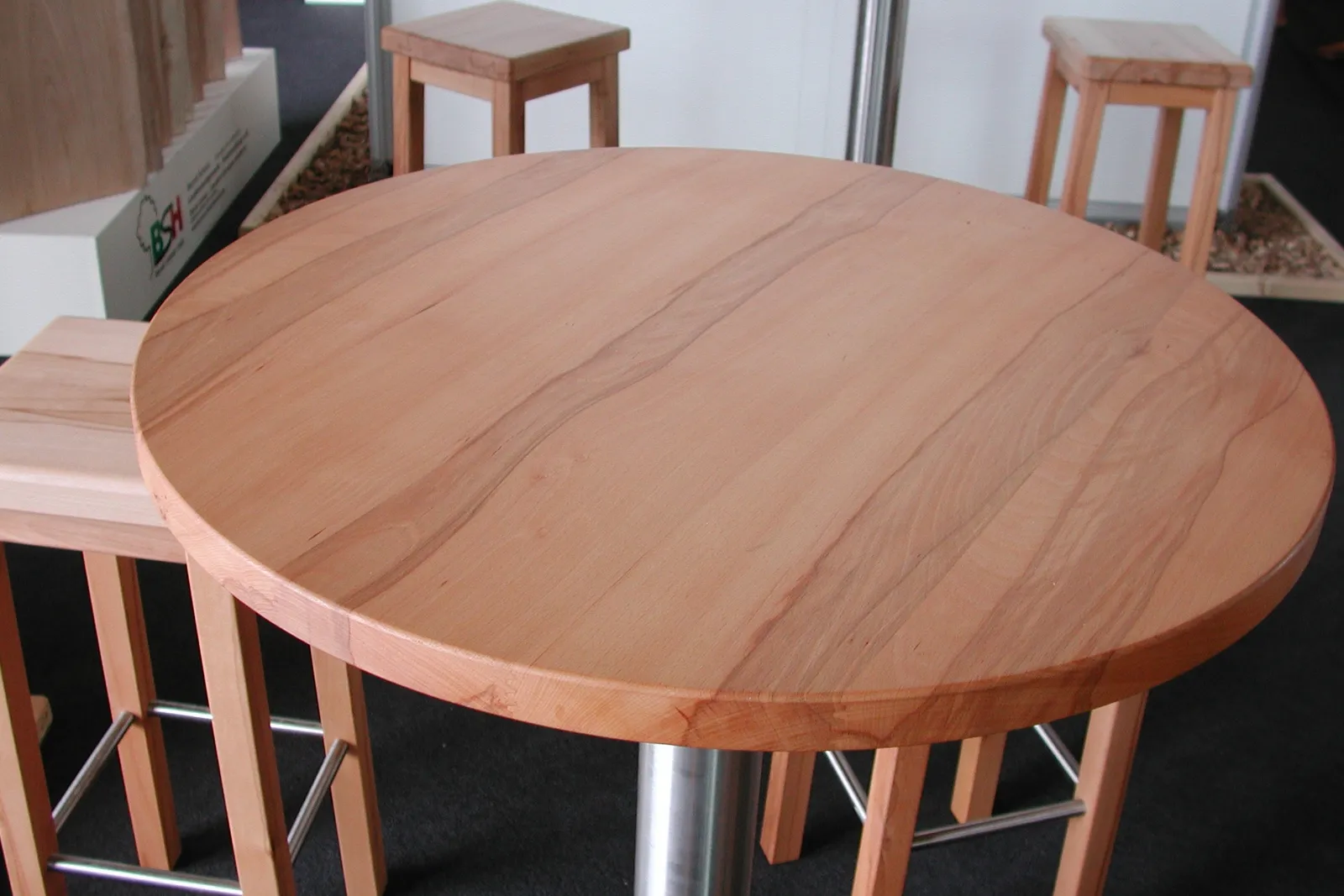
Versatile for interiors
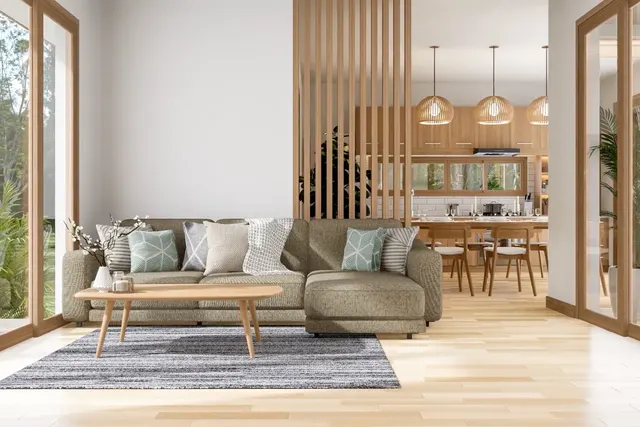
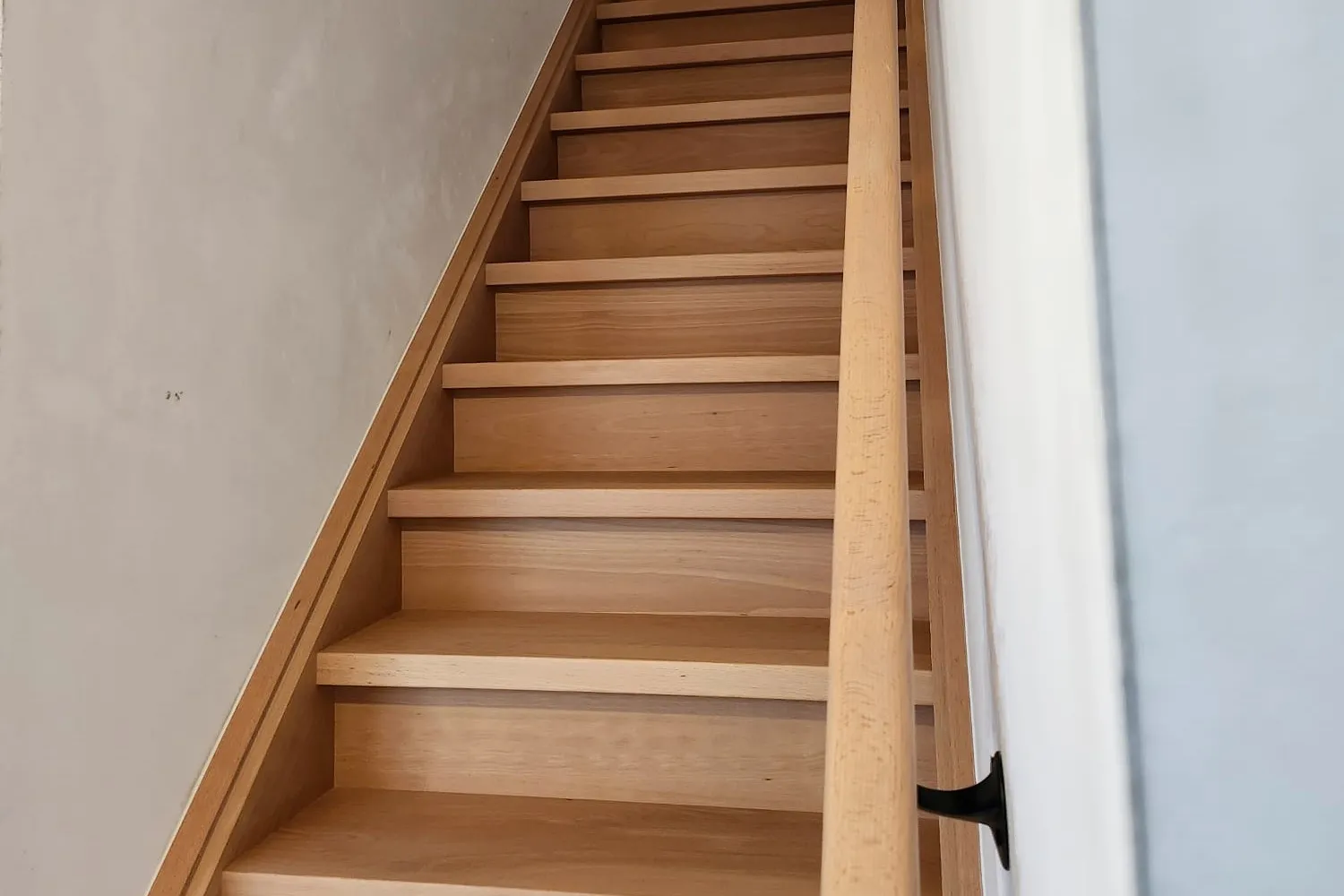
Beech is naturally non-durable (durability class V), so it is not suitable for outdoor use. It is first and foremost an interior timber, where it proves particularly versatile. Its wear resistance makes it suitable for heavily used parquet flooring and sports floors. In interior fit-outs, it is used as solid timber, veneer or plywood for panels, stairs and furniture components. Chairs and other seating make good use of its excellent bending properties.
Beech also proves its worth in turning and smaller objects, from table legs to toys, and from kitchen utensils to bed slats. Its understated appearance, mechanical strength and relatively favourable price make it a mainstay of interior construction.
Managing stress and finishing
Beech dries quickly, but the considerable difference between radial and tangential shrinkage creates a high risk of splitting and distortion. Once successfully dried, beech is easy to work, both by machine and by hand, although beech from the most northerly regions can be slightly harder and more prone to splitting. Make sure to use sharp tools: because of its density, blunt cutting edges can quickly cause burn marks through friction when working beech.
Another advantage is that beech bends well. Thin-sawn timber or veneer can be glued in moulds and pressed into the desired shape, or steamed to make it pliable. As it cools, the timber loses its plasticity and retains its curved shape. Finishing does require care, however, as beech tends to absorb products unevenly.
Want to know more? For technical questions about beech, contact Hout Info Bois.
Question about this story? Ask your question
Keep following this
Get an email when a new story is published. No account needed.
- ThemeSelecting timber and panel materials
- SubjectWoodworking