Our Brains Love Wood campaign highlights the benefits of building with timber
Text Kris VandekerckhoveImage Fedustria
Fedustria, the employers’ organisation for manufacturing companies in the textiles, wood and furniture sectors, commissioned scientific research into how our brains respond to timber interiors. The results add a new dimension to a message Fedustria has been promoting for some time: wood deserves a much more prominent place in the way we build, live, work, learn and care for others.
In the story of the three little pigs, the first builds with straw, the second with wood and the third with stone. Only the last house survives. For Karla Basselier, CEO of Fedustria, this perfectly illustrates our existing prejudices about building with wood. “We are effectively taught from childhood that it is inferior, even though that perception is at odds with reality: wood is lightweight, strong and renewable, making it particularly relevant in the context of climate change. A cubic metre of wood can store around one tonne of CO2. That carbon remains stored even when the wood is used in a building or interior. Wood can also significantly speed up the construction process.”
Brain activity mapped
According to Fedustria, the underuse of wood as a construction material is therefore largely down to persistent prejudices. Fire safety and moisture resistance are often cited as concerns, even though science has shown that both can be effectively managed. To reinforce the message, Fedustria commissioned research into the effects of being surrounded by wood on our wellbeing. In collaboration with professor Steven Laureys, an internationally renowned Belgian neurologist and neuroscientist, and research agency Neurensics, the brain activity of 24 participants was measured using MRI scans.
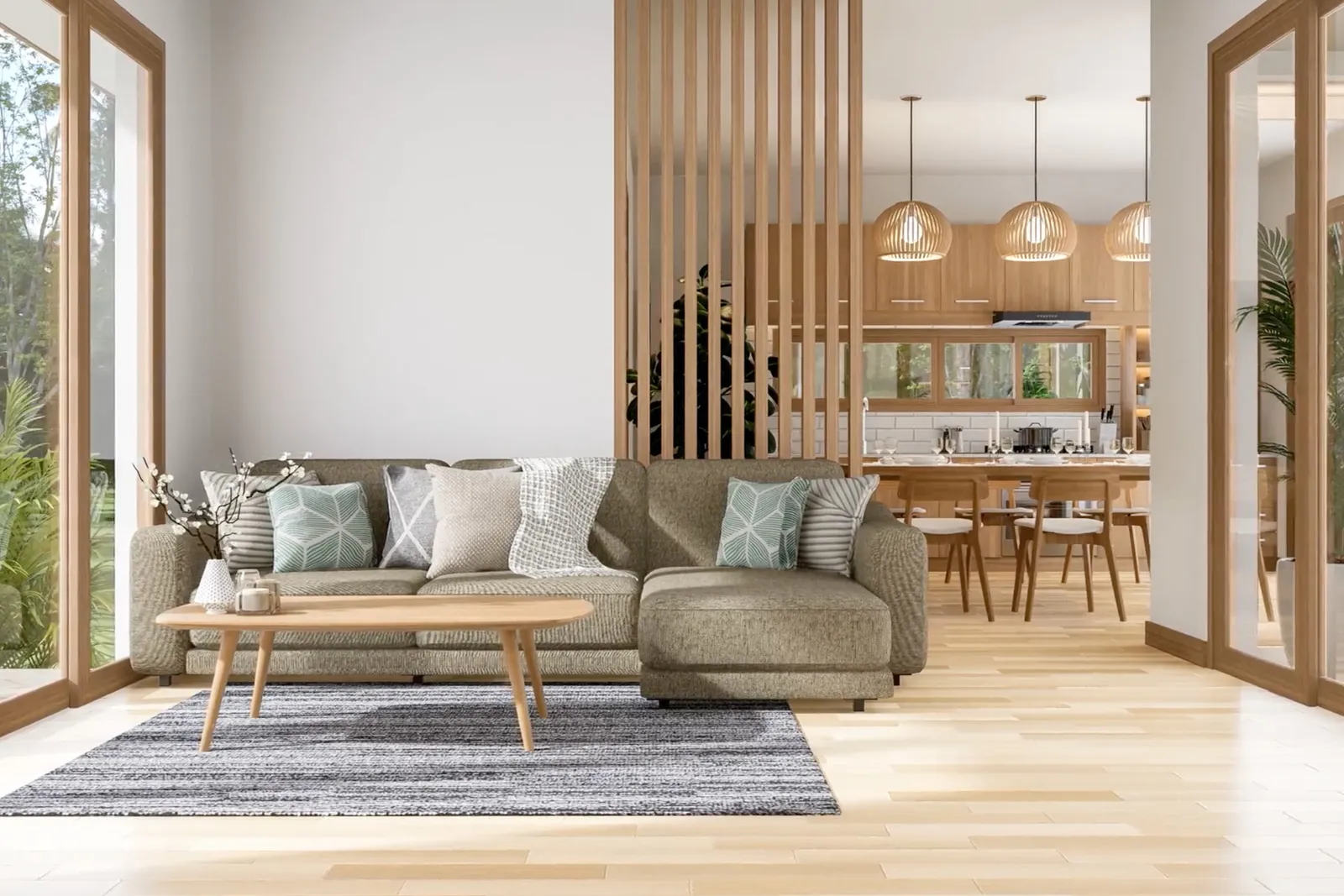
“They were shown interiors made of wood, concrete and plastic, each in a different setting: a home, classroom, office and hospital,” explains Basselier. “The results confirm what many people intuitively feel. Wood scores better for wellbeing, activates cognitive functions and encourages solution-focused thinking. In a hospital setting, it can even reduce stress and irritation. This opens up possibilities for schools, care institutions, offices and public buildings.”
Fedustria will now translate the study findings into reports, papers and practical recommendations. “The campaign is called ‘Our Brains Love Wood’. Architects and interior architects are a priority, as they specify materials. The government also has a key role to play through public procurement. We are therefore proposing a minimum proportion of wood in public projects, with 20 per cent as an indicative target,” she continues.

Wood pact
The message comes at a challenging economic time. Turnover in the wood sector is down by four to five per cent, and exports are also under pressure. At the same time, imports from China are increasing, adding to competitive pressure. “That is precisely why it is important to continue highlighting the strategic value of timber construction in our own country,” says Karla Basselier. “If we are serious about our climate and construction targets, we need to do more with wood. The Netherlands can serve as an example. Around 20 per cent of new-build projects there use wood. In Belgium, the figure is around 8 per cent.”
Ultimately, the federation is aiming for a Belgian wood pact, inspired by the Dutch example. Such a pact, which has been in place in the Netherlands for some time, should bring together the government, the sector and construction stakeholders around shared goals. “Sustainability is not an empty promise. We support the stricter European deforestation regulation, which requires companies to demonstrate the origin and legality of their wood. Our own code of conduct for wood importers also goes beyond the legal requirements and is audited,” concludes Fedustria’s CEO.
Question about this story? Ask your question
Keep following this
Get an email when a new story is published. No account needed.
- SubjectWoodworking