“Investing in students is investing in the future of the sector”
Text Wendy ThijsImage Lamello
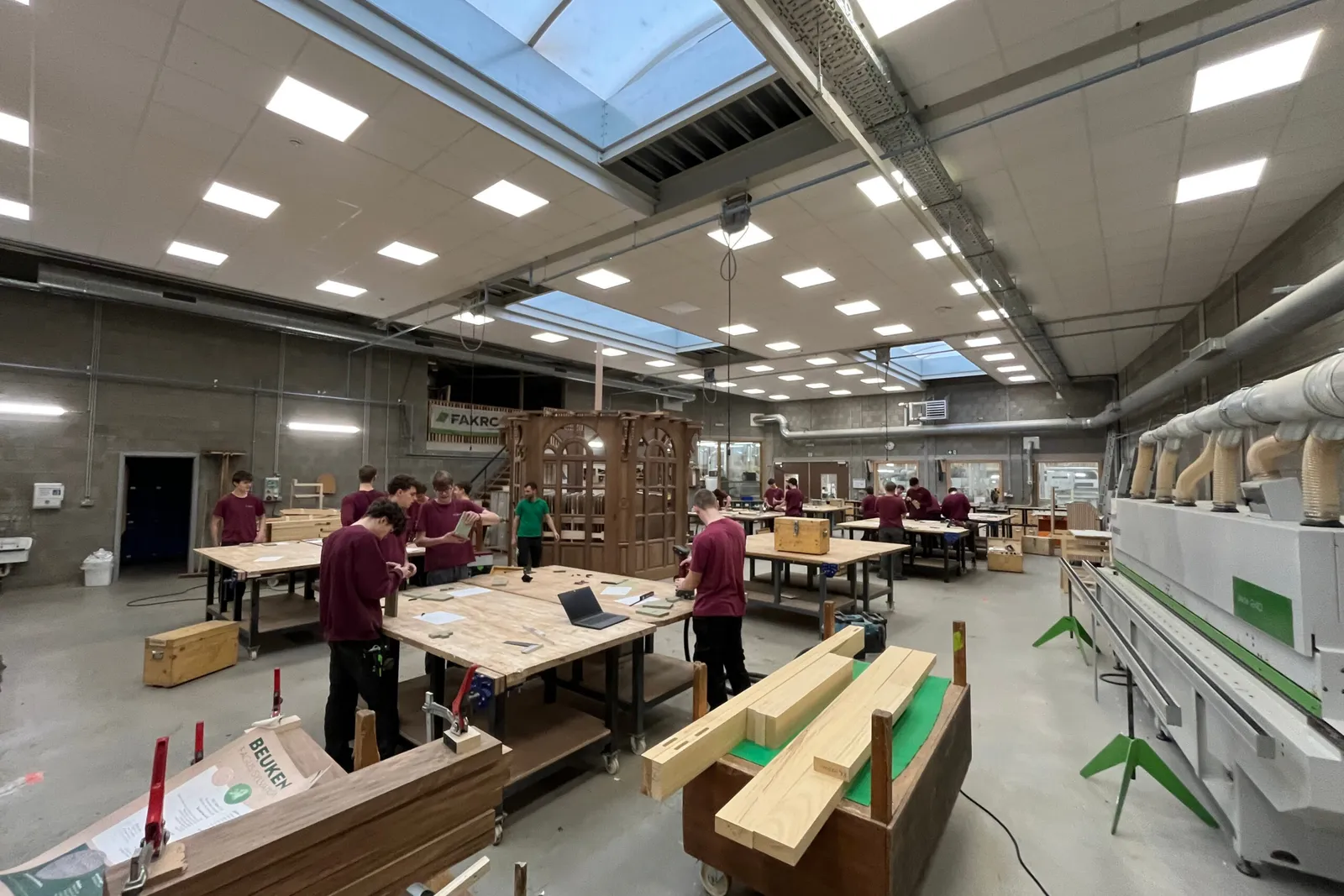
Lamello brings people together. Its innovative joining systems are primarily used to connect furniture components, but the company also wants to bridge the gap between education and the labour market. It does this through free, practical lessons that introduce students to modern timber joints.
Investing in the joiners of tomorrow: that is Lamello’s mission. “Through our training, we want to bring the realities of the workplace straight into the classroom,” says Marc Demares, CEO of Lamello Belgium. “The lessons are closely tailored to what students will need later on.”
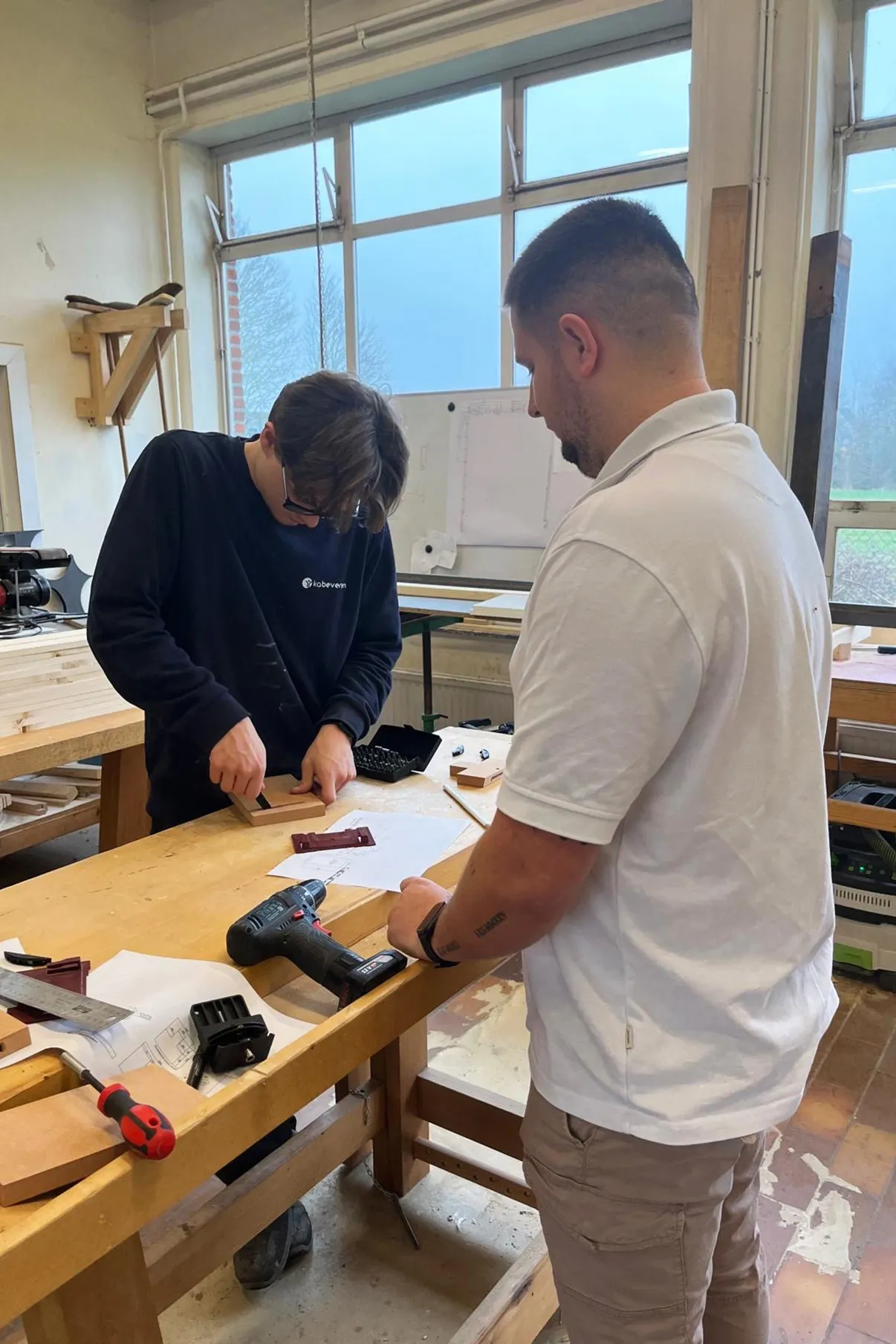
“There are two modules for students in the final years of secondary education,” adds Maxime Dumon, who also oversees the school partnerships in his role as commercial technical adviser. “In the first module, we demonstrate our P-System. We show students different connectors, mill grooves and explain how the machine works. In the second module, the students get hands-on. They mill joints for a phone and headphone stand, learning to make a corner joint, a T-joint and a mitre joint. Schools can also buy our machines and accessories at a reduced rate, making it more affordable to modernise their workshops.”
“We started these lessons in 2021, convinced that the students of today are the joiners of tomorrow,” explains Demares.
“By investing in their training now, we ensure they know our products when they start working in the sector.”
“We believe this kind of training is essential to the future of the trade,” says Dumon. “If students are introduced to modern systems and techniques during their training, they will be better prepared for the realities of the sector.”
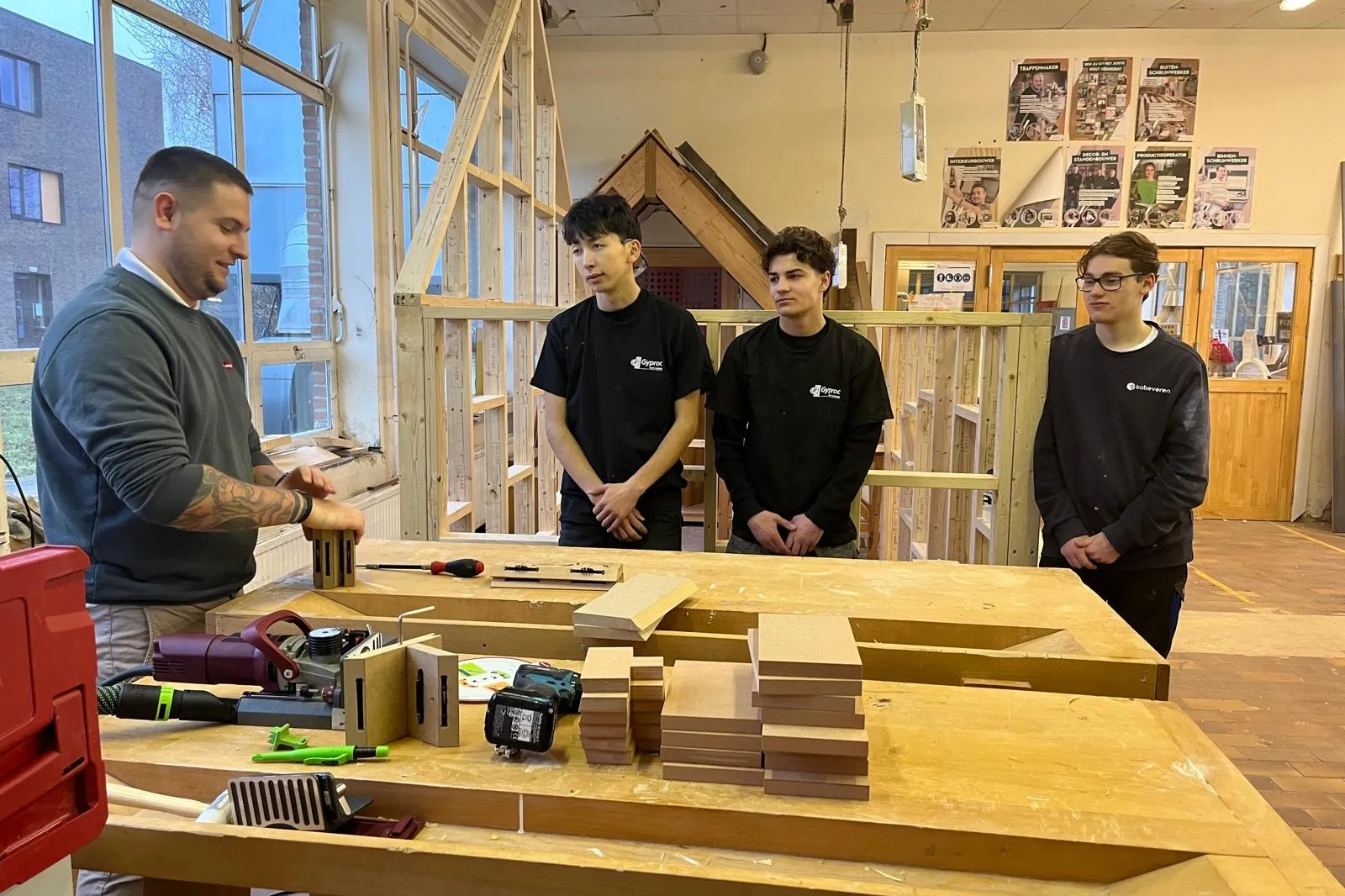
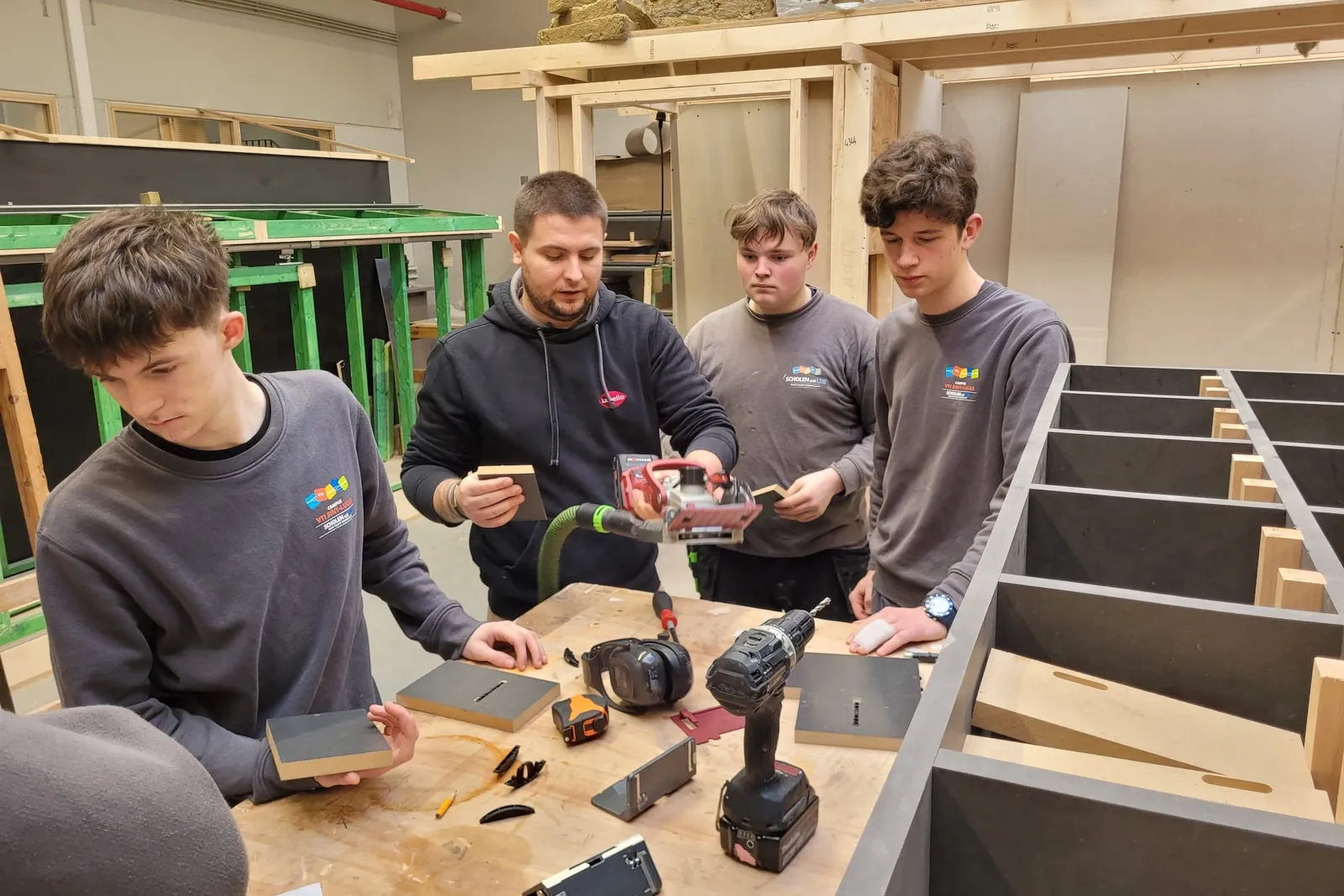
Making it relevant to them
Lamello has refined its approach over the years. “We started with a birdhouse, but these days the students make a phone and headphone stand. At first, they sometimes laugh about it, but by the end they are usually really proud of what they have made,” says Dumon.
The teaching approach has also been adapted over time. “It’s a very broad course. Not everyone is interested in interior joinery; some want to specialise in exterior joinery. I’ve learned to take things slowly and not assume the students already have much prior knowledge. Asking lots of questions also helps keep them engaged and alert. At the start of my lesson, I pass around a solid-wood sample with a Tenso connector. If they can’t pull it apart straight away, the ice is broken and I usually have the whole group with me. Sixteen- and seventeen-year-olds are still real live wires, but fortunately they do show respect.”
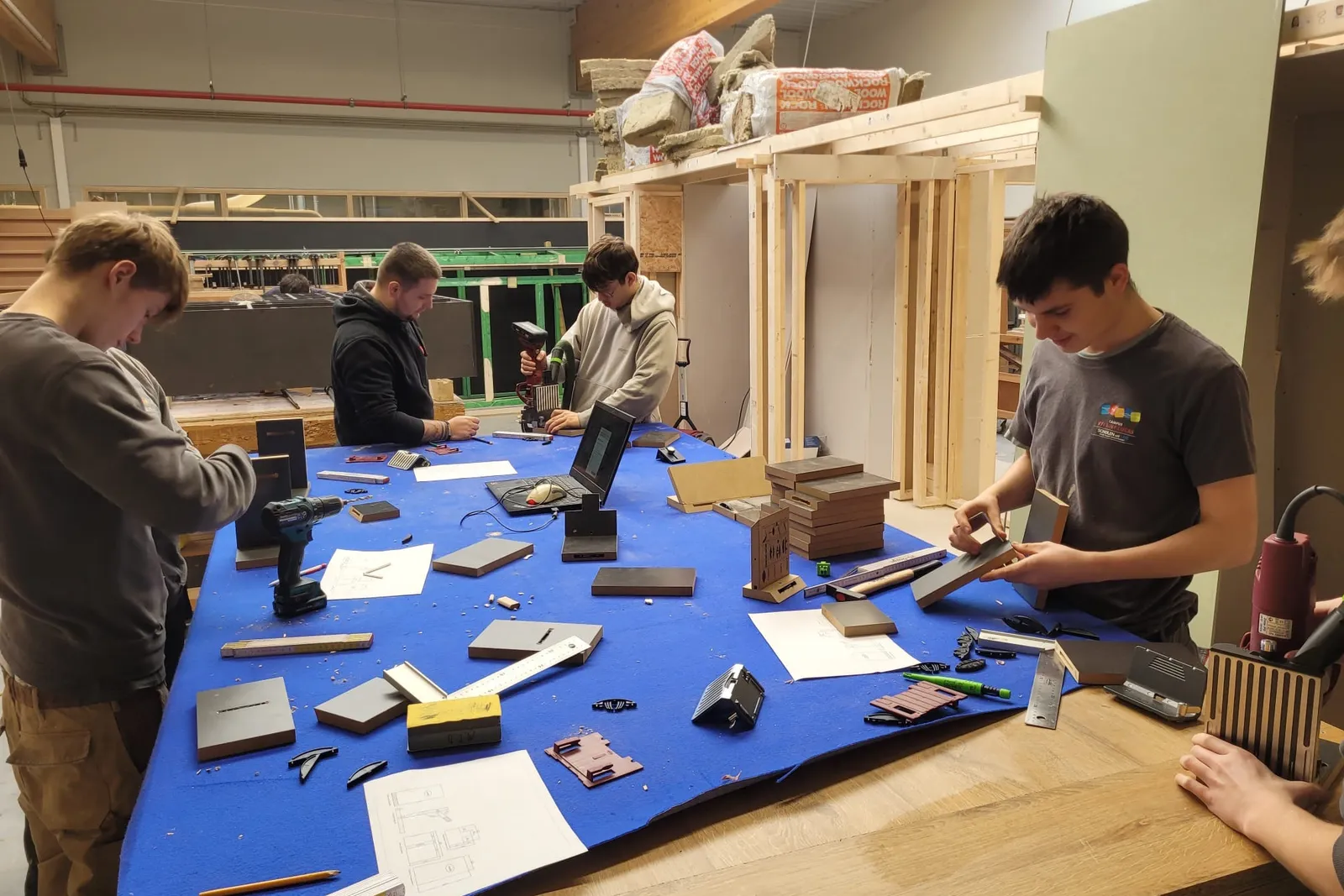
Supporting teachers
“We find that teachers and schools are highly motivated to give their students the best possible training, but new trends and technologies still receive too little attention. Businesses can make a real difference,” says Demares.
“It’s a wonderful course, but also an expensive one, because it requires a lot of machinery and materials. Schools have to make constant choices, putting both the quality of education and teachers under pressure,” Dumon notes.
“Many schools are forced to make do with older machines and materials. You can make furniture with them, but not in the way businesses work today. There is a gap between what students learn at school and what the labour market expects of them. More work placements would be a step in the right direction. Students in the fifth and sixth years of secondary school get just two to three weeks of placement. You only really learn the trade if you can follow a project through its entire lifecycle, from production to installation. Woodworking education needs to reflect the realities of the profession more closely.”
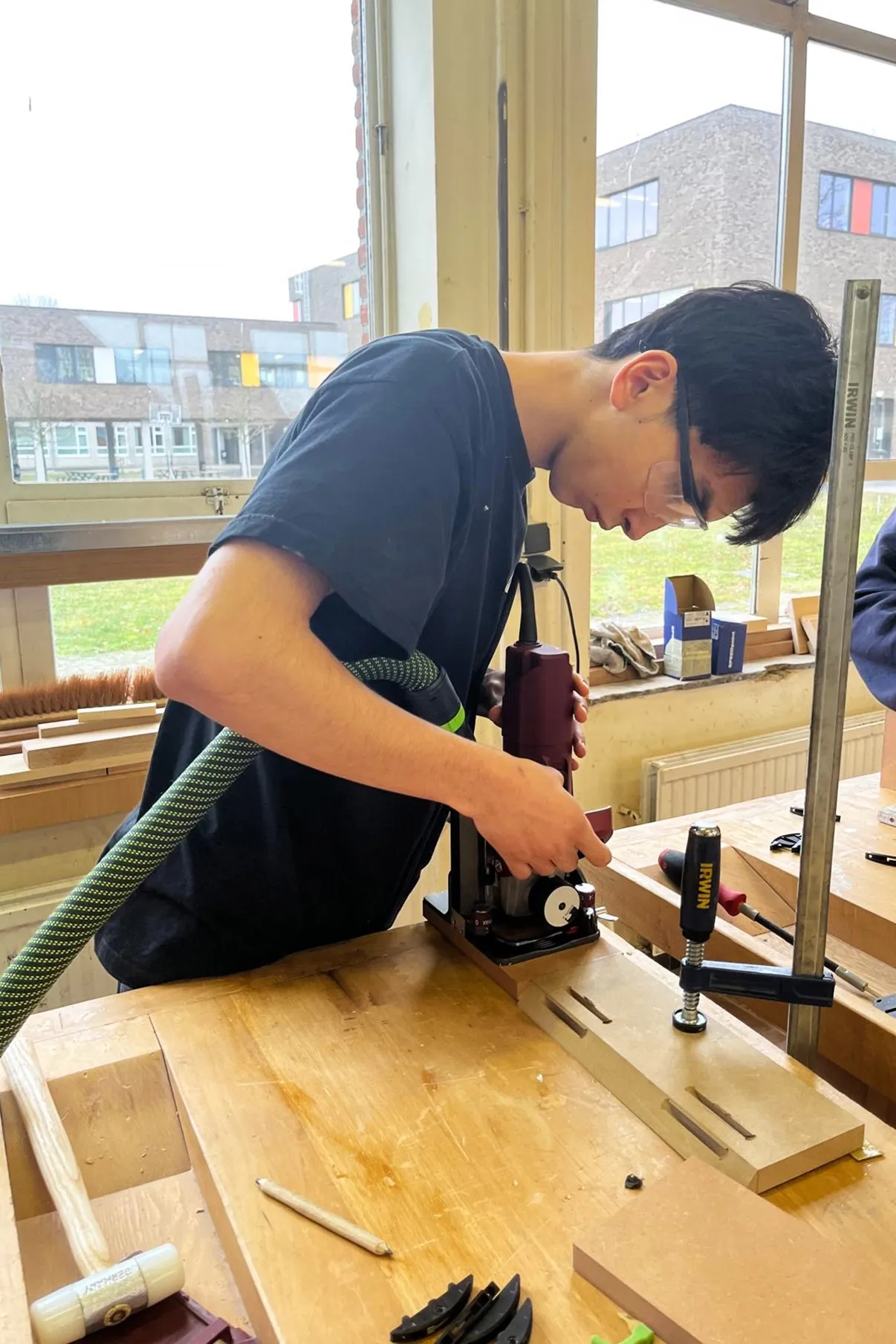

Preserving trade skills
“I also get the impression that basic skills are gradually disappearing,” says Demares. “In recent years, education has increasingly shifted towards production work, at the expense of the finer points of the trade itself. You may be able to operate machinery, but still lack the necessary understanding.”
“Besides, not every joiner has a CNC machine. About sixty per cent of the joiners I visit still work manually,” Dumon adds. “With so much diversity in the sector, it’s difficult to prepare students realistically for the labour market.”
There is also a strong need for practical training in businesses, although finding the time for it remains a challenge. “We try to address that by delivering training on site, in their workshops. Together, we look at how the P-System can best support them. Linking the training to a project already under way or a familiar problem makes it practical and immediately applicable. Investing time in training is necessary, but businesses often realise afterwards that they quickly make that time back by working faster.”
Question about this story? Ask your question
Keep following this
Get an email when a new story is published. No account needed.
- ThemeStrong and safe trade businesses
- SubjectWoodworking