Towards standardised quality assessment for reclaimed structural timber
Text Marlies DecavelImage WOOD.BE
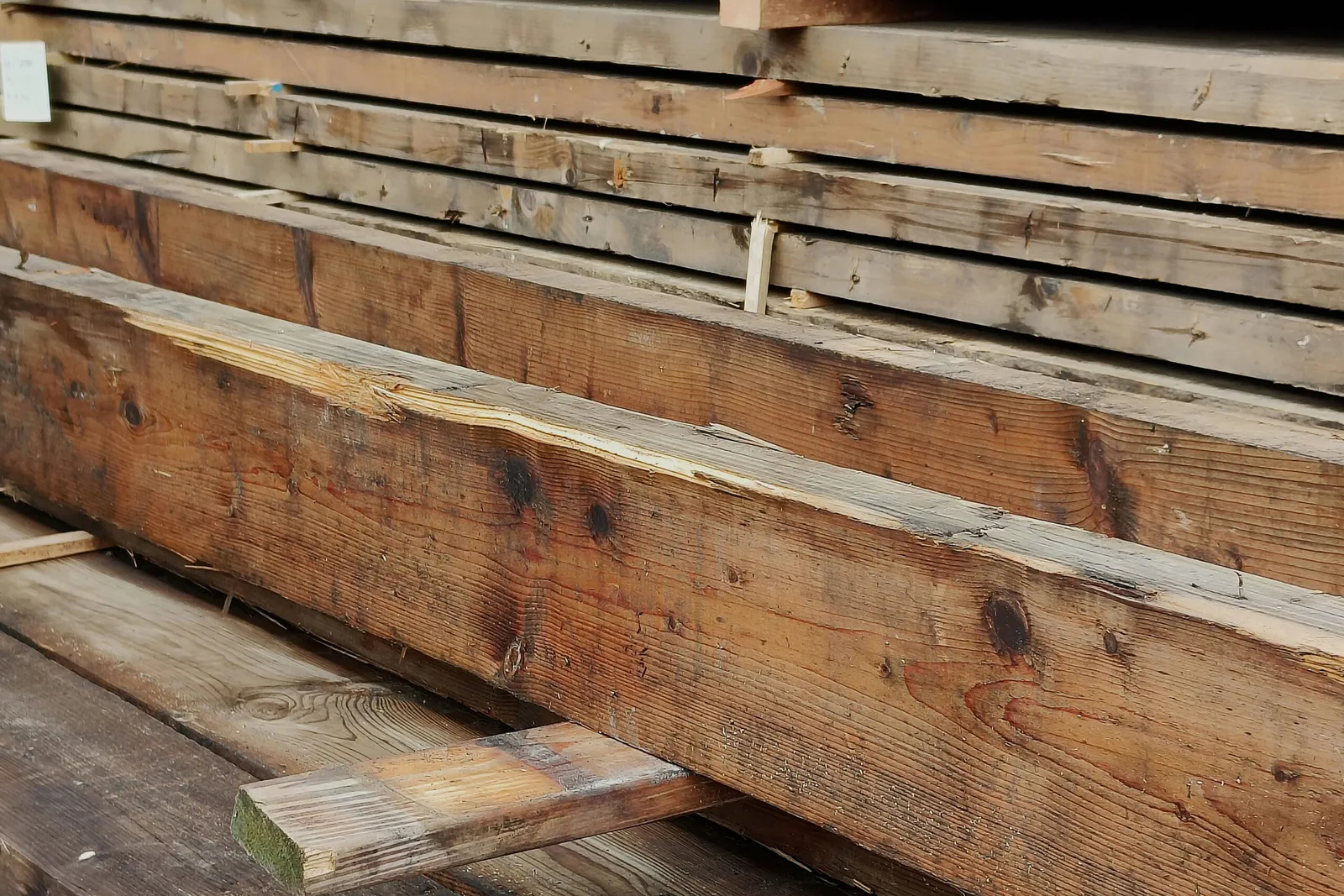
Demand for circular building materials is growing, but reclaimed timber is still used too little in structural applications. Why? There is not enough certainty about the quality and strength of reclaimed timber. Knowledge centre WOOD.BE aims to change that by developing a standardised method for objectively assessing the value and strength of reclaimed timber.
WOOD.BE, the independent knowledge centre for Belgium’s timber and furniture industry, supports companies through scientific research, technological innovation and quality control. From sustainable use of materials to advanced production techniques, WOOD.BE helps the sector remain future-proof and competitive. Through close collaboration with companies, research institutions and government bodies, WOOD.BE plays a key role in the transition to more sustainable and innovative use of timber.
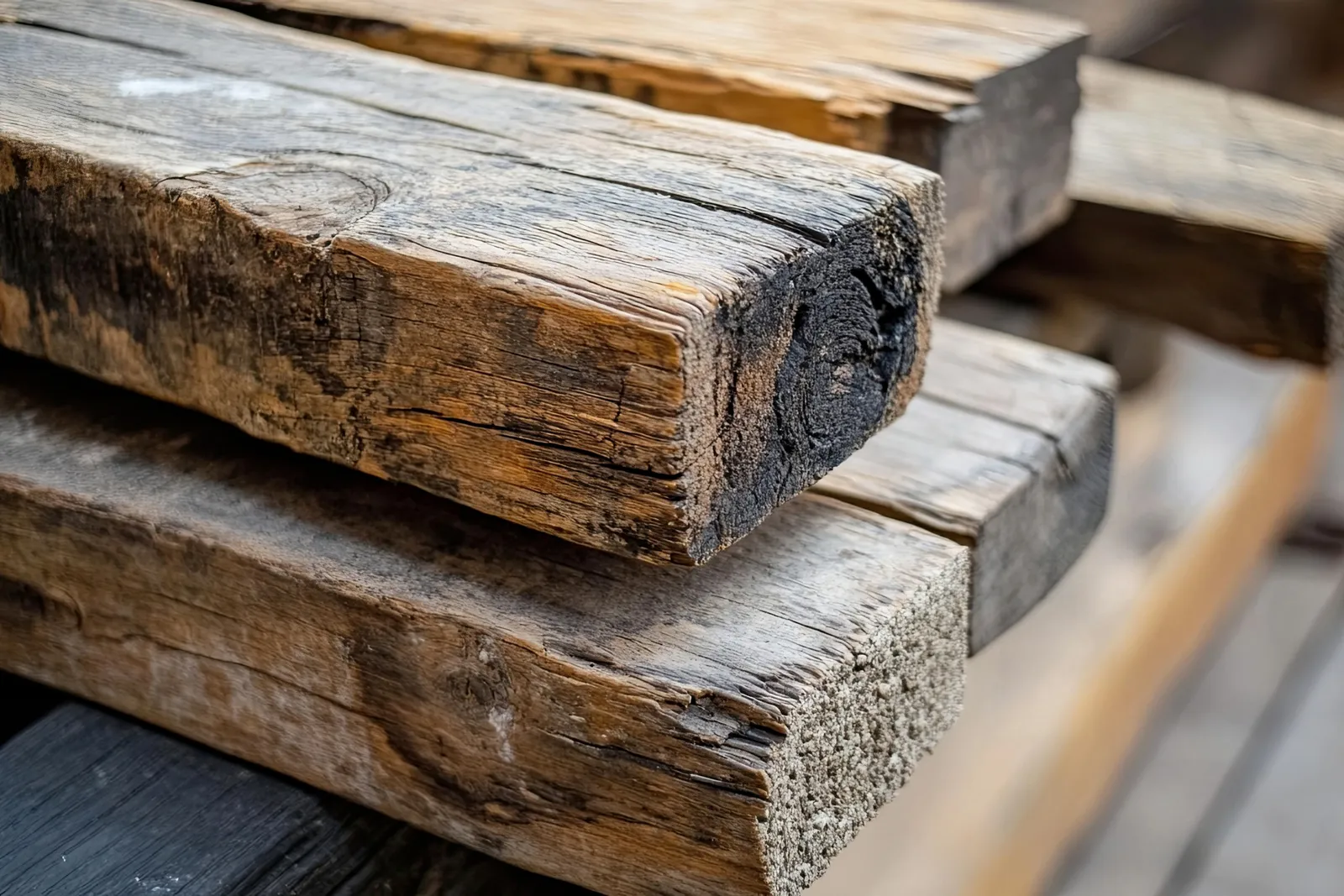
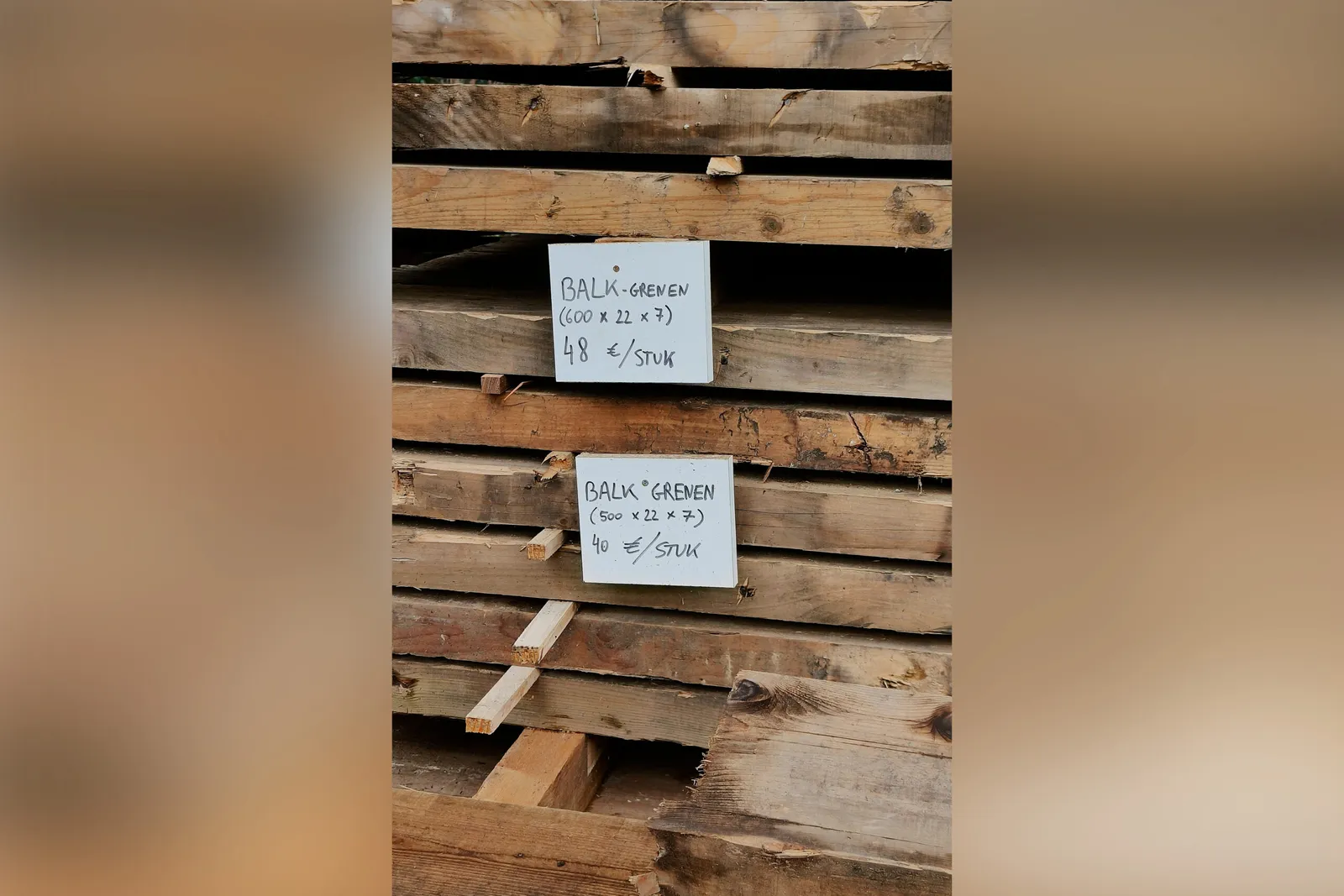
The knowledge centre is now putting its expertise in standards, certification and product development to work on a new project: Reclaimed Timber. Sustainable construction calls for alternative timber sources, but in practice the market for reclaimed structural timber remains limited. With support from the FPS Economy and NBN, WOOD.BE aims to change this by objectively assessing and standardising the strength of reclaimed timber. “Timber banks have beautiful wooden beams in stock, but can barely sell them as structural timber,” says Imke De Windt, project coordinator for Reclaimed Timber at WOOD.BE. “Contractors and architects are reluctant to use them because there is no certainty about their quality. How strong is this timber? Can it serve a load-bearing function? This uncertainty is holding back the market.”
A systematic approach to grading timber
The idea of reclaiming structural timber is not new, but in practice it runs into difficulties. Architects are bound by ten-year liability and would rather avoid taking risks. Contractors also need to be sure that the timber meets the standards. Until now, this has often been addressed through over-dimensioning, simply using more timber than necessary, but this is far from a sustainable solution.
To turn the tide, WOOD.BE launched a project to develop a standardised grading method for reclaimed timber. “The aim is to establish a classification system that allows us to assign reclaimed timber a recognised strength class, comparable to new timber grades such as C18 or C24,” Imke explains. “We start with a visual inspection of the timber, as in standard grading. We also assess additional factors: has the timber suffered moisture damage? What mechanical damage is visible? Has it been treated with chemical products? This information is crucial.”
More advanced tests follow. A resonance analysis, in which vibrations are induced in the timber, provides an indication of its strength. Destructive tests are then carried out by breaking beams under controlled conditions. “This allows us to determine whether the resonance analysis corresponds to the actual strength of the timber, and whether we can use it to assign a reliable strength class.”
Broad-based collaboration with the sector
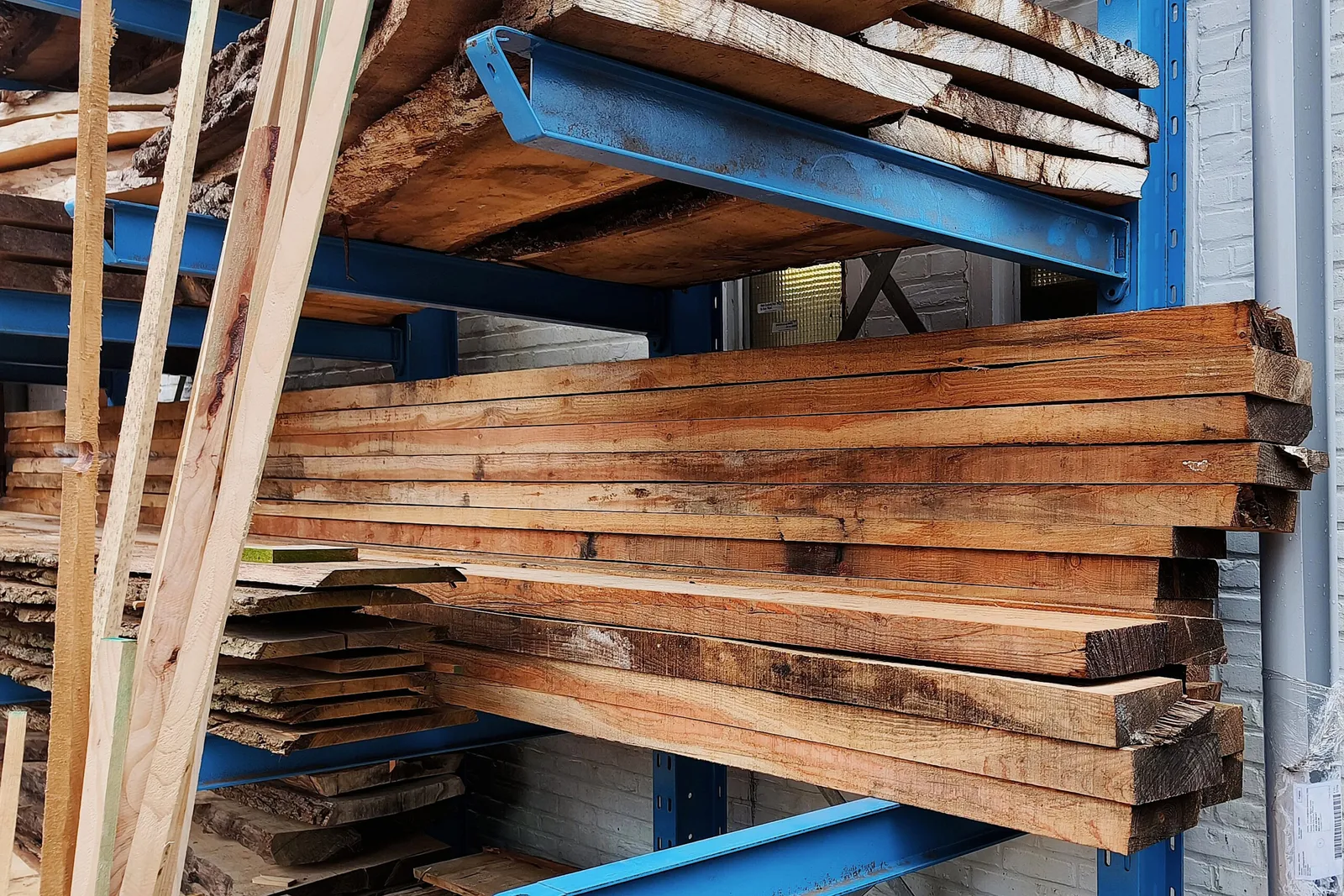
WOOD.BE is not carrying out the Reclaimed Timber project in isolation, but is working with a wide range of stakeholders. The project group includes timber banks, architects and contractors, as well as demolition companies and construction federations. Imke says: “We want the whole sector to support the testing method so that it is actually used. Our research also has an impact on the entire construction process, from demolition to reuse. Buildwise, for example, is focusing on higher-quality demolition techniques to recover more usable timber from demolition work. Our work starts as soon as the timber arrives at the timber banks. A uniform grading process will allow them to sort reclaimed timber as effectively as possible. This grading gives designers and processors confidence in its quality and strength class. It’s a win-win for everyone.”
From testing to practical application
The project runs for two years and began in December 2024. The results are expected by the end of 2026. The ultimate goal? A standardised method that allows timber banks and contractors to assess the quality of reclaimed timber themselves. Imke says: “As the crowning achievement, we want to finish with a large-scale practical workshop. We’ll test different types of beams together, so everyone can get to grips with the grading method.”
In the longer term, WOOD.BE hopes to embed this expertise permanently. In the coming years, the knowledge centre will therefore organise workshops and consultation sessions as part of the project. “We want new players in the sector to be able to come to us, just as they already can for new timber. This project is a major first step in that direction.”
Question about this story? Ask your question
Keep following this
Get an email when a new story is published. No account needed.
- ThemeSustainable and circular timber supply chain
- SubjectWoodworking