











‘Sustainability? It’s mostly a matter of common sense’
Text Wendy ThijsImage Studio Dann
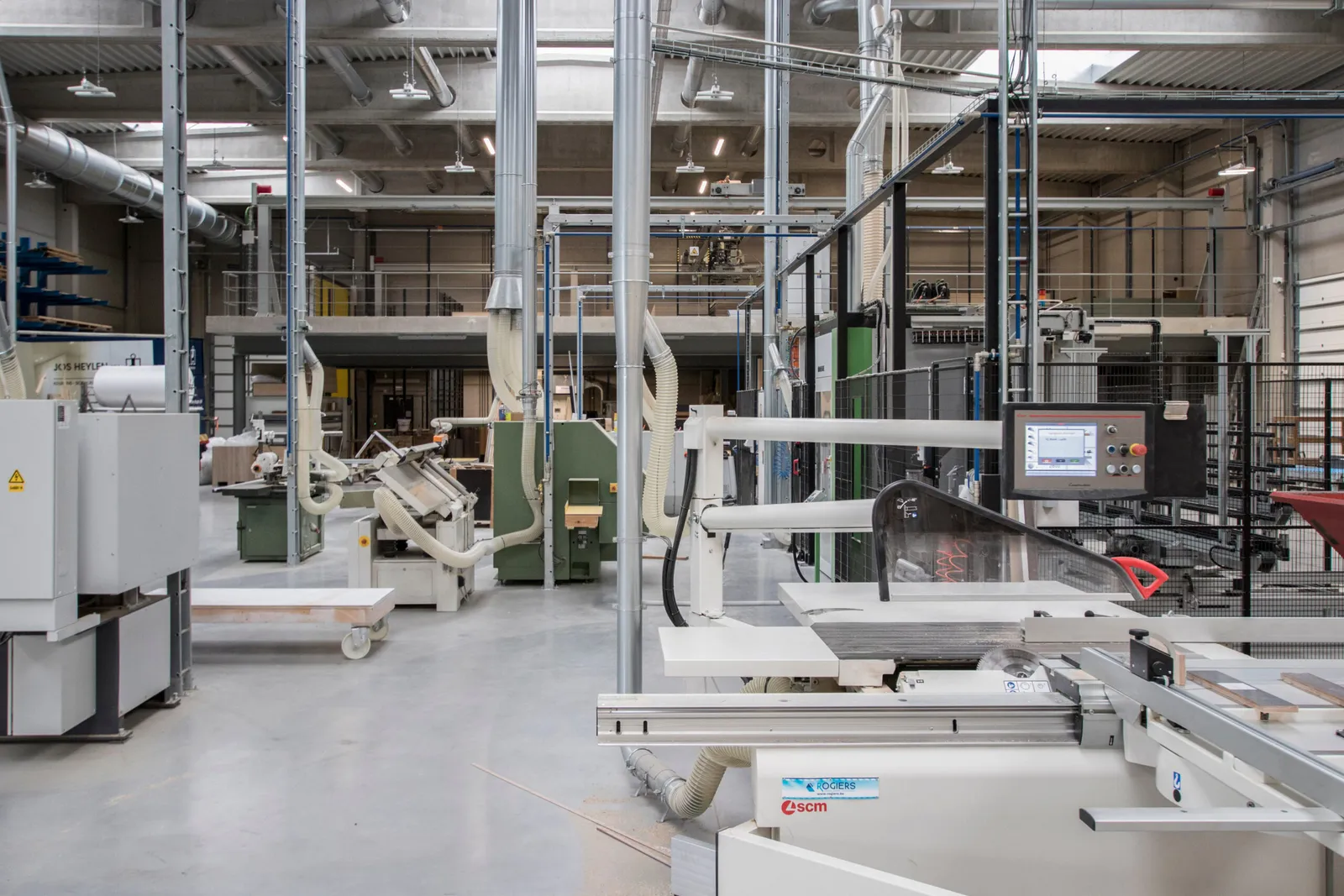
Taking steps towards sustainability is not always easy. To inspire fellow joiners, Jos Heylen shares his experience. In 2019, he moved into a forward-looking business premises that was more sustainable than the standards at the time required. There are plenty of lessons to learn about making your office and production space more sustainable.
Heylen has been in the trade for more than forty years and enjoys getting to grips with technically challenging projects. He specialises in exclusive interiors and complete finishes for private homes and villas. His company continues to grow year after year and now employs 34 people who, in consultation with architects or for private clients, deliver challenging bespoke projects.
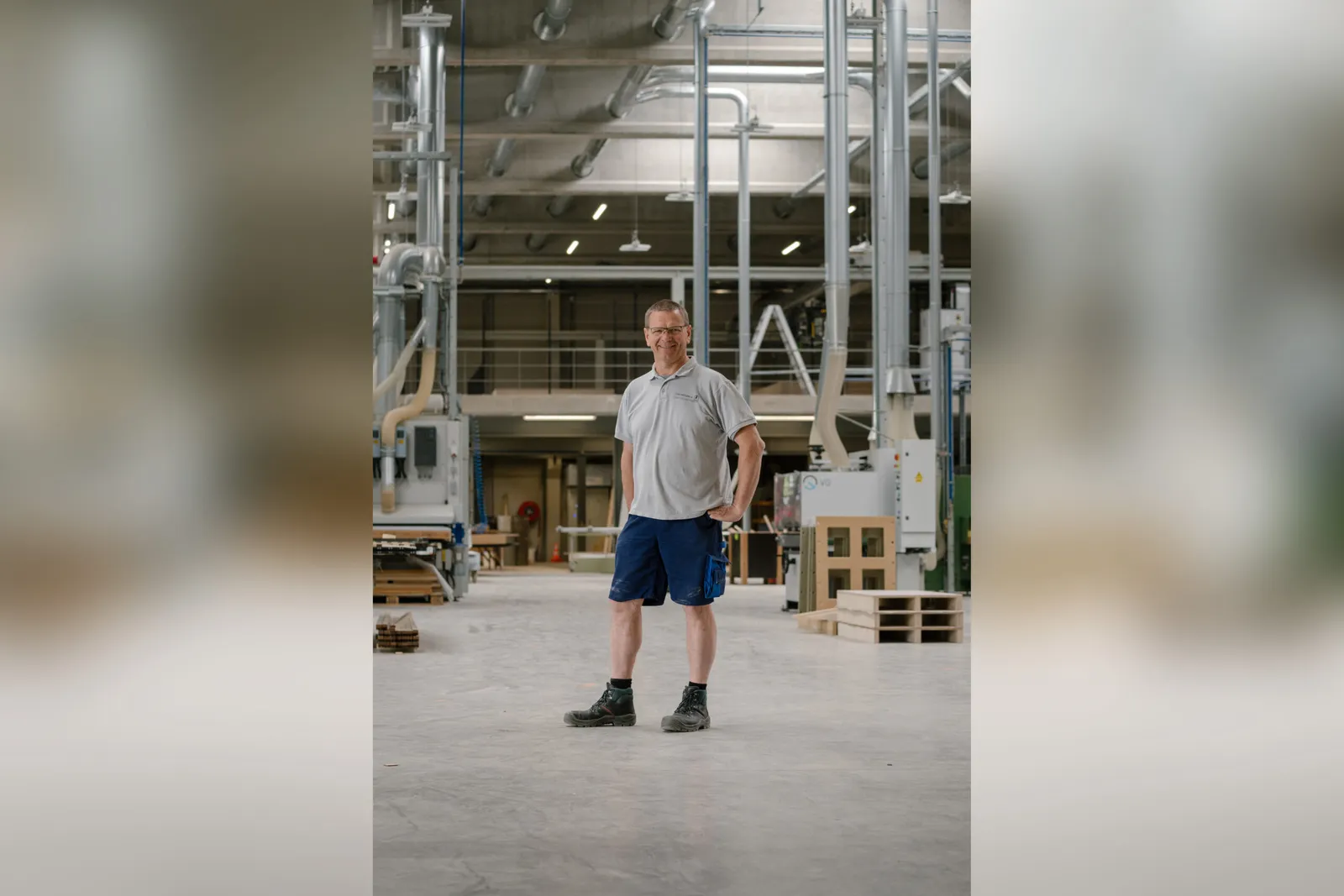
What does sustainability mean to you?
“I wouldn’t necessarily describe myself as a ‘green guy’, but I’m convinced that focusing on sustainability is the only way to build a business fit for the future. That’s why I’ve gone quite a bit further than strictly necessary.
However, I’m guided not only by my personal convictions, but also by economic considerations. That’s why we still use gas for heating for now. I needed it for the spray booth anyway, and at the time it wasn’t cost-effective to install a heat pump as well. We have, however, made all the necessary provisions to switch over easily in the future. I recently saw how a colleague uses waste heat from the compressor to power most of his underfloor heating. We’ll look into that option too when our compressor needs replacing.
Because the building is so well insulated, our consumption is very low, incidentally. We use at least a third less than in the previous workshop, even though the production space is now three times as large.”
Can you explain what else makes your building sustainable?
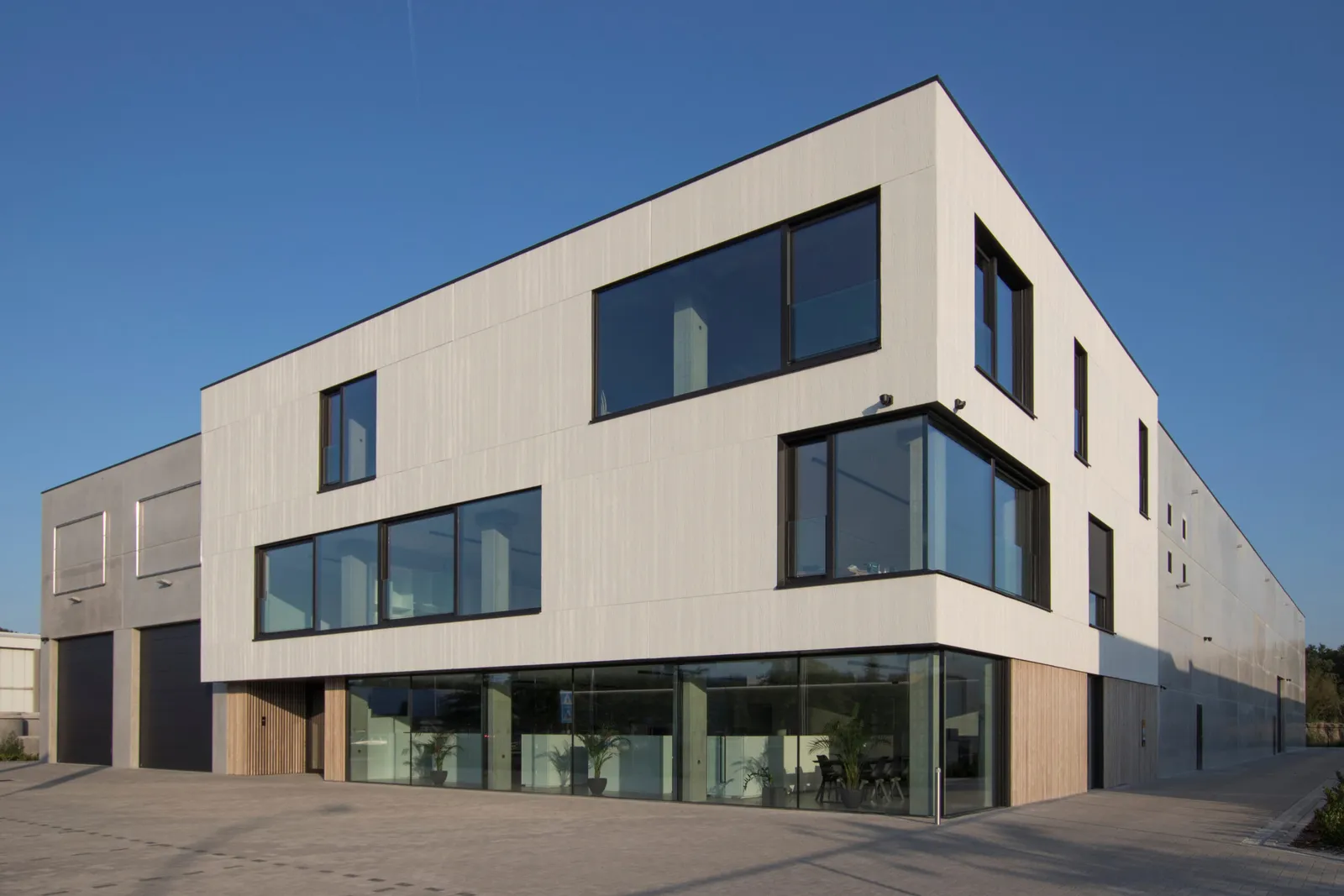
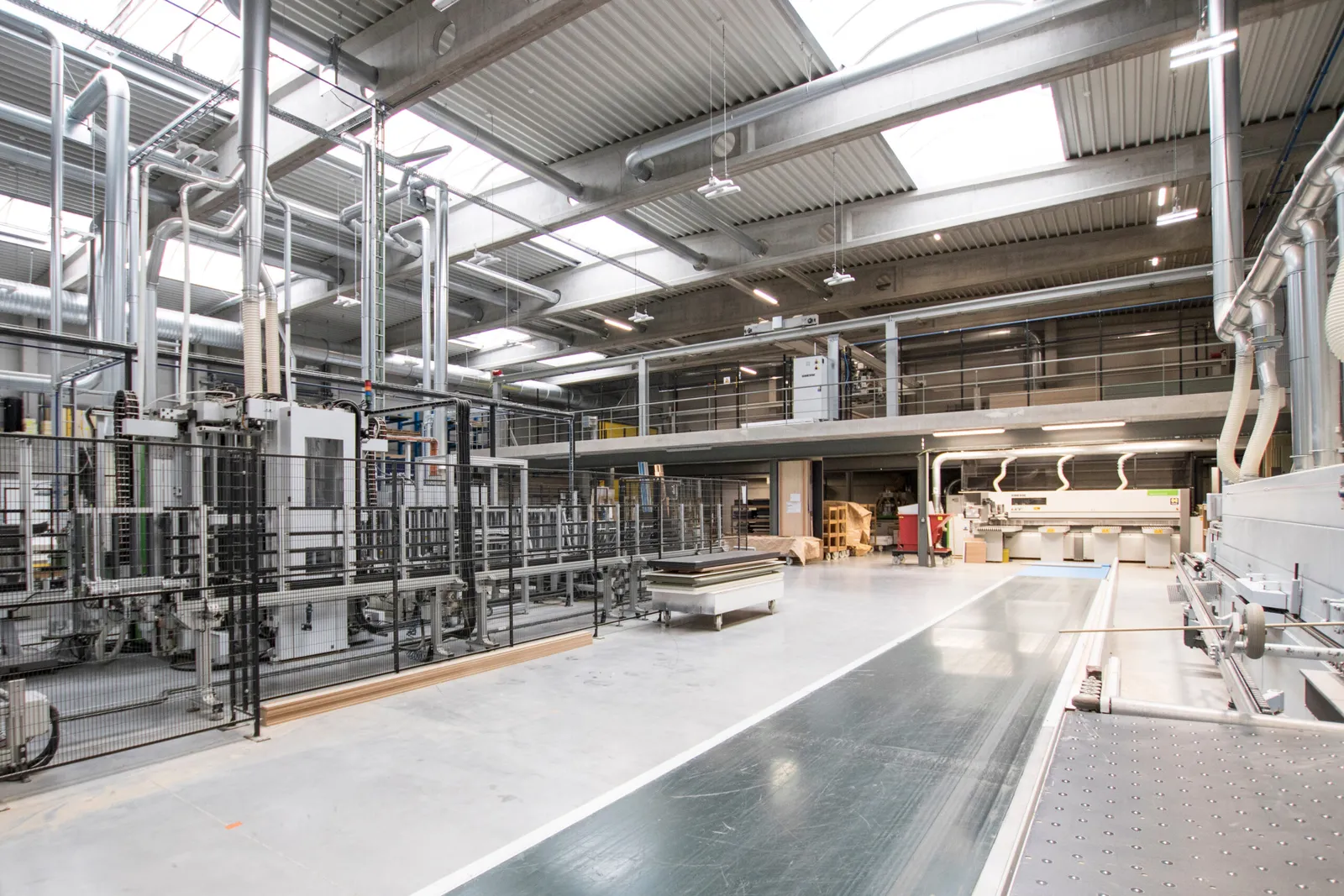
“It starts with building as compactly as possible to use as little land as possible. We make the most of the available height. The office has three floors, and the production area has two. The machines are on the ground floor. Upstairs, we store appliances, drawers and fittings, and there’s an automated sheet material storage system.
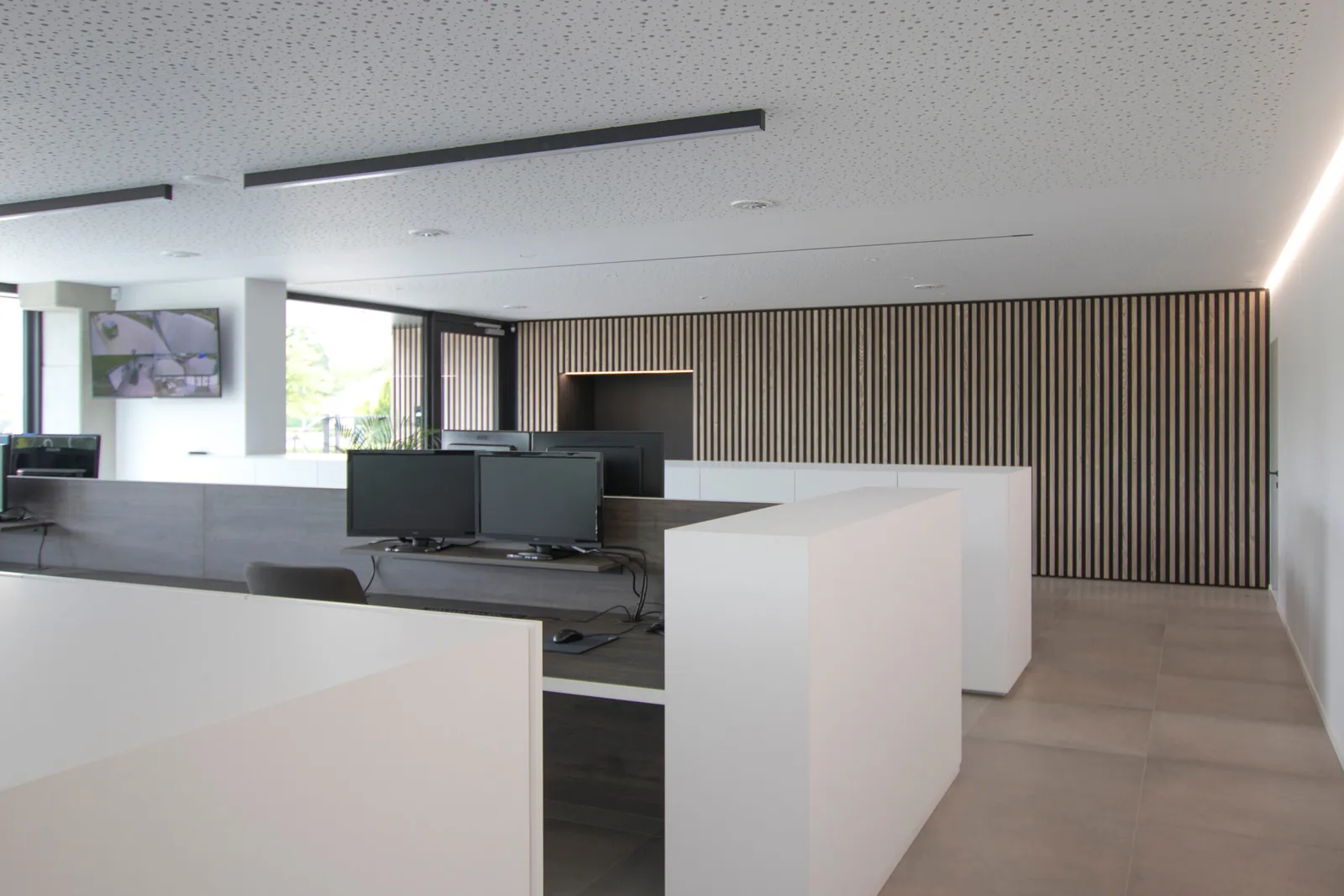
We’ve also invested in a high-performance building envelope. The building is exceptionally well insulated, and the offices have triple glazing. We installed underfloor heating in the production area. That’s unusual, but very energy-efficient. Even though the doors are opened regularly, the temperature stays almost constant. These measures have significantly reduced our energy costs.
We generate electricity with 350 solar panels. We have a high-voltage substation and feed surplus electricity into the grid. Until recently, this earned us money, but nowadays we have to pay for it during peak periods. That’s why I want to invest in an energy management system and battery storage.
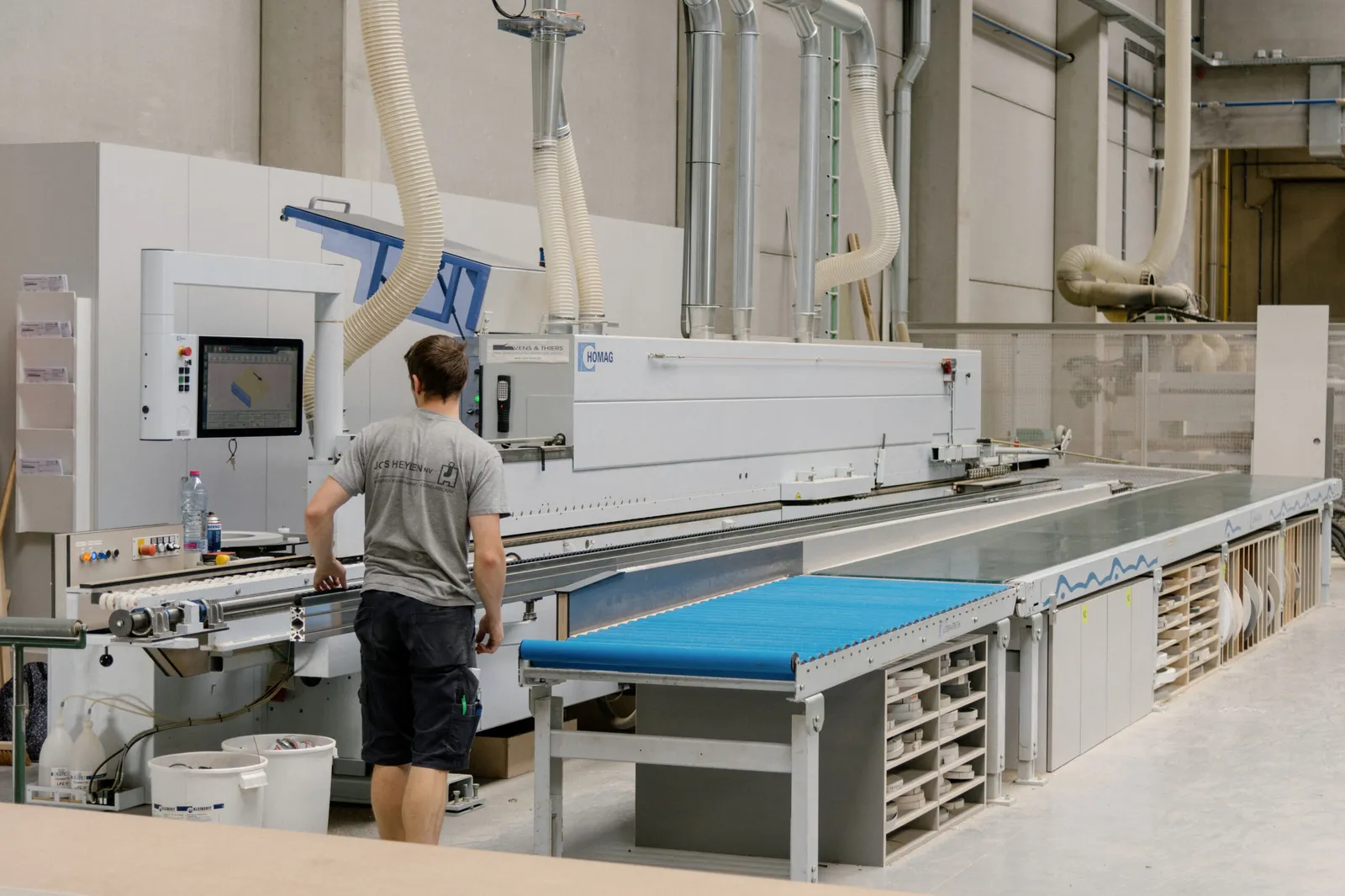
Our machinery is highly automated. The machines use much less energy than their predecessors. You’d be surprised how much you can save by automating and organising your production efficiently. If you make the same components faster, you save energy too.”
Have you made any other energy-saving choices?
“We installed LED lighting with motion sensors and daylight controls. The lights are never on when they’re not needed. One thing many fellow joiners don’t realise is how much you can save by optimising your compressed air and dust extraction systems. Your supplier can check for leaks and see whether your compressor is still performing well. Even with systems that are only about eight years old, you can often save up to thirty per cent.
Our dust extraction system is frequency-controlled and uses electrically operated dampers. When a machine isn’t being used, the damper closes automatically, so the system uses no more energy than necessary. You recoup an investment like that quickly.”
Do you also actively seek out environmentally friendly materials?
“That certainly plays a part in our choice of suppliers. We always opt for timber and sheet materials that are formaldehyde-free or low in formaldehyde and carry an FSC or PEFC label. Products made with recycled materials and packaged sustainably are a bonus. Quality comes first, though. Where possible, we use water-based lacquer, but for some applications we still have to use solvent-based lacquer.
We also take waste management seriously. More than eighteen waste streams are carefully separated, and most are processed using circular methods. Our vans have different buckets so we can sort waste at source. I think it’s important to look after our surroundings and future generations.”
Are you involved in any initiatives or certification schemes to ensure you keep making progress?
“No, the administrative burden puts me off. I’m not doing this for external recognition or labels, but because I believe in it. I realise that before long, we’ll also have to demonstrate that we’re operating sustainably. I don’t think we’ll need to take many additional steps then, but I do dread the paperwork involved. And yes, I could outsource it, but knowing me, I’d still want to understand every detail, so I’d be better off doing it myself.”
How do you see the future?
“It’s always been my ambition to be at the forefront of my field. For me, that means investing in automation and digitalisation, as well as sustainability. I think it’s something you have to pay attention to today. So we’ll keep taking steps, such as investing in a battery, a heat pump and the further electrification of our machinery and logistics.”
Question about this story? Ask your question
Keep following this
Get an email when a new story is published. No account needed.
- SubjectGeneral







