Magnetism prevents thermal expansion problems in entrance doors
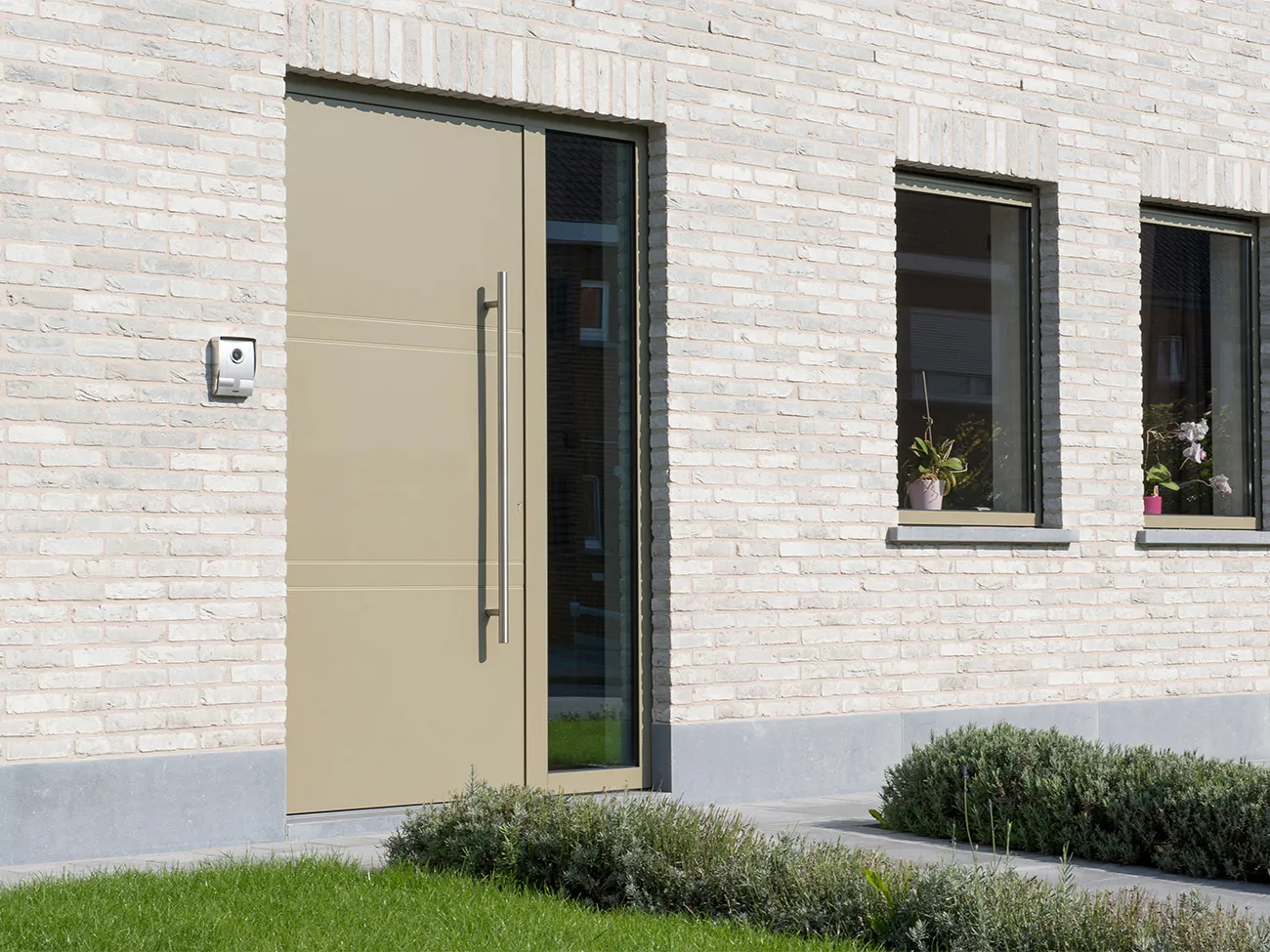
In recent years, contemporary architecture has increasingly featured larger, taller entrance doors in PVC and aluminium. With a conventional sash-covering system featuring a bonded door leaf, the front door can sometimes warp and jam on warmer days. Frager, a specialist in aluminium and PVC door panels, set out to find a solution to this thermal expansion problem and developed Magnetude®, a revolutionary front-door system that works using magnetism.
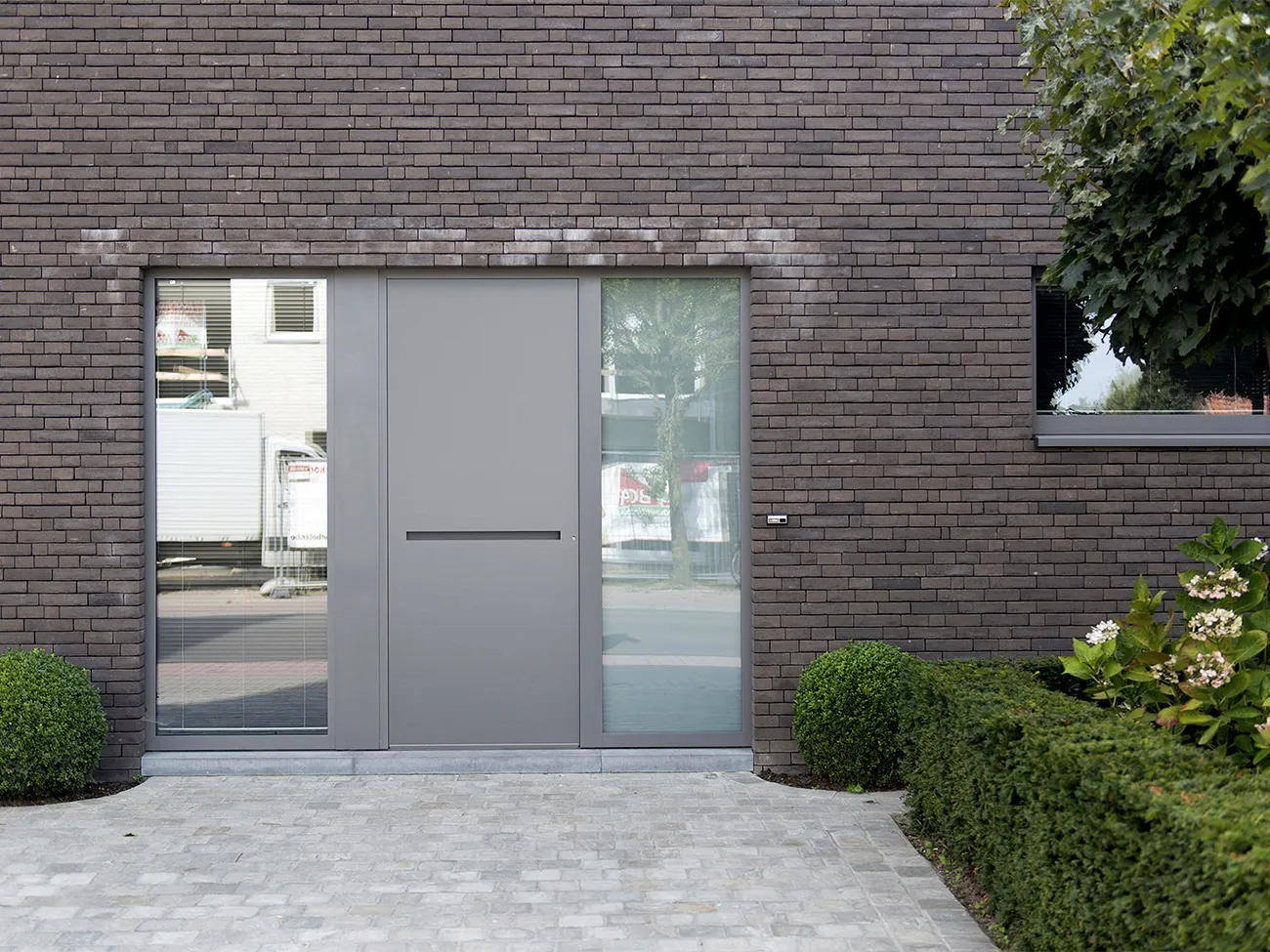
For several years now, architects and clients have been opting in large numbers for large entrance doors, often in dark colours such as black. Combined with existing three-point locking systems with anti-burglary hooks, these doors are highly susceptible to thermal expansion. “When exposed to the sun’s heat, the large surfaces expand, causing the door leaf to bow inwards on the lock side. The locking hooks jam, making it impossible to open or close the door. As a result, we received a flood of complaints,” explains Franck De Munster, managing director at Frager. “We challenged our R&D department to find a way of allowing the outer panel to move freely in relation to the door leaf while remaining attached to it. Bonding was not an option, as that was precisely what caused the thermal expansion problem. We developed a unique system in which the door panels are not bonded to the door leaf, but are simply fitted using magnets: Magnetude®. You could compare it to an iPad Smart Cover. That can also move from side to side while remaining attached to the iPad.”
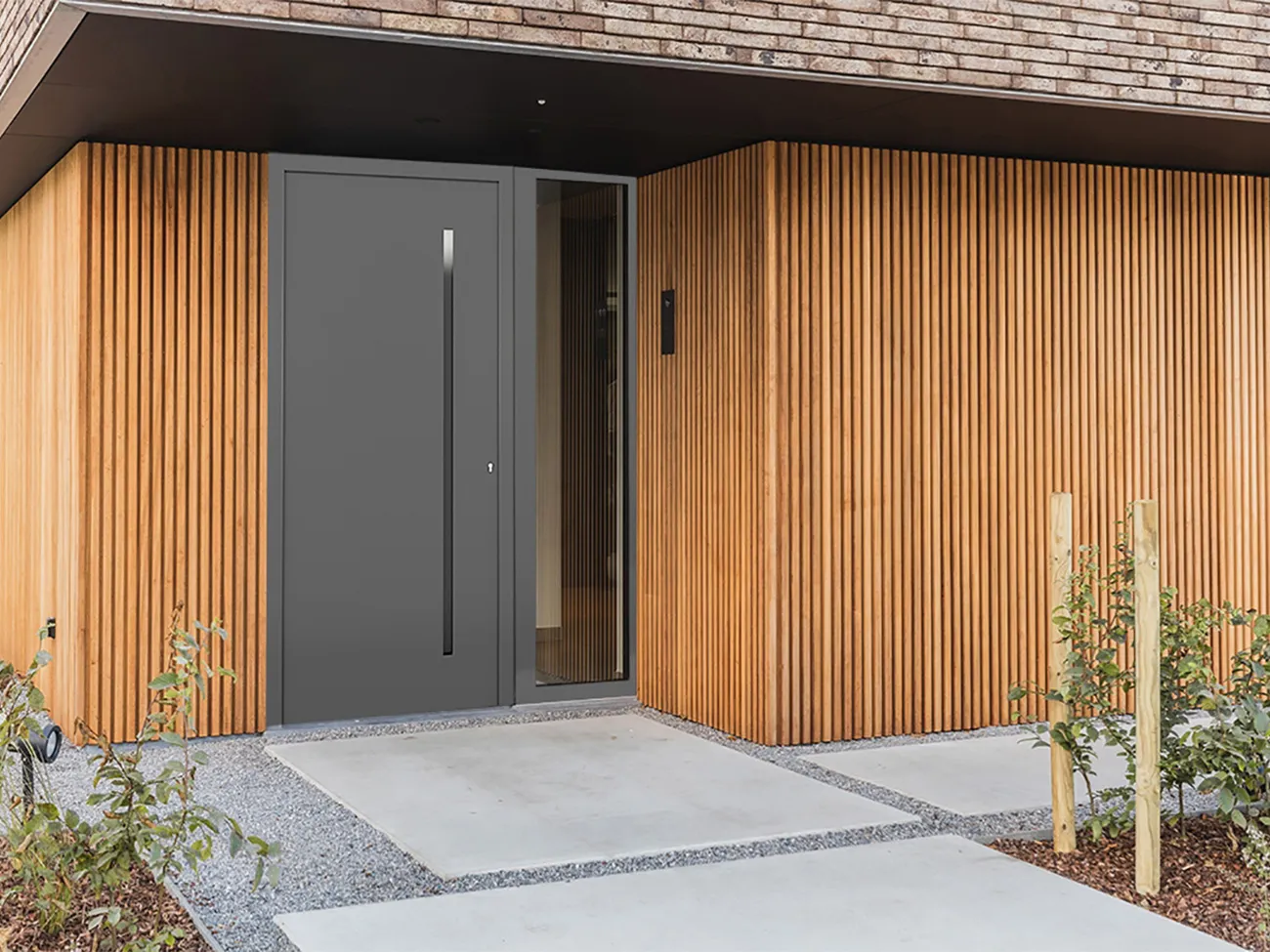
A win-win for fabricators and clients
At Frager, they fitted sixteen magnets, each with a pull force of 30 kg, to a standard infill panel. The aluminium outer panel was fitted with three steel strips, each 2.5 mm thick. Extensive testing showed that this revolutionary innovation puts an end to thermal expansion problems, because when the door heats up, only the outer panel expands. The door leaf, which carries the hinges and lock, does not warp, so the door cannot jam.
“We discovered many other benefits, both for the production process at our customer, a PVC and aluminium window and door manufacturer, and for the client. Producing doors with bonded leaves takes around 2.5 hours. The door system then has to dry for 12 hours, and it is advisable to wait another 24 hours before transporting it to the building site. With Magnetude®, the sandwich panel is fitted to the glazing dimensions, after which the outer panel is attached using magnets. And that is all, in just 6 minutes,” De Munster explains. “It is also a constant nightmare when doors are damaged by other trades on site between making the building wind-tight and handover. With Magnetude®, the infill panel is fitted as a temporary panel, and one person can fit the door leaf overlay panel the day before handover. If the outer panel, inner panel or glazing is damaged later, each element can be replaced separately. The owner can also easily change the look and feel of the front door without using tools. Magnets can also be used to attach all kinds of decorations to the outer face of the door, without screws or adhesive. And burglars have no chance. Even if they manage to remove the outer panel, they will still be faced with a conventional door panel secured in the glazing rebate by the glazing bead.”
Question about this story? Ask your question
Keep following this
Get an email when a new story is published. No account needed.
- ThemeImproving window and door performance
- SubjectPreview