











Design 4 Circularity takes centre stage at WOOD.BE Innovation Day
Text Stephanie DemasureImage WOOD.BE
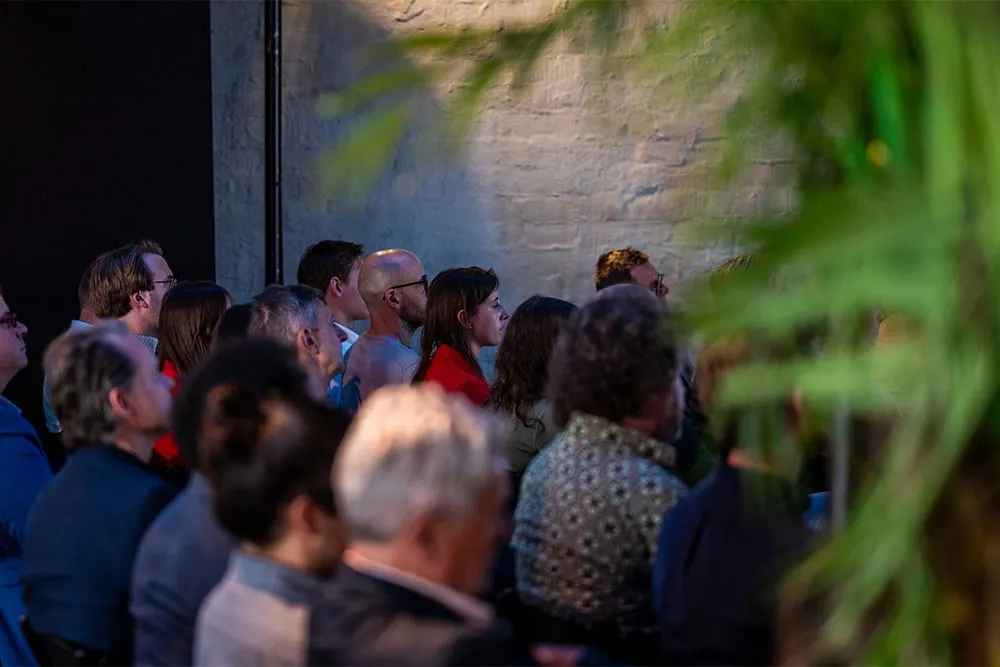
Knowledge centre WOOD.BE supports companies in the wood and furniture industry as they work towards an innovative and sustainable future. To share knowledge and inspire entrepreneurs in the sector, it has been organising an Innovation Day for several years. It is the ideal opportunity to explore the challenges and opportunities in the industry with specialists and fellow professionals. On 23 May, Interieurbouw & Schrijnwerk also travelled to Ghent for the 2024 edition, which focused entirely on Design 4 Circularity.
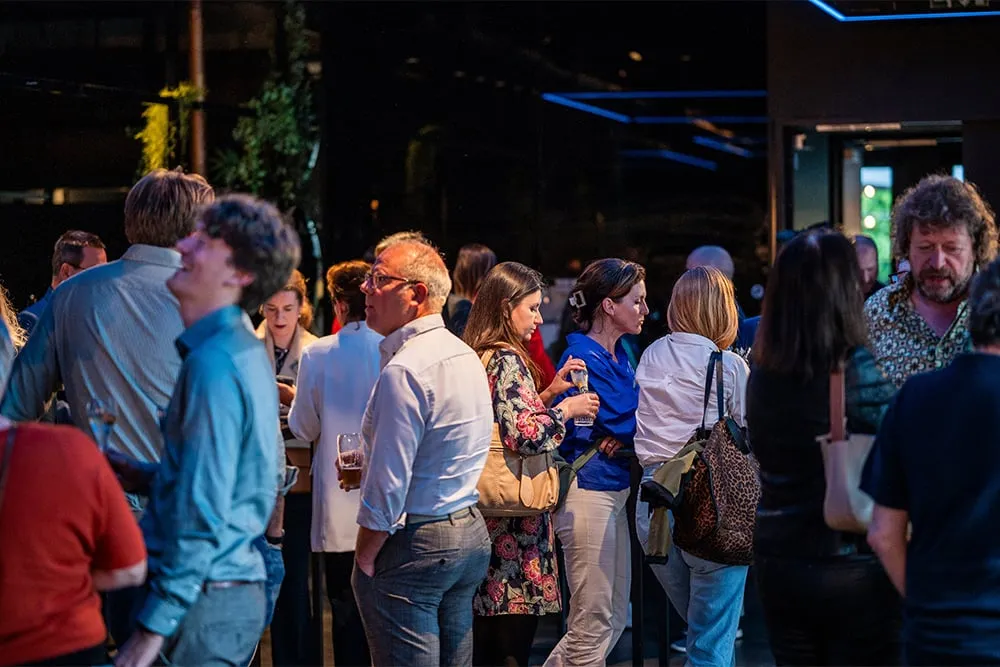
Chris De Roock, general manager of WOOD.BE, welcomed around 60 wood and furniture professionals to ZwartWit in Ghent. He explained the choice of circular design as the theme and set out the importance of the Innovation Day. “Through expert speakers and inspiring real-life examples, we want to encourage our peers to put their new insights into practice. That way, we can work together towards a sustainable, circular future for the wood and furniture sector.”
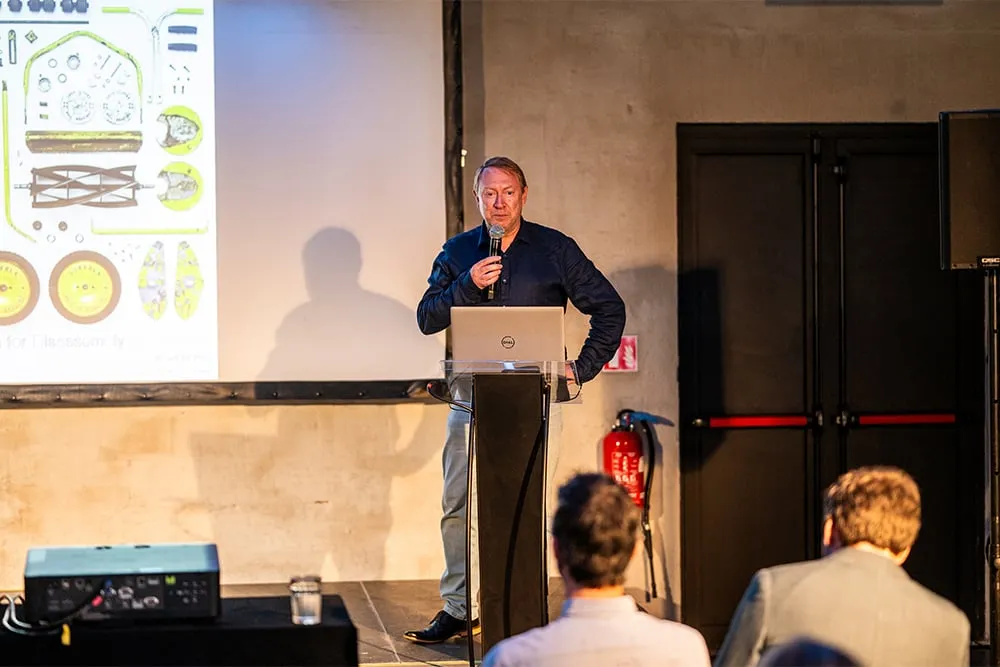
WOOD.BE once again put together a strong programme. Alongside entrepreneurs, Carsten Wentink, policy officer at the European Commission, and Professor Marcel den Hollander were also on the bill. The close connection between theory and practice made for an especially engaging event. Participants listened attentively and went home with ideas and practical tools. That was after an inspiring keynote and, of course, plenty of time to network. Here’s a look at the afternoon.
Impressive statistics
As a research and knowledge centre, WOOD.BE likes to base its projects and events on figures. The statistics that opened the day certainly made an impact.
Eighty per cent of a product’s environmental impact is determined during the design phase. How a product is developed is therefore crucial if we are to produce and do business sustainably. Applying the principles of Design 4 Circularity is essential to the transition to a circular economy. These principles are relevant not only to products, but also to business operations in the broader sense. Design 4 Circularity supports circular product design through smart business models and carefully considered processes. And that brings a number of benefits.
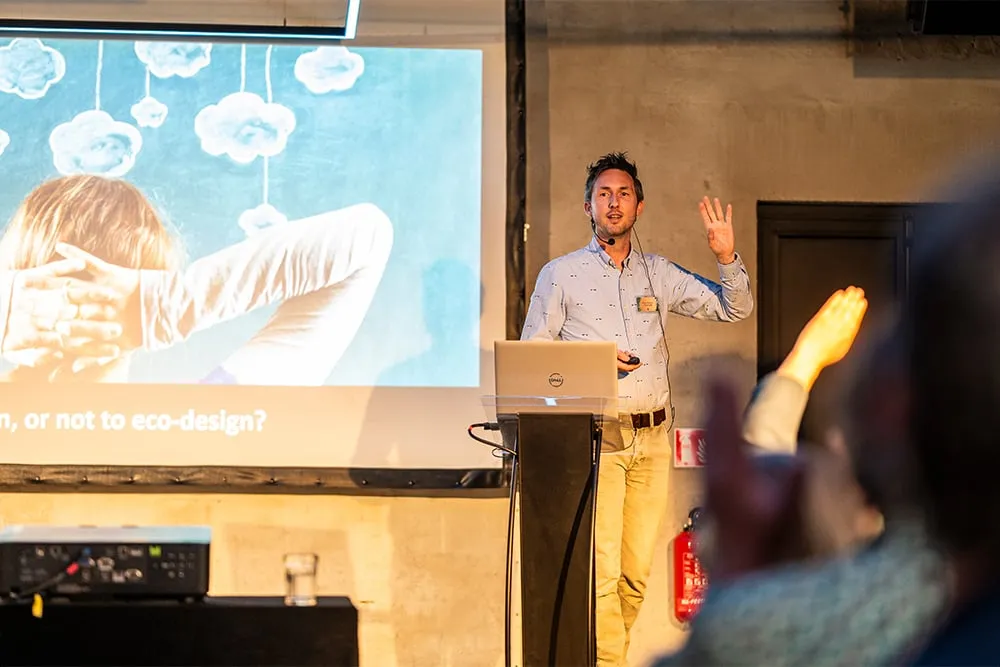
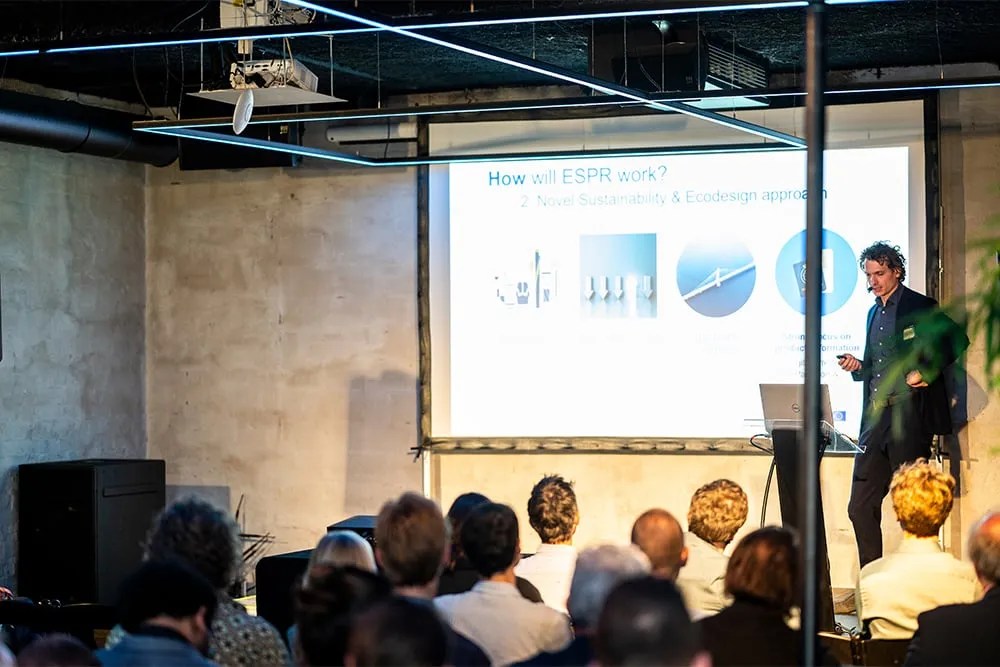
Innovation adviser and researcher at WOOD.BE Klaas Holsters got off to a flying start, outlining the benefits of ecodesign. “One important benefit of ecodesign is that it saves costs. You need fewer materials and less energy, which means less waste to process, and therefore lower processing costs. But that is far from the only reason to embrace ecodesign today. It can also create new commercial opportunities, such as repairing or upgrading existing products. What’s more, it makes companies more resilient, helps them adapt more smoothly to new legislation over time, and benefits brand reputation. Customers and investors alike have greater regard for companies that incorporate a circular vision into their design processes from the outset.”
Three principles of Design 4 Circularity
There is plenty to say and explore when it comes to Design 4 Circularity (D4C). Yet it all rests on three basic principles. Klaas Holsters explained them: life cycle thinking, systems thinking in design, and value chain collaboration. “To have a truly circular product, you need to close its loop, but you don’t necessarily have to do it alone,” he explained, expanding on the final core principle. “If you bring a product to market that can be repaired almost indefinitely, but rely on a partner to carry out those repairs, you’re still working circularly.”
WOOD.BE puts the D4C principles at the heart of various projects. For example, the knowledge organisation developed a guide for mattress designers who want to consider circularity, in collaboration with Valumat, the management organisation for extended producer responsibility for mattresses. Developing similar guidelines for other product groups is also in the pipeline. At European level, there is CEO, or the Circular Economy Office. “We also carry out life cycle assessments (LCA), which recently enabled us to quantify ecodesign guidelines. For the hotel sector, we have brought together all circularity-certified products on a website. The circular economy is a key theme running through our research programme.”
Ecodesign for Sustainable Products Regulation
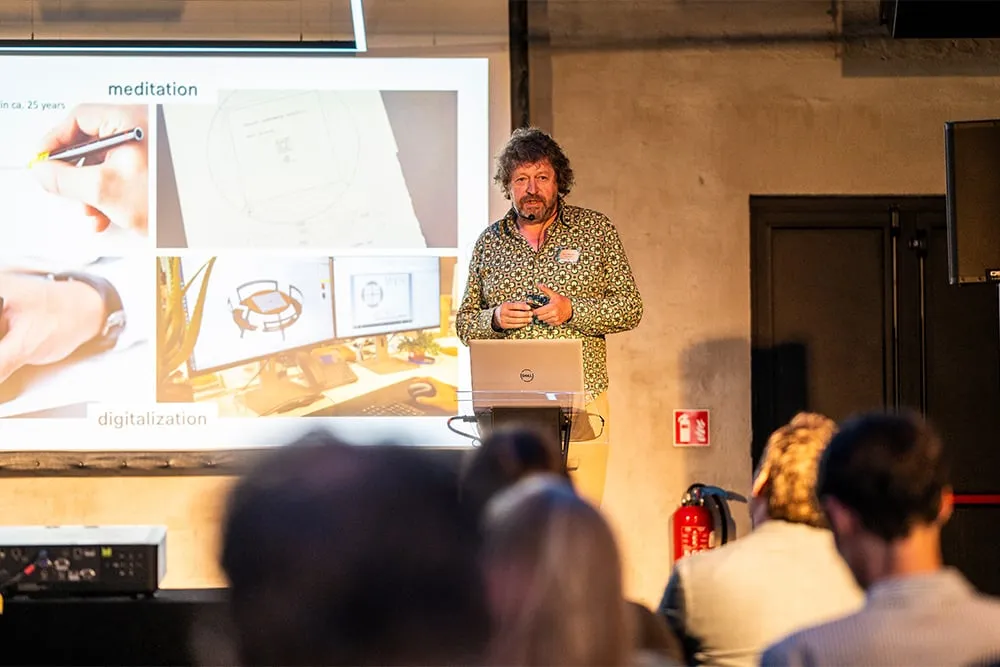
It is no surprise that circular product design is receiving increasing attention. We are more aware of the limits of our planet. This is also reflected in specific legislation, such as the European Ecodesign for Sustainable Products Regulation, or ESPR for short. Carsten Wentink, policy officer at the European Commission, explained what it means. “Following the publication of the ESPR Regulation proposal in 2022, we are now in the final stage of negotiations. We expect it to come into force shortly. The ESPR is, however, a framework and does not contain any requirements. These will be added gradually through secondary legislation.”
The ESPR builds on the existing Ecodesign Directive, while adding further tools and opportunities. The Commission wants to improve market surveillance to maintain a level playing field, require public authorities to buy more sustainably, and introduce measures to prevent the destruction of unsold goods.
“We will have to wait a little longer for specific rules,” Wentink emphasised. “We have, however, already identified a number of important product groups where ecodesign guidelines could have a major impact. The furniture sector emerged from the study as the second most important product group. Mattresses came fifth.”
It therefore seems very likely that specific design guidelines for furniture and mattresses are on the way, although they won’t be here tomorrow. Once the Regulation has been adopted, an ecodesign forum will first need to be set up. It will draw on a broad group of stakeholders to develop specific guidelines. Wentink does not expect the first product requirements until sometime in 2026. “There will logically be a transition period to give companies time to implement the new requirements. This is traditionally around 18 months, although complex changes may take longer.”
Putting it into practice
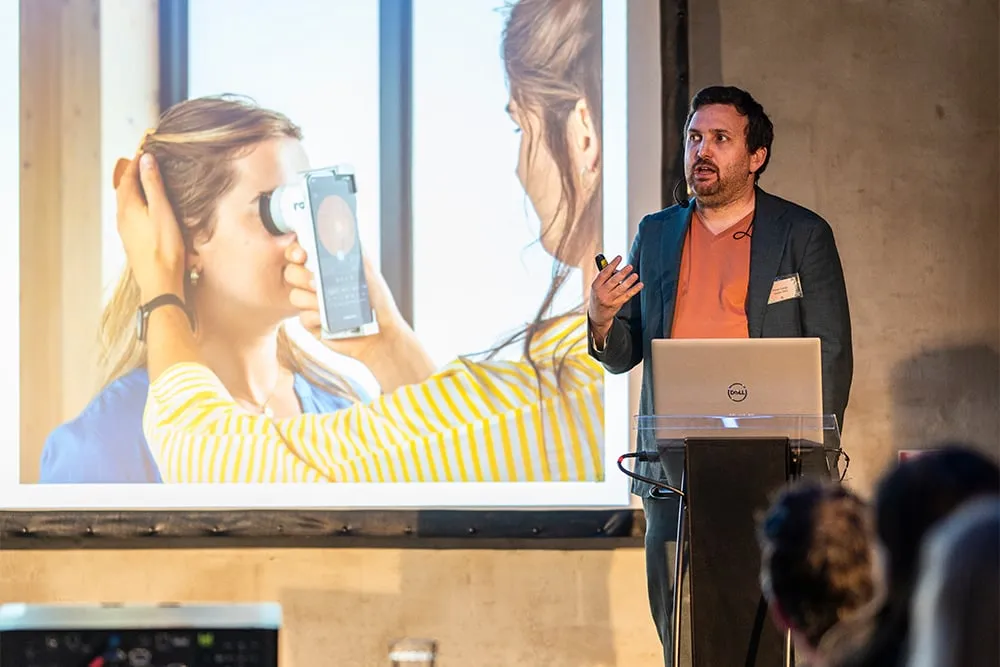
Interesting insights, but what does this mean in practice? To make the connection with the industry tangible, WOOD.BE invited three entrepreneurs who work with a circular vision every day. Pieter Lesage opened the practical session. As founder of Studio Dott, he focuses on circular design in every project. “Sustainable design should really be the baseline, not a differentiator,” he stressed. Dirk Wynants of Extremis also respects the limits of our planet, by blurring the boundaries between indoors and out. He gave a presentation on biophilic design, which is based on our innate need to connect with nature. “Good acoustics, the right humidity and natural light are important factors in maintaining wellbeing and mental energy,” he explained. “Research has shown, among other things, that pupils in a classroom without natural light retain 20 per cent less of what they learn.”
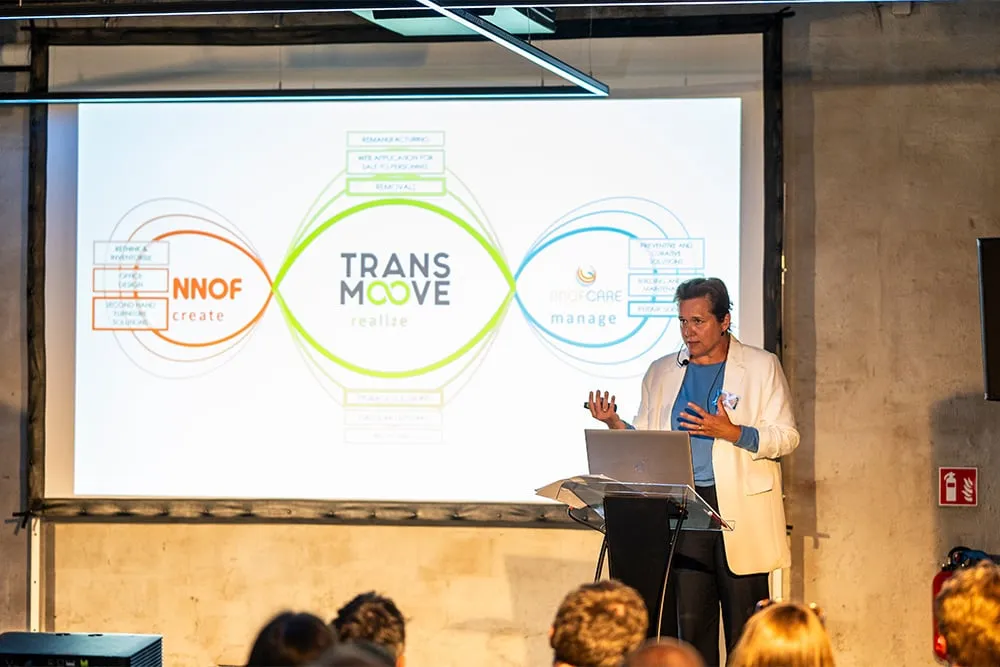
Developing a circular product is one thing, but dealing with discarded products is another necessary consideration. Transmoove and its subsidiary Nnof (Nearly New Office Furniture) relocate offices while making maximum use of existing office furniture. “We turn desk tops into acoustic screens and transform drawer units into lockers,” says co-owner Anne Lenaerts. “It takes time, resources and expertise. So we’re not a cheap alternative to buying new furniture. But we do manage to reduce environmental impact by 60 to 80 per cent, and that’s a big win.”
Inspiring keynote
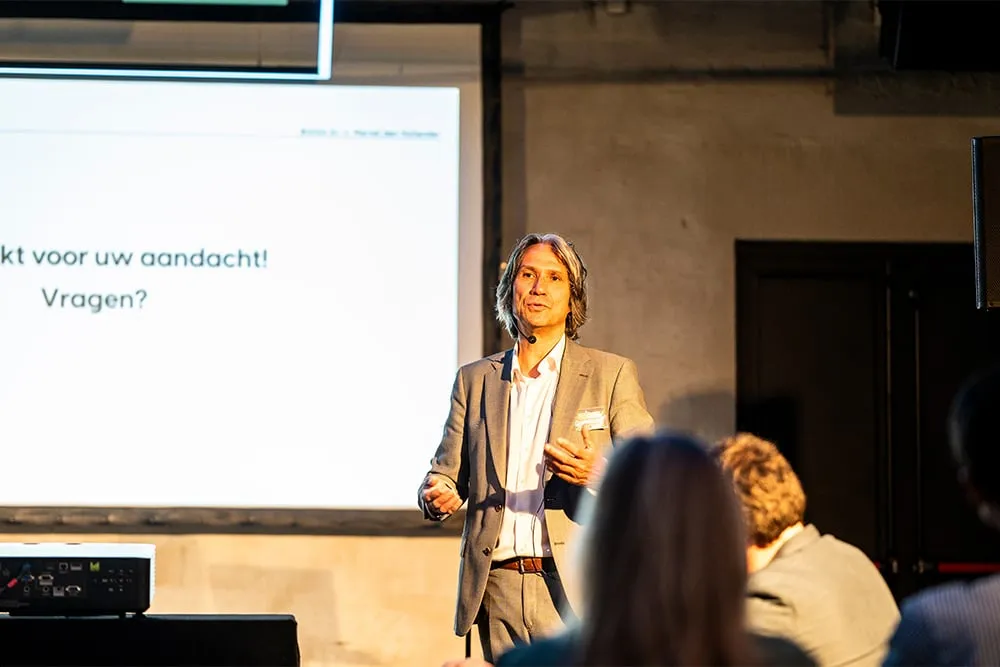
With extensive experience as a designer and valuable insights from scientific research, Professor Marcel den Hollander was the ideal keynote speaker. He immediately captured the room’s attention with some sobering statistics. “99 per cent of consumer purchases become waste within six months. What’s more, 50 to 70 per cent of it is still perfectly functional or edible at that point.” This set the scene for a fascinating talk featuring alternative design approaches and inspiring examples. The audience undoubtedly went away with plenty of ideas and insights to put into practice.
Question about this story? Ask your question
Keep following this
Get an email when a new story is published. No account needed.
- SubjectGeneral







