Moment-resisting connections in timber construction
Research into moment-resisting timber connections
How can we make timber construction more sustainable and circular? It is a broad question that researchers and engineers have been grappling with for years. The answer lies not only in knowledge of materials and building standards. It also calls for experimentation, modelling and creativity. That is exactly what Robbe Celis of WOOD.BE did for the Woodlink project.
Woodlink is a research project by WOOD.BE, the knowledge centre for the timber and furniture industries, in collaboration with the Belgian Bureau for Standardisation (NBN) and the FPS Economy. For the project, Robbe Celis, a civil engineer-architect and timber construction expert at WOOD.BE, is investigating moment-resisting timber connections. More specifically, he is looking for ways to make them more efficient.
Like Robbe, anyone involved in building stability follows the European design codes. For timber construction, this is Eurocode 5. The standard is continually evolving. Existing calculation methods are refined and improved, and new methods are added.
This is one of the ways Woodlink adds value. The project contributes to more accurate calculations that fill a gap in Eurocode 5. It focuses on the economic and environmental benefits of moment-resisting connections: longer spans and reduced material use.
The benefits of moment-resisting connections
Moment-resisting connections are important in timber frame construction for two reasons:
1 An effective means of wind bracing
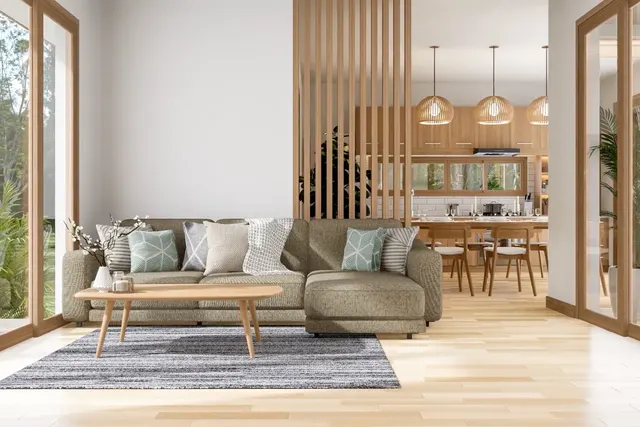
Buildings use walls to resist lateral wind loads. In some situations, it is not always possible to install enough walls, for example where there are wide expanses of glazing or large open spaces. Moment-resisting timber connections offer a solution.
2 High vertical load-bearing capacity
Moment-resisting timber connections also affect vertical load-bearing capacity. Designs that use moment-resisting connections are less reliant on load-bearing walls. This creates more opportunities for open spaces without relying on walls for support.
This leads to the inevitable question: can we build without load-bearing walls using moment-resisting connections?
Building without load-bearing walls
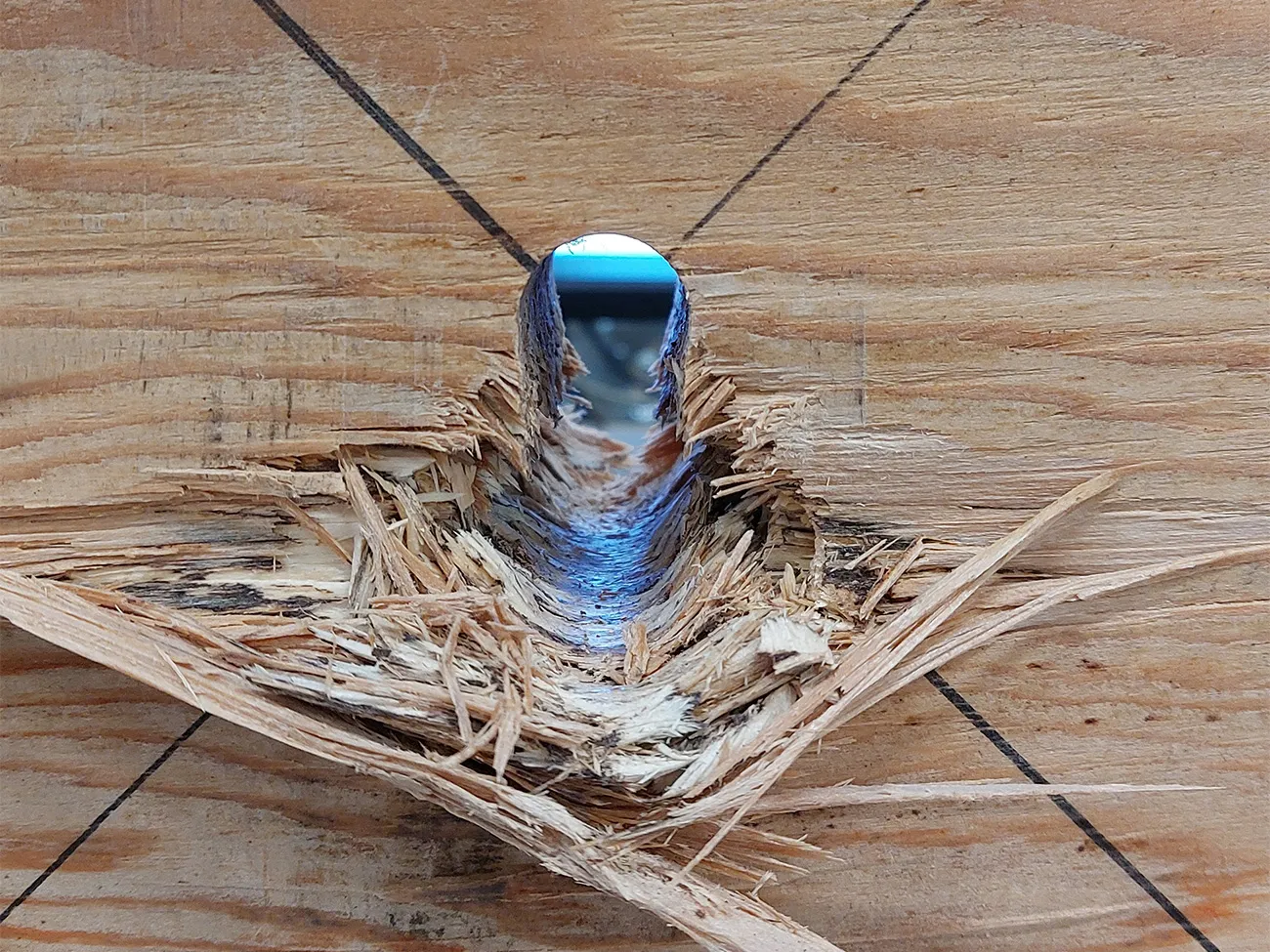
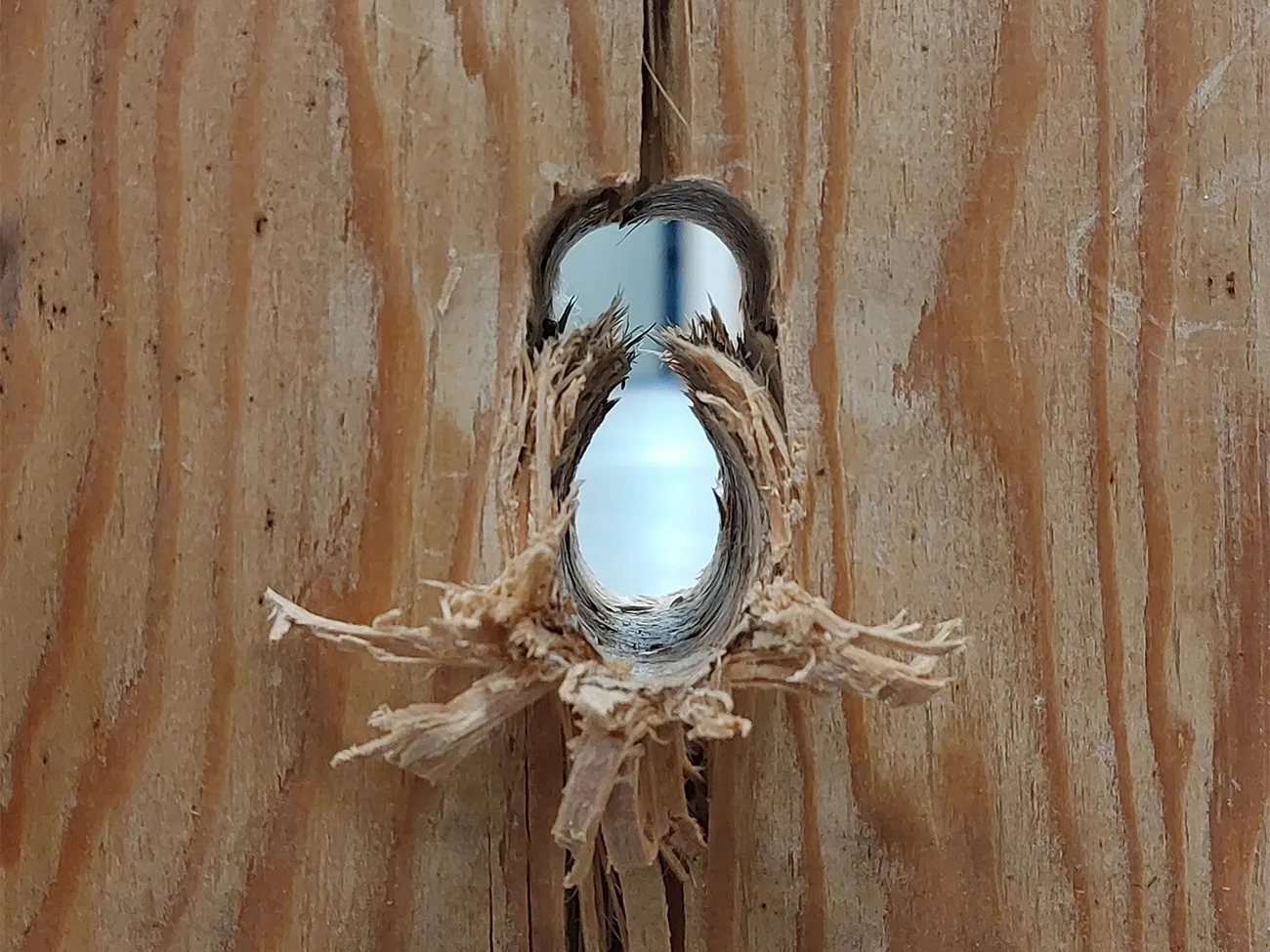
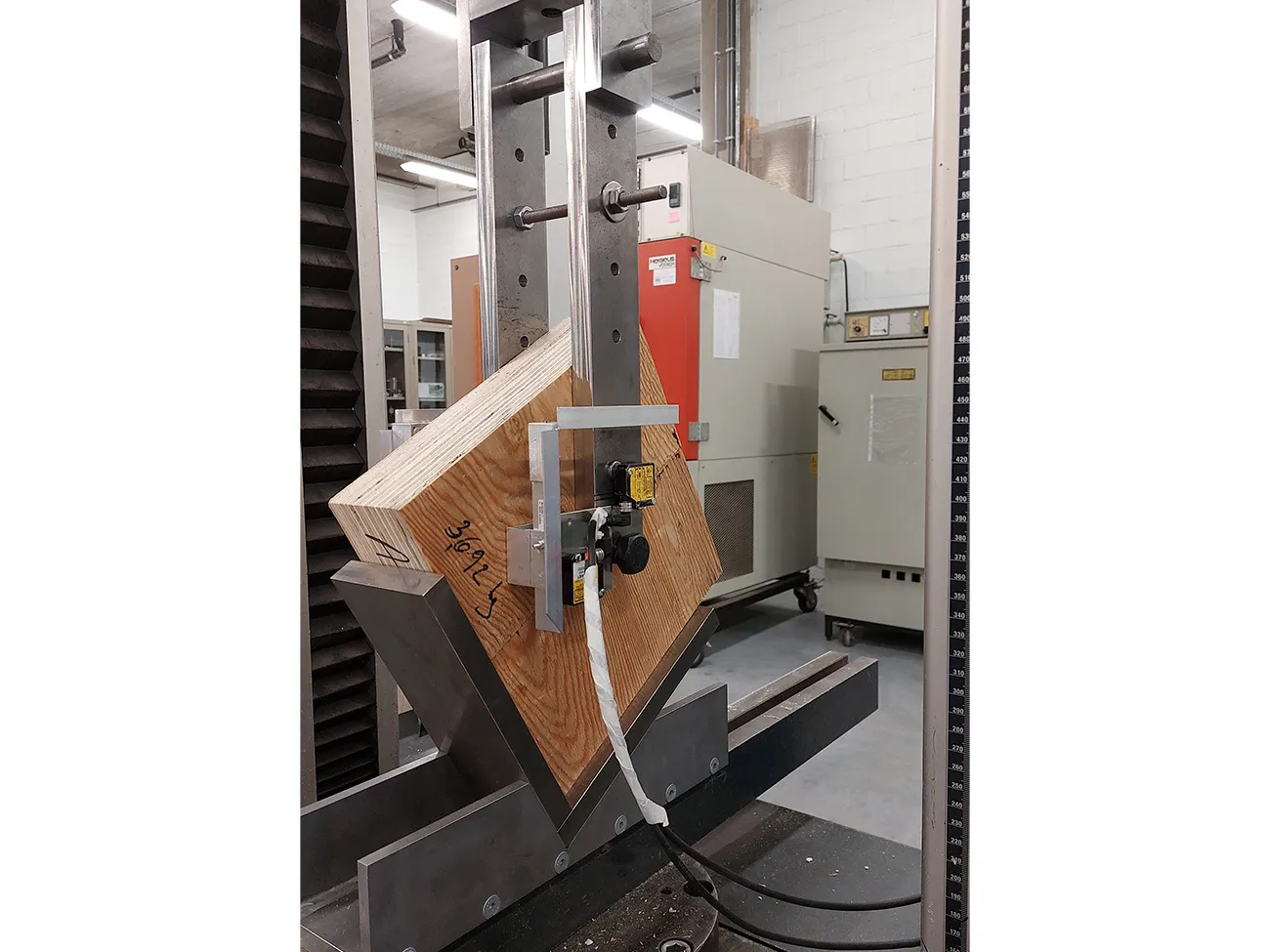
This is a question Robbe explored in his research. He tested different fasteners, screws and nails, in the same type of timber, Laminated Veneer Lumber or LVL. The test results provided a basis for new calculation methods to determine the characteristics of moment-resisting timber connections in different situations.
Woodlink is currently in the pre-normative phase. For now, the work is limited to theory and experiments, with no practical applications yet. The practical aspects will come in a later phase. Based on his measurements and calculations so far, Robbe has shown that moment-resisting connections can achieve spans 20 to 30 per cent longer.
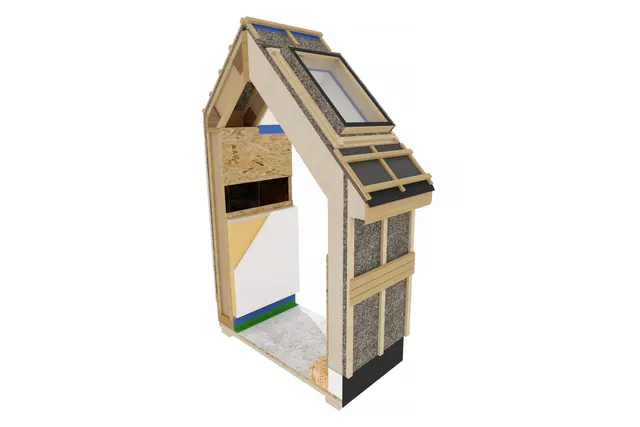
The step towards building without load-bearing walls is a short one. It is a concept that fits perfectly with circular and sustainable construction. A building with load-bearing façades only is highly flexible, allowing its spaces to be adapted to changing needs.
Circular timber construction
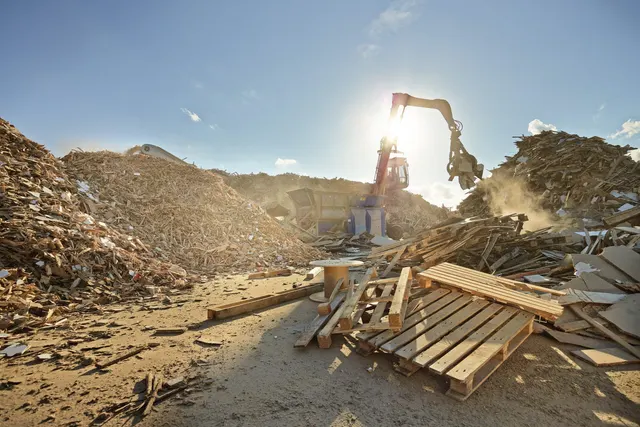
In this way, Woodlink is helping to shape a future-proof approach to timber construction that goes beyond the sustainability of the material itself. Timber is sustainable, but we need to use it wisely. As it grows, as a tree, it stores CO2, which it releases at the end of its life. Keeping timber in the construction cycle for as long as possible therefore has significant environmental benefits.
Designing for disassembly and flexibility is one answer. Rather than using reclaimed timber as a source of energy, we should look for ways to reuse it at a higher value. This brings us back to moment-resisting timber connections. Using screws instead of adhesives or other chemical fasteners makes structures easier to dismantle and reuse. This is another major step forward for circularity in timber construction.
Question about this story? Ask your question
Keep following this
Get an email when a new story is published. No account needed.
- ThemeSustainable and circular timber supply chain
- SubjectWoodworking