Larch: local, robust and versatile
Text Wendy ThijsImage Hout Info Bois, Huisraad
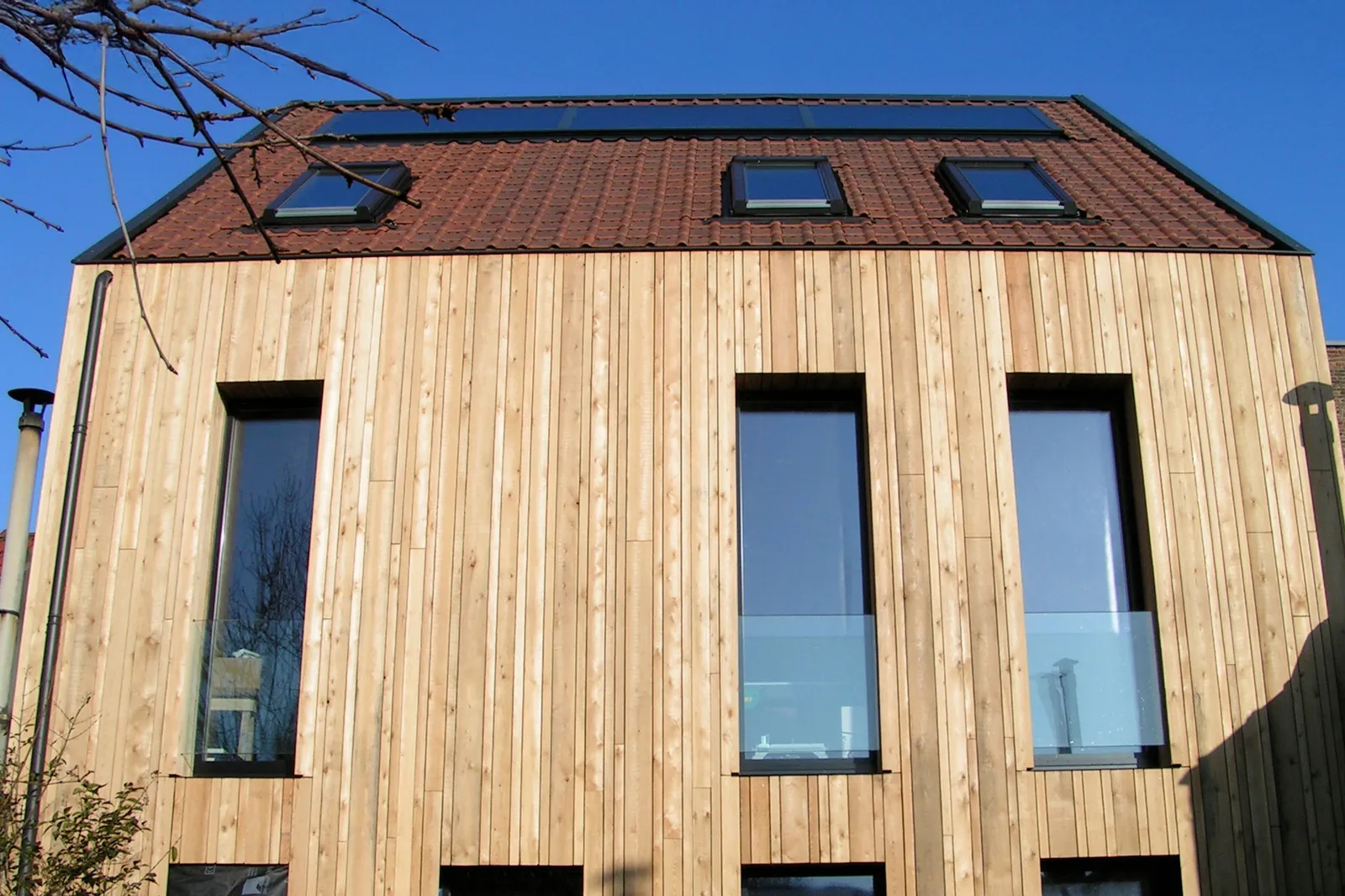
Wood is a heterogeneous material: every species behaves differently. Choosing species you know well is a natural reflex. You know exactly how to work with them to bring your project to a successful conclusion. Yet it pays to consider a different choice too, on ecological, economic and creative grounds. Familiarity breeds preference, so we’re highlighting a wood species well worth discovering: larch.
Like other wood species, larch absorbs CO2 as it grows, and the carbon remains stored in the wood after felling. This helps reduce its climate impact. Larch also grows in Belgium and neighbouring regions. This makes it an especially ecological choice, as the short supply chain keeps transport emissions to a minimum.
Fast-growing
Three varieties of larch are found in Europe: European larch, Japanese larch and a hybrid of the two. Japanese larch was introduced here because it is more resistant to larch canker and bark scorch. The hybrid combines this resistance with faster growth, offering the best of both worlds. Notably, larch is one of the few coniferous species that sheds its needles quickly. In other conifers, the needles generally remain on the tree for longer.
Red, robust and richly grained
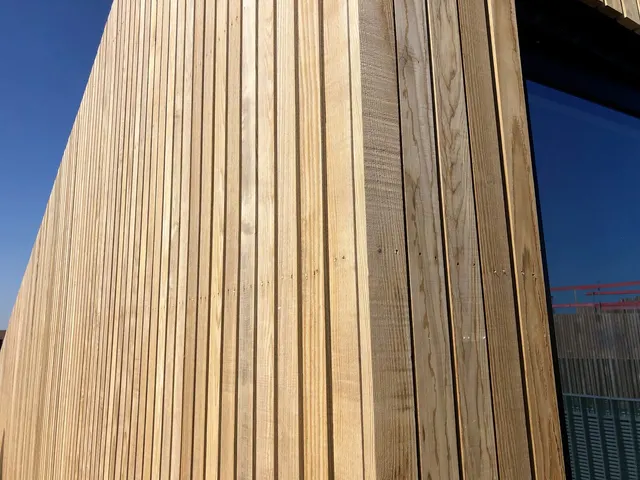
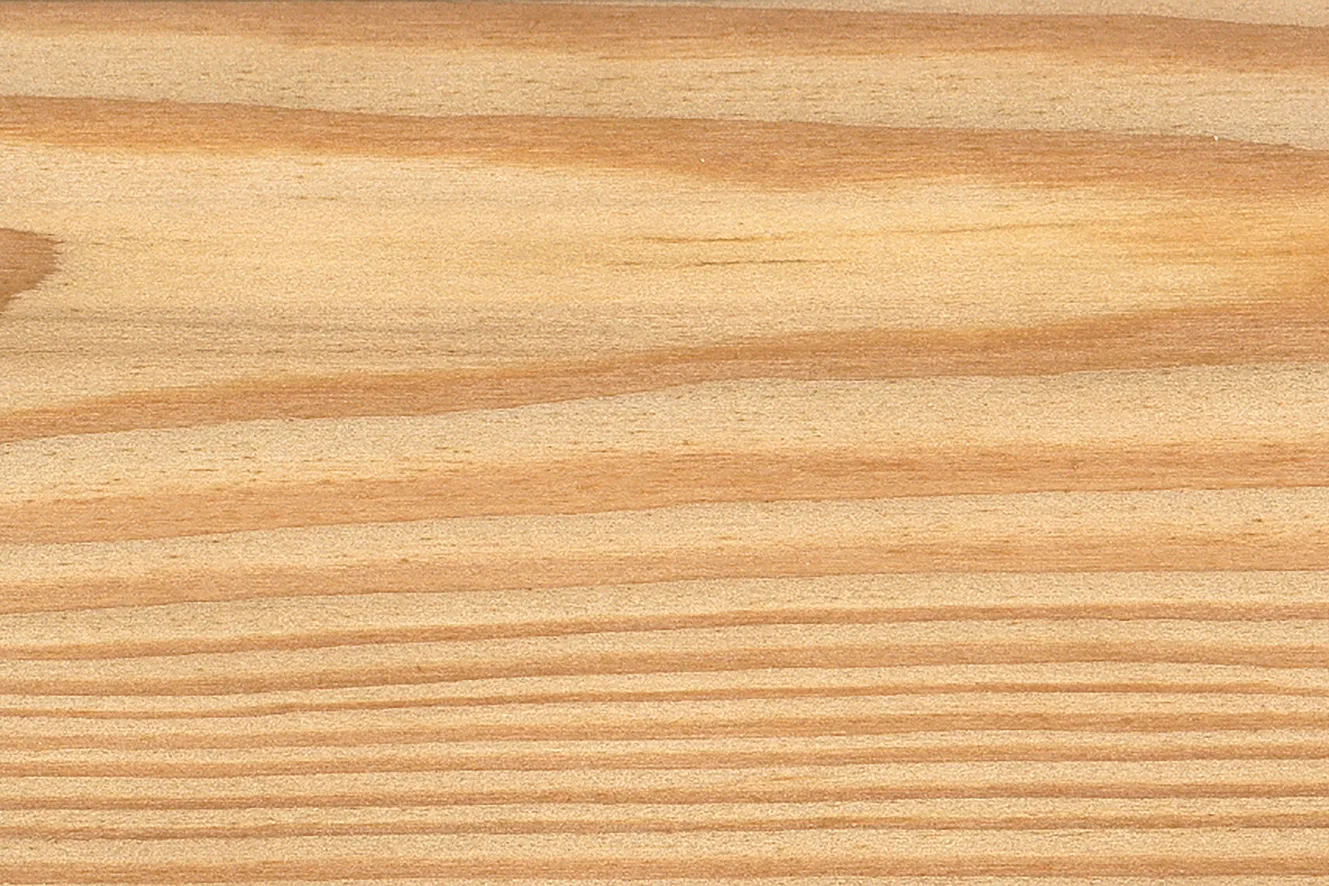
Larch heartwood is a warm, reddish brown, with white sapwood on the outside. Flat-sawn, it displays a beautiful flame figure, while the pronounced growth rings give it a lively texture. The grain is straight and fine, and the contrast between earlywood and latewood adds character.
Despite its rapid growth, larch has the highest density of all European coniferous species, combining strength with workability. It is therefore a surprisingly robust choice within the softwood range.
Suitable for outdoor applications
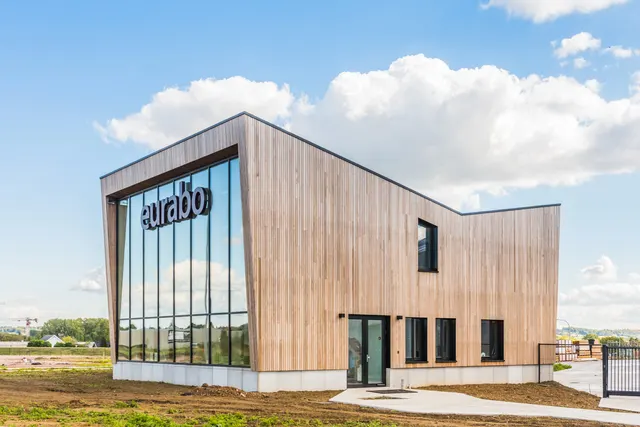
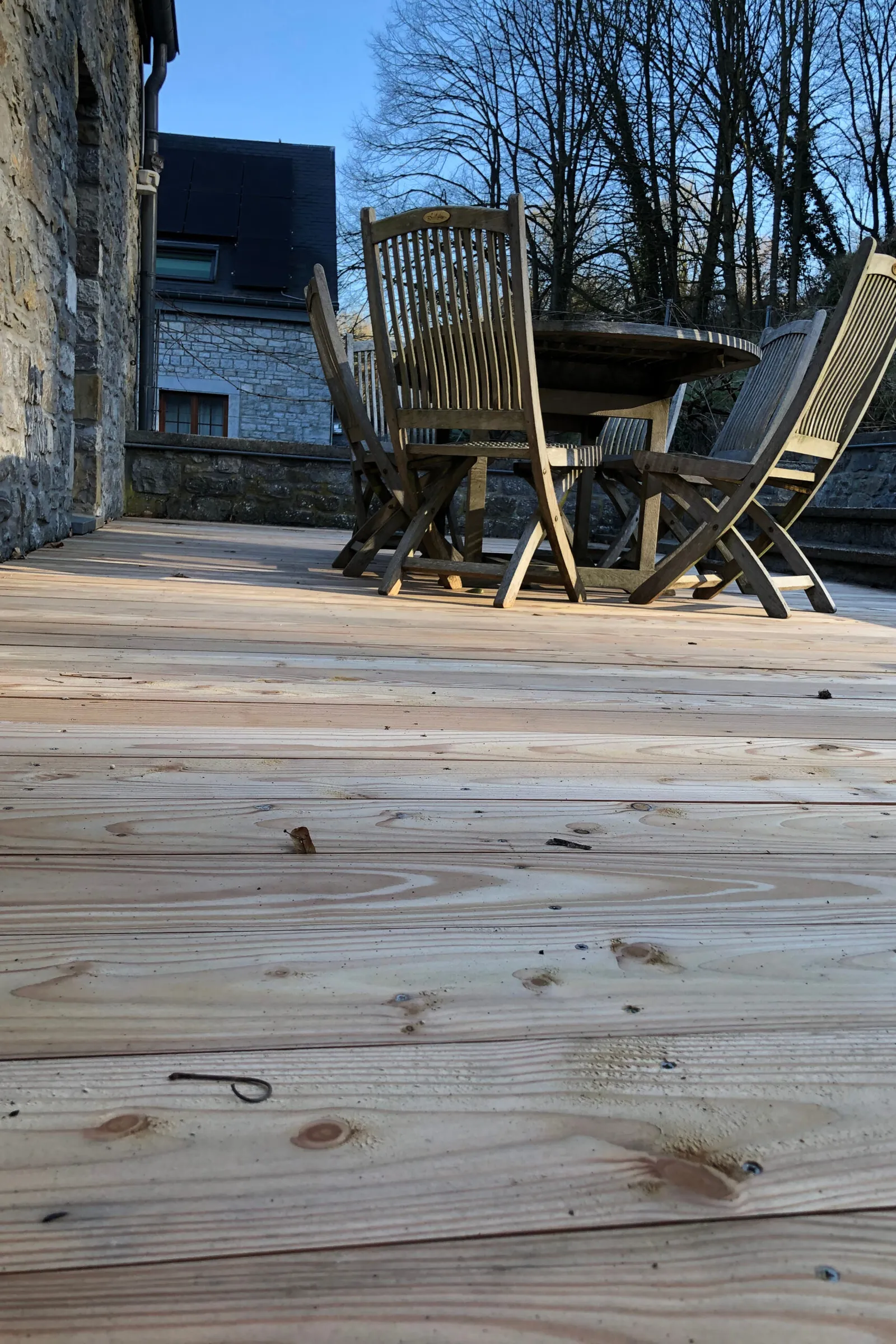
Larch is one of the most durable European coniferous species. It has a natural durability rating of class 3. This makes it suitable for outdoor applications without ground contact or prolonged wetting, provided the sapwood is removed.
Solid larch joinery can sometimes present stability problems, but choosing glulam larch avoids this risk.
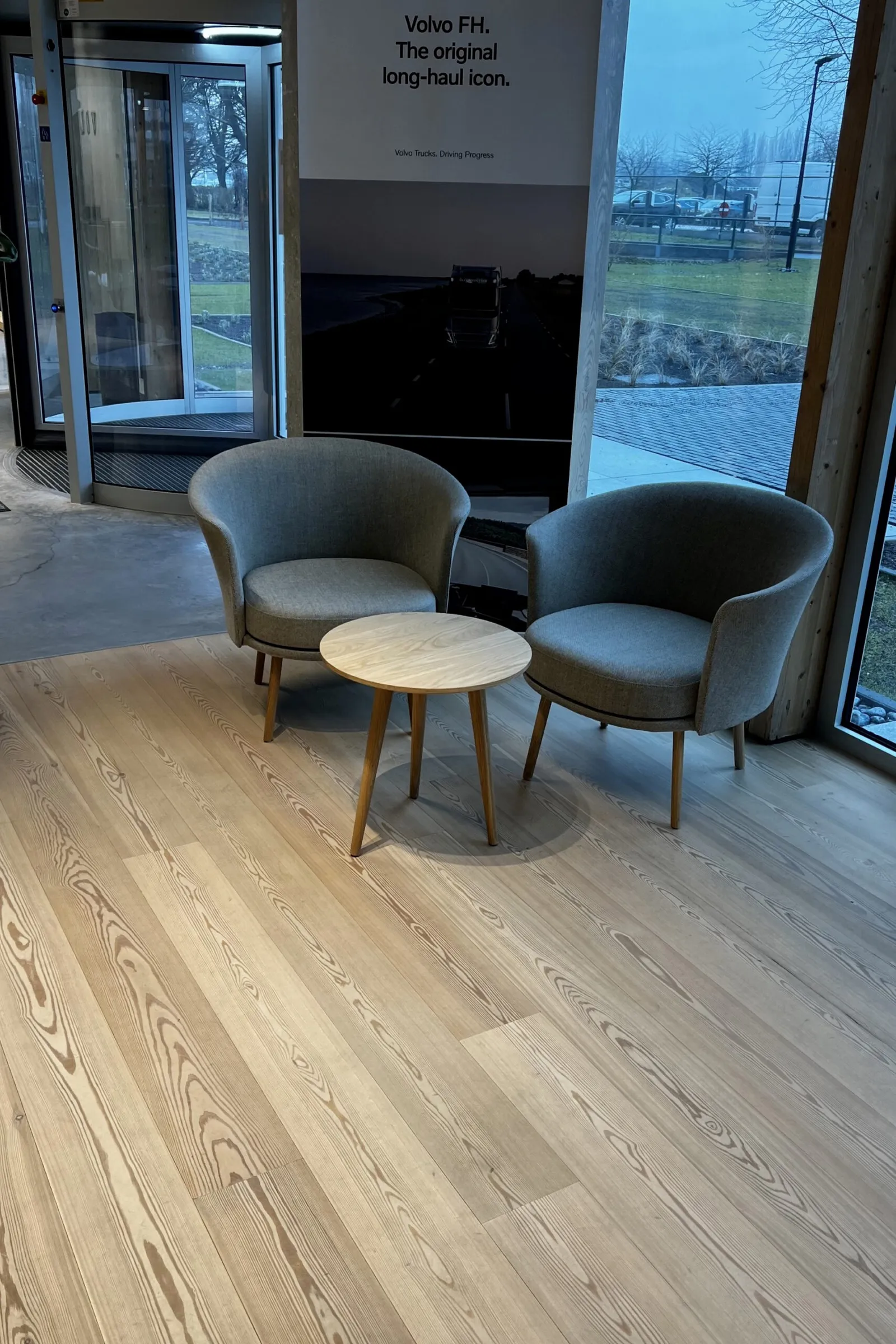
Larch is an excellent structural timber and is also suitable for interior applications such as stairs, plank flooring and furniture. It is also an excellent raw material for sliced veneer, glulam and panel products.
Beware of resin
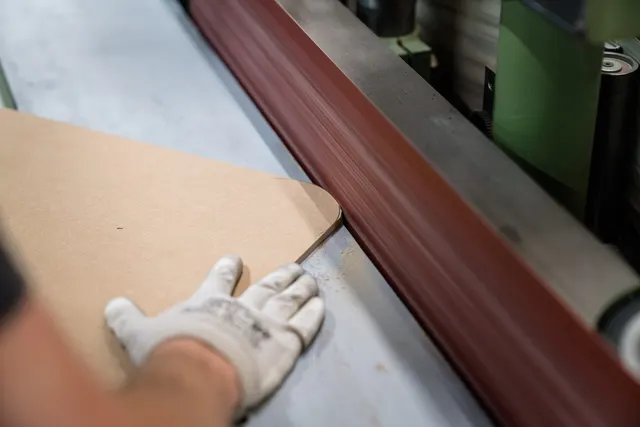
Larch is easy to work, both by hand and by machine. However, its resin content can cause cutting tools to heat up more than usual. Drying and finishing therefore require some care: the wood must be dried slowly enough to allow the resin to drain, and resin-rich areas are best degreased before finishing. The wood sands well, although earlywood fibres may stand up.
For outdoor joinery, the wood is best treated using a C1 process, followed by C2, CTOP or an opaque paint finish.
For specific questions or challenges, you can always contact Hout Info Bois.
Question about this story? Ask your question
Keep following this
Get an email when a new story is published. No account needed.
- ThemeSelecting timber and panel materials
- SubjectWoodworking