Industry 4.0 training programme continues
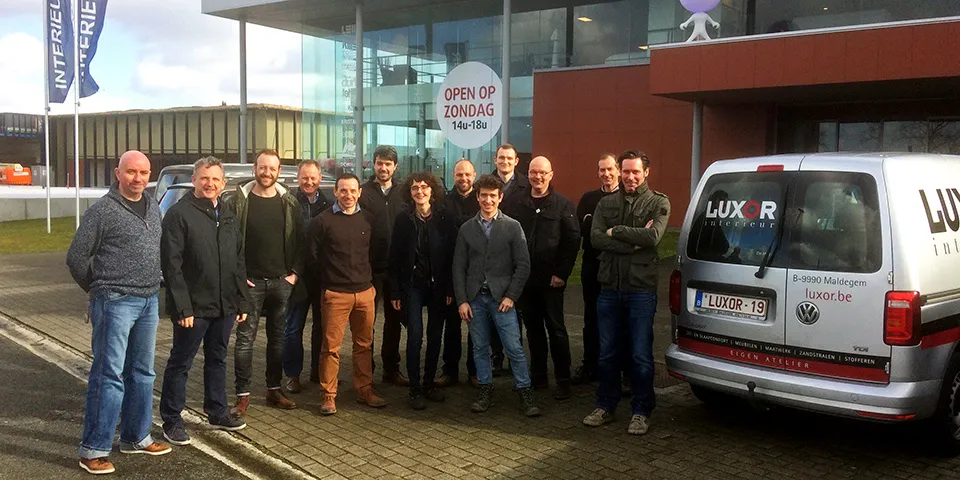
Some participants in the Industry 4.0 training programme were so eager to learn more that Woodwize decided to organise a follow-up project. Four companies from the interior and wood-processing sectors had the opportunity to take part in unique, practical training on LEAN. And it seems to have paid off: participants came away with numerous ideas for making their production and administrative processes more efficient. Four more sessions will take place in the autumn, focusing on turning all employees into ‘problem-solvers’.
Making processes more efficient
Industry 4.0 is a new approach to manufacturing centred on automation, the Internet of Things, metadata and integration. Tom Rombouts, consultant at Woodwize, explains: “The aim is to achieve more cost-efficient production, higher quality and greater flexibility. This directly leads to lower stock levels and less waste, faster deliveries, optimum cost calculations, … Many SMEs are already pursuing these objectives, but are not achieving the results they hope for because they do not take an integrated approach or use the right technologies. Last year, our interactive Industry 4.0 training session already put around fifteen companies on the right track. But some participants wanted to go a significant step further. That is why we decided to set up a follow-up programme. Our partner in this project, Flanders Make, suggested that interested companies take a basic Lean4Growth course. This enabled us to offer a practical response to the demand for greater efficiency in processes. Trainer Christine Wouters also takes a very people-centred approach, which added further value. Getting employees on board with Industry 4.0 is crucial to achieving real results.”
Kulapro also had the opportunity to host a session.
LEAN for everyone
With fifteen years’ experience of LEAN in the automotive sector, civil engineer Christine Wouters knows what she is talking about. What’s more, she has applied the concept in both production and administrative environments. “Although LEAN originated on Toyota’s production floor, it can be applied anywhere,” she explains. “The key is to optimise processes so that work is carried out more efficiently, freeing up time and resources for further growth. SMEs and multinationals in every sector can benefit from applying LEAN principles across all their departments.”
The LEAN course came at just the right time for Casa Vero. The company is expanding and needs to adapt its production flows.
Training on the shop floor
Christine Wouters aims to make the material covered in her courses immediately applicable. And she means that quite literally, as the training takes place on the shop floor. Four companies signed up for Woodwize’s sessions, each taking its turn to host. “Each company has two regular participants, usually the managing director and one of the site managers,” says Christine Wouters. “When a session takes place at their workplace, they can bring along two additional employees. This helps build a degree of employee involvement. At the start of the day, they have to explain to these colleagues what they have learned so far. For me, that is an ideal way to see whether I have communicated the training content effectively and whether they have understood it correctly. This is also a core principle of Job Instruction Methodology, a training method that is covered during the course. We then get started with the training. Participants learn about LEAN and related methods, while also examining processes and developing proposals for improvement. We cover a wide range of topics: how can you identify waste? How do you use 5S correctly, and what pitfalls should you watch out for during implementation? What are TPM, SMED, Kanban and Level Load Planning? How do you use the Value Stream Map technique? How do you achieve a LEAN layout?”
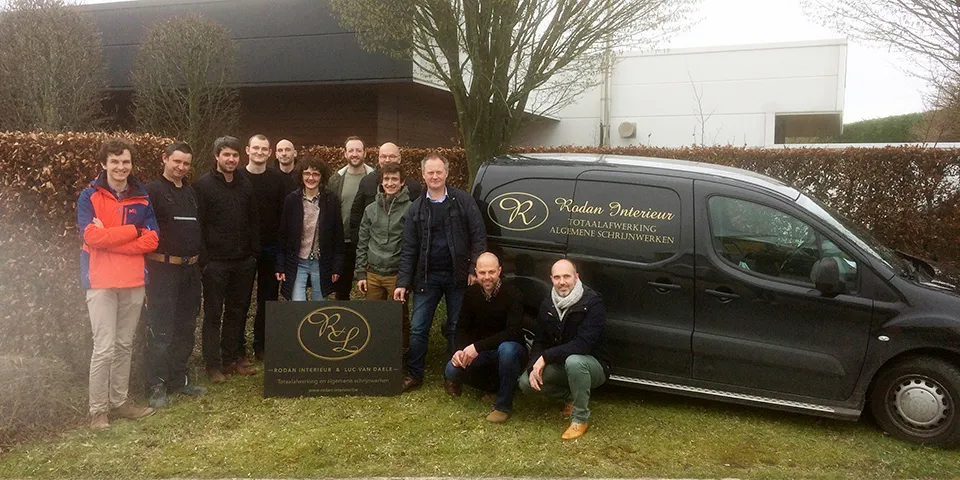
The fourth participant was Rodan Interieur, which also enthusiastically welcomed the other participants and trainer to its workplace.
Ready for the next programme
By putting all this knowledge to the test in practice, participants can immediately spot opportunities for improvement. Christine Wouters says: “It was very rewarding to discover that the host of the fourth session had already made several changes. This was the first time I had delivered my course to people from the interior fit-out and wood-processing industries. They were also the smallest companies I had ever worked with. Even so, their enthusiasm and eagerness to learn were tremendous. It was a real pleasure working with them, and I am already looking forward to the next programme. The second programme will focus on JIDOKA, and therefore on employees. In short, it is a course on techniques for turning all your people into problem-solvers. This is particularly relevant in the context of Industry 4.0, as it helps employees and new technologies work together even more closely.”
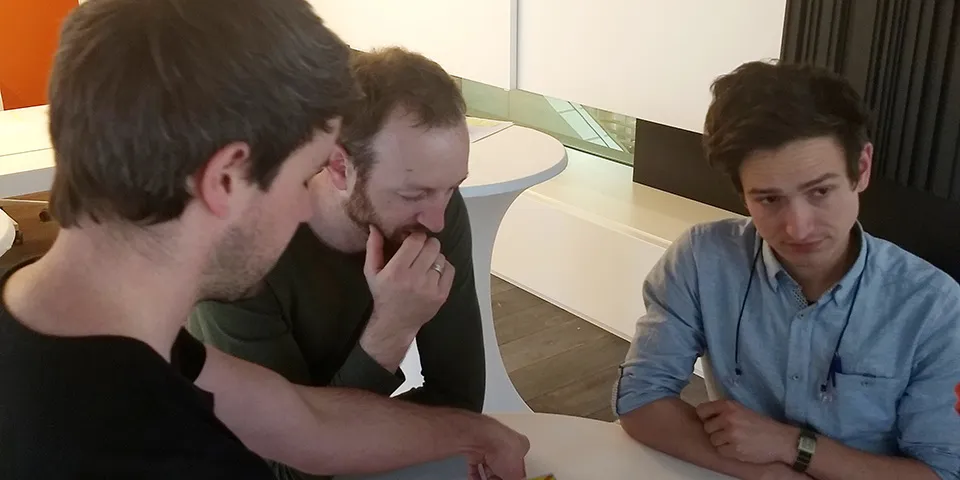
Christine Wouters aims to make the material covered in her courses immediately applicable.
A course that makes a difference
One of the four participants was interior design company Casa Vero. “We are currently expanding, which means we need to adapt our production flows,” says managing director Rob Verboven. “Woodwize’s LEAN training came at just the right time. The course actually exceeded our expectations: it was a particularly interesting and, above all, practical introduction to the concept. It was also enjoyable and informative to share the experience with three other companies. In short, it was a successful initiative that taught us a great deal. So much so that we have already implemented the 5S principles at some workstations. We will also be introducing visual management shortly. That proves this course delivered real value.”
The course is practical in its approach: here, participants practise the pull method.
A supportive initiative
Two representatives from Flanders Make also took part in the training. “We had previously worked with Lean4Growth to introduce the ‘flow manufacturing’ philosophy at other companies,” says research engineer Bart Van Doninck. “It has always worked particularly well because Christine Wouters supports the theory with relevant examples. Thanks to the practical approach, participants come away a significant step closer to optimising production. My own work involves daily research into flexible assembly cells, where a wide range of product variants can be made in small batches. This concept has a lot in common with the made-to-measure work that participants on the Woodwize course have to deal with. That is why I thought it would be useful to take part in the training. It gave me a better understanding of both the principles of flow manufacturing and the wood sector. This means Flanders Make can tailor its research and services to the needs of these companies. We are therefore very pleased with Woodwize’s initiative. It supports our efforts to help the manufacturing industry through the digital transformation needed to secure sustainable production in Flanders.”
Question about this story? Ask your question
Companies in this story

Keep following this
Get an email when a new story is published. No account needed.
- ThemeStrong and safe trade businesses
- SubjectJoinery
- CompanyWoodwize