Flemish designers create design objects from wood waste
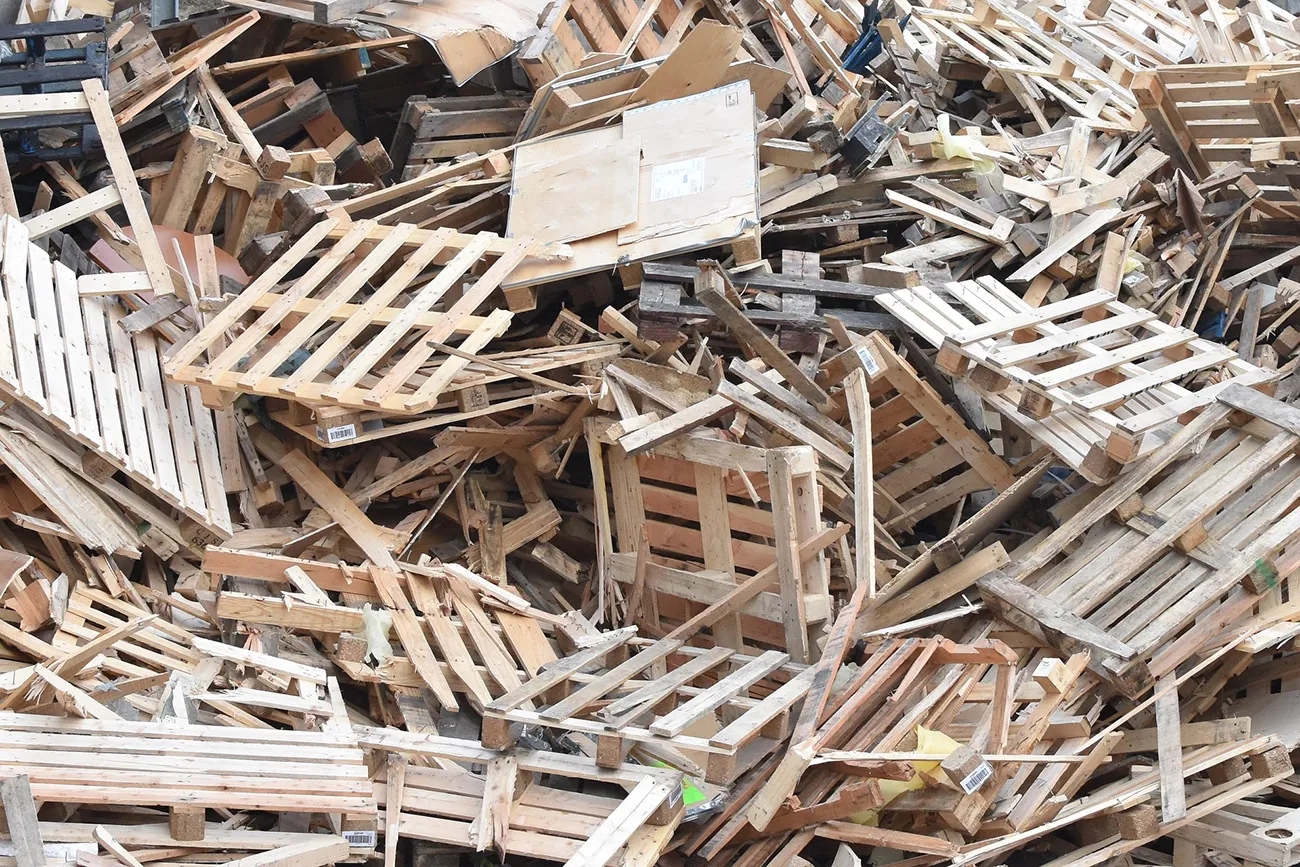
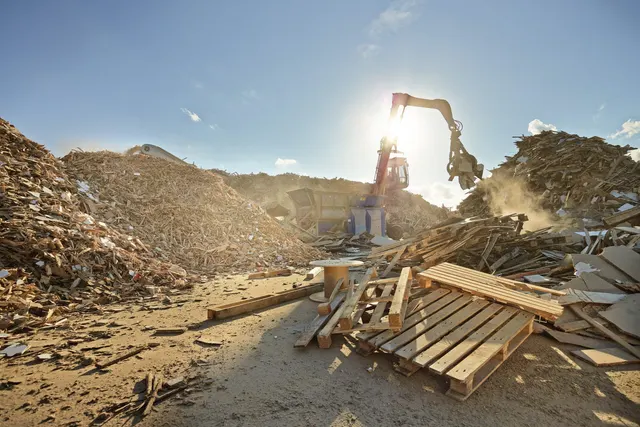
Through the WOOD-DESIGN project, BOS+ challenged five designers to work with the residual wood streams of five wood-processing companies. With guidance from BOS+, Hout Info Bois, Flanders DC and Vlaanderen Circulair, they set out to find a new, sustainable purpose for waste wood. The participants’ award-winning and innovative designs will be on display in the Salon Catharina period room at Design Fest Gent from 22 April.
Participating designers and their designs
1. Studio Plastique
Archibald Godts and Theresa Bastek worked with less popular timber species available from Houthandel Vercruysse.
By choosing these less popular species, the designers hope to highlight the current problems of overexploitation and commercial preference, and offer an alternative.
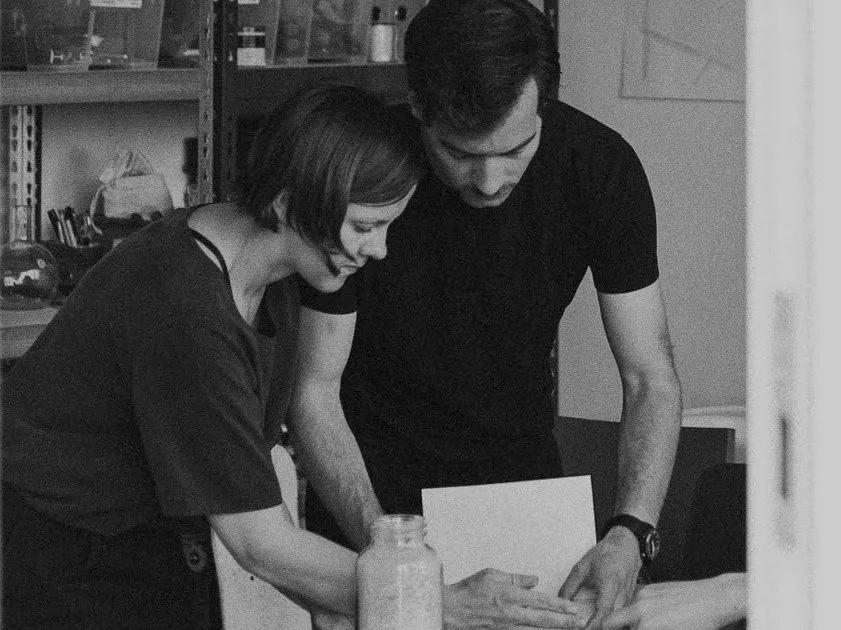
“The forest is an ecosystem of balanced diversity. This diversity generates a range of products that can be harvested sustainably from the forest, if we embrace this potential. The opposite scenario, planting trees in the form of plantations, disrupts the balance, making these environments susceptible to pests and diseases, as well as vulnerable to climate change,” the designers tell us.
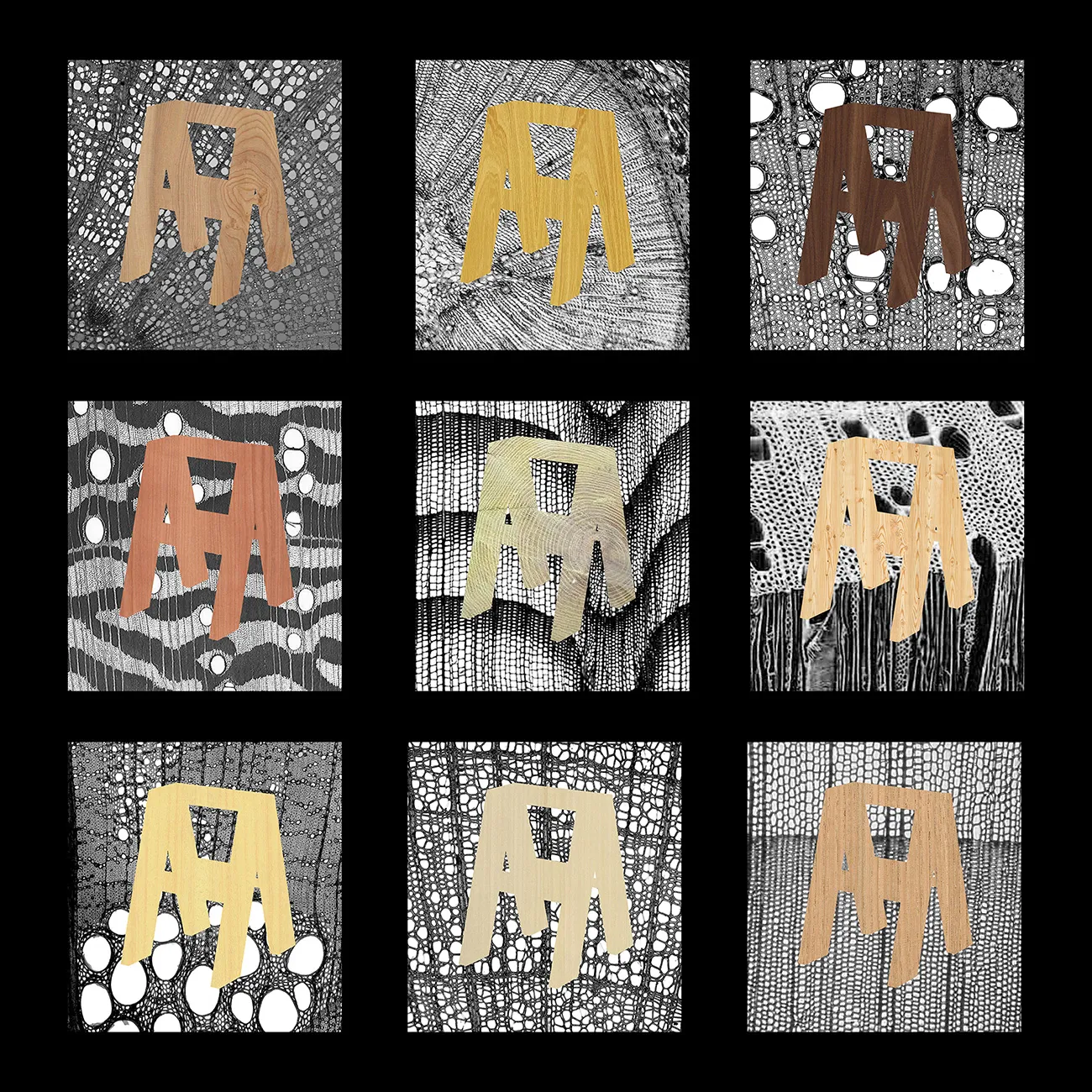
+52 is a wooden step stool, a highly functional item that can serve as either a small ladder or a seat. The object can be made from different wood species, allowing it to embody and showcase the inherent properties of each one. “+52 proposes challenging the use of overexploited wood species, reconsidering it and making more sustainable choices, aesthetically, economically and ecologically,” the designers explain.
2. Nauwau
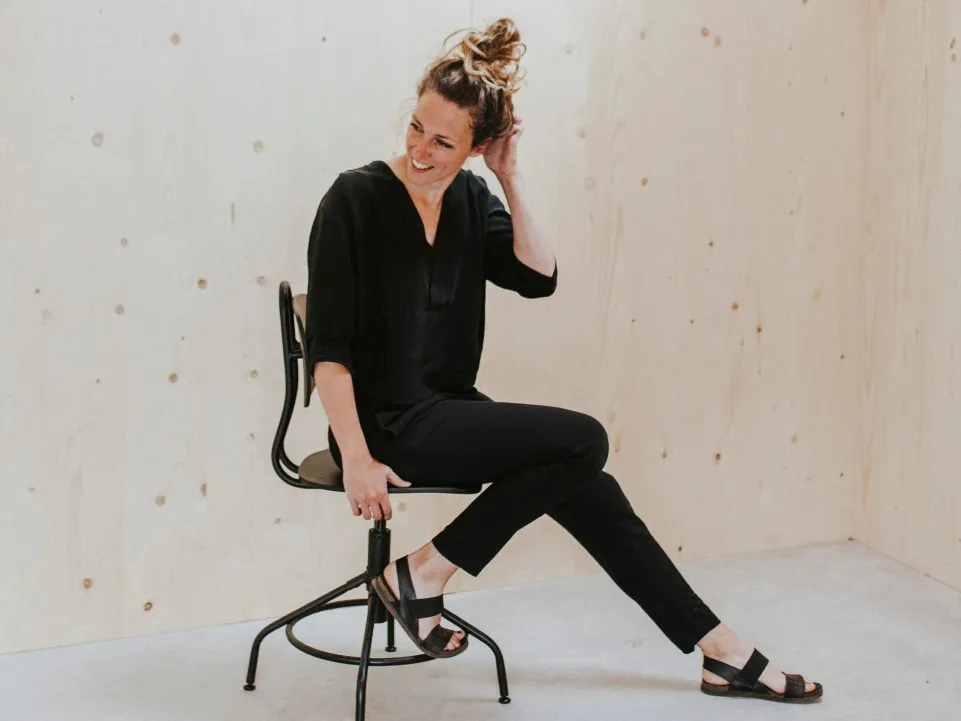
Rayah Wauters examined the existing imbalance between supply and demand in the timber sector, an issue that she regularly encounters, as does forest manager and WOOD-DESIGN project partner Marc Goossens.
“The problem is not so much the imbalance between supply and demand, but the fact that supply and demand barely find each other, if at all,” Rayah explains.
Wood available in volumes that are too small, left over after the high-quality lower trunk has been sold, or damaged by fungi, is of no interest to the traditional sector. However, a new generation of makers is eager to work with this kind of local timber.
The problem, however, is that supply and demand for these types of wood are not aligned. To address this, Rayah developed ‘timbr’, a digital platform that connects wood suppliers and buyers. As well as its commercial function, the platform is a place to share information, inspire and promote the use of local timber.“Timbr connects trees with builders,” Rayah sums up.
3. Ellen Comhaire
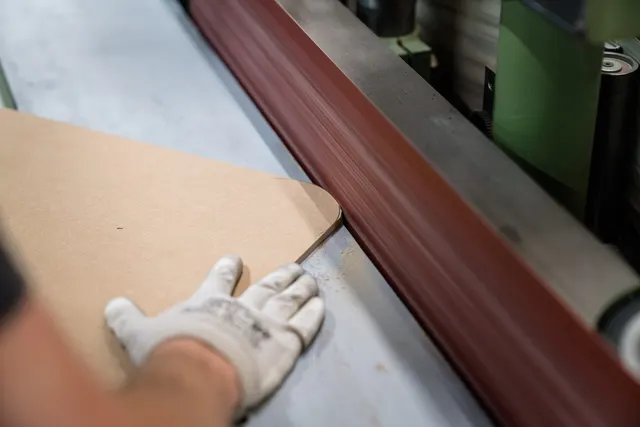
Ellen experimented with different types of natural binders for making boards. Existing board materials are often still held together with binders containing harmful fossil-based substances. ”Many board materials contain formaldehyde, a carcinogenic volatile organic compound that is released at room temperature. We have lost our connection with our materials and no longer realise what we are bringing into our homes,” Ellen explains.
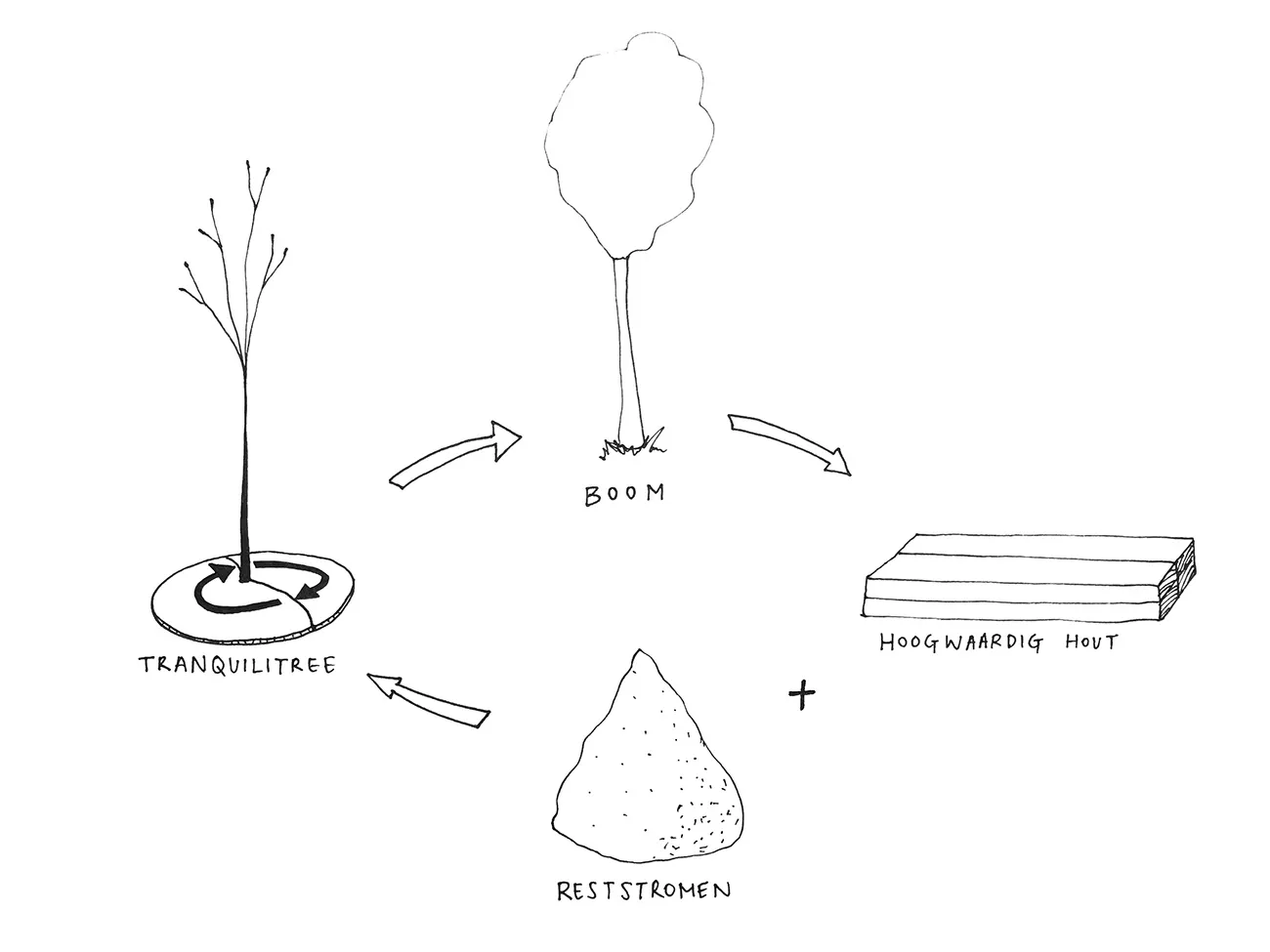
Inspired by wood’s circular process, Ellen pursued a new direction after her research into binders: using a woody residual stream from IDE Woods, she developed an innovative, sustainable tree mat, Tranquilitree.
”Tranquilitree gives trees a peaceful start after planting, thanks to improved moisture regulation and extra nutrients, and gives their owners peace of mind too, as they no longer need to keep the area around the tree clear,” Ellen says.
4. Utilise.Objects
Giel Dedeurwaerder and Brent Neve developed two projects. For the first, the designers worked with residual material from a less popular wood species: poplar. This wood has a negative connotation in the construction and timber sectors, partly because of its softness. The designers carried out various treatments on the wood and managed to densify the surface of the boards, creating new applications for the material. “Poplar is our blank canvas. We want to find new market potential for a historically familiar tree,” the designers explain.
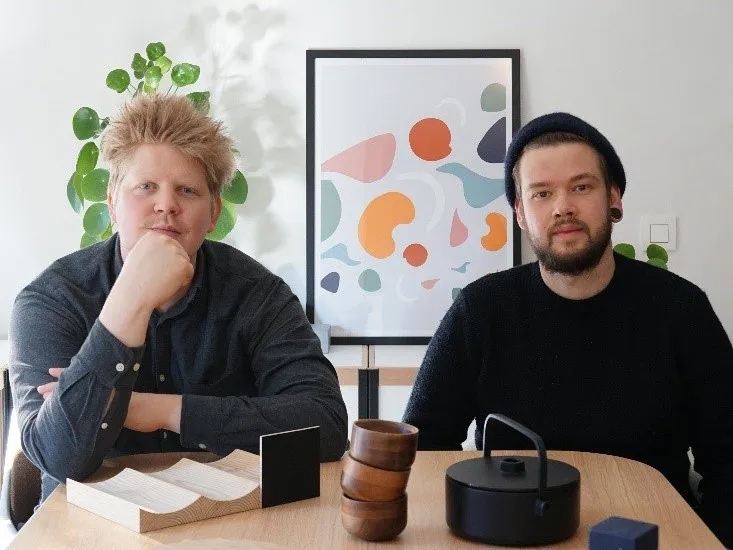
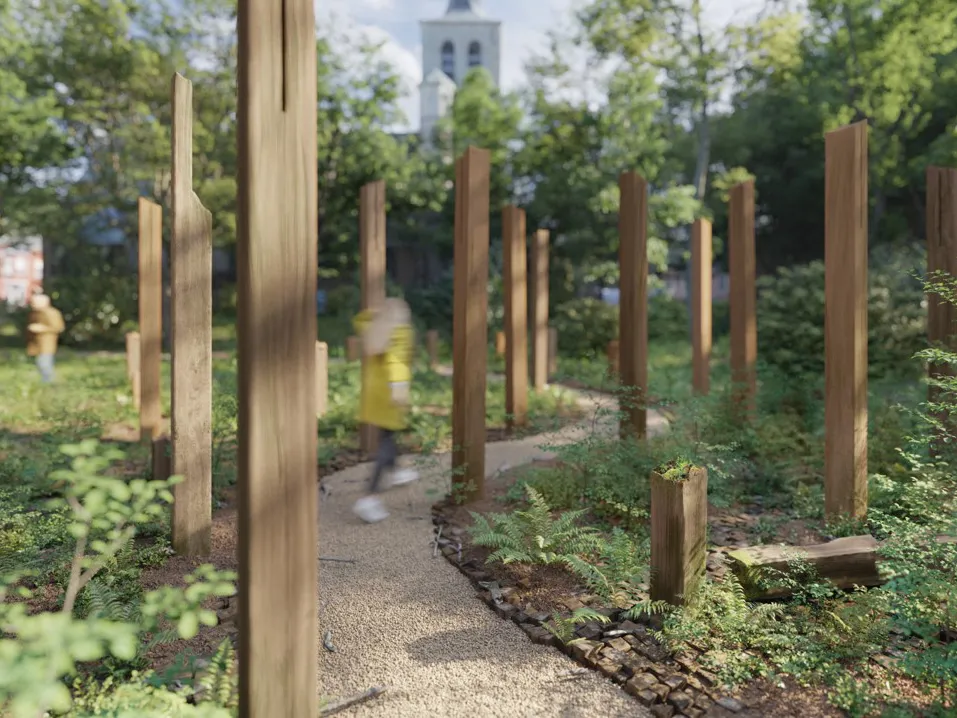
For their second project, the duo focused on wood’s contribution to biodiversity in forests, cities and gardens. Using residual material from Cohout, the designers developed several products that support biodiversity in an urbanised environment. Utilise.Objects won a bronze Henry van de Velde Award for this project. “Designing products for our own gardens from wood waste that strengthens biodiversity and makes an aesthetic contribution to our surroundings,” the duo sums up.
5. Frederik Delbart
During his visit to Thys Hout in Kapellen, Frederik was struck by the raw beauty of stacked solid oak. The designer wanted to preserve the abstract purity and complex simplicity of these compositions and combine them with the solid form language of a butcher’s block or dining table to create a kind of primordial object, so sturdily constructed that it could easily stand the test of time. “My role as a designer was to capture the beauty of this material and translate it into an object in which it can be fully expressed…” Frederik explains.
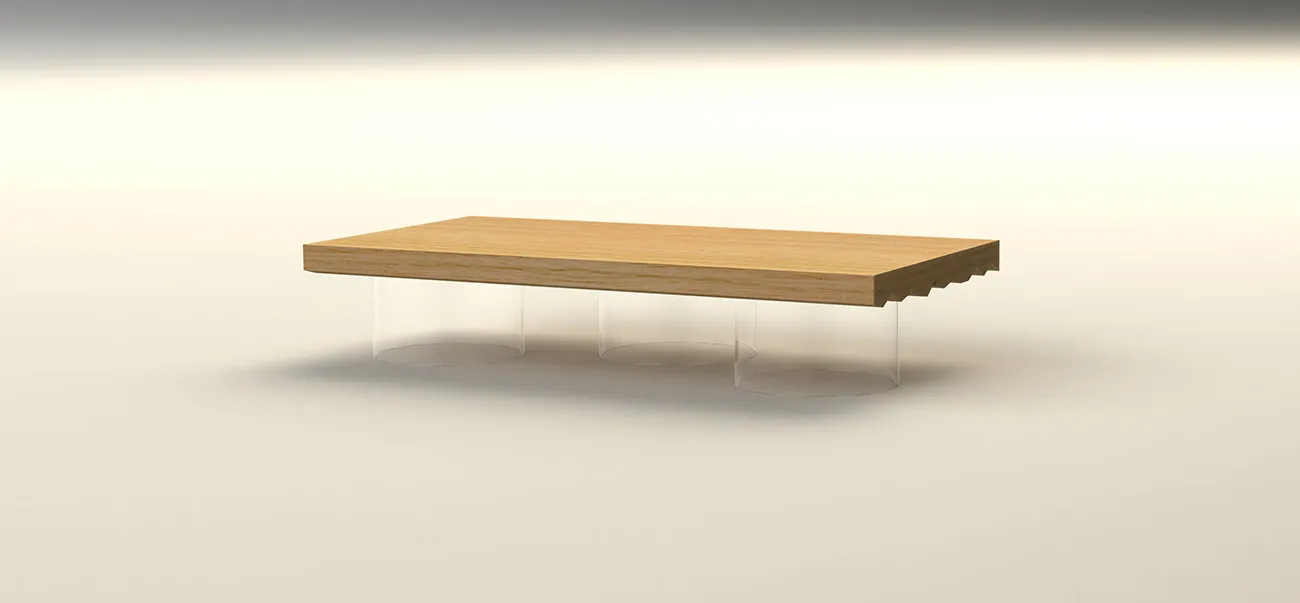
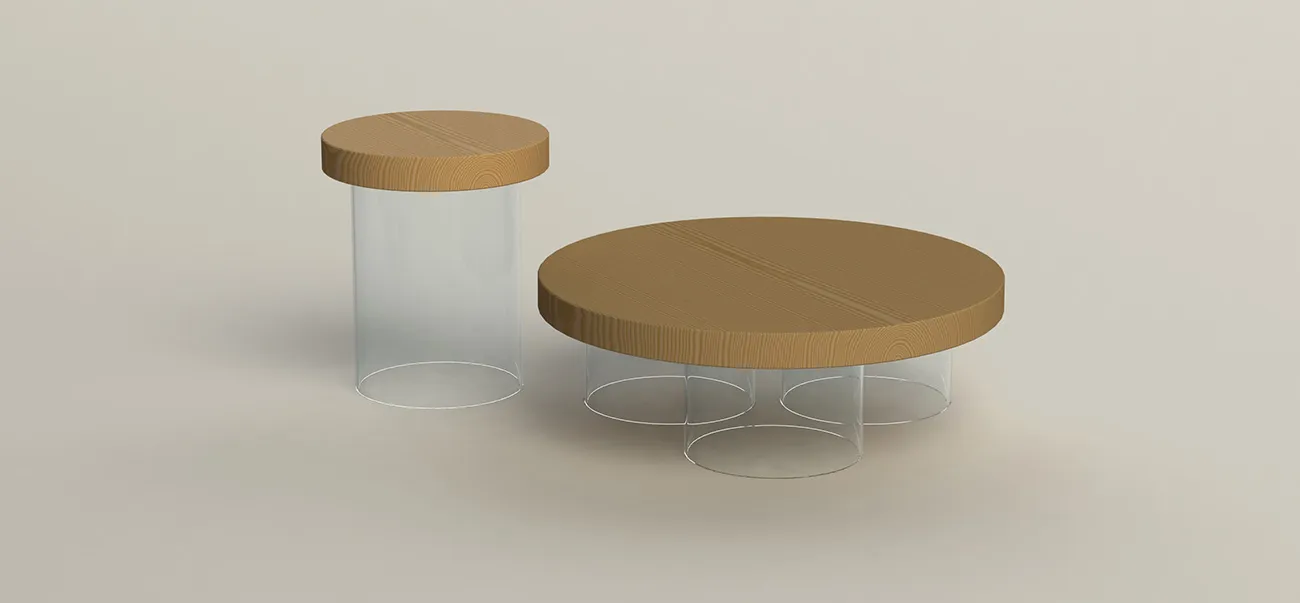
For the “THE EDGES OF THE TREE” collection, the designer used only the smallest pieces of waste wood he could find at Thys Hout. For the other model, called “THE WHIMSICAL TREE ”, he worked with longer pieces of waste wood and laid them side by side as they are stacked, leaving the “imperfect” side visible at the bottom.
“Every tree is unique, and the same is true of every table we make from one. By looking at waste streams differently, with wonder and admiration for the irregularities and shapes that emerge where nature and industry meet, I arrived at two different results,” the designer says.
More about WOOD-DESIGN
Against a backdrop of growing pressure on forests worldwide, and with a view to using wood efficiently, the nature organisation BOS+ developed the WOOD-DESIGN project in collaboration with partner Hout Info Bois from the timber sector and Flanders DC from the design world, with financial support from Vlaanderen Circulair. The project aims to challenge the design world to work with woody residual streams from local timber companies.
“Making optimum use of local timber is one of the many steps needed to combat global warming,” says Dries Van der Heyden of BOS+.
In May 2020, BOS+ issued a call for designers to take part in WOOD-DESIGN. No fewer than 64 submissions were reviewed, and 5 designers were ultimately selected based on factors including their experience and vision for sustainable design. Partner Hout Info Bois was responsible for selecting wood-processing companies from the primary timber sector. These are companies specialising in forest management, sawmilling and timber trading.
Question about this story? Ask your question
Keep following this
Get an email when a new story is published. No account needed.
- ThemeSustainable and circular timber supply chain
- SubjectWoodworking