Which worktop is right for you?
“The choice of worktop determines the mood and style of the kitchen”
It has long been no secret that a kitchen worktop is an important part of the kitchen. Nor is it news that worktops come in a range of materials, thicknesses and colours. What is equally obvious, however, is that consumers choosing a new kitchen are often unaware of these things. Clear communication about the pros and cons and the specific properties of each material is therefore essential. Everything needs to come together.
Which kitchen worktop is the best choice? It’s a question that’s impossible to answer definitively, so giving a suitable response is no easy task. And yet, as a kitchen specialist, it’s up to you to do just that. A worktop is one of the most important elements in the kitchen. It is the largest ‘appliance’ in terms of surface area, and therefore also the one that has to withstand the most wear and tear. Take the time to discuss the customer’s expectations of the worktop in detail, and don’t rush into recommending a particular material. When asked what they expect from their worktop, customers will probably say it should be easy to maintain, hygienic and durable. But the list of possibilities is of course much longer. So make sure you discuss the material, shape, height and more during every conversation.
Rounded edges
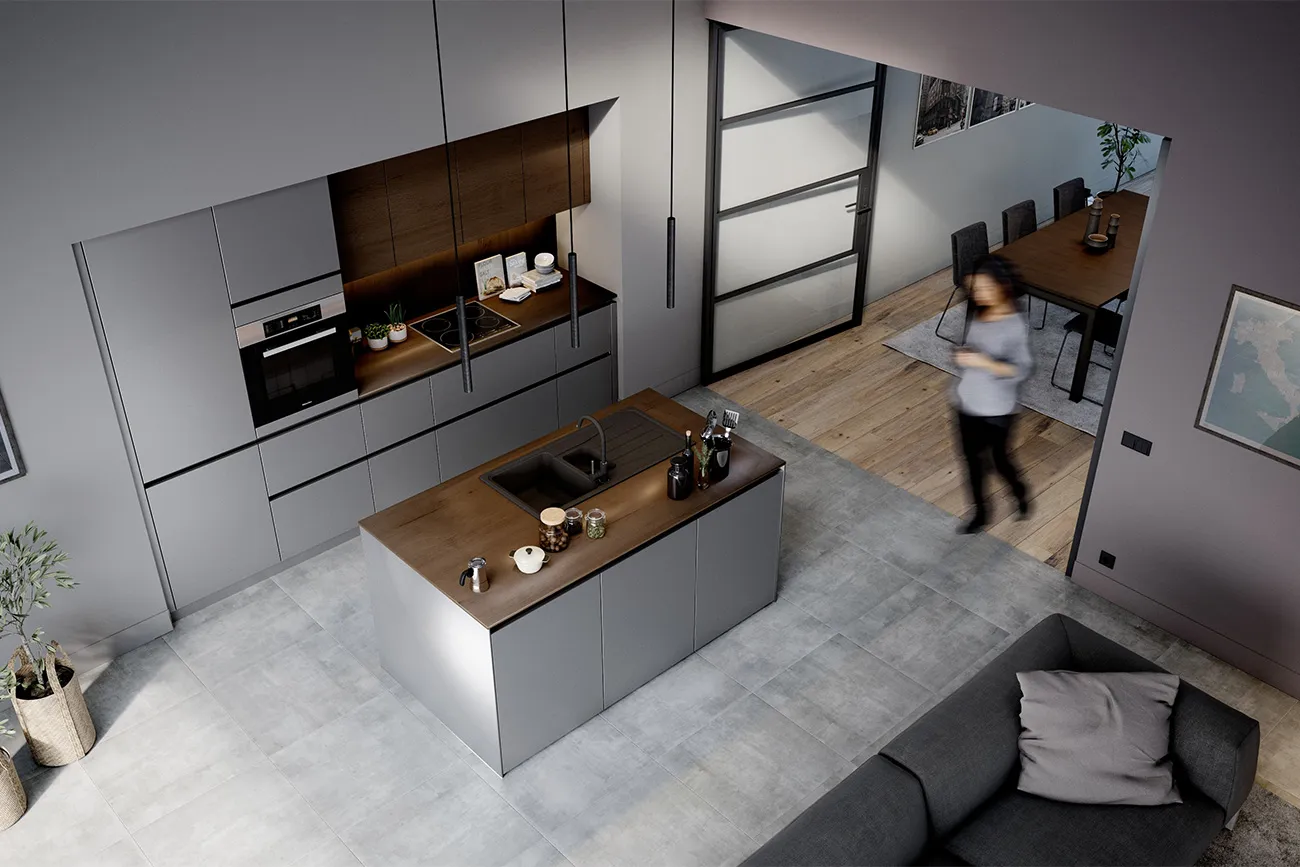
A worktop is always made to measure. The cliché really is true: every home is different, so every kitchen is different, and the people who live in it are different from their neighbours too. That is what makes every kitchen so unique, and why it is vital to give the worktop the attention it deserves, alongside the sink, kitchen tap and, of course, all the appliances.
We are seeing the cautious emergence of rounded kitchen islands. Following the trend for round sofas, rugs, tables and the like, curves are now making their way into the kitchen too. Straight lines have become boring, and we want to bring more life into the kitchen. An added benefit is the extra safety provided by rounded corners when young children are moving around the house, and therefore the kitchen.
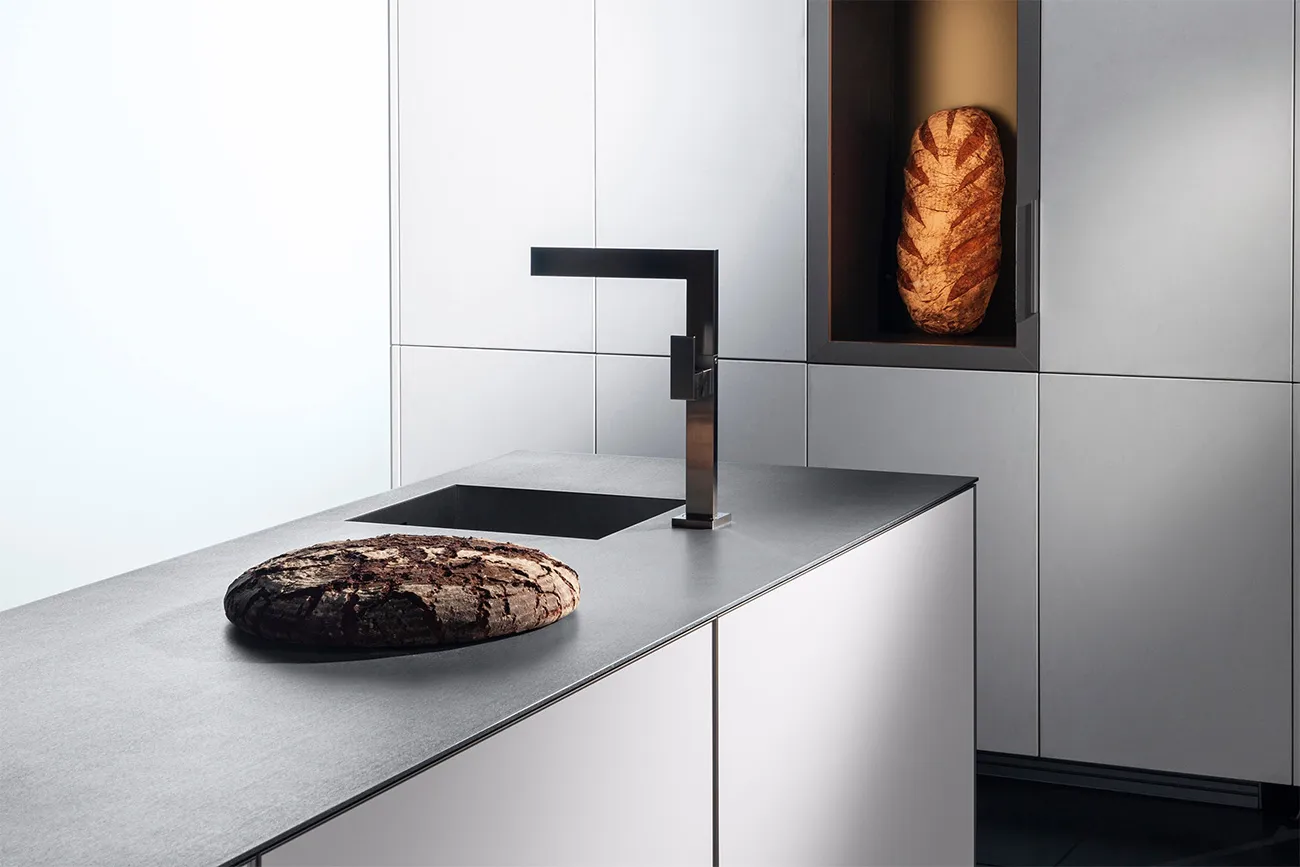
Up and down
The height of the worktop is important for ergonomics. It would be a shame to be working at a worktop and realise it should really have been a little higher to be ideal. There is of course a standard height, but this can be adjusted to suit individual preferences. The best approach is to put it to the test and carry out a few tasks at a worktop, such as the everyday activities involved in preparing a meal, like chopping vegetables and stirring pots and pans. Only then will you know which height really works for your customer.
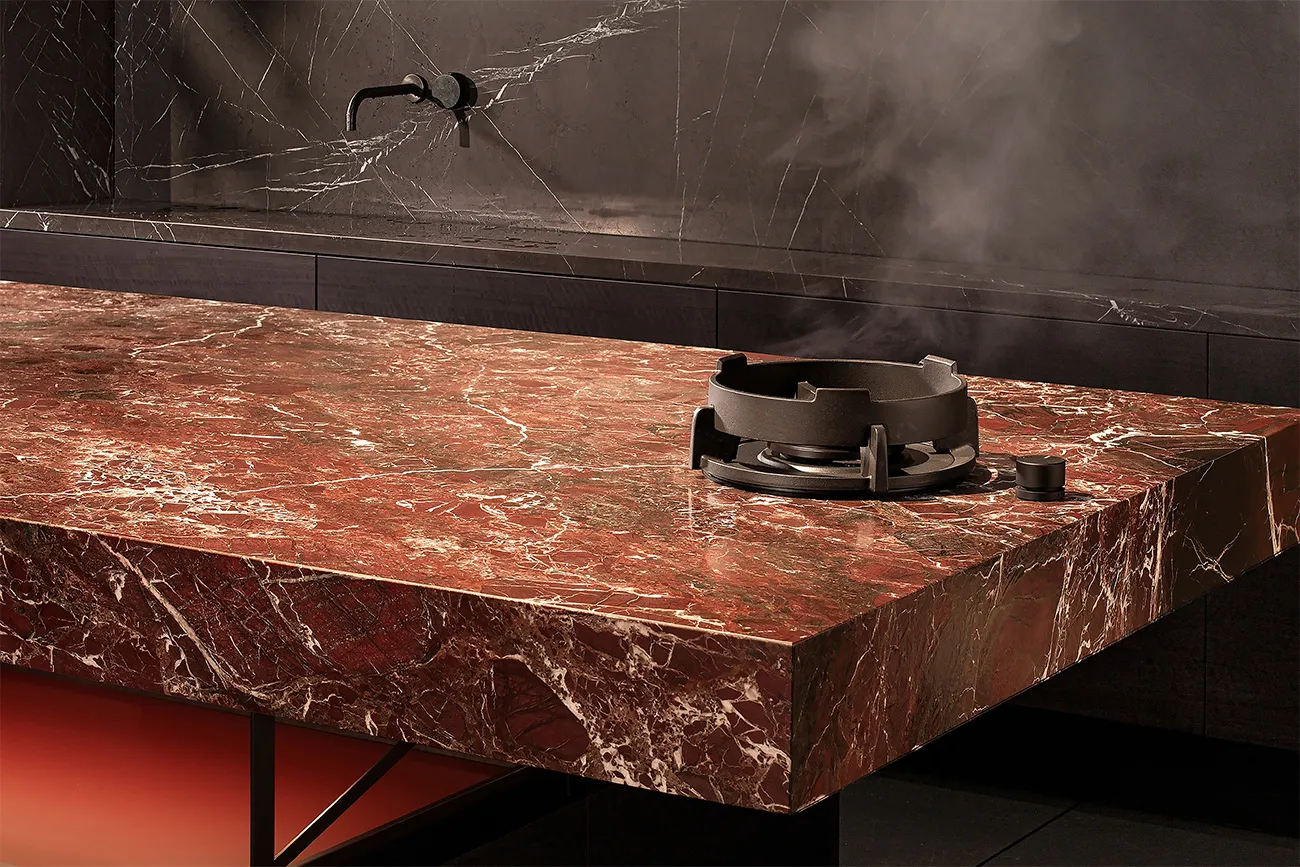
A wide choice of materials
Every customer expects to choose the material and colour of their worktop. After all, it is what every visitor will see in their home, especially now that the kitchen and living room have merged into one space and the kitchen has become the heart of the home. The pandemic may have prompted us to ‘hide’ our appliances, but of course we can’t do that with a worktop.
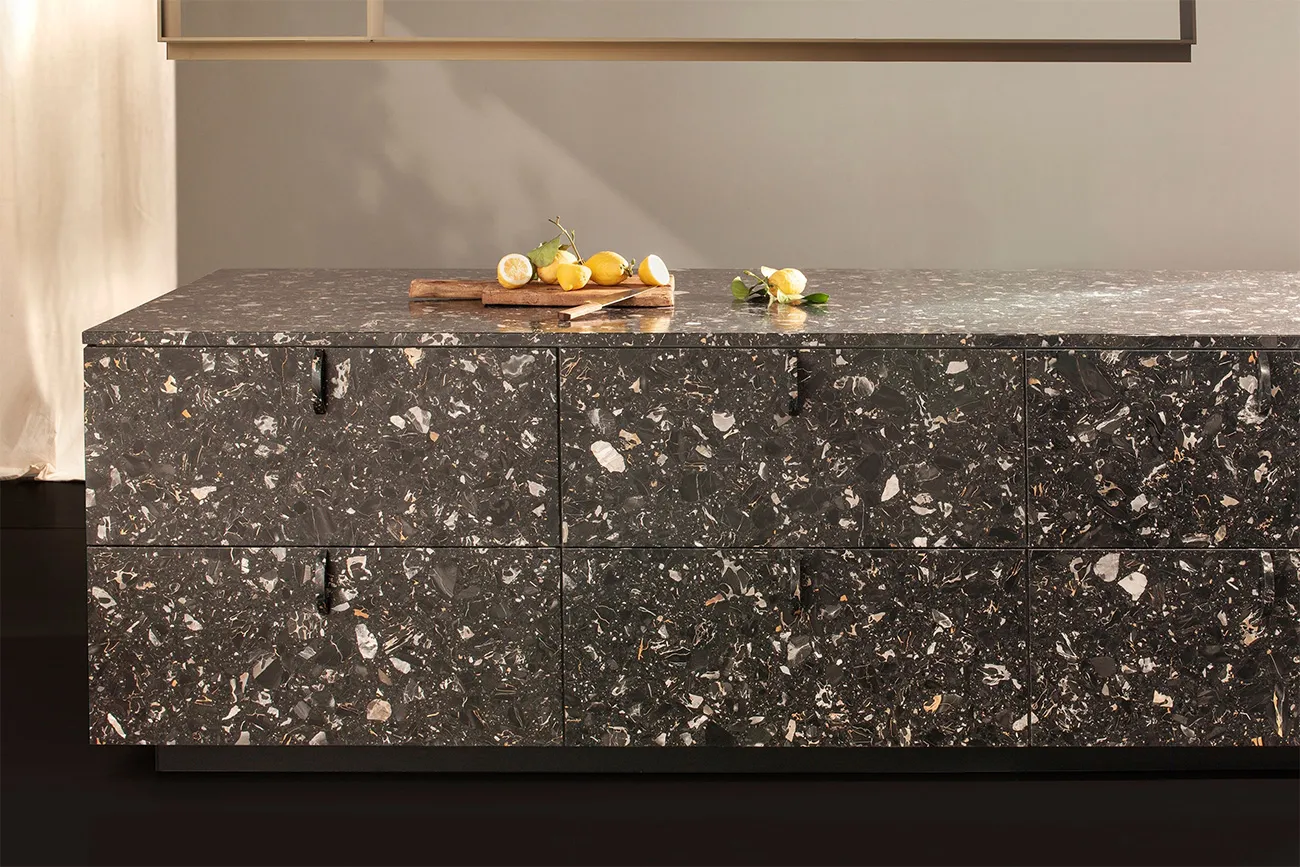
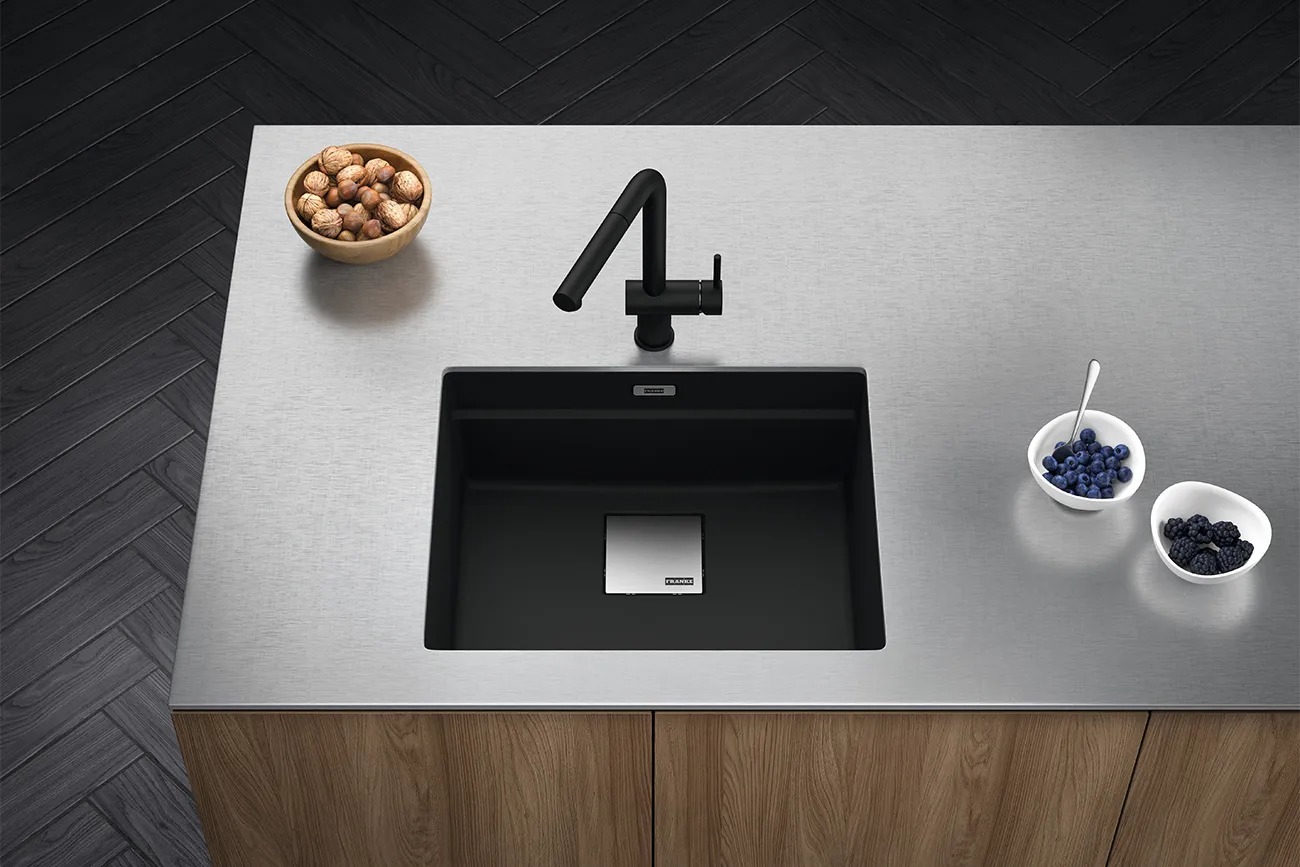
The choice of worktop determines the mood and style of the kitchen. So there is more to consider than just its functional properties. When it comes to materials, we all know the most common, or most frequently mentioned, options: natural stone (granite, Belgian bluestone, marble, etc.), composite, ceramic, Dekton, stainless steel… But worktops can also be made from glass, wood or concrete. Concrete worktops come in all kinds of varieties and sizes, and are by no means limited to the kitchen. They can also be used in garages, bathrooms or hobby rooms. A concrete worktop is robust and resistant to scratches, heat, pressure and dirt. Concrete is hard, smooth, durable and able to withstand heat and heavy loads. Polished concrete is also less susceptible to staining and easier to clean.
Question about this story? Ask your question
Keep following this
Get an email when a new story is published. No account needed.
- SubjectProduct information