The world of edgebanding: a sector in motion
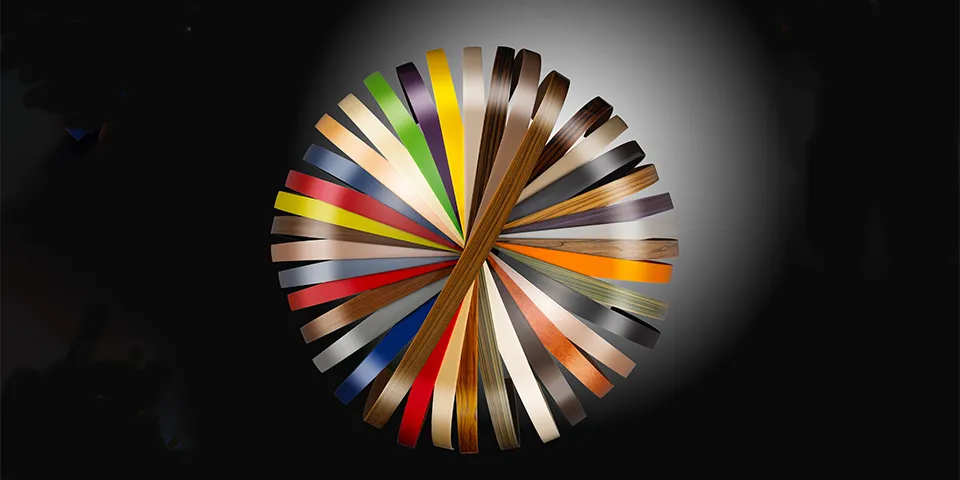
The edgebanding sector is constantly evolving. Whenever a new collection of sheet materials becomes available, the range of edgebands has to keep pace. Technology is advancing too. Innovative machines, adhesives and bonding techniques have emerged in recent years. Today’s interior builders have everything they need to deliver the perfect result.
An ever-expanding range
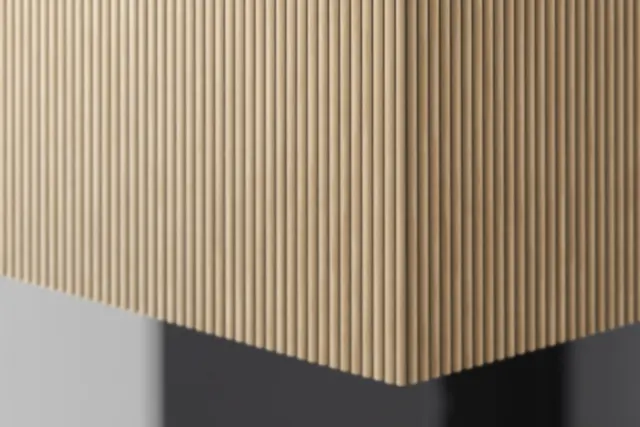
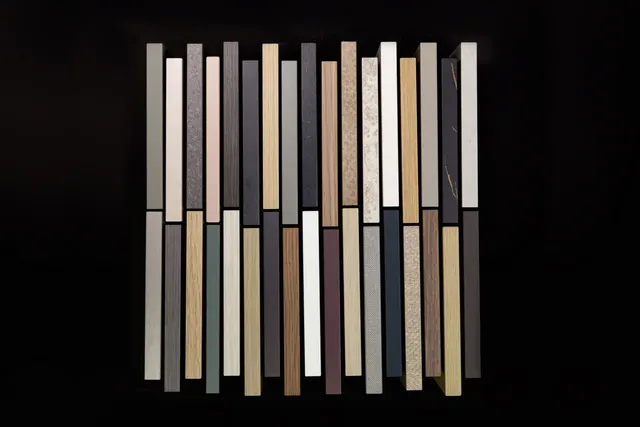
These days, even the slightest difference in colour between an edgeband and the sheet material is “not done”. More and more people also want an edgeband that matches the structure or décor of the sheet material perfectly. Erwin Jacobs, managing director of Kavec: “End customers are becoming more discerning. They choose bespoke products, so everything has to fit perfectly. Sheet materials are increasingly realistic. For example, a wood imitation is now barely distinguishable from real wood. Interior builders and edgeband manufacturers naturally have to keep up.”
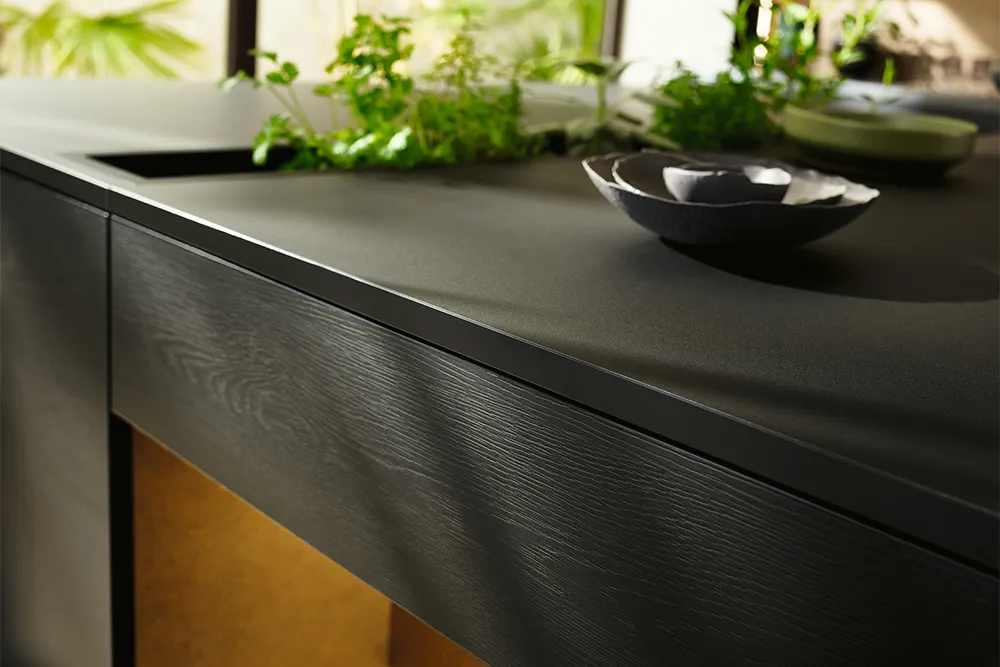
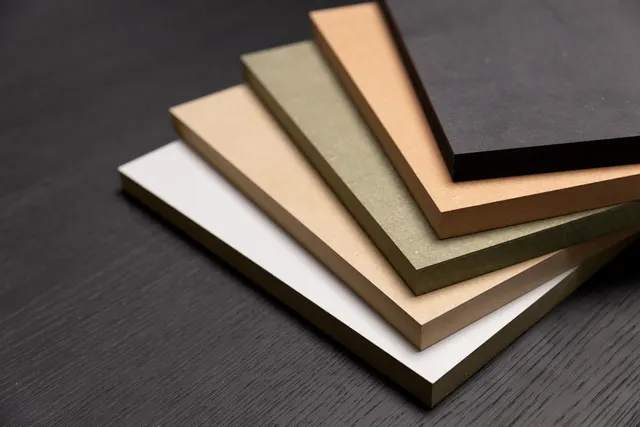
Interior builders need to know they can turn to you for expert advice. (Image: Rehau)
Alain van der Kuylen, Belux Manager at Ostermann: “To compete with foreign manufacturers, Belgian kitchen manufacturers have to stand out through quality or range, or by responding to customers’ specific requirements. This means offering more variety in colours, textures, widths, … with delivery just as fast as for standard products. As a distributor, we certainly need to respond to this.”
Service must not be overlooked either. Edwin Zaaijer, REHAU: “It is important to keep talking to customers. That way, you can learn from each other and respond to their needs, especially in a sector where the range is expanding almost daily. Digital channels matter, but personal contact should not be underestimated either. Interior builders need to know they can turn to you not just to buy products, but above all for expert advice.”
Zero-joint technology becomes the norm
Individuality and bespoke work are the key words in interior construction. End customers want a unique piece of furniture, tailored to their requirements and made to the highest quality. An edgeband with a visible glue line is therefore increasingly unacceptable.
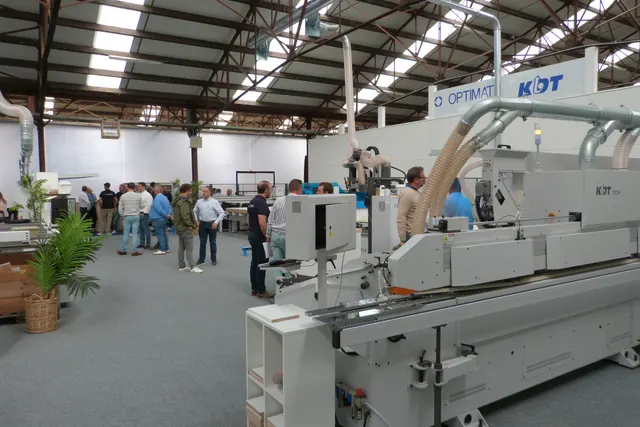
Bruno Vermote, director of Robaco: “At first, the glue line could be made less visible by using adhesives in different colours. A few years ago, edgeband was developed with an ultra-thin functional layer on the back, which can be activated using three techniques: laser, hot air and NIR. This means there is no longer any need for hot-melt adhesive. At the time, zero-joint edgebanding was mainly for larger interior builders, because of the machinery required. That changed with the advent of hot-air machines. Zero-joint results are now within everyone’s reach.”
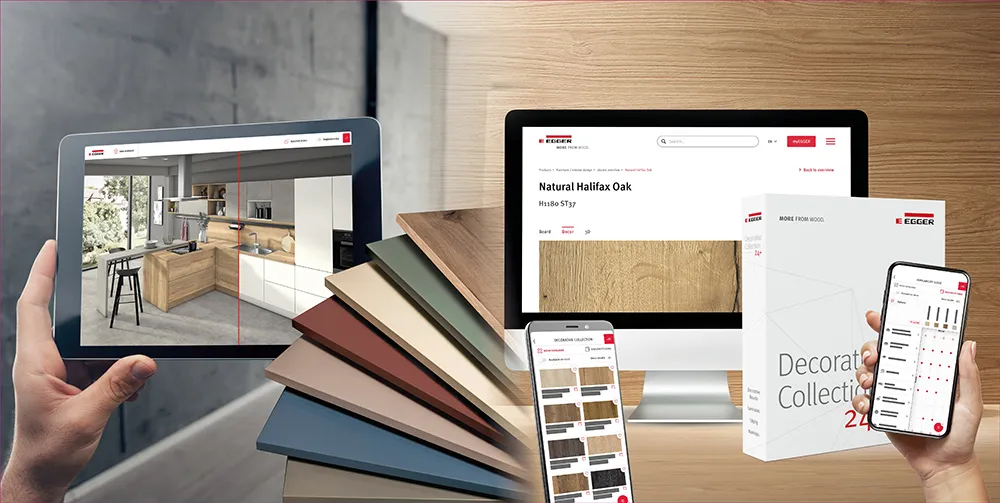
Edgebanding has grown from a detail into an essential part of interior construction. (Image: Kavec)
Innovative adhesives
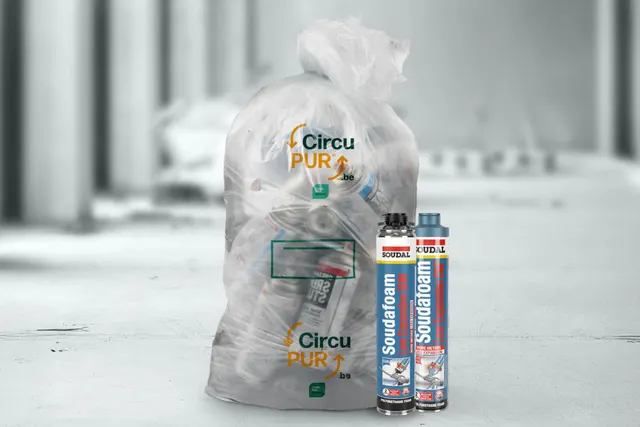
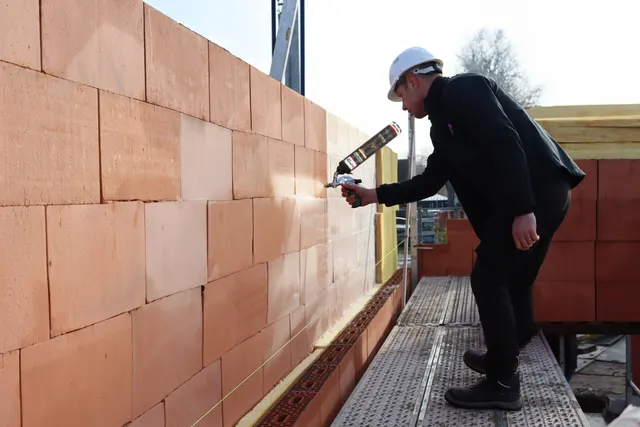
In terms of adhesives, we are seeing a clear shift from thermoplastic hot melts to polyurethane, or PUR, adhesives. David Costermans, technical sales adviser at Jowat: “Once cured, they form a high-quality, waterproof bond with excellent heat resistance. The ongoing development of our PUR adhesives and the optimisation of their packaging are making the process more user-friendly and accessible to both industry and interior builders.”
Edgebanding is no mere detail
One thing is clear: edgebanding has grown from a detail into an essential part of interior construction, and the demands placed on it are getting higher all the time. Edgeband and adhesive manufacturers, as well as distributors, are doing everything they can to give interior builders their full support.
Question about this story? Ask your question
Companies in this story
Keep following this
Get an email when a new story is published. No account needed.
- ThemeSelecting timber and panel materials
- SubjectProduct information
- CompanyRehau
- CompanyOstermann Groep
- CompanyRobaco