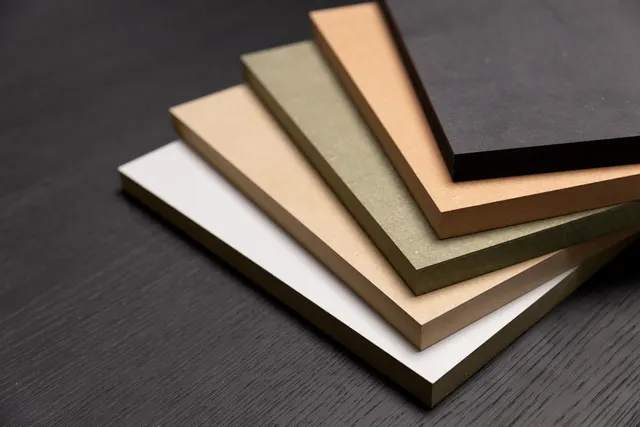
The right sealant for a smooth finish
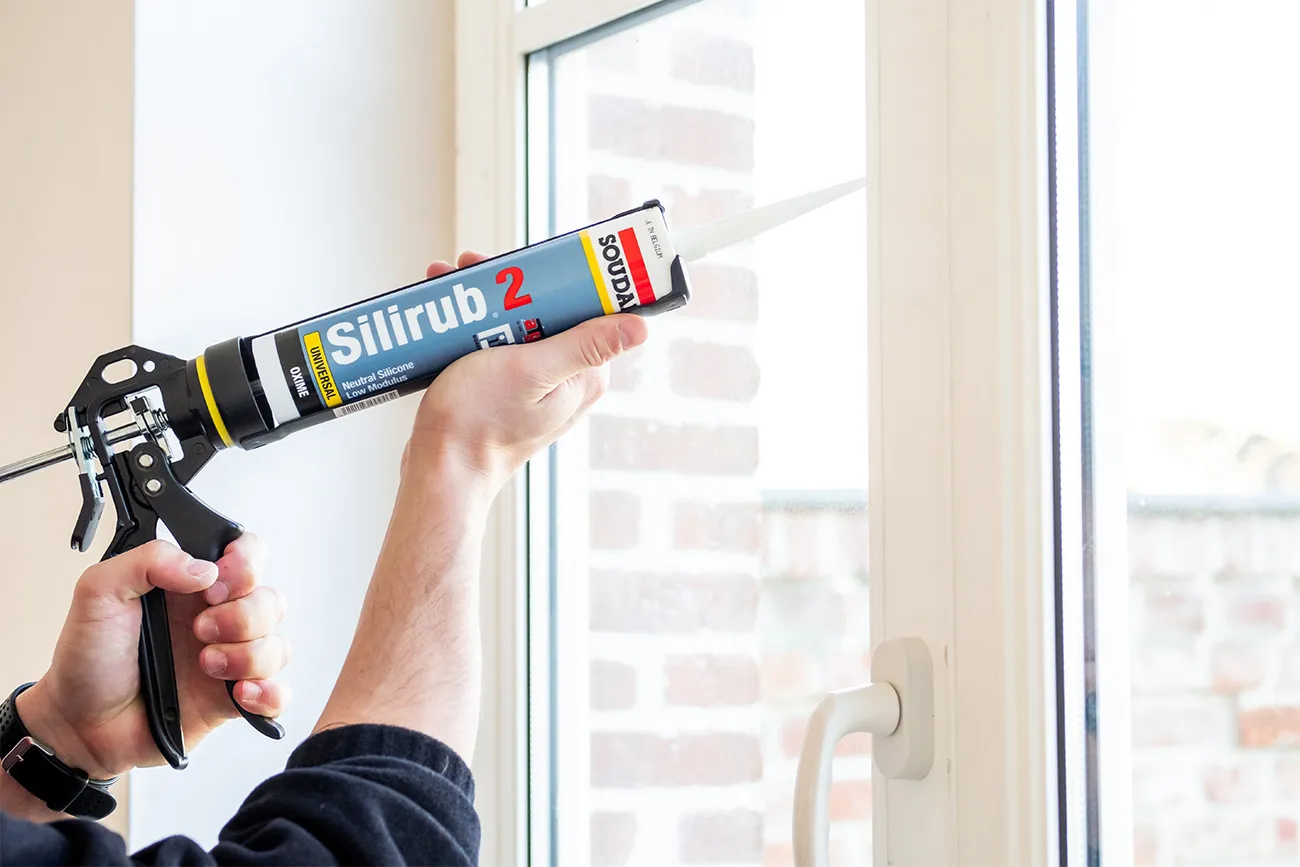
Sealants are essential for both professionals and DIY enthusiasts, filling holes and gaps and sealing joints. There is a particularly wide range of products in this category, with more being added every day. The most suitable sealant depends first and foremost on the application, the substrate, whether it is for interior or exterior use, and whether it needs to be paintable. When the right product is applied correctly, the result is a high-quality finish that lasts, and a satisfied end customer.
Professionals such as painters mainly use Soudal products to seal connection joints and fill holes and cracks in plasterwork. Sealants are also used to seal glazing joints and install decorative elements. Depending on the application, professionals use acrylic, hybrid or silicone sealants.
The best-known sealants among painters are acrylic sealants, as they are easy to apply and can be painted over very well. If a more elastic product is needed to accommodate significant joint movement, hybrids or silicones are more suitable. Hybrids can be painted over and offer superior adhesion to a range of substrates, which means they can often also be used as adhesives. Silicones cannot be painted over, but are highly elastic and UV-resistant. Their excellent adhesion to glass makes them ideal for glazing joints, for example between a window frame and glass.
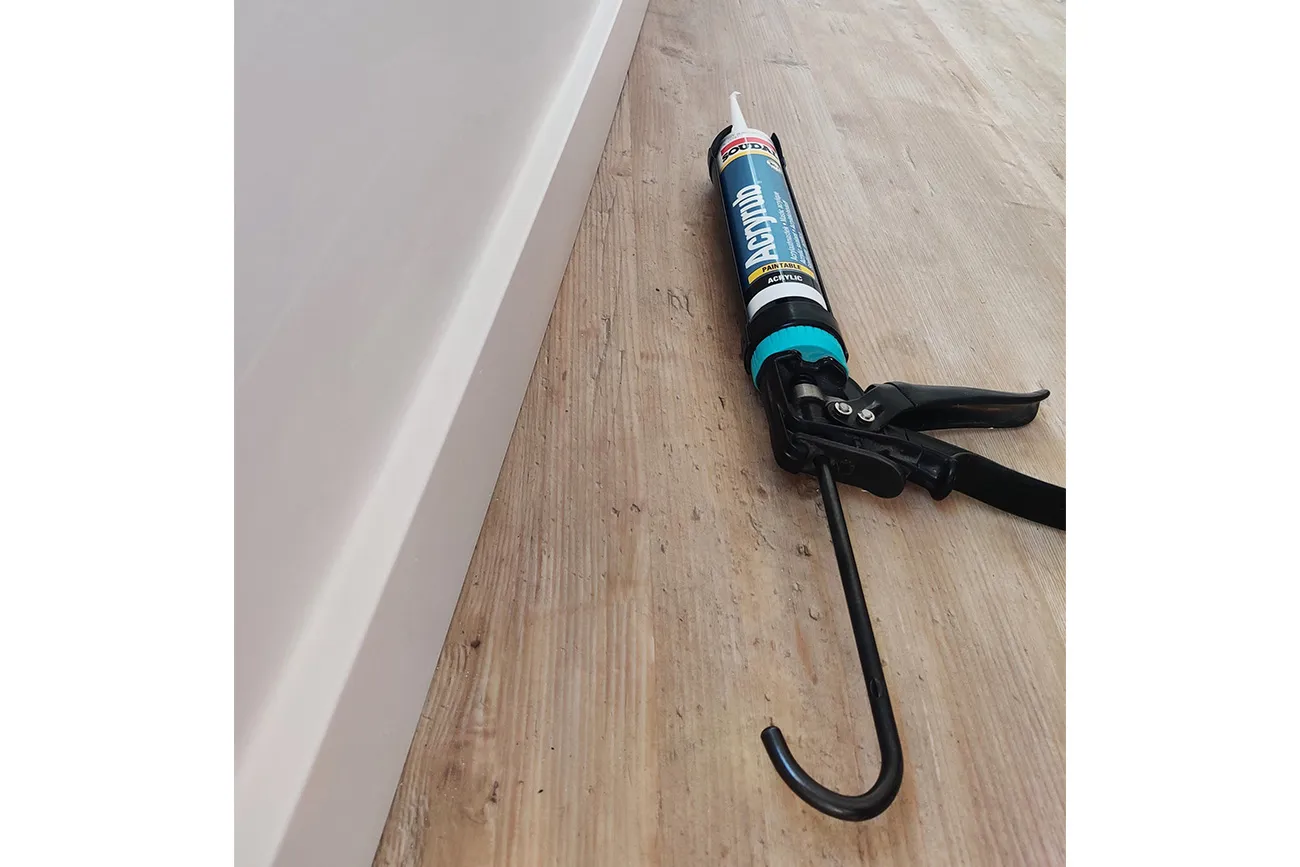
Sealing connection joints
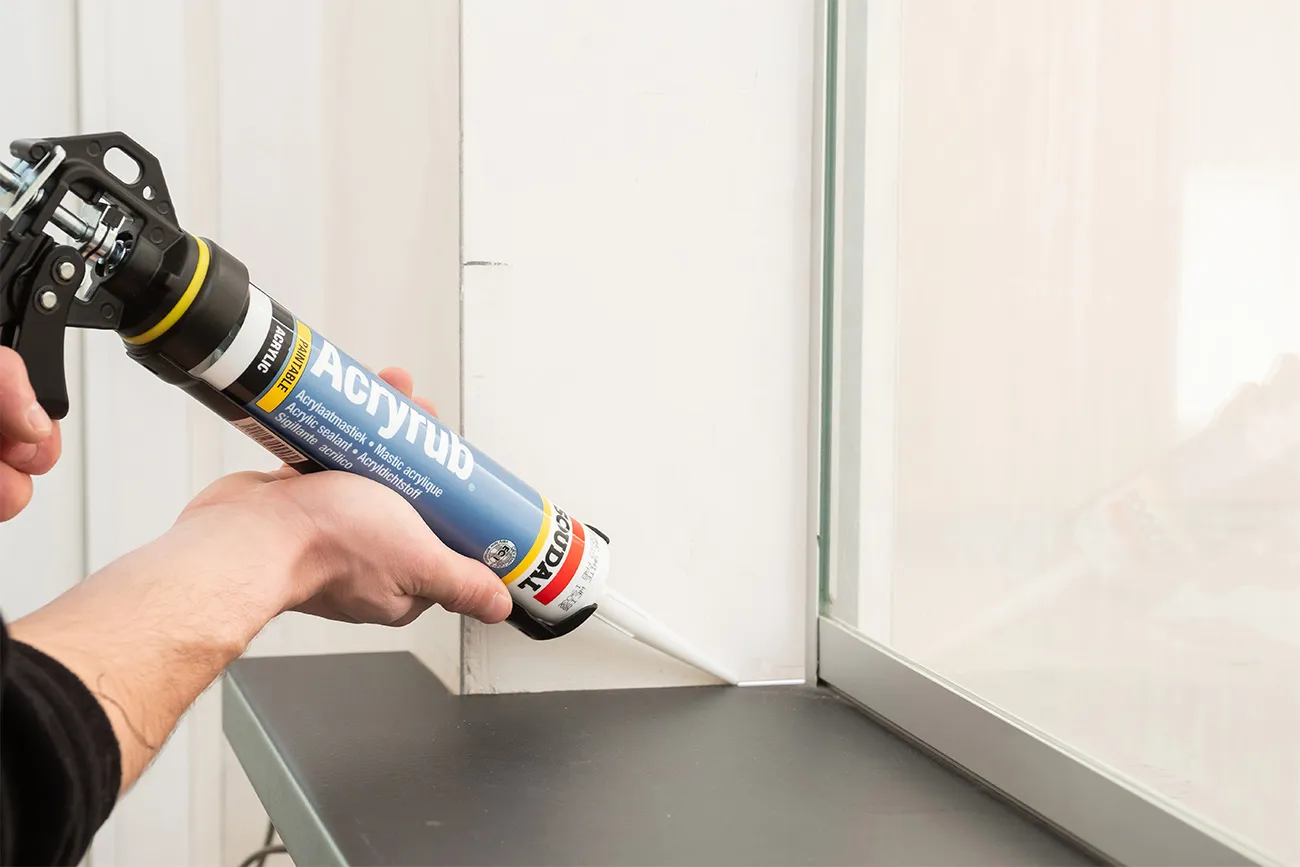
Sealing connection joints, such as the joint between a window frame and a wall, involves different substrates (e.g. PVC, wood …), making good adhesion essential. Appearance is also important, and paintability is often a requirement. The acrylic sealants often used for this application are Acryrub and Acryrub CF2. Acryrub combines sufficient movement accommodation with excellent paintability. Acryrub CF2 is less elastic, but can be painted over sooner and does not crack after painting.
Sealants often need to accommodate greater movement. Hybrid sealants offer several advantages in this situation. Firstly, a hybrid adheres more strongly than an acrylic, so it is less likely to pull away from the substrate. Hybrids also combine high elasticity with paintability and, unlike acrylics, do not shrink. They are suitable for (elastic) joints, but can also be used as adhesives, for example to fix skirting boards and profiles. The most widely used hybrids are Soudaseal 211 Interior, which does not shrink, remains elastic after curing and can be painted over, and Soudaseal 215 LM, which can accommodate even more movement. Most hybrid joint sealants, including Fix ALL®, are suitable for both interior and exterior applications.
Filling holes and cracks
Holes and cracks are filled before finishing or painting. As well as good paintability, a product that is easy and quick to apply is important. Acrylic sealants, such as Soudafill Light, are best suited to these applications. This product is a filler and sealant specially developed to smooth out small irregularities, holes and cracks. It is indispensable for achieving a smooth finish.
Question about this story? Ask your question
Companies in this story

Keep following this
Get an email when a new story is published. No account needed.
- SubjectProduct information
- CompanySoudal NV