Poplar: the perfect partner for a sustainable interior
Text Wendy ThijsImage Laurent Brandajs
Wood is a heterogeneous material: every species behaves differently. Choosing species you know well is a natural instinct. You know exactly how to work with them to bring your project to a successful conclusion. Yet it can pay to consider another species too, for ecological, economic and creative reasons. Familiarity breeds preference, so we’re putting the spotlight on a species well worth discovering: poplar.
It is now widely known that wood is an ecological material. The CO2 a tree absorbs during its lifetime remains stored in the wood after it is felled and processed. This offsets CO2 emissions during the production process, resulting in net-zero emissions. If you also choose a local species such as poplar, little transport is required and overall emissions are minimal.
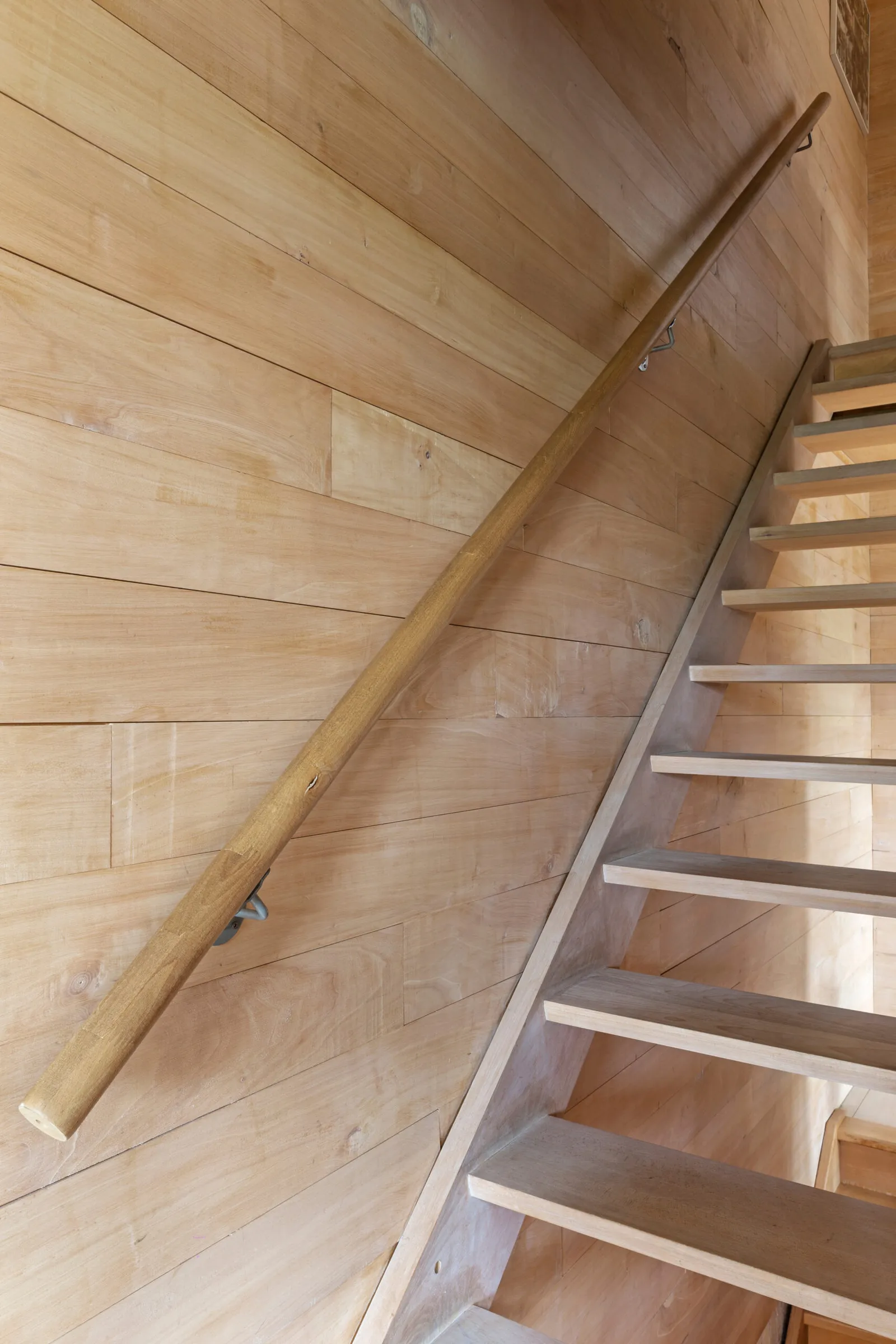
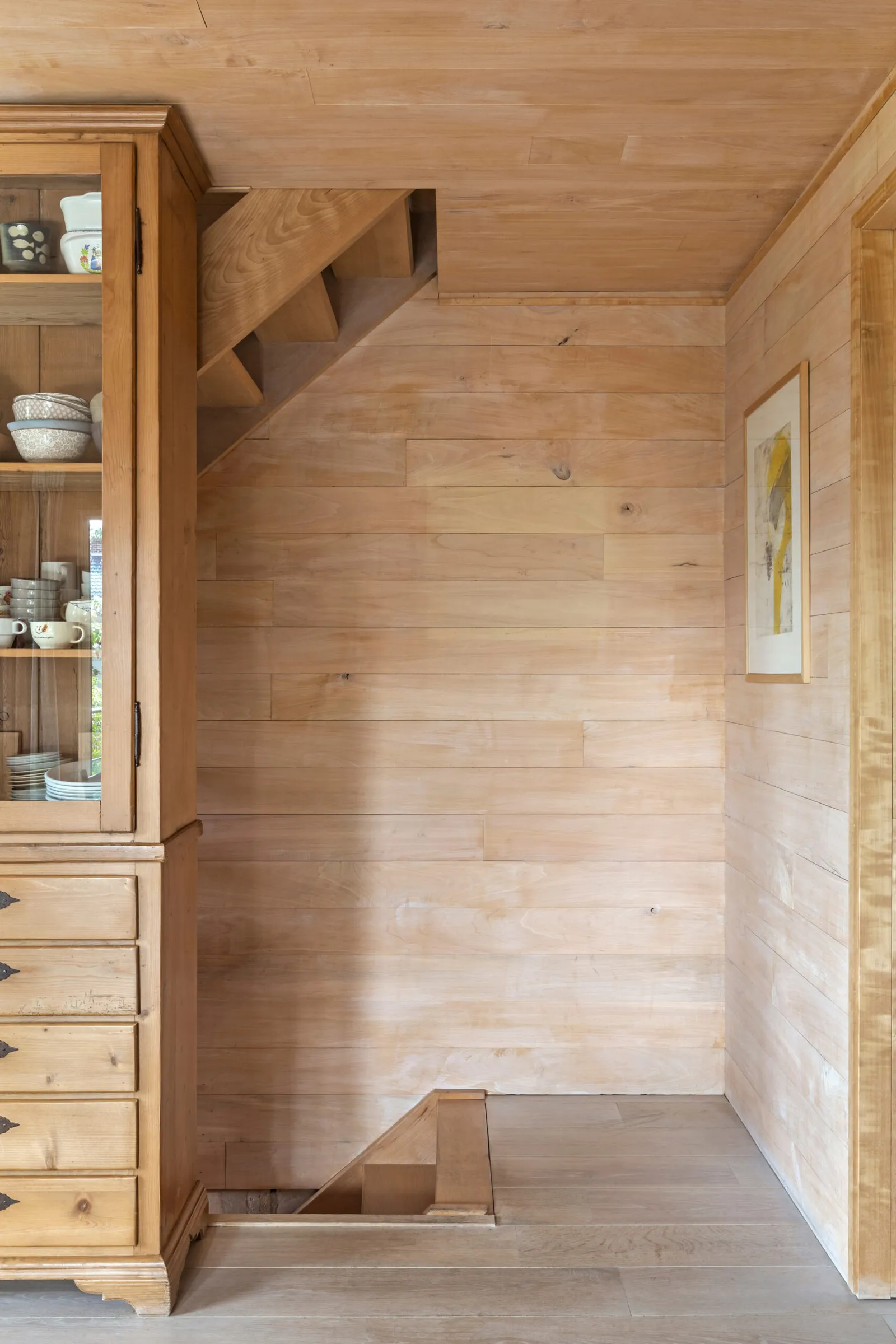
An ecological and economical choice
Poplars grow well in Belgium. The different species cross readily with one another. Intensive selection has produced varieties with ideal properties for timber production: these clones grow quickly, have straight trunks and are highly resistant to fungi and insects. This makes poplar one of the most economical tree species in the Belgian landscape. Certain forest management choices have led to less planting of this clone in recent years, but it is still widely available and remains an excellent option for timber production.
Processing poplar timber
Poplars are fast-growing trees that can become very tall and broad. If pruned correctly and in good time, they can be sawn into boards with few or no knots. Poplar has a somewhat uneven structure, which means it tends to develop a relatively high proportion of tension wood. This can lead to cracks, distortion and a woolly surface, but an experienced sawyer will spot this quickly and take the necessary precautions. Poplar trunks contain a lot of water, so the timber needs sufficient time to dry to prevent warping and distortion.
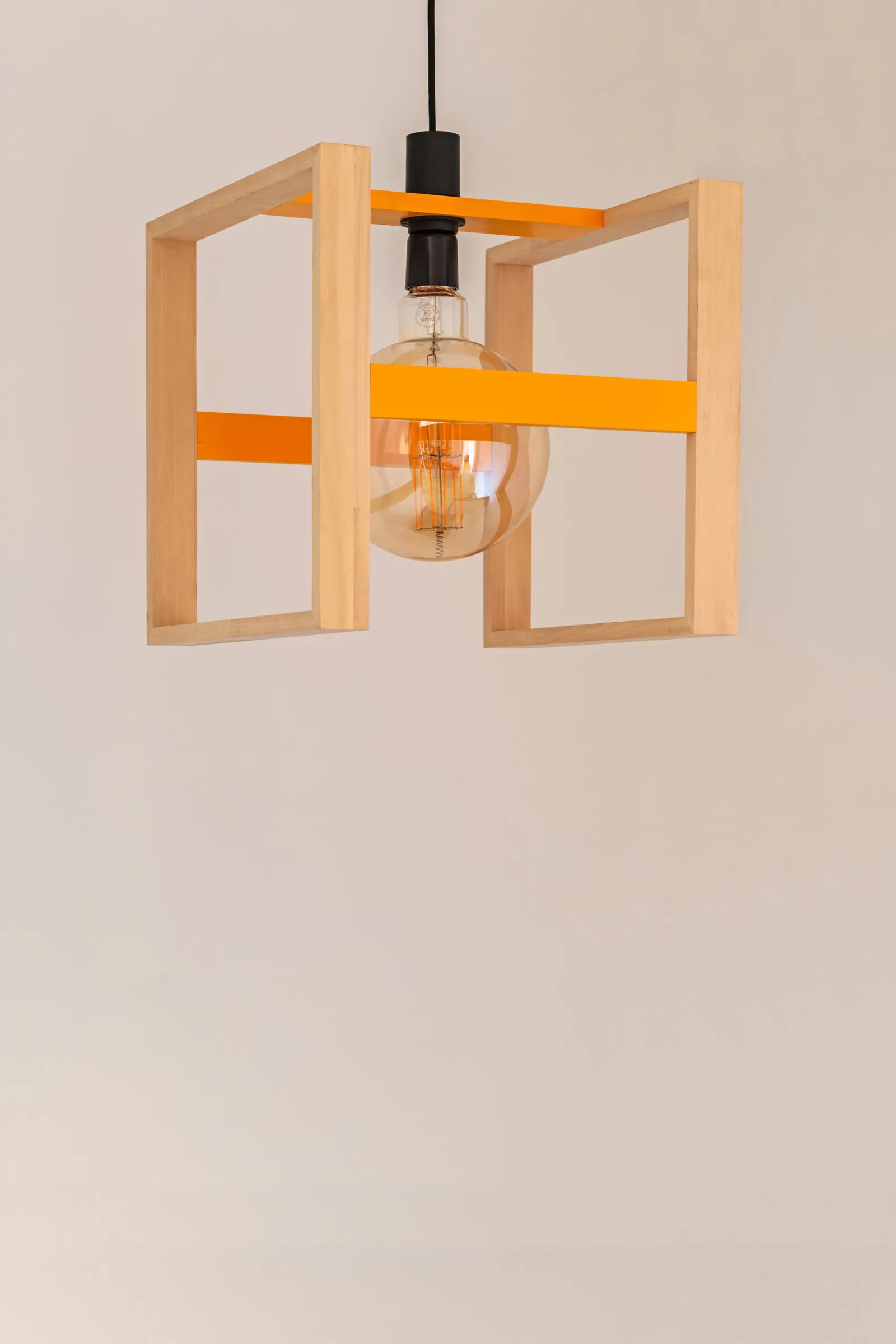
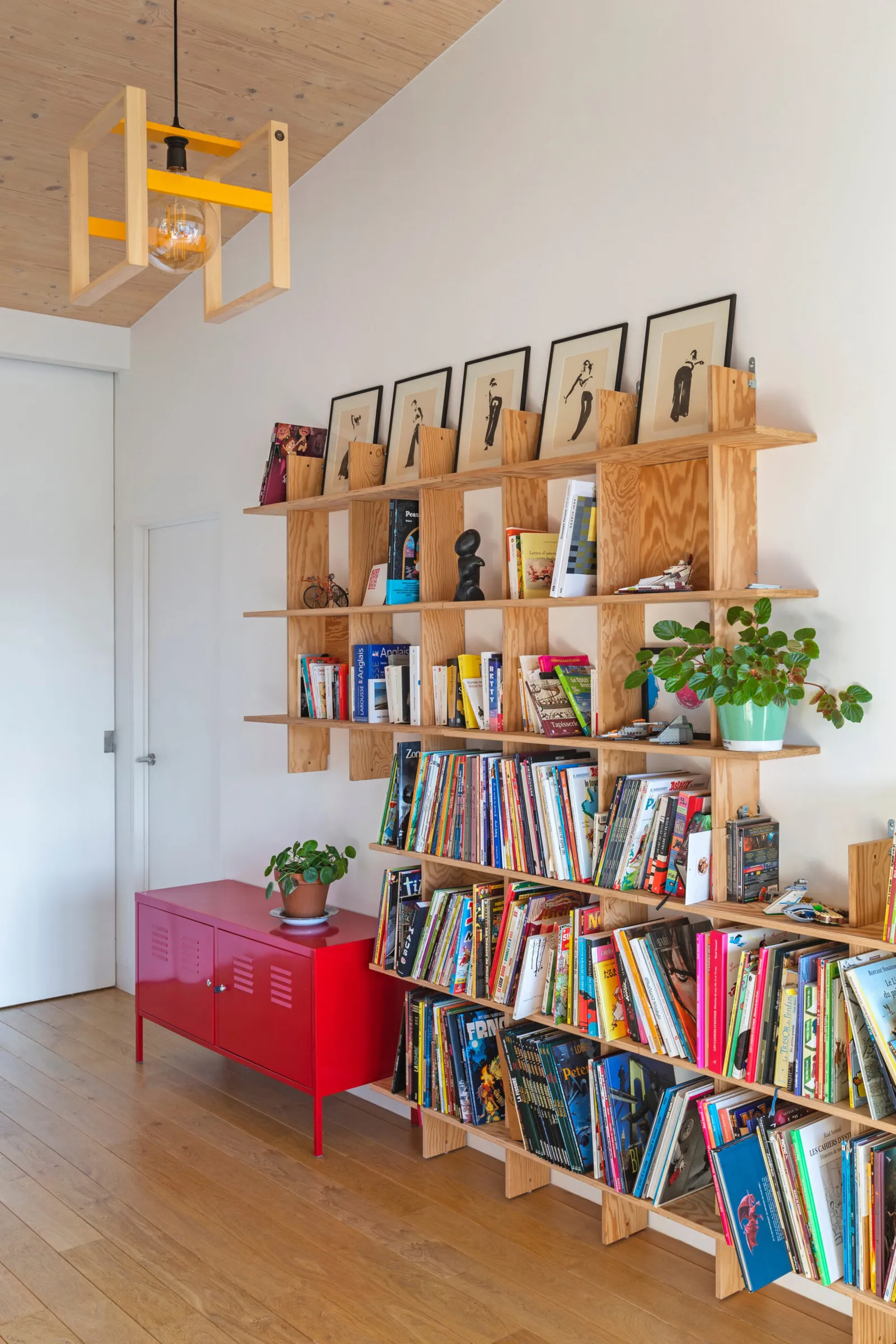
Primarily for interiors
Poplar has an even structure and usually a straight grain. It is light and soft, with a fine texture. Its rapid growth often produces wide growth rings, measuring more than two centimetres across. Both the sapwood and heartwood are white to yellowish-white. Some trunks have a ‘false heartwood’ with a grey-green to brown hue. Freshly sawn poplar has a pronounced grain pattern that becomes less visible as it dries.
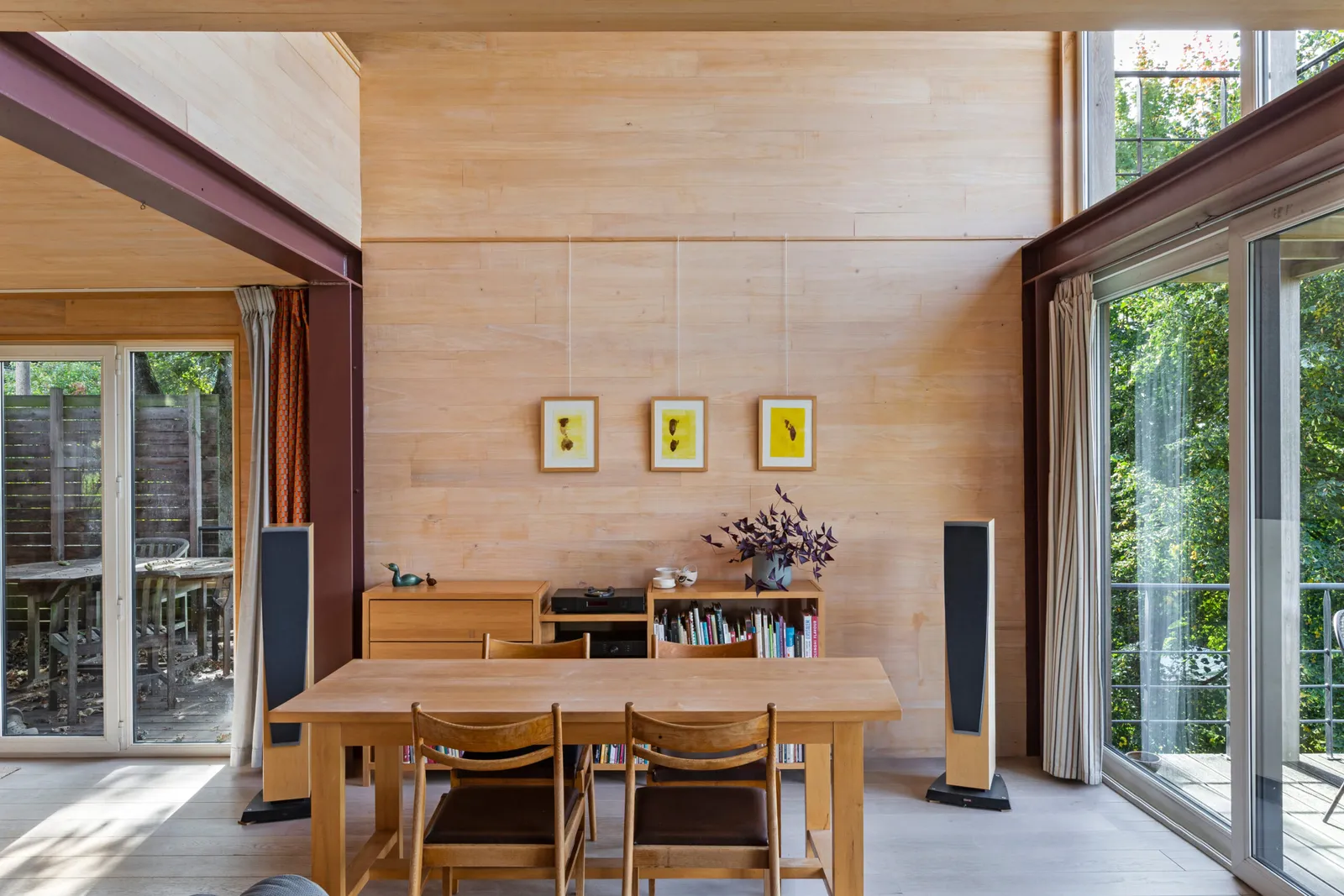
Because of its low natural durability, untreated poplar is unsuitable for outdoor use. Heat-treated poplar, however, can be used outdoors. Untreated poplar is primarily suitable for interior applications, as long as it does not come into direct contact with water. It is used, among other things, for wall and floor cladding and ceilings. Because the wood is soft, it is less suitable for floors subject to heavy foot traffic. Poplar is also often made into panel products such as plywood. Furniture can also be made from poplar, using either panel products or solid timber. Despite its low weight, poplar is relatively strong and can also be used as a structural material, for example in roofs.
Easy to work
Poplar is easy to work, except when it contains a lot of tension wood. This can result in a woolly surface and cause the saw blade to heat up. You can prevent this by using sufficiently sharp tools and increasing the set of the saw blade’s teeth.
For the best results, it is recommended that you sand the surface by hand afterwards, as a sanding machine does not always produce the desired finish. Once properly sanded, the wood can easily be varnished or painted. Nails, staples and screws can all be used for fixing. If you have specific questions or challenges, you can always contact Hout Info Bois.
Question about this story? Ask your question
Keep following this
Get an email when a new story is published. No account needed.
- ThemeSelecting timber and panel materials
- SubjectProduct information