Open-source CNC machining continues to evolve in response to customer feedback
Text Luc OphalsImage Mekanika
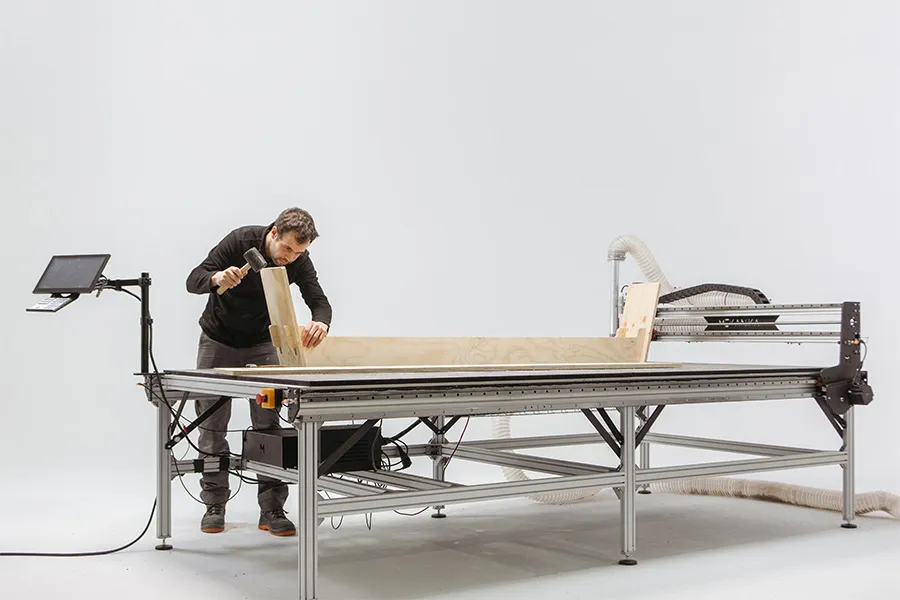
Mekanika, a young company based in Anderlecht, offers high-quality digital CNC machines that are open source, endlessly repairable, fully modular and intuitive. All this comes at a very affordable investment cost. Its original ambition remains the guiding principle behind its creative development: making local production more accessible.
Mekanika aims to make production equipment more accessible, while also making it easy to adapt to users’ specific needs and requirements. Its open-source plans are aimed at professionals and hobbyists alike. The company designs and pre-assembles digital CNC machines prized for their ease of use, quality of work and adaptability. Roldan Descamps, the company’s CEO, explains: “Users of our digital CNC machines range from professionals to DIY enthusiasts working with a wide variety of materials. They include furniture makers, joiners, fitters, kitchen designers, makers of orthotic insoles, set designers, … Our machines are also ideal for prototyping.”
The benefits of open source and kit delivery
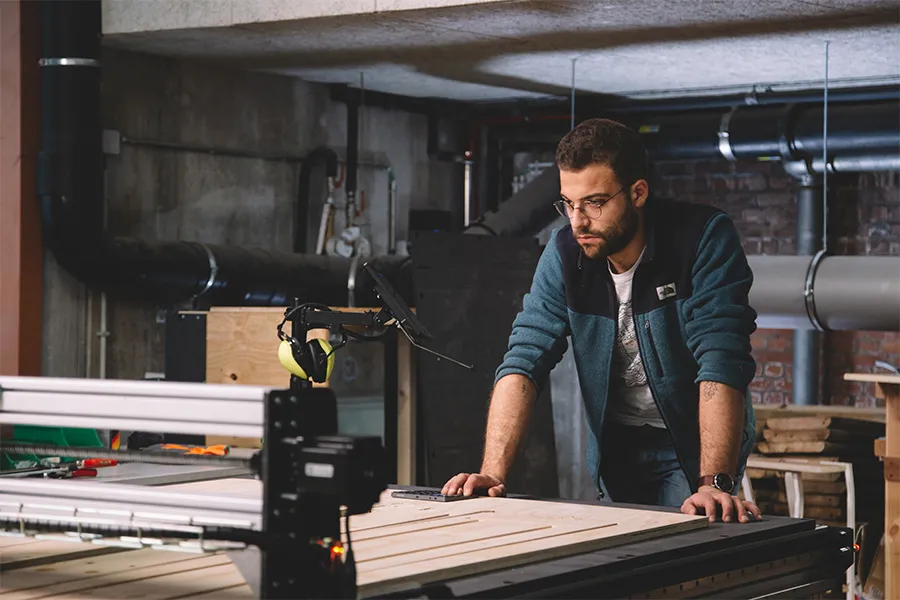
The idea of designing and manufacturing powerful, affordable digital cutting machines came from a simple observation. Faced with the need to build their own machines to help clients develop products as part of their design consultancy work, Mekanika’s founders built their first machines using information available online. “They soon realised that a machine could almost always be built from the same basic components, much like a Lego assembly,” says Roldan.
This gave rise to the idea of developing a modular machine-building kit. The customer assembles the machine, using free assembly guides, manuals and technical drawings available on the website. “Our machines can be customised, are easy to repair and are designed to be ready for use within a few days. They require no advanced technical skills. They are durable, user-friendly and high quality. Our design methodology is based on zero waste.” All parts are, and will continue to be, available over time, with a guarantee of virtually unlimited repairability. Ultimately, customers who assemble the machine have full control over it. The product’s open-source design strengthens ties within the user community and fosters a culture of sharing that benefits everyone.
A diverse range that is constantly evolving
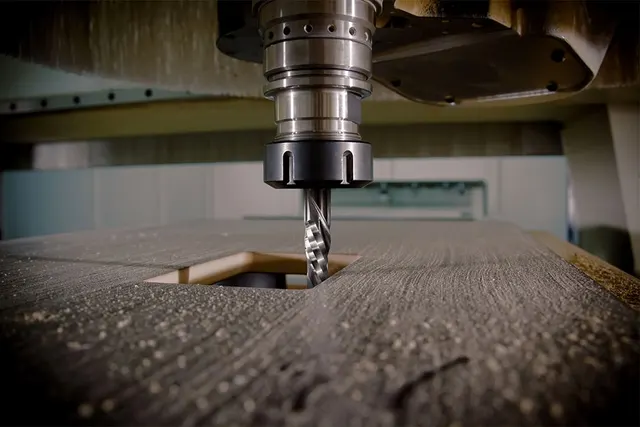
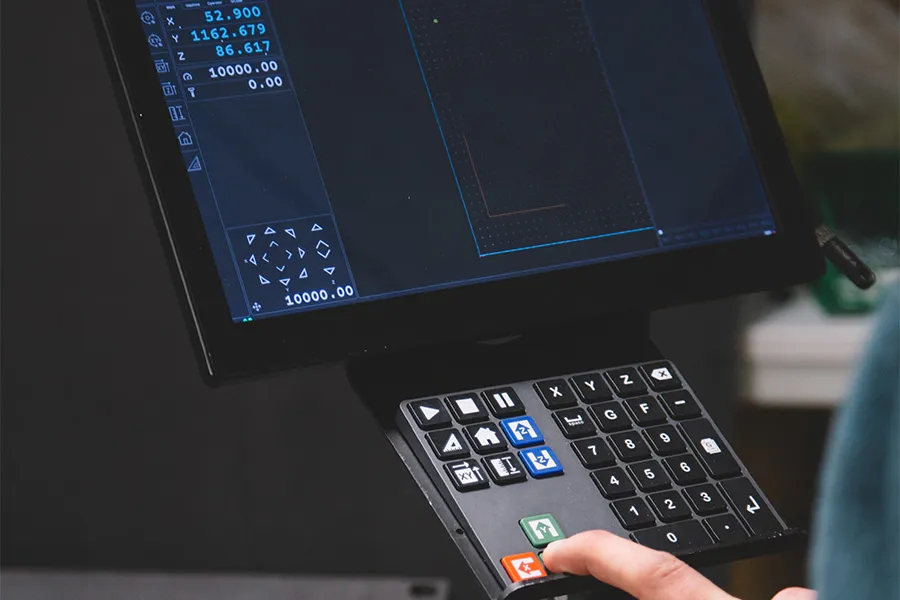
A recent addition to Mekanika’s range is the versatile FAB CNC panel router, which can handle a wide variety of materials. It has cutting speeds of up to 10,000 millimetres per minute, can process full panels thanks to its 1,800 by 2,700 millimetre working area, and is fitted with a 2.2 kW air-cooled spindle and an intuitive interface. The other flagship products are the EVO series, aimed at enthusiasts and professionals looking to explore a new technology or launch a prototyping or CNC machining activity, and the PRO series, comprising much more robust machines for precise and accurate machining. “It’s very easy to get started with an EVO model. You can upgrade to the PRO version using an upgrade kit, so there’s no need to buy a new machine,” says Roldan.
Future improvements
Mekanika listens to its customers. This fundamental approach gives the company insight into the needs of people working in the field. “Knowing that removing a panel can sometimes be time-consuming, we partnered with RAPTOR, a manufacturer of pneumatic nail guns. Using composite nails instead of metal fasteners saves a great deal of time and is also kinder to the cutter. Once in place, the nails are neatly cut off at the side. There is no debris left on the machine, and the cutter can pass over them easily.
Work is also under way to develop a vacuum table that would eliminate the need for a relatively expensive clamping system. Further developments are also expected in accessories, including more powerful spindles, an automatic tool changer and the addition of a laser head for engraving and personalisation. Operating the machine will also become even simpler, with the option to add all cutting parameters to the CAM software. To be continued. ■
Question about this story? Ask your question
Keep following this
Get an email when a new story is published. No account needed.
- SubjectMachinery