











Working together towards circular construction and climate-neutral business
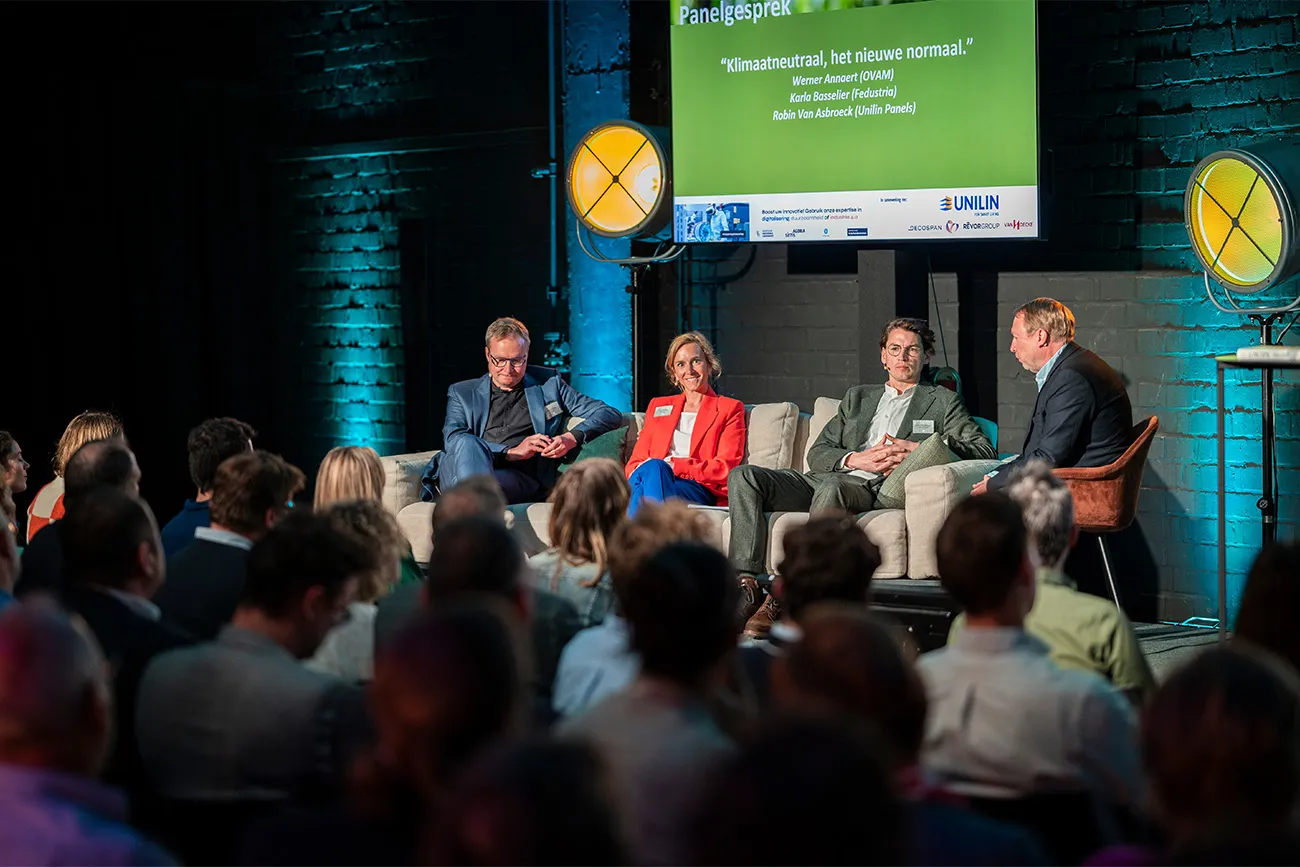
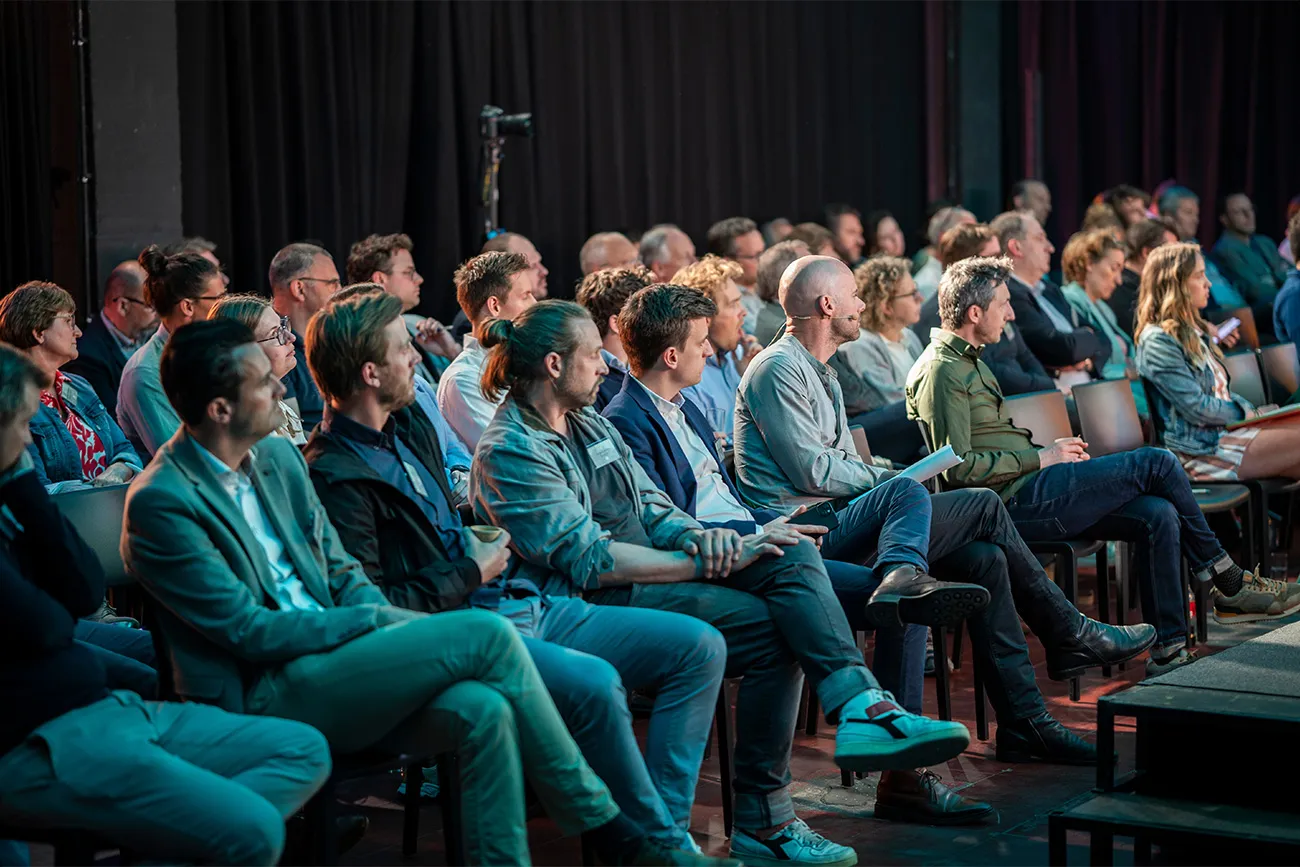
On 25 May, around 90 companies from the wood and furniture sector gathered in Zwijnaarde for WOOD.BE Innovation Day. The event focused on combating climate change and how the sector can make a difference. Through practical case studies, a panel discussion and an inspiring keynote speaker, attendees were given ideas and guidance on taking their own steps towards circular, climate-neutral business. The message running through the afternoon was clear: collaboration is essential.
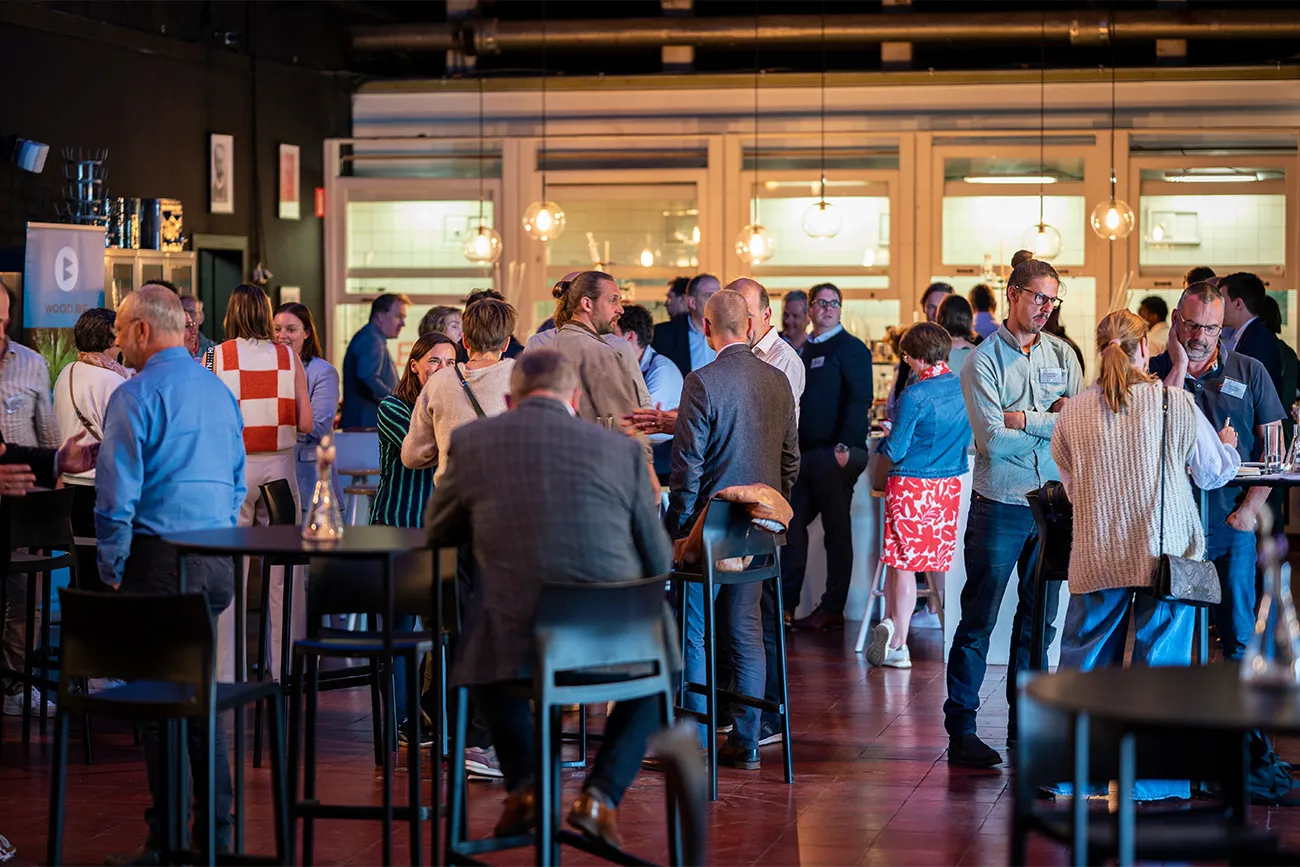
For the first time in three years, WOOD.BE Innovation Day was able to take place in person again. There was considerable interest in the event, and attendees were eager to be there. It is clear that this year’s theme is timely and that the sector is ready to play its part in combating climate change. WOOD.BE General Manager Chris De Roock referred, among other things, to the 2021 floods in Wallonia and the drought in southern France earlier this spring. Climate change is a fact, and we must act now to prevent things from getting worse. With this Innovation Day, WOOD.BE wanted to give the wood and furniture sector practical tools that businesses can put to use.
Impact across the board
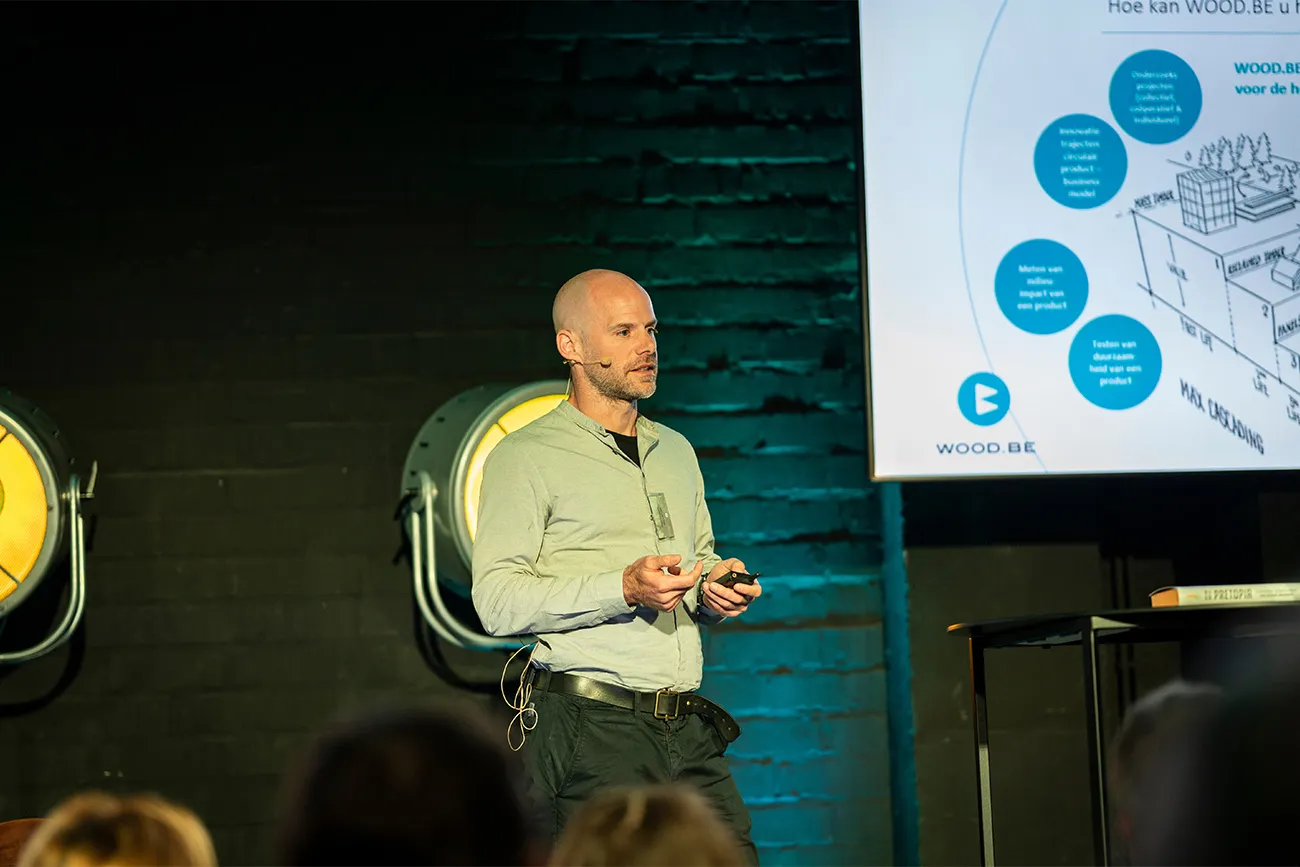
“To run a climate-neutral business, we need to look at the entire life cycle of products,” said Klaas Holsters, innovation expert at WOOD.BE. He referred to the URRO principle: understand, reduce, remove, offset. “It is important to investigate where your company’s CO2 emissions are concentrated: before, during or after production. A thorough analysis enables you to set realistic targets, first to reduce emissions and then to adjust your company’s operations towards climate neutrality. Finally, it is worth reviewing your investment criteria. By consciously choosing environmentally responsible partners, you don’t have to tackle the challenge alone. For example, you can reduce your CO2 emissions by up to 80% by considering the entire cycle of your production process.”
Circular criteria that make a difference
As companies are not always sure where or how to start, WOOD.BE offered some tips they can put into practice:
- Design what matters: virtualise, dematerialise and respond to market needs.
- Extend the life of your products by setting up a repair or take-back service, or opt for modular systems that allow customers to adapt them as their needs change.
- Reuse or repurpose old and damaged products.
- Make your products traceable with a digital product passport.
- Make deliberate choices about sustainable materials and construction, such as independent layers.
- Be bold and embrace co-creation and co-production.
Need for forward-looking legislation
After the practical case studies, a panel discussion explored the link between industry and legislation. Chris De Roock chaired the discussion with Werner Annaert, Director General of OVAM, Karla Basselier, CEO of Fedustria, and Robin Van Asbroeck, Country Manager BeNeLux at Unilin. The panel highlighted the sector’s strong ambition to embrace the circular economy. Many companies are already making the transition and need a clear legislative framework, as well as clear certification schemes and grants for green businesses. Industry representatives called on the government to take a more forward-looking approach and lead by example in making a difference.
Asked why some companies are ahead of the legislation, Werner gave a succinct answer: “Because they are entrepreneurs who seize every opportunity to grow. Those who do not start striving for climate-neutral business now will fall behind later. Flanders is a breeding ground for good examples. If you want to stay relevant, you have to innovate.”
Provotyping as a springboard for innovation
The final motivational talk came from Stefaan Vandist, author of the book Pretopia. Through provotyping, he wanted to challenge people to think more boldly and come up with an entirely new narrative. In other words, provocative prototypes. This approach turns seemingly impossible dreams into realistic, creative solutions that benefit the local and social economy.
He called for organisations to become greener, for people to share their vision and talent, and for strong coalitions to be built between innovative partners.
The message running through WOOD.BE Innovation Day was the importance of sharing knowledge and expertise. By sharing good practices, we can work together to take the Flemish wood and furniture sector to the top of the world.
WOOD.BE is an initiative under the Industry Partnership, supported by Vlaio. This Innovation Day was organised in collaboration with Unilin, Decospan, Love Home Fabrics, Revor Group and Van Hoecke.
Practical case study 1: Van Hoecke
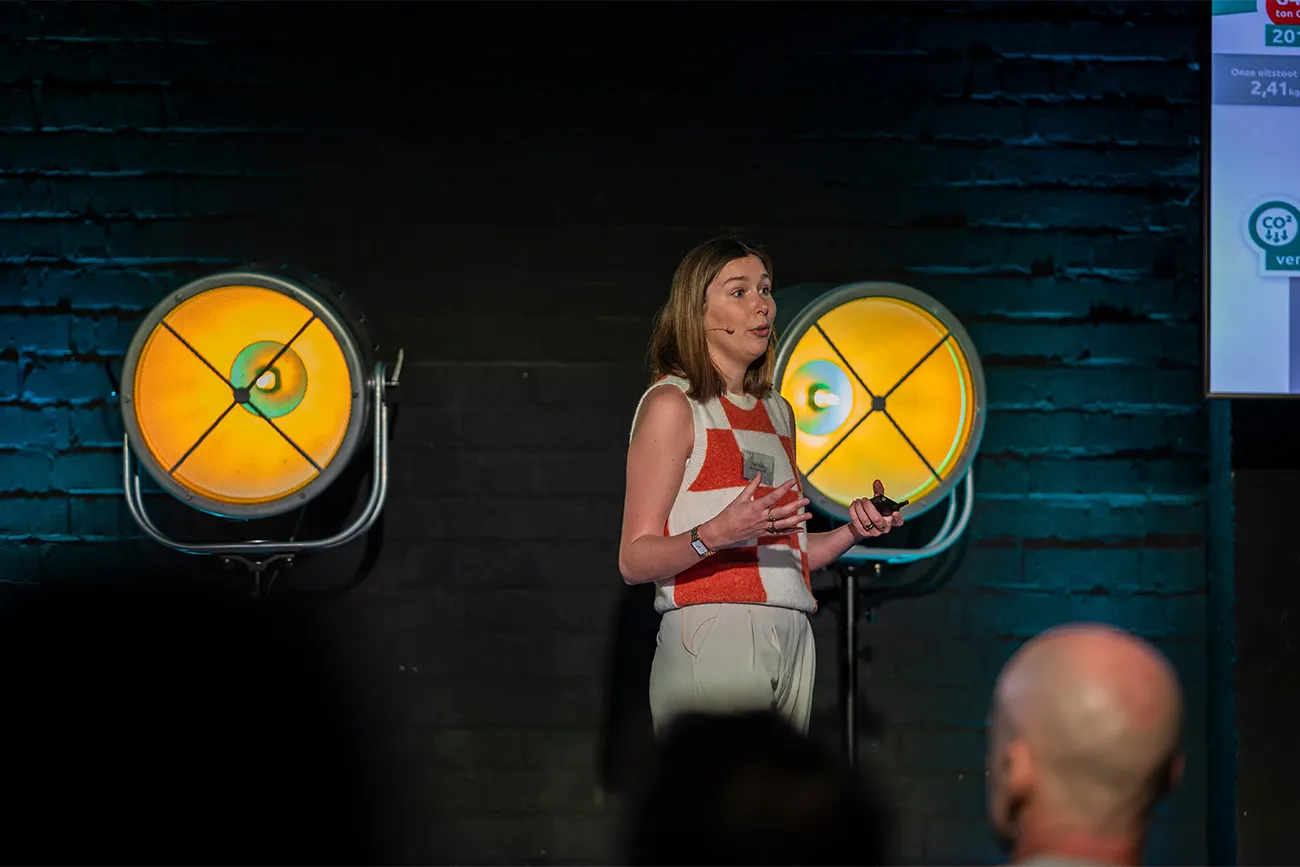
The first case study was presented by Flore Callier, sustainability coordinator at Van Hoecke. She stressed the importance of corporate social responsibility at both product and process level. “Van Hoecke still has CO2 emissions. But thanks to our consistent approach, we offset them and remain climate-neutral. This means regularly measuring our emissions, setting realistic targets and offsetting emissions by investing in worthwhile projects. Finally, Van Hoecke places great importance on transparent communication, both internally and externally. This helps employees, customers and partners understand our choices and our approach, which in turn strengthens their trust in our company.”
Van Hoecke is taking the following steps, among others, to combat climate change:
- The company can operate independently of the energy grid and buys only green electricity.
- All buildings are BEN-certified.
- Van Hoecke uses renewable heating and cooling, including free cooling.
- The company promotes cycling through community-building.
- The company is electrifying its fleet and is researching electric vans.
- Packaging is made from reusable Belgian cardboard, while essential plastic packaging is being optimised or replaced with higher-quality alternatives.
- Van Hoecke routinely carries out a life cycle assessment for all its products.
Practical case study 2: Circular matters
Pieter Dondeyne is co-founder of Circular Matters. This young company develops innovative building materials with a positive climate impact. To do so, the entrepreneurs use nature as a building block. Pieter stressed that every contribution to tackling climate change matters, although he personally favours a radical shift that rethinks the construction process from the ground up. Some examples: “We developed 100% natural adhesives. By using naturally occurring bonds, we created a completely harmless product. We are also working with new raw materials, such as the inner part of a corn cob, to produce products such as plywood and ceramic tiles with the same properties as the original product: scratch-resistant, easy to maintain and colourfast. We also use 3D printing techniques in our creations.” Circular Matters supplies materials to furniture makers and processors, and relies on trusted partnerships to further develop its production lines.
Practical case study 3: SOFAR
The final good practice was presented by Nele Vlaeminck of Sofar. The company wants to move away from the current linear economy, which generates a staggering 10 million tonnes of furniture waste in Europe every year. Sofar is tackling this issue through its products, materials and business model. Its circular sofa is designed to deliver service, comfort and durability. Nele said: “Our sofa is 100% Belgian and made from recycled and natural monomaterials. The linen cover is easy to wash and replace, so you do not have to buy a new sofa if it gets damaged or you want to change your interior. The sofa is also modular, making it easy to extend or rearrange over time. All our products come with a digital passport, making it easy to order additional products or get in touch with questions or problems. We also take back all our products so that their raw materials can be reused or reprocessed.”
Question about this story? Ask your question
Keep following this
Get an email when a new story is published. No account needed.
- ThemeSustainable and circular timber supply chain
- SubjectGeneral







