











The future of timber construction: a round-table discussion between industry partners
Text Els GoethalsImage Dieter Meyns
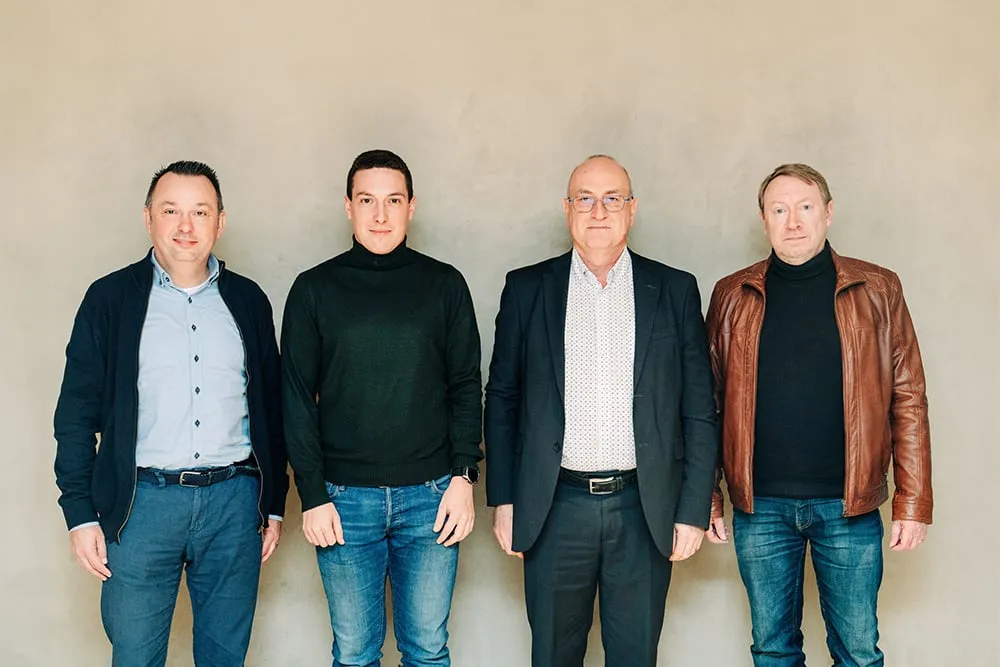
Timber construction is gradually gaining ground in Flanders. What is the key to successful applications? Where can the sector make further progress? Experts share their views during this round-table discussion. Read their thought-provoking reflections here.
Timber construction versus traditional building methods. How does the construction process differ?
Unanimously: “The trend towards shorter build times is continuing. Timber frame construction and solid timber construction (CLT) are ideally suited to this. Modular structures are manufactured in the factory, then transported to the construction site and assembled. This saves a significant amount of time and simplifies logistics on site. Everything is meticulously planned in advance, which in turn results in
high-quality work.”
Dries: “Timber frame construction and CLT make it possible to put buildings into use sooner. An undeniable advantage for hospitals, residential care centres and so on.”
Piet: “For the sake of completeness, log construction, post construction and post-and-beam construction are also innovative timber construction techniques. Unfortunately, going into each method in detail would take us too far today.”
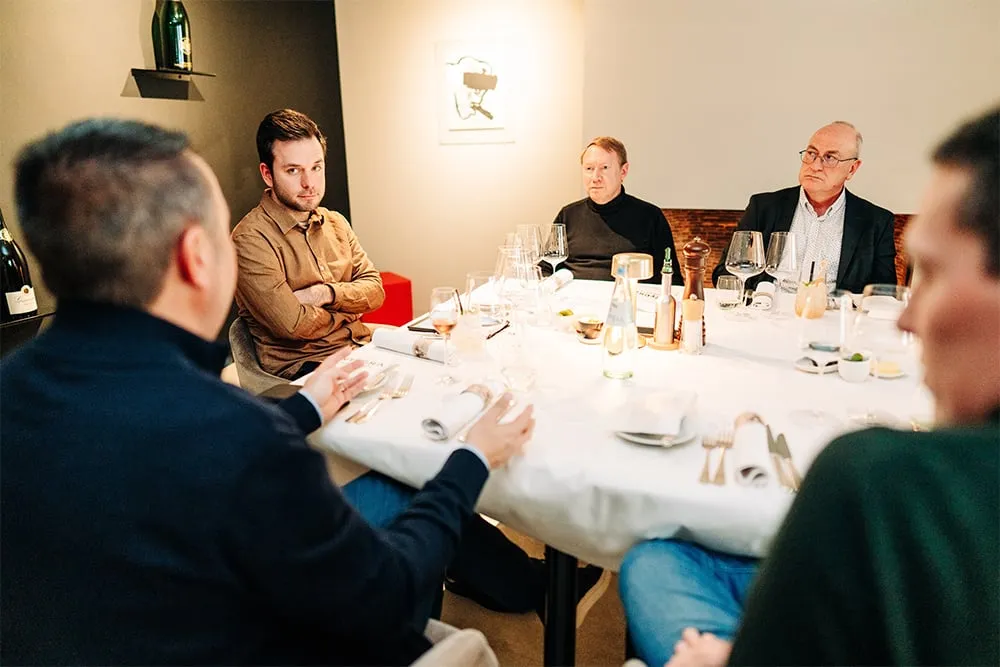
Have these advantages been known in the construction sector for a long time, or is this knowledge relatively new?
Dries: “The advantages themselves are nothing new. However, increasingly sophisticated applications are emerging, such as computer-controlled 2D and 3D techniques. These ensure a very high standard of finish. All building services can be prefabricated off-site.”
Is timber competitive in price as a building material? Has this changed in recent years?
Damien: It is a good thing that competition is increasingly coming into play. This is making prices more accessible for prospective self-builders and renovators.”
Dries: “Meanwhile, the traditional construction sector has seen unprecedented price rises since the energy crisis. This gives timber construction a competitive advantage.”

How can it help address the shortage of workers in construction?
Damien: “The construction sector has been struggling with a staff shortage for some time. To such an extent that it is recruiting workers from abroad: Portugal, Belarus, … Timber frame construction and solid timber construction also offer a solution in this respect. The entire production process takes place in the factory, in the most favourable conditions, usually with the help of advanced CNC-controlled machines. This contrasts with traditional construction, where workers regularly have to work in the cold and rain. Work can continue as normal even in severe frost.”
What other advantages can timber construction offer?
Chris: “The implementation of Flanders’ construction shift is a reality. This change brings both challenges and opportunities for the construction sector. Subdividing single-family homes, building upwards, … these are clear trends. Modular timber frame construction and CLT are the best solutions for these needs. These building methods are characterised by materials that are light yet strong. They are also often chosen because they are renewable.”

Why is relatively less timber construction used in Belgium?
Dries: “We keep coming back to the same point: Belgians are born with a brick in their stomach. Another misconception that often crops up concerns fire safety. As architects and engineers, we carefully monitor the stability, fire resistance and fire classification of the timber species. The fire resistance, or the extent to which the building structure remains standing, is equivalent to that of traditional construction, provided the right parameters are taken into account. For example, oversizing the structure to allow for charring over a certain period. If disaster does strike, it is the outer layer that chars, slowing down further charring. This means the load-bearing structure of timber buildings remains intact in most circumstances.”
Damien: “Fortunately, a change is under way. More and more clients are open to timber construction. The fact that the price difference is smaller today plays a part. We are also seeing a change in mindset among fire service commanders.”
Dries: “Today, I work full-time at BeHeCon on developing and calculating timber construction projects, whereas a few years ago this only came up occasionally. We are seeing an increase in both the private and public sectors. For architecture competitions and public-sector tenders, we put timber construction forward as much as possible. Through efficient engineering, we offer a competitive price compared with conventional construction methods.”
How is timber construction perceived in our country today? Is it seen as a sustainable way to build? Why, or why not?
Chris: “Timber is a natural material with insulating properties. Although perceptions sometimes suggest otherwise, it is a sustainable choice in more than one respect. As they grow, trees absorb CO2 from the air and are an essential part of the fight against climate change. According to the European Commission, construction accounts for 40 per cent of total CO2 emissions in Europe. President Ursula von der Leyen has therefore launched the ‘New European Bauhaus’ movement, which aims to encourage innovation in construction and reduce CO2 emissions, including through the use of timber and other bio-based materials.”
Piet: “The proviso is that the timber must come from sustainably managed forests. FSC and PEFC are the best-known certification schemes in this regard. The Scandinavian countries, for example, have an excellent reputation both for responsible felling and careful reforestation. There are many exemplary projects where biodiversity remains completely intact. To be clear, this is not about irresponsible deforestation.”
How can we change this perception? How can we make timber construction more popular?
Chris: “There is a clear trend towards more conscious living, with people choosing healthy building materials. Timber fits the bill perfectly. Dutch architects such as Pablo van der Lugt and Daan Bruggink regularly discuss the health benefits of a biophilic and bio-based building culture. These are based on scientific findings. This building concept strengthens the connection between people and nature, with the use of timber and other bio-based materials playing a key role.
The results are remarkable: from positive psychological effects on schoolchildren to faster recovery for patients. It is clear that living, care, learning and working environments with natural elements improve wellbeing.”

Where do you see quick wins for the future?
Chris: “I believe education has a role to play here. How much timber construction is covered in architecture and civil engineering courses? Not enough, surely? There has been some improvement in recent years, though. In Geel, Thomas More University of Applied Sciences offers a bachelor’s degree in timber construction, while UHasselt gives timber construction considerable attention in its civil engineering technology programme. But there is room for more. Investing in talent is a lever for the future.”
Piet: “I completely agree! Collaboration is the key, both with education and training partners and with stakeholders. Let’s consider what we want to achieve and what we need to make it happen.”
What can we learn from neighbouring countries, where this construction method is used more widely?
Damien: “Timber construction techniques are commonplace in many European countries: Germany, Austria, Scotland and so on. These are often forested areas. In the Netherlands, they are even building fire stations in timber. This clearly demonstrates that timber structures can meet fire safety requirements very well.”
Piet: “Timber construction is even being used in the Olympic Village, where the Games will be held this summer.”
What can the government do to encourage this shift? Is price regulation an option?
Unanimously: “Price regulation is not our preferred option, as it could distort the market. But it could certainly encourage the government to build or renovate its own buildings using bio-based materials. Or we could look to Germany, where the government awards grants for timber construction projects. Will this remain a pipe dream in Flanders …?!”
Question about this story? Ask your question
Keep following this
Get an email when a new story is published. No account needed.
- SubjectGeneral







