











Studio Wae turns Interface production waste into designer carpet tiles
Nostalgic ochre brings optimism to interiors
At Interface, an international flooring company with a strong focus on sustainable business practices, production waste is given a functional and artistic second life. Partner company Studio Wae uses waste streams to create circular designer floor coverings and wall hangings. Both companies are working towards a future in which environmentally friendly production goes hand in hand with unique designs. With into the blue, subtle blush and golden ochre as its new seasonal colours, Interface brings calming comfort, gentle warmth and sunny optimism to the workplace.
Circular designer carpets
Flooring company Interface is a true pioneer in sustainability. Its factory in Scherpenzeel runs on 100% renewable energy, and the company continues to introduce innovations in sustainable and circular production. Despite all these efforts, it is impossible to avoid generating waste during production, for example because of weaving or colour defects. “At Interface, we place great importance on sustainability and try to prevent waste streams. Nevertheless, we also have production rejects: carpet tiles with weaving defects, colour defects or backing defects. This is material we cannot bring to market, but do not want to throw away either. So we have to look for alternative solutions,” says Chantel van de Kuil, Opportunity Stock Manager at Interface.
This led the company to Studio Wae, founded in 2017 by Tynke van den Heuvel, after she had spent 14 years working at a recycling company for metals and electronic equipment. During that time, she developed an interest in waste streams and waste prevention. Today, she heads Studio Wae, which transforms waste into designer tiles. “I dream of a future in which everyone handles natural resources sustainably,” says Tynke van den Heuvel. “When people see what we do with waste, hopefully they will look at old carpets and demolition sites differently. I see Studio Wae as a market disruptor: we want to inspire as many people as possible to embrace the circular economy, while also showing how beautiful the results can be.”
Waste transformed into art
Studio Wae transforms the waste stream into new products, reducing waste generation to zero. “Now that our waste stream is given a second life, production at Interface is fully circular,” says Chantel van de Kuil. Studio Wae shares the same sustainable vision. “At Studio Wae, we reuse rather than recycle. Everything is also made locally, in Utrecht. This way of working is a perfect fit for Interface. We use its waste stream to create designer products such as carpet tiles and wall hangings,” adds Tynke.
Modular flooring at Torfs
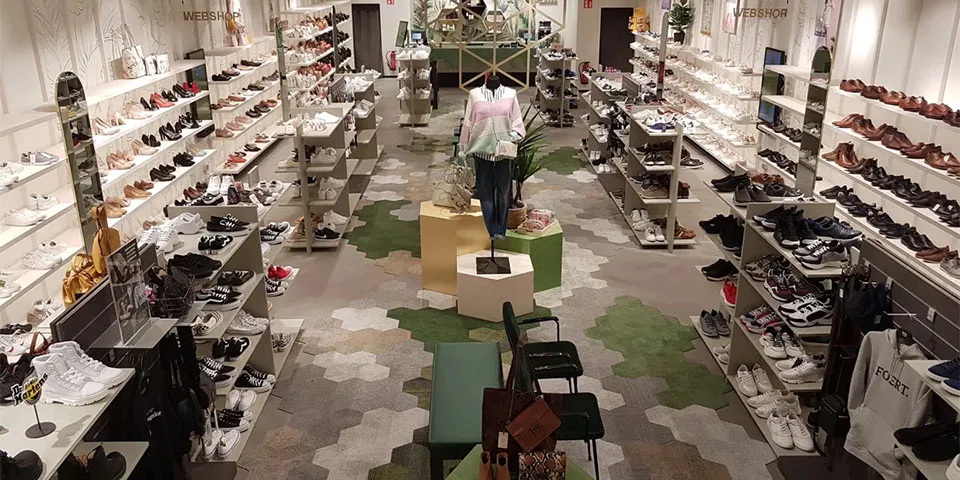
Studio Wae is primarily active in the Netherlands, but has previously worked with the Belgian shoe retailer Torfs, supplying modular flooring for three of its stores. “Working with their architects, we achieved a unique result, made 100% from waste streams,” says Tynke. “When the material reaches the end of its useful life, we at Studio Wae look at what can be reused. Anything that cannot be reused will be recycled by Interface, so no raw materials are lost.” Tynke hopes to work on more projects in Belgium and the Netherlands in future, although her ultimate ambition is somewhat unusual for an entrepreneur: “My ultimate dream is for Studio Wae’s products to become unnecessary, because there is no more waste and everyone is fully aware of the value of waste streams,” Tynke continues.
Ecological and aesthetic
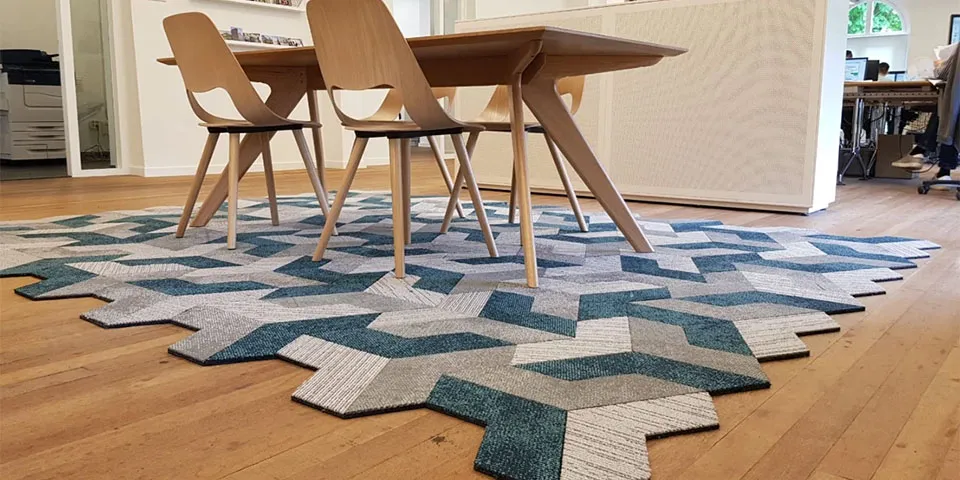
Alongside sustainability, beauty is also a key pillar for Studio Wae. “Sustainability also needs to be aesthetic; it should engage and inspire the user. We want to turn waste into art, so to speak. The shape of the tiles is inspired by the art of M.C. Escher. Our collaboration with Interface, in turn, led to the creation of the iconic Boomerang tile,” says Tynke. For use in interiors, the handmade tiles can be combined in different ways to create a variety of shapes. The result is a unique geometric interplay of symmetrical and asymmetrical patterns. Imperfections in the fabric are a bonus. “The weaving defects, combined with the freedom to arrange the geometric shapes, give every modular floor a unique character,” says Tynke van den Heuvel.
Energetic golden ochre
For workplace interiors, Interface is presenting into the blue, subtle blush and golden ochre this season. Indigo shades with a satin-blue undertone evoke the depths of the ocean and bring calm to the workplace, while plaster-like salmon hues have an invigorating effect and create a warm, sociable atmosphere. Finally, Interface is also introducing buttery shades such as golden ochre, which give interiors an energy boost and help reduce work-related stress. “When we were looking for inspiration at the furniture fair in Milan, the fearless use of vibrant yellow particularly captured our imagination. Golden ochre brings sunshine into interiors and adds cheer to the workplace in a playful, energetic way,” concludes Chantel van de Kuil.
Price for a Studio Wae project: From €40/m², depending on the size and chosen shape (City, Boomerang, Cube). A choice of more than 80 colours.
More information about the availability of Interface products is available online: www.interface.com
Question about this story? Ask your question
Keep following this
Get an email when a new story is published. No account needed.
- ThemeSustainable and circular timber supply chain
- SubjectGeneral







