











Stair strings and balustrades in HPL
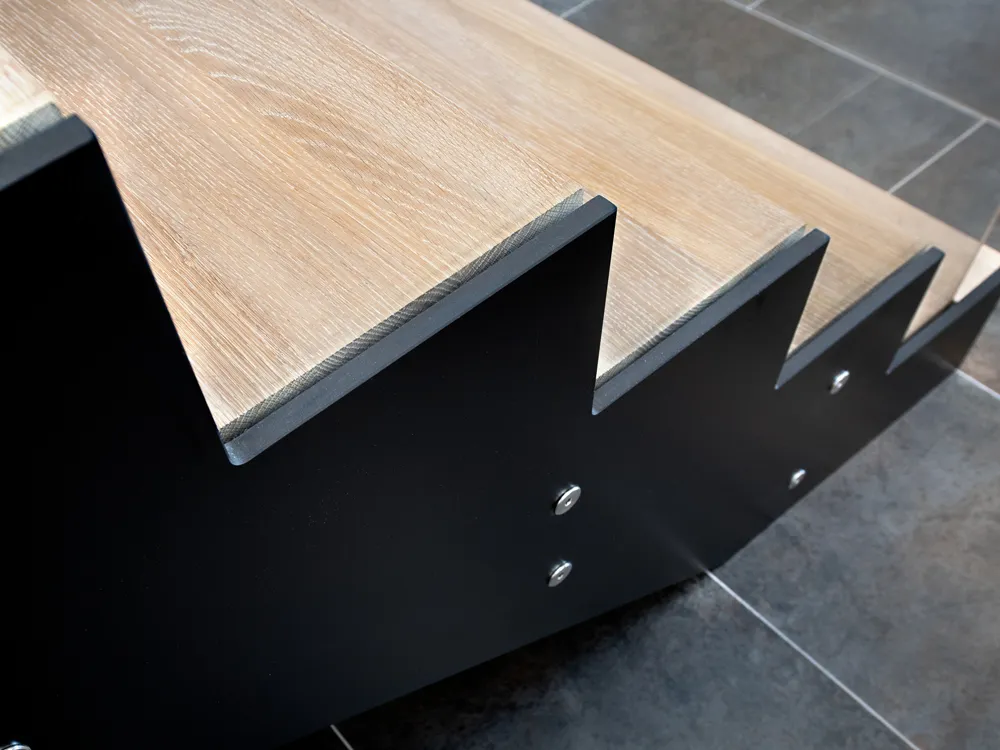
High Pressure Laminate, or HPL, is now a familiar material in the interiors sector.
Its hard, impervious surface makes it a popular choice for worktops, doors, cabinet fronts and wall cladding. In the stair industry, however, HPL is rarely used.
Text: Elise Noyez Photography: Trappen Smet
Trappen Smet, a family business and the only stair manufacturer on the Belgian market to offer this option, has been making stair strings and balustrades in black or white HPL since 2019. “We’ve been making bespoke stairs for 27 years,” says sales manager Jasper Desmet. “We want to offer customers as many options as possible, including when it comes to materials. In that respect, HPL adds value.”
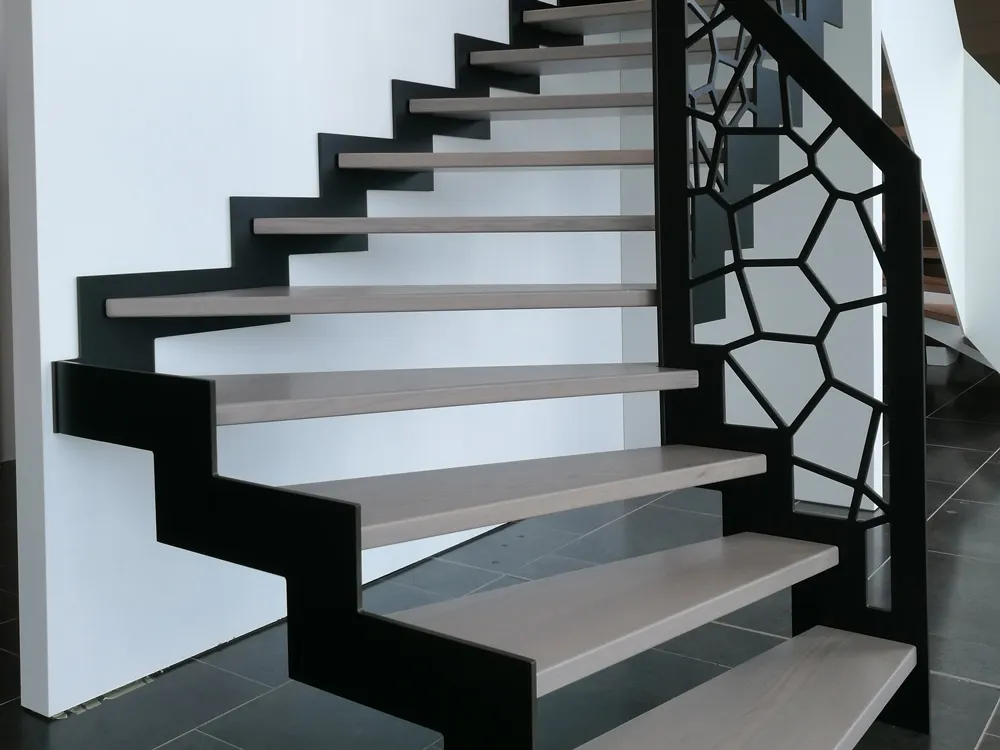
HPL can be sawn or routed into any shape to create a unique balustrade.
High performance
According to Desmet, using HPL for stair strings offers several benefits. “Thanks to its exceptionally dense structure, HPL is extremely hard, highly scratch-resistant and impervious to both moisture and sunlight. Unlike painted metal stair strings, it is not at risk of damage. What’s more, the black and white HPL sheets are coloured throughout, so the end grain, which is almost always visible on a stair string, is guaranteed to match the overall finish.”
Sleek or striking
According to Desmet, HPL has a similar look to a metal stair string: sleek and slim. But there’s also scope for decorative touches. “HPL can be sawn into any shape. By routing circles, squares, organic shapes or even text out of the base sheet, for example, we can create a sculptural or fully customised balustrade. Combined with timber treads tailored to the rest of the interior in terms of both wood species and finish, the stairs take on a truly unique character.”
Question about this story? Ask your question
Keep following this
Get an email when a new story is published. No account needed.
- ThemeSelecting timber and panel materials
- SubjectGeneral







