











Solid surface in interiors: Hygienic surfaces with style
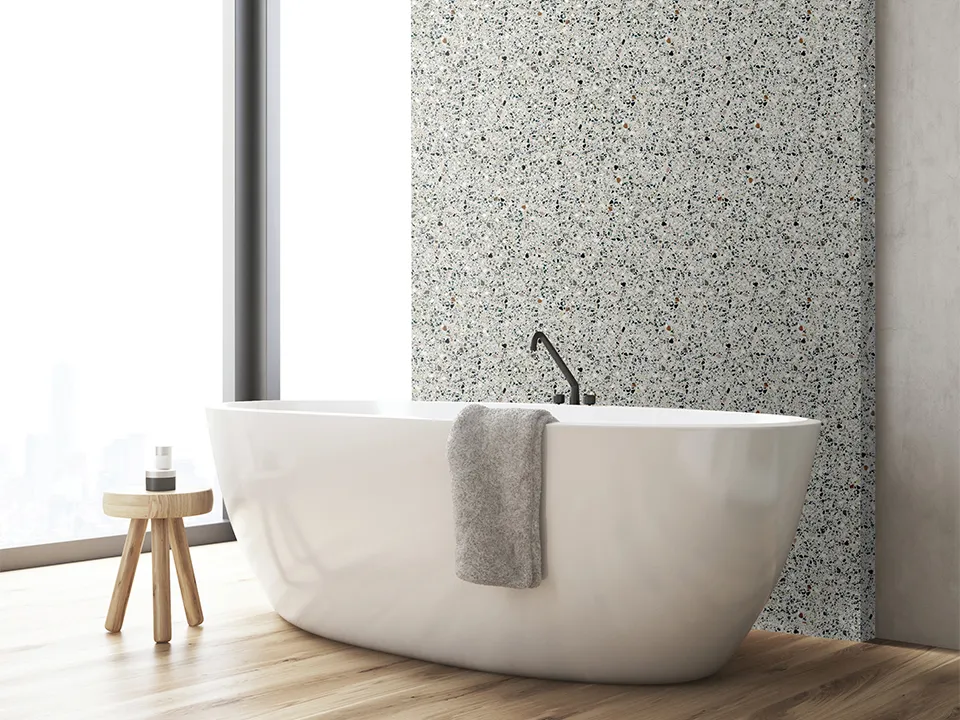
Solid surface is no longer a newcomer to the world of interiors.
Over the past few decades, this strong and versatile material has evolved from an exceptional one-off, reserved for the most luxurious and distinctive projects, into a staple of the decorative panel range. In light of the past year, the material is expected to be used even more widely in the future.
The added value of solid surface in a post-coronavirus era is no coincidence. Around 60 years ago, the material, a blend of aluminium trihydrate and acrylic resin, was developed specifically for the medical sector. Its useful advantages included not only a strong, non-porous and antibacterial surface, but also the ability to thermoform the material, eliminating potential risk points such as joints and sharp corners.
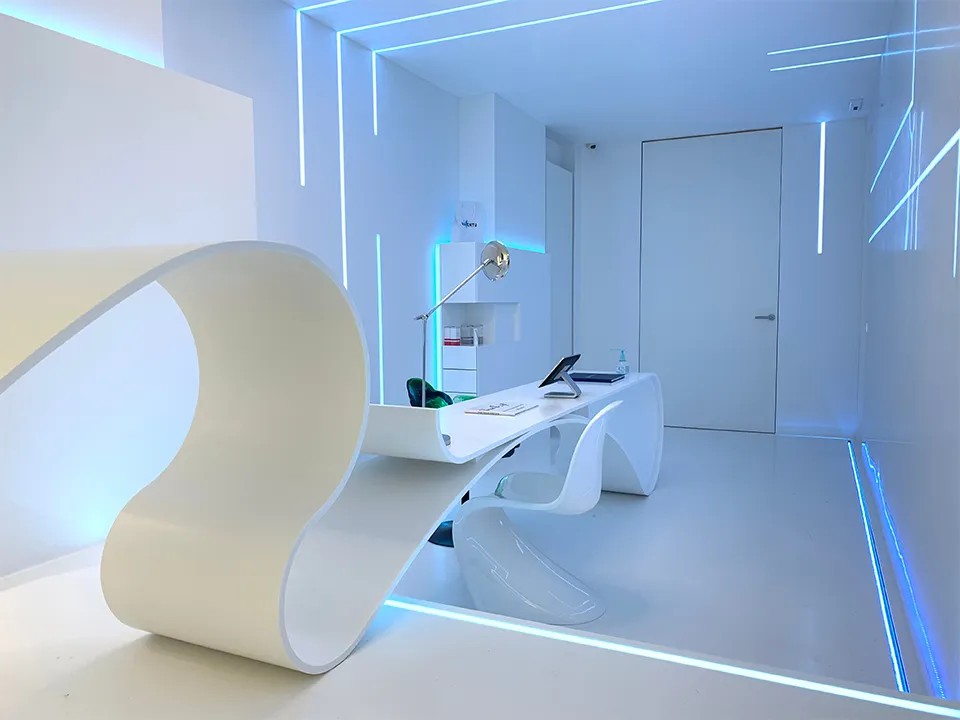
Today, the whole world is necessarily paying attention to the spread of germs through the air and via surfaces. In both public buildings and residential projects, there is growing demand for decorative surfaces that are also hygienic, easy to disinfect and highly resistant to chemicals. Thanks to its inherent material properties on the one hand, and ongoing developments in aesthetics and technology on the other, solid surface could offer a solution.
Versatile design options
Solid surface is used in residential kitchens and bathrooms, as well as in hotels, restaurants, shops and even television studios. In homes, the panels are still mostly used as they are, sometimes with standard thermoformed accessories such as sinks and washbasins. In commercial projects, there is more scope for fully bespoke organic forms.
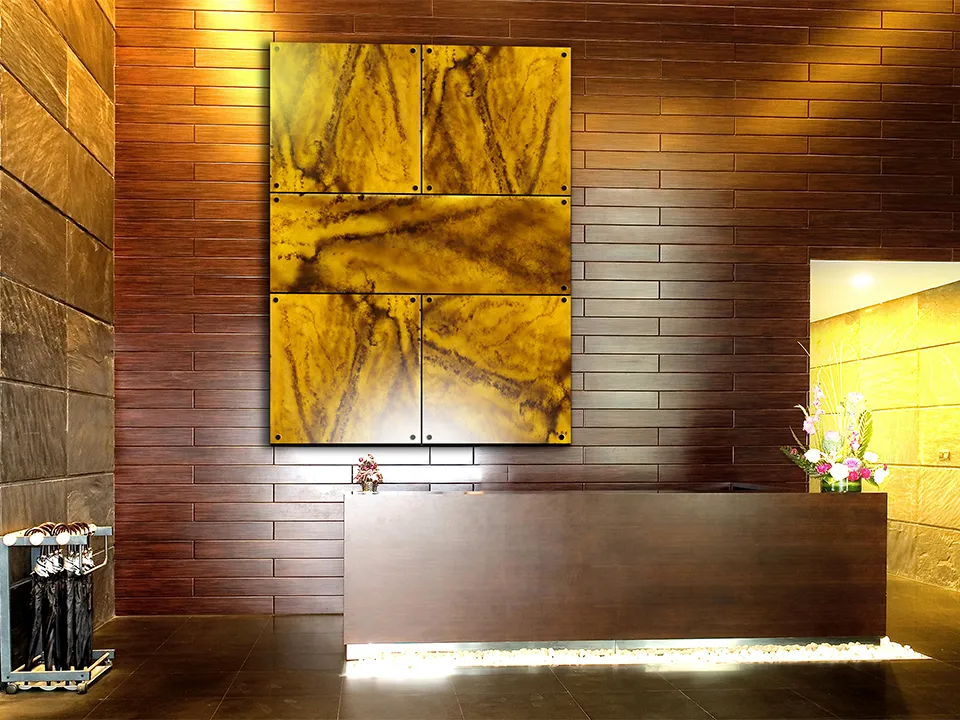
In both cases, the ever-growing range of colours and textures gives designers the creative versatility to develop a unique concept for every brief and every taste. Across manufacturers, hundreds of designs are now available, from vivid solid colours to a range of stone and natural stone effects. In step with interior trends, collections are constantly being expanded. One of the most recent developments is the search for translucent and even transparent solutions.
Dark colours
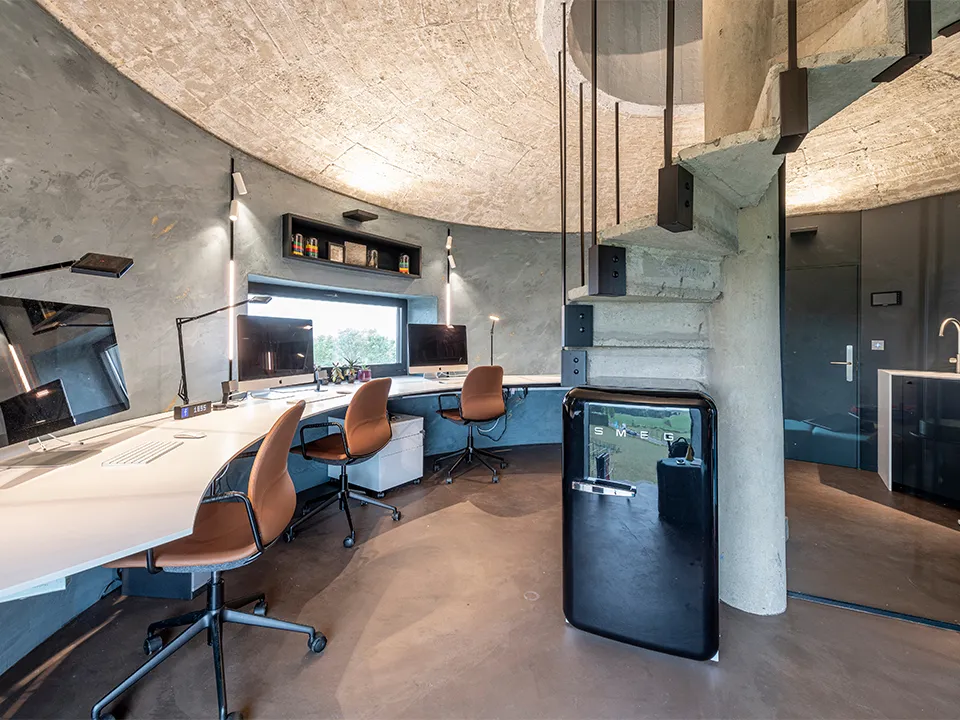
At its core, however, solid surface is primarily a white material. It was only under the influence of the design world that colour pigments and textures were added to the basic composition, including an increasing number of dark and black shades. In the past, manufacturers and users regularly came up against a limitation of the material. Although solid surface panels are coloured throughout, scratches still show up to some extent as white marks. The darker the material, the more visible a scratch. In recent years, several manufacturers have therefore developed and launched technologies to optimise the material’s colouration and reduce this effect as much as possible.
Easy processing
Efforts are also being made every day across the solid surface industry to make processing easier. Solid surface can indeed be thermoformed into almost any shape and joined seamlessly, and any damage can be repaired invisibly while scratches can be polished out, giving it an effectively unlimited lifespan. However, all this requires a precise and labour-intensive process.
For example, achieving a neat, seamless bond requires working in a clean, dust-free environment and ensuring the joints are sufficiently clamped. Sanding surfaces is another essential step, both for seamless bonding and for an even finish and surface repairs. The less sanding required, for instance by using highly dimensionally stable panels or panels with greater scratch resistance, the more efficient the processing.
Question about this story? Ask your question
Keep following this
Get an email when a new story is published. No account needed.
- SubjectGeneral







