











Oak, the undisputed king of timber species
Text Wendy ThijsImage Hout Info Bois / Treeline / De Bosbeke
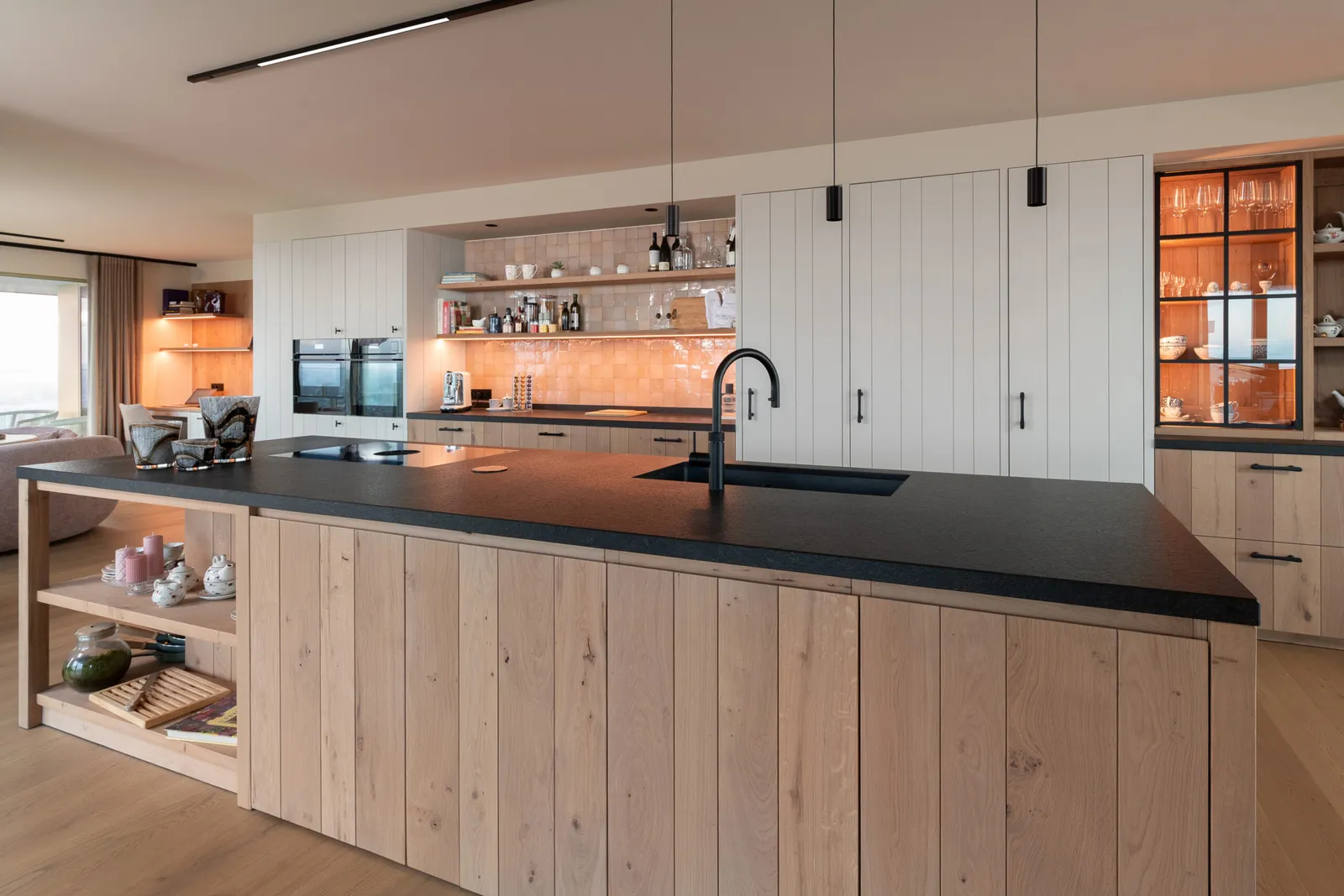
If there is one timber species every tradesperson uses, it is oak. It is a mainstay of Belgian interior construction and joinery, and remains a popular choice with architects and end customers alike. No wonder: oak is widely available, timeless and easy to work with. But being widely used does not necessarily mean it is well understood. Time to take a closer look at oak.
The oak timber used in Belgium comes mainly from Europe and North America. However, oak is found throughout the world. Oak species also grow in regions such as Java, Indochina and parts of Central and South America. There are hundreds of species worldwide.
Widely available on the timber market
Note: timber sometimes appears on the market under the names ‘eik’ or ‘oak’ that is not botanically true oak. Only timber from the genus Quercus may be called oak. When the term ‘oak’ is used without further qualification, it usually means European oak. Pedunculate oak (Quercus robur) and sessile oak (Quercus petraea) are the most commonly used European species. Oak from North America is explicitly referred to as American oak.
Although timber is already one of the most environmentally friendly building materials, its environmental benefits can be increased further by choosing locally sourced timber. As oak grows well in Belgium, a local supply chain is entirely feasible, with less transport and a lower environmental impact.
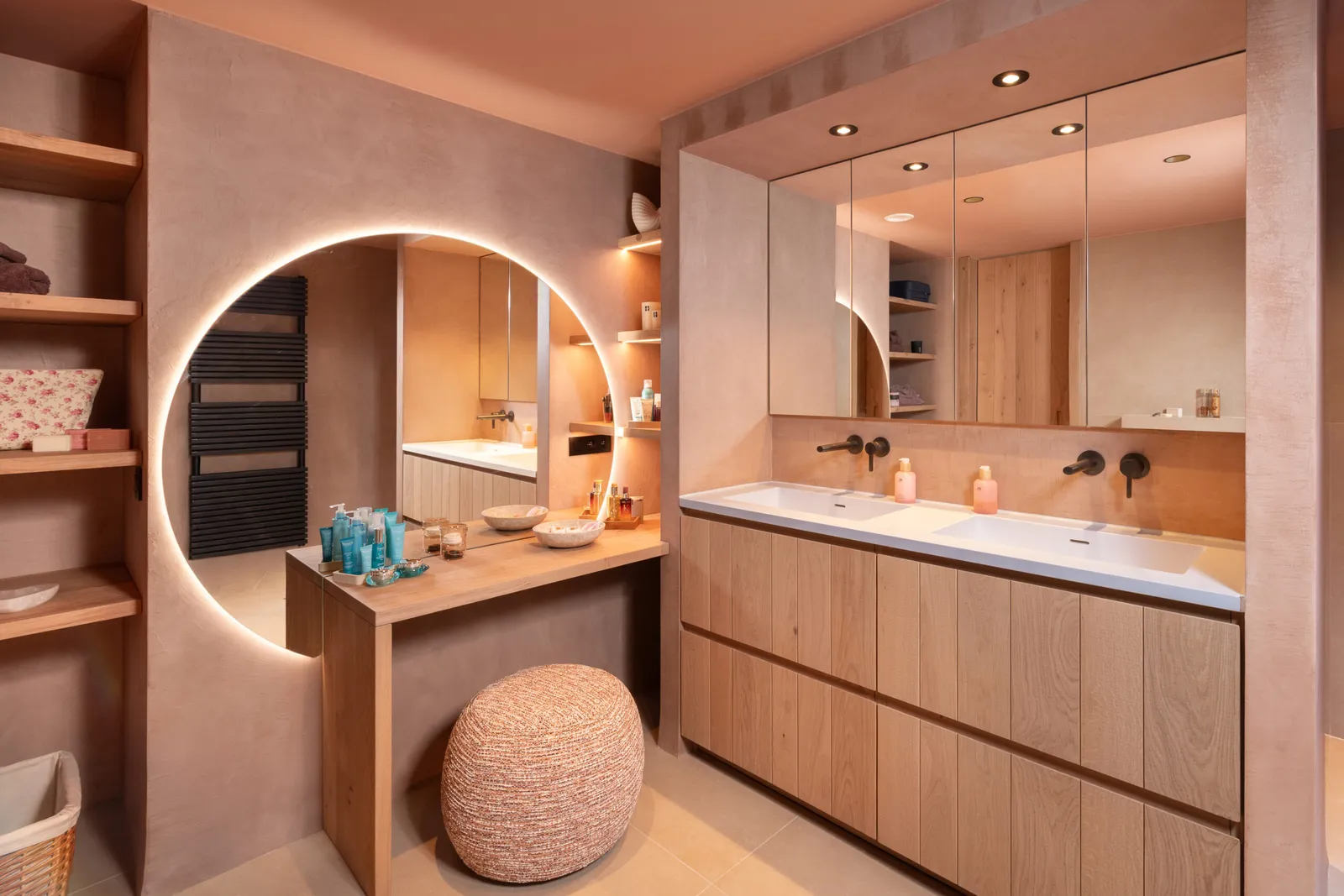
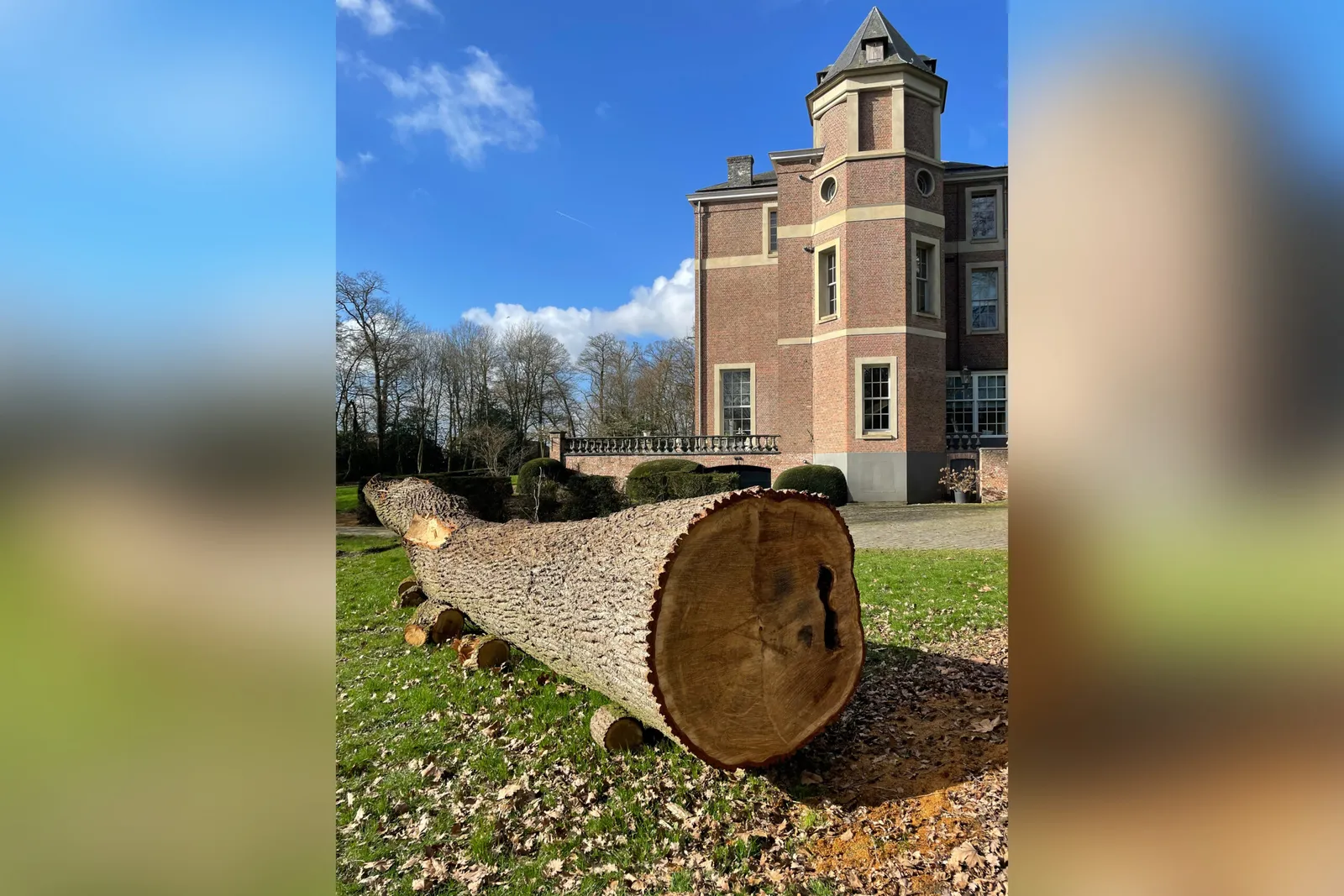
A timber species with many facets
In North America, there are two main groups: white oak and red oak. European oak is most similar to white oak, with heartwood ranging from light to golden brown. Red oak tends more towards a reddish brown.
On the end grain, the growth rings are clearly defined. Plain-sawn oak has a pronounced flame figure, giving the timber a lively character. In quarter-sawn oak, the medullary rays appear as silvery flecks. This effect is sought after, but also more expensive, as quarter-sawing yields less timber from the log.
A timber species with a quality standard
Precisely because oak is one of the most widely used timber species, there are clear guidelines for assessing its quality. The appearance quality of European oak is covered by the Belgian standard NBN EN 975-1:2009. It specifies how often and to what extent visible defects, such as knots, splits or sapwood, may occur within a particular quality grade.
American oak is graded according to the US system. Under this cutting system, each defect is not assessed individually. Instead, the plank is assigned a grade based on the percentage of clear surface.

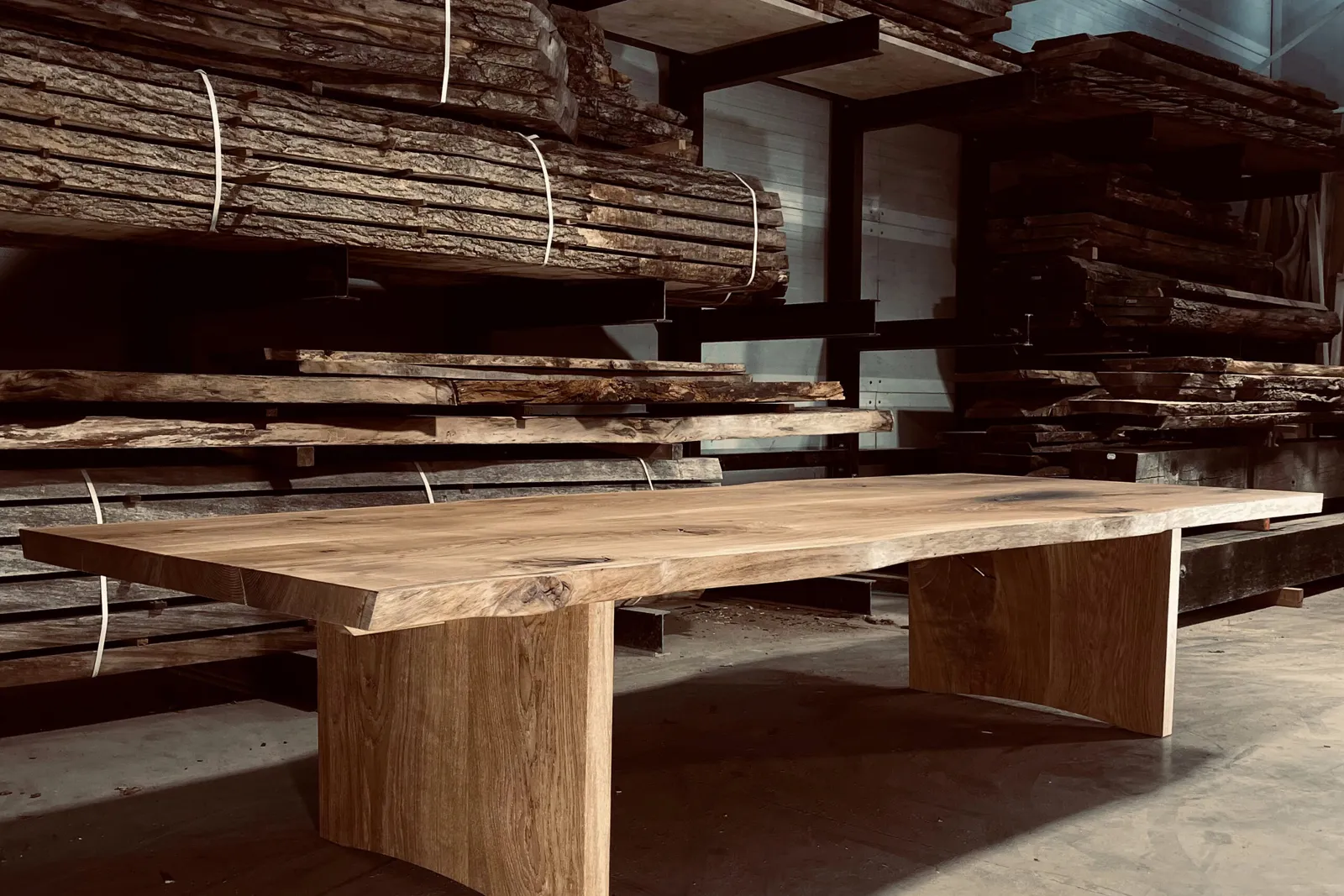
From parquet flooring to bespoke work
Oak is highly versatile in interior construction, largely thanks to its heartwood, which ranges from moderately durable to durable (durability class II to III). The sapwood is not durable and is used less often. The highest grades are often used for parquet flooring and veneer, sometimes processed into panel products. Oak is also widely used for internal doors, furniture and staircases, as well as for structural timber.
Points to consider when working with oak
Well-dried oak is dimensionally stable, but requires some care during processing. As oak splits easily, pre-drilling is recommended when using screws and nails. It is also best to use corrosion-resistant fixings, as the tannin in oak reacts with metals and causes discolouration. Oak is easy to machine and work by hand. Tip: a cutting angle of about twenty degrees gives the best results for a smooth finish. Steam and a bending form are useful for curved applications, and European oak is particularly well suited to this technique.
Want to know more? For technical questions about oak, contact Hout Info Bois.
Question about this story? Ask your question
Keep following this
Get an email when a new story is published. No account needed.
- ThemeSelecting timber and panel materials
- SubjectGeneral







