











New uses for “waste wood”
Sustainable business
Wood-Design aims to make the timber sector more sustainable. Five designers were paired with five timber businesses to find new solutions for their wood-based by-products over a two-year programme. The results? Innovative products and services, one of which even won a Henry van de Velde Award. Here is an overview.
Every little helps, as do the bugs, it turns out, in the transition to a more circular economy and sustainable society. With Wood-Design, a project supported by Vlaanderen Circulair, BOS+, Flanders DC and Hout Info Bois set out to investigate whether the timber and design sectors could contribute to this, even on a small scale. How can we make more sustainable use of natural resources, in this case the by-products generated by businesses in the timber sector? This waste wood is currently used mainly in particleboard, as an energy source or for composting. Are there other possibilities? The project aims to inspire and encourage the sector to consider alternatives.
Deadwood and biodiversity
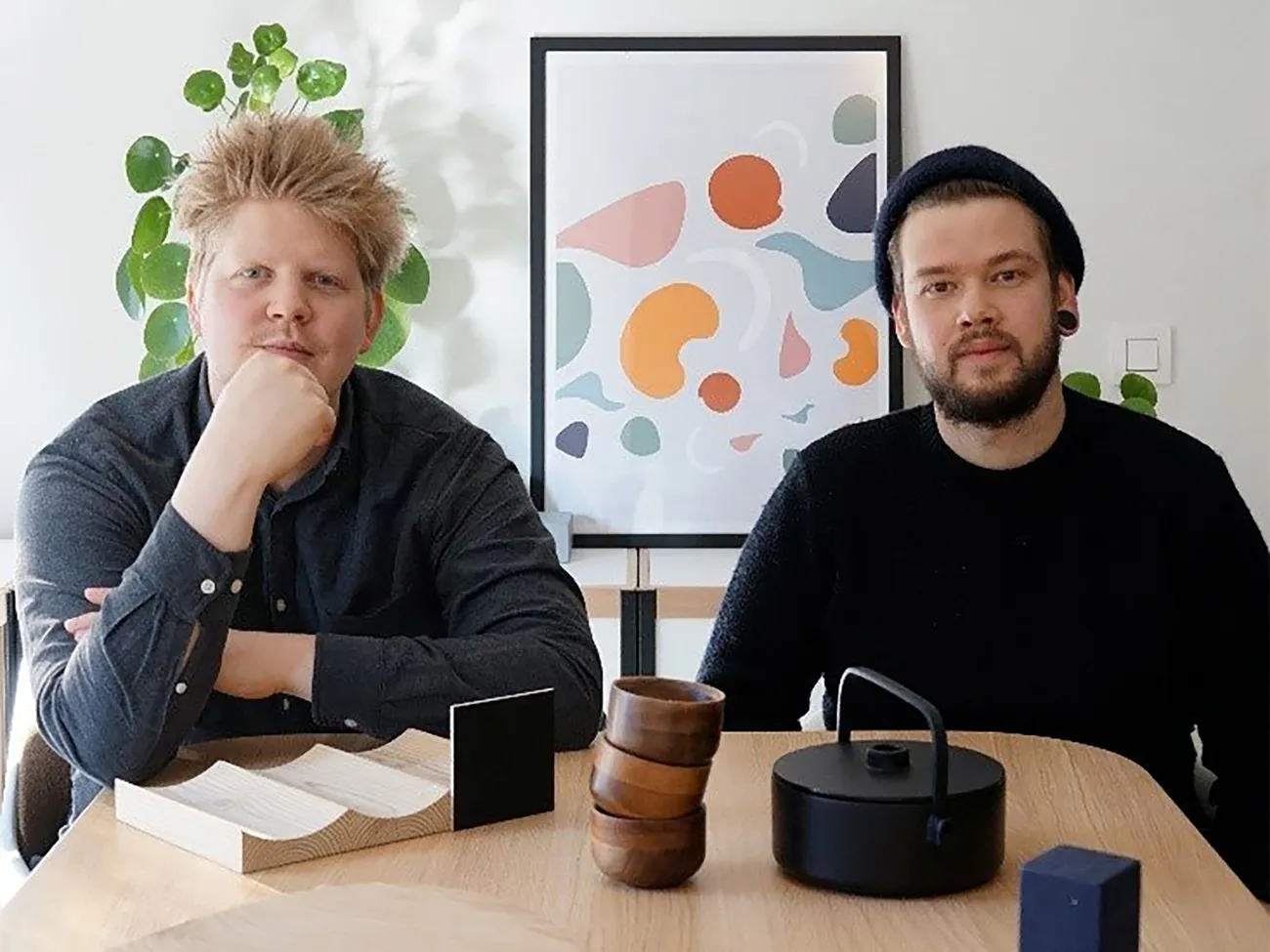
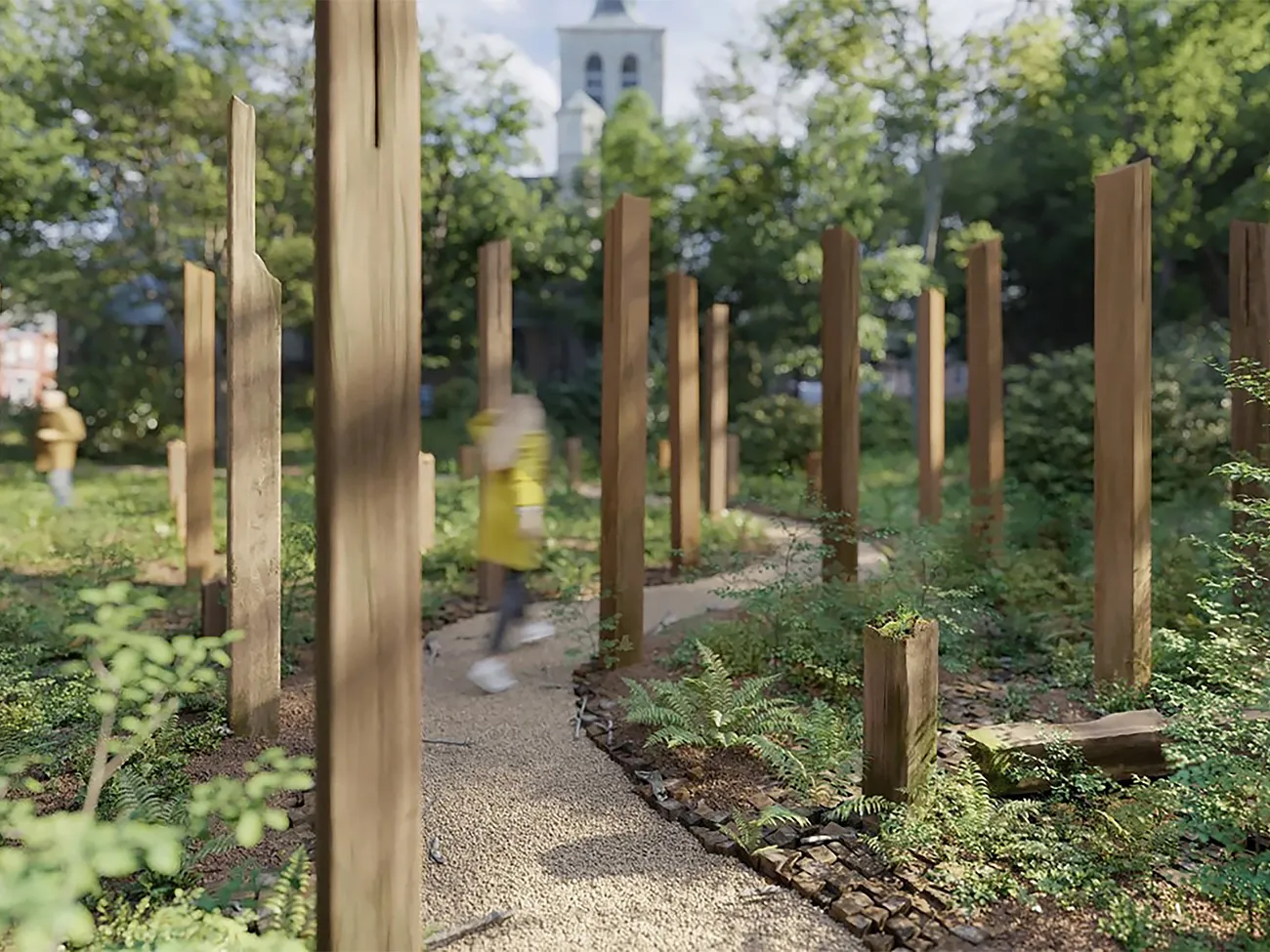
We spoke to Giel Dedeurwaarder, an industrial product designer who, together with furniture maker Brent Neve, forms the duo behind the research platform Utilise.objects. For the Wood-Design project, they worked with the by-products of forest operator and timber merchant Cohout. Their shared enthusiasm led to two ambitious projects. Giel: “Our first project focuses on deadwood, primarily in the interests of biodiversity. Fortunately, deadwood is now given more space in forest management, with all the benefits that brings. We want to go further and extend this approach to cities and municipalities, using an installation made from beams of various types of waste wood. It is not simply an art installation, but a whole that will, over time, be taken over by nature. This will automatically make the city or municipality a little greener.”
Henry van de Velde
Private gardens were also considered. As part of the same biodiversity project, Utilise.objets designed three objects made from sawmill offcuts of logs sawn through and through. Each object in the series, Wand, Bodem and Staand, is aimed at a different group of insects that make their way into the garden. “The bark side is actually the most interesting part of the tree for insects, and therefore very useful,” they explain. The insect hotels show that usefulness can also be beautiful: they have a strong design appeal and can be combined aesthetically. The project won bronze in the Environment category at the Henry van de Velde Awards 2022.
Giel: “The Dutch design label Weltevree is interested in bringing the product to market in 2023.” Watch this space!
Undervalued local poplar
A second project focuses on adding value to poplar. “Today, the timber is used mainly for the match industry and fruit crates, and rarely finds its way into the interior or construction sectors. Our motivation was to tackle the negative associations attached to poplar and explore practical possibilities.” Its potential is evident from the distant past: in the Middle Ages, poplar was used, for example, to make furniture. “Through experiments, including with a metal roller, we managed to densify the surface of poplar and create new joints. Possible applications include CLT panels for solid timber construction, as well as multi-layer furniture boards. We also tested colouring poplar, with positive results.” Another welcome benefit is that, whereas usually only the lower trunk of the poplar is used, the middle section of this native, fast-growing tree is also ideally suited to these new applications. Less waste wood, more sustainable uses.
Surprising furniture design
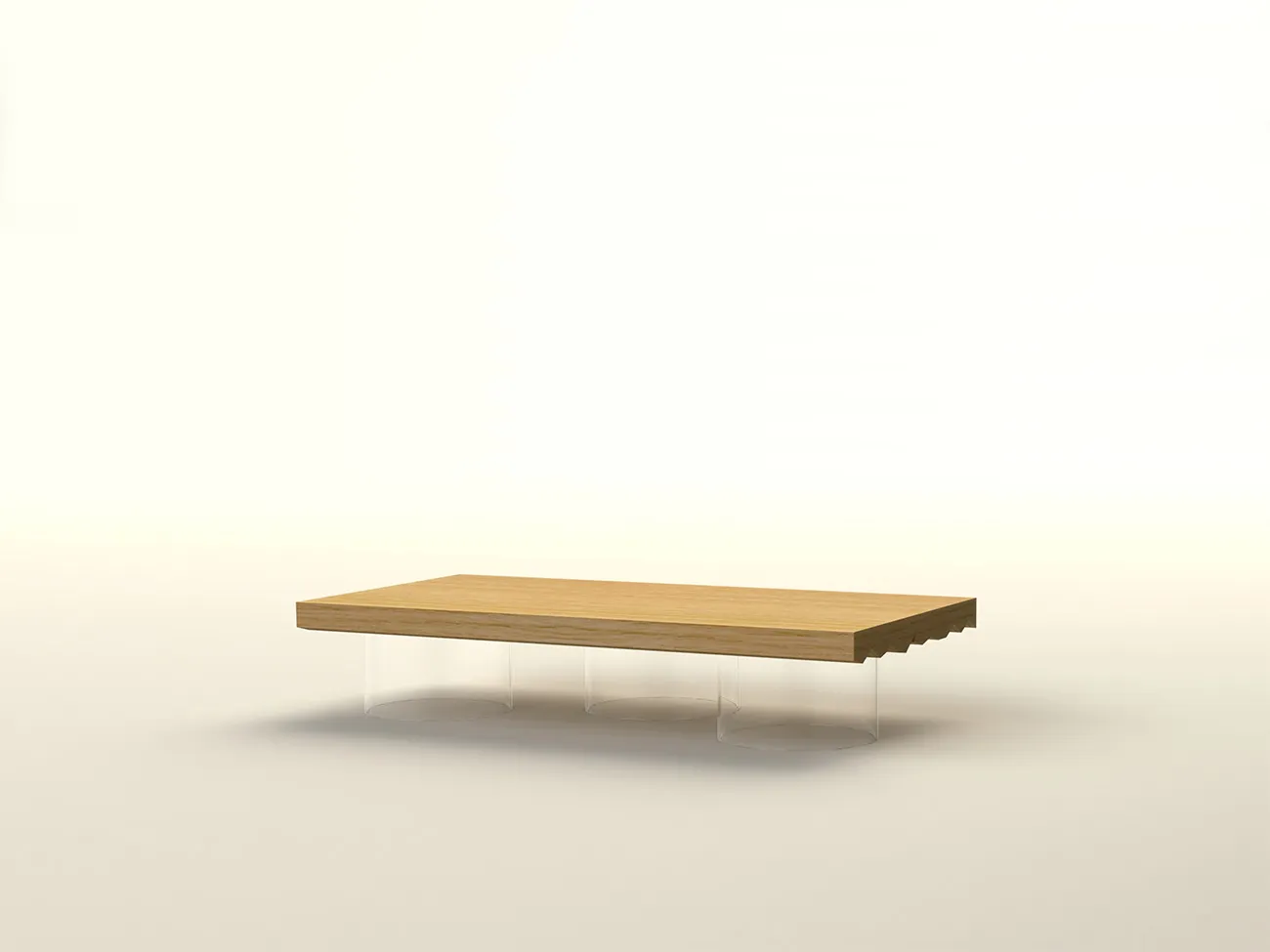
Each designer brought a very different and surprising approach. Designer Frederik Delbart teamed up with furniture maker Steven Gauwberg to work with surplus dried oak from
Thys Hout and designed two furniture collections. He combined the timber with large, transparent borosilicate glass tubes for the bases, making the solid boards appear to float. Studio Plastique, a collaboration between designers Archibald Godts and Theresa Bastek, worked with by-products from timber merchant Vercruysse and designed +52, a wooden step stool that can also be used as a seat. The piece was not designed to be made from a single wood species and can vary in thickness depending on the timber, to ensure its strength. This naturally gives rise to aesthetic variations in colour and texture.
Original concepts
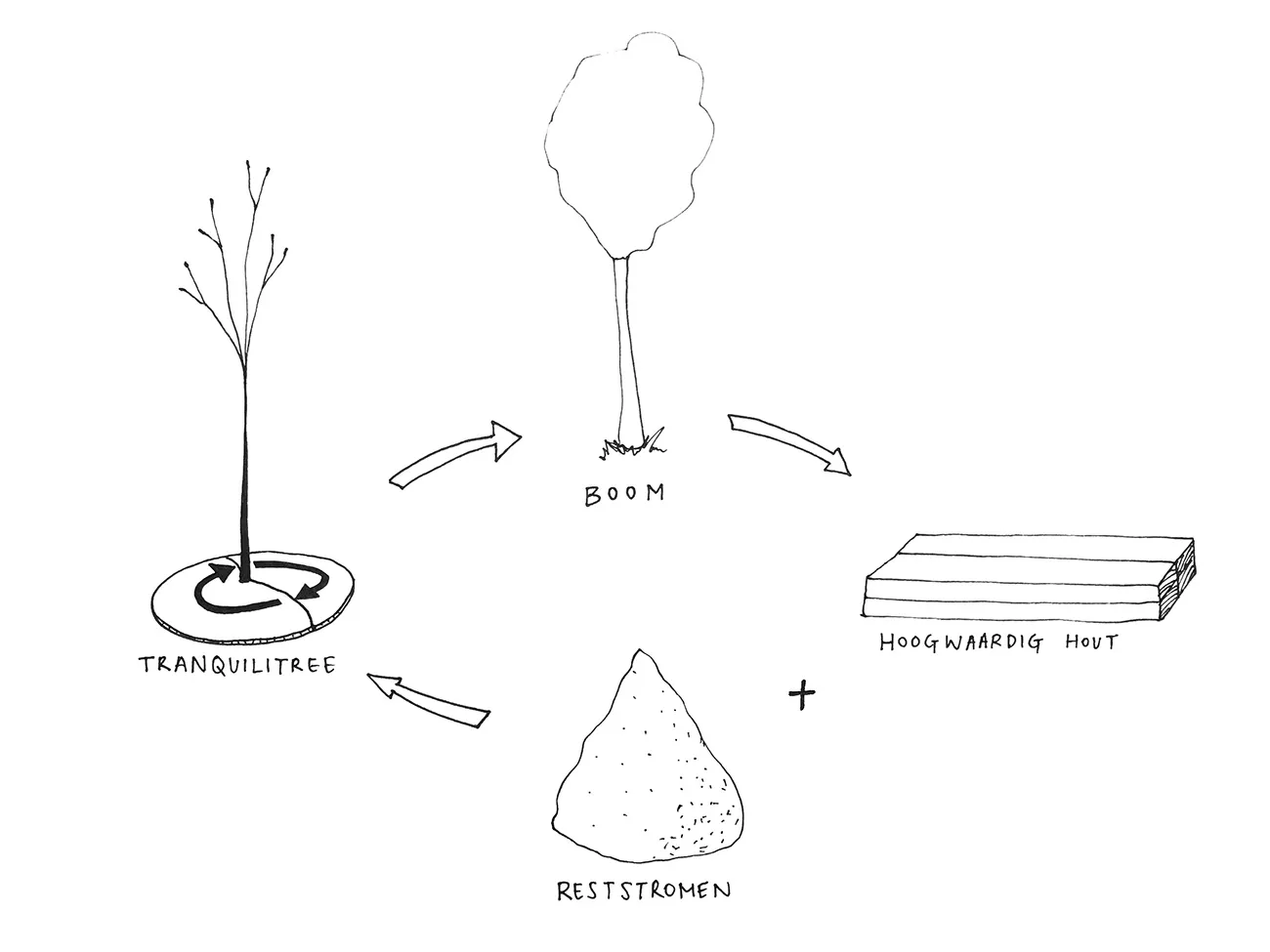
Industrial product designer Ellen Comhaire, who was paired with softwood sawmill IDE Woods, took a different approach. She developed Tranquilitree, pads that help trees stay healthy during the first few years after planting. Made from local, low-grade by-products, the pads are circular in every respect and protect the tree from drying out and competing vegetation. Last but not least is Nauwau, where designer Rayah Wauters and tree care specialist Niels Arnauts were paired with forest operator and timber merchant Marc Goossens. They came up with Timbr, a play on Tinder, to bring together the supply and demand for timber in a simple way. It is a platform connecting suppliers of solid (waste) timber with those looking for it. Are you a designer, joiner or simply a DIY enthusiast looking for timber? The app automatically suggests the best available lot based on a number of criteria, such as wood species, thickness, length, origin and moisture content. Alongside its commercial function, Timbr also aims to inform and inspire, and to promote the use of local timber. In short: one theme, five designers and a range of results showing that thinking about sustainability pays off.
Question about this story? Ask your question
Keep following this
Get an email when a new story is published. No account needed.
- SubjectGeneral







