











Metal cladding
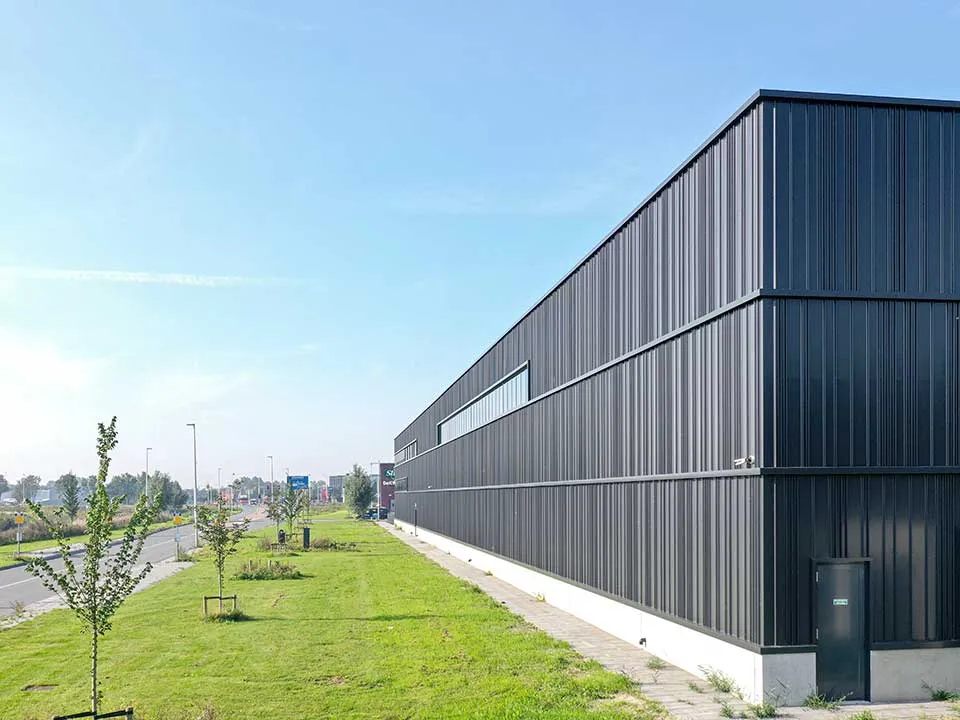
Pressed corrugated profiles are gaining ground.
Custom-made metal cladding is gaining ground, and pressed corrugated profiles in particular are becoming more popular. According to Maarten Zaat, director of Metal Cladding Systems, there is a straightforward explanation. “For a modest additional cost, a building can be given a truly unique, contemporary appearance. Architects can even create their own pattern for a profile.” Fine examples include the new head office of Groenhart Group in Purmerend and the TD building in Eindhoven.
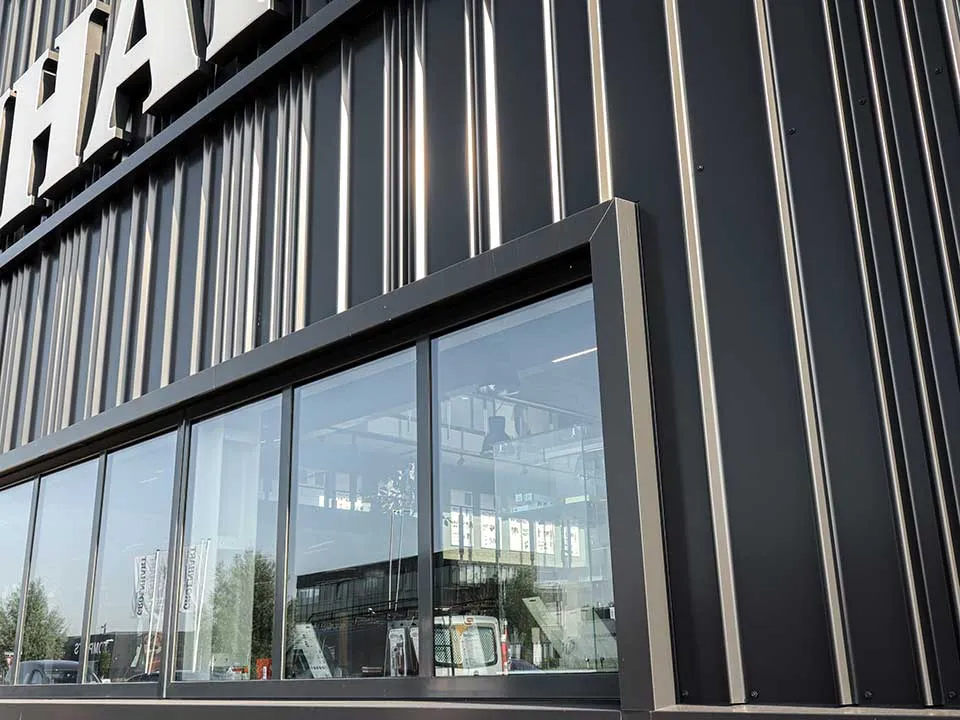
Metal Cladding Systems operates as an importer in the Benelux for three manufacturers of metal cladding and one manufacturer of GFRC cladding. “We represent, among others, MN Metall GmbH from Neustadt and Hans Laukien GmbH from Kiel,” says Maarten Zaat. “MN Metall offers an extensive range of metal profiled cladding, including bespoke products, while Hans Laukien not only supplies roll-formed profiles but is also investing heavily in bespoke profiled cladding. This expansion reflects growing demand for pressed profile shapes in metal cladding. Pressed corrugated profiles in particular are becoming increasingly popular.”
Bespoke cladding
The municipality of Purmerend imposed certain aesthetic requirements on the design of the new head office of Groenhart Group. “The new building is in a prominent location,” says Chanan Hornstra of HRH Architecten. “This brought with it a number of planning requirements, and it was also stipulated that the building should read as a single volume. That posed a challenge for us as architects: we had to ensure that the different functions, in this case offices, a distribution centre, warehouse, workshop and so on, were not apparent from the outside. We then spent considerable time exploring façade solutions with high, yet affordable, aesthetic value and came across a metal-clad sports hall in the middle of the country. That led us to MCS. It turned out to be bespoke cladding by Hans Laukien.”
Individual design
“Bespoke work is quickly associated with high costs,” Zaat admits. “Yet the profile systems from Hans Laukien, among others, show that for a modest increase in the overall construction budget, you can give a building its own identity. There is a negligible difference in the supporting structure required for standard roll-formed profiles and bespoke profiles. Only the outer sheet is different. But that gives the building real character. It is also possible to give a profile its own design. For example, you can vary the pattern using a single profile type by changing the centre-to-centre spacing. Alternatively, you can choose several corrugation shapes with different profile forms for even greater variation. The new Groenhart Groep premises feature single-corrugation cladding of the Hans Laukien W40/70 type, pressed in three different patterns and applied in a random arrangement. We have received a great deal of feedback on this project. A wonderful design, detailed to perfection by the architect.”
A tour de force
“As an architectural practice, we didn’t have much experience designing steel cladding,” says Hornstra. “So we really did need support. MCS provided highly professional assistance. They have all the expertise in-house and know better than anyone what it takes to ensure the design can be realised as intended. The irregular corrugation of the profiled cladding creates an attractive play of shadows and a striking appearance, making the building look less imposing too. Every façade element is both aesthetic and functional. One nice detail, for example, is the use of a perforated version of the same profiled sheet on the façade next to the outdoor terrace. The result is truly stunning. From certain angles, you can see through the façade in a filtered way, while the terrace remains connected to the outside world. A tour de force.”
One example of a project featuring a double pressed corrugation is the transformation of the TD building in Eindhoven. “The façade consists of several bays of different widths. To detail the width of each bay with millimetre precision, we chose a variable pattern featuring two different corrugation shapes,” Zaat explains. “These are the Laukien W 15/40 and W 40/70, with two corrugations measuring 40 and 15 millimetres high, pressed in nine different configurations and colour-anodised. This finished result is another impressive achievement.”
Question about this story? Ask your question
Keep following this
Get an email when a new story is published. No account needed.
- SubjectGeneral







