











Knowledge of timber is often overestimated: why training remains crucial
Text Wendy ThijsImage Timber Training Center
Dirk Glas spent many years in the timber sector, building up a wealth of knowledge and experience. He still draws on that expertise today to help raise standards across the sector. Through the Timber Training Center, he is committed to passing on timber knowledge to professionals, while Hout & Jobs helps companies put the right people in the right roles.
Dirk Glas’s expertise in timber did not come out of nowhere, though a degree of chance was involved. After studying interior architecture, he was keen to get to work as soon as possible, and the first opportunity that came his way was a job with a timber importer. He became fascinated by the material and went on to work for various timber companies at home and abroad for more than forty years.
The world of timber buying and selling holds few secrets for him. He learnt the sector’s commercial logic and gradually built up a sound knowledge of the market and the material.
Because he believed it was important to buy timber with a sound understanding of the material, he completed several specialist training courses.
Het Houtbad: specialist timber training for professionals
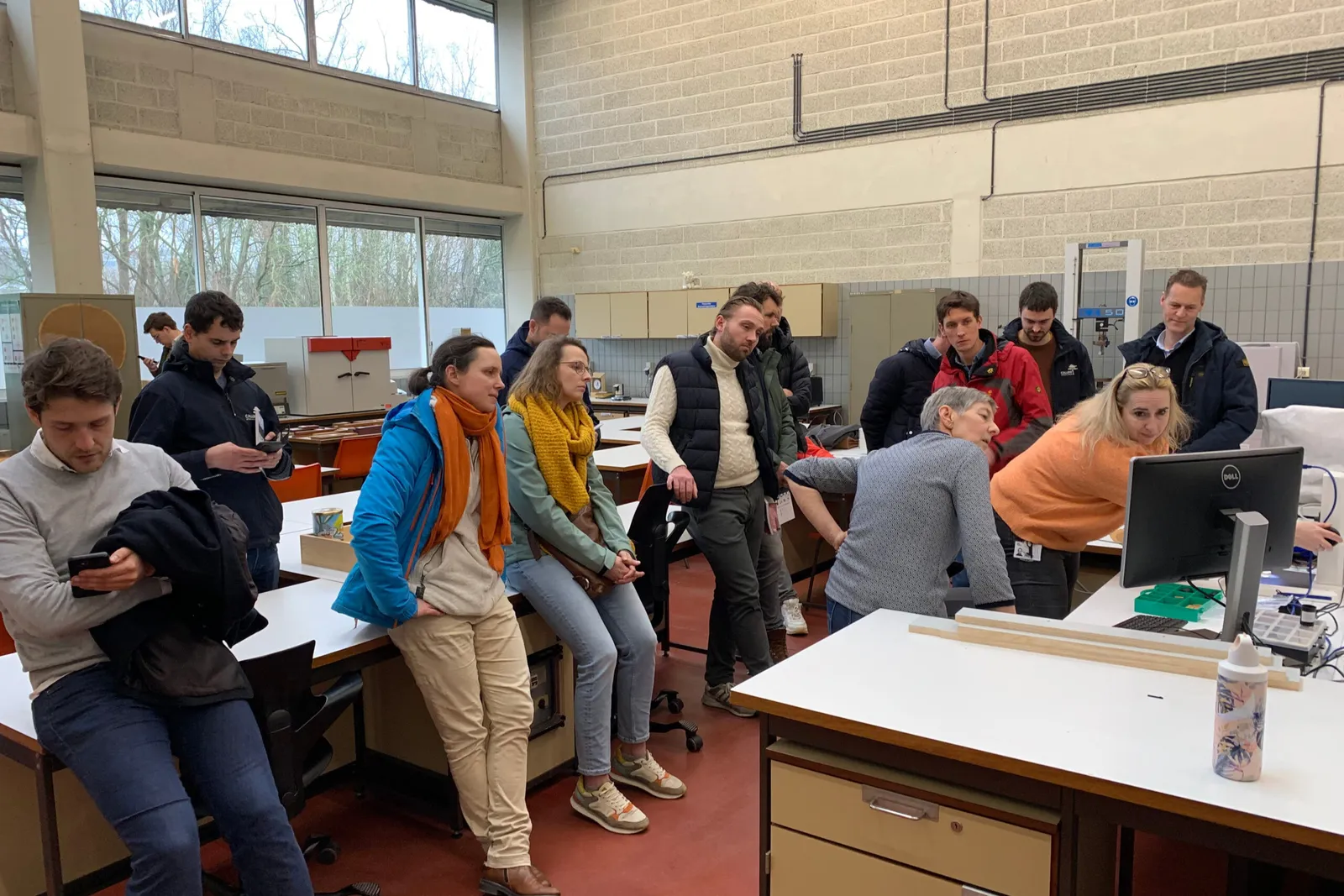
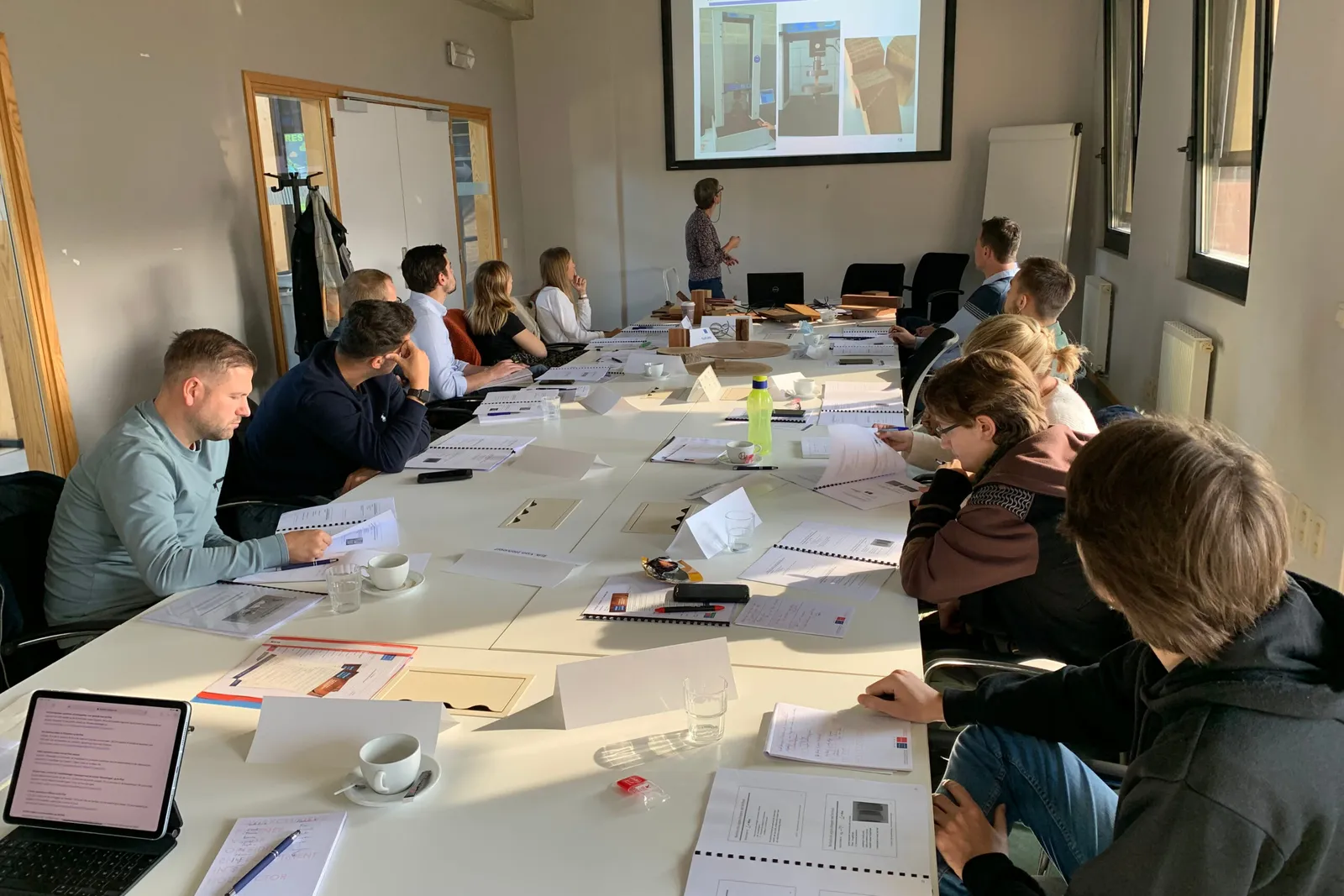
As there was no comprehensive professional training course in Flanders at the time, he took the initiative together with several people from the sector. This led to the founding of the Timber Training Center more than twenty years ago. It has been organising timber training courses ever since. “People often overestimate their knowledge of timber,” says Glas. “When you ask them more about it, you realise their knowledge is mostly limited to the species and materials they encounter in their day-to-day work. Het Houtbad gives professionals the chance to broaden and deepen their knowledge.”
The course has evolved considerably to keep pace with changes in the sector. The new course, which starts in Ghent on 21 May, focuses on the different timber species, their properties and how they behave in various applications. It also covers timber anatomy, moisture content, commercial forms, quality standards and the identification of species from Europe, Africa, South America and Asia. Participants also learn how different species compare with one another and what alternatives are available when a particular species is hard to source. For the first time, the course will also cover timber construction, fire resistance and grading, as demand for these subjects continues to grow. Timber expert Koen De Mesel will be teaching the course.
Finding the right match in the timber sector
Precisely because the timber sector is so specialised, finding the right person for the right role is a challenge. Glas also works in this area through Hout & Jobs, a recruitment partner for the timber sector. The idea first took root when he received a phone call from the Netherlands one day. “One of the major players there was looking for an employee and asked whether I knew anyone who might be suitable for the role. Someone I knew in the sector, or someone who had attended one of our courses. That’s how things got started,” he says.
He joined forces with Patrick Claeys, a recruitment and selection specialist. Claeys’s recruitment expertise, combined with Glas’s knowledge of the sector and materials, means Hout & Jobs is highly successful at matching the right candidates with national and international companies in the timber sector. The focus is primarily on strategic, commercial and management positions. When necessary, the two work discreetly, as companies do not always want to make public that they are looking for talent. Glas and Claeys have now built up a network of more than 3,400 potential candidates.
Where does the sector’s timber knowledge lie?
The timber sector is a chain made up of many links. Ideally, every link would have the necessary timber knowledge, but according to Glas, that is not always the case in practice. Architects and designers specify materials, but timber and panel products receive little attention during their training. As a result, they usually rely on the joiner’s expertise when it comes to technical questions. But building up that knowledge of materials is no longer easy for tradespeople either. “Secondary education no longer places as much emphasis on developing knowledge of materials,” says Glas. “Many joiners and interior fitters only develop that expertise over time.”
“The timber merchant should have the necessary knowledge, but there too, expertise is often concentrated in the hands of a small number of specialists. When they retire, their knowledge disappears from the business as well.” Through Het Houtbad, Glas wants to prevent valuable knowledge from leaving the sector in this way. By passing it on to a new generation, he hopes to continue contributing to a strong, future-proof timber sector.

Question about this story? Ask your question
Keep following this
Get an email when a new story is published. No account needed.
- SubjectGeneral







