











How sustainable are façades made from recycled aluminium?

As the construction industry pursues a circular approach, façades made from recycled aluminium are increasingly being specified. This is a positive development, but how can you, as a designer, know whether the recycled aluminium you specify has actually been used in products before, rather than being production waste reused in the manufacturing process? And does it really matter? The terminology involved is essential, as it turns out, because it contains subtle but significant distinctions.
Aluminium has the unique property of retaining all its characteristics after recycling. It can be remelted indefinitely and reused for the purpose for which it was originally intended. This makes aluminium a sustainable and environmentally friendly material, although not all types of aluminium are identical. The same applies to the recycled aluminium content of a product. Misuse of the terminology involved, whether deliberate or not, can cause confusion, including by overstating the environmental benefits. This is, of course, something to avoid …
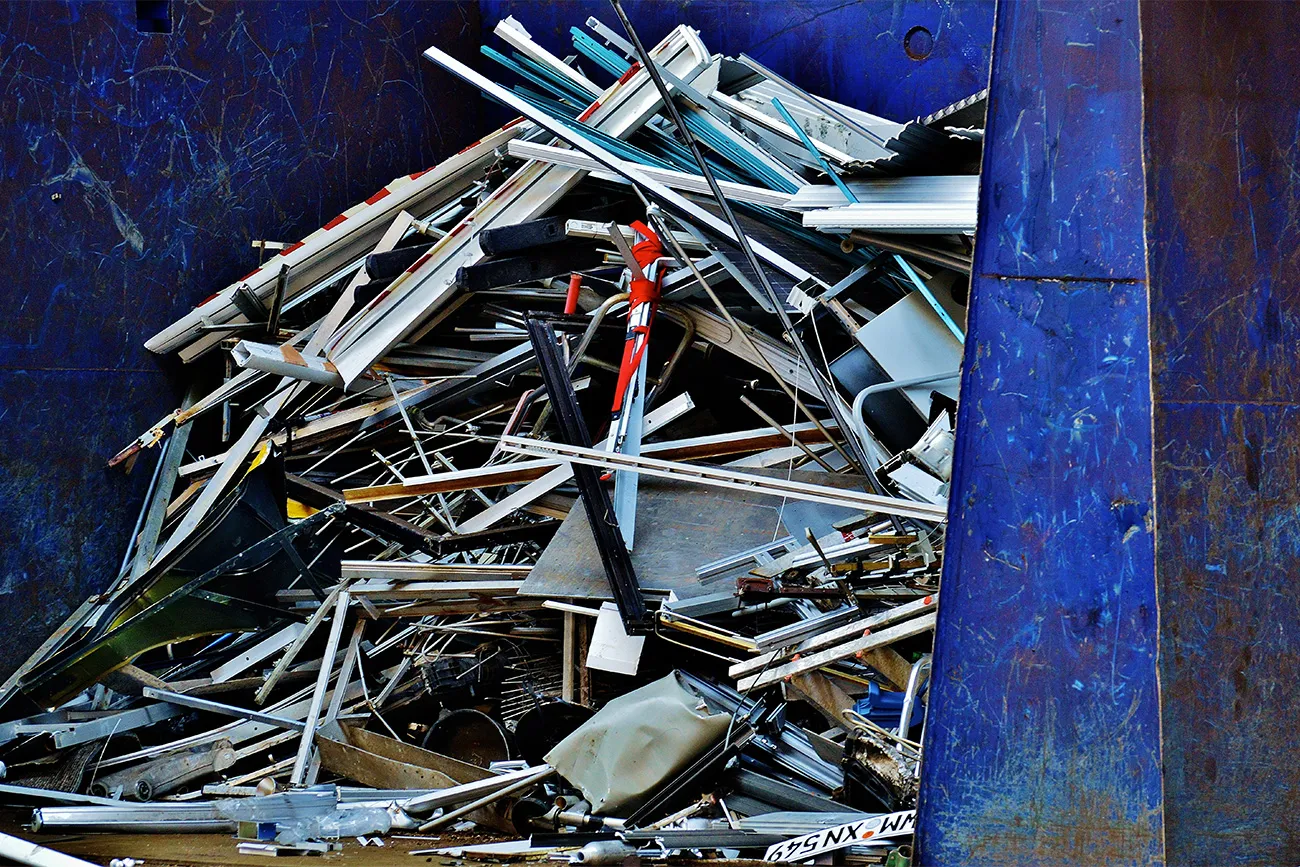
Pre-consumer scrap
An important distinction in terminology is the one between ‘pre-consumer scrap’ and ‘post-consumer scrap’. The total recycled content includes both types, but there is a fundamental difference between them. Pre-consumer scrap is also known as production scrap. It refers to aluminium waste from the manufacturing process, such as extrusion. In other words, the metal never became a finished product. It may have been anodised or painted, but it was never used for its intended purpose. It is collected during production as clean material and taken to a recycling plant to be remelted. This is a positive development, as reusing this aluminium saves a considerable amount of material. What is more, remelting aluminium requires 95 per cent less energy than producing primary aluminium.
Post-consumer scrap
Post-consumer scrap is end-of-life, or reclaimed, aluminium. This is metal that has been used in a product which has completed its full life cycle and is ready for recycling or reuse. An aluminium window can be considered post-consumer scrap when a building is demolished or renovated and the material is processed and finally remelted to make new windows. The distinction from pre-consumer scrap is very important, because the higher the post-consumer scrap content, the lower the CO2 footprint and overall environmental impact. The downside is that producing top-quality metal with a high post-consumer scrap content is much more complex, since the material is not clean: it has been anodised or painted, may have a thermal break between the inner and outer sections, and is fitted with hardware such as hinges and handles. In short, it is a complete product made up of different materials.
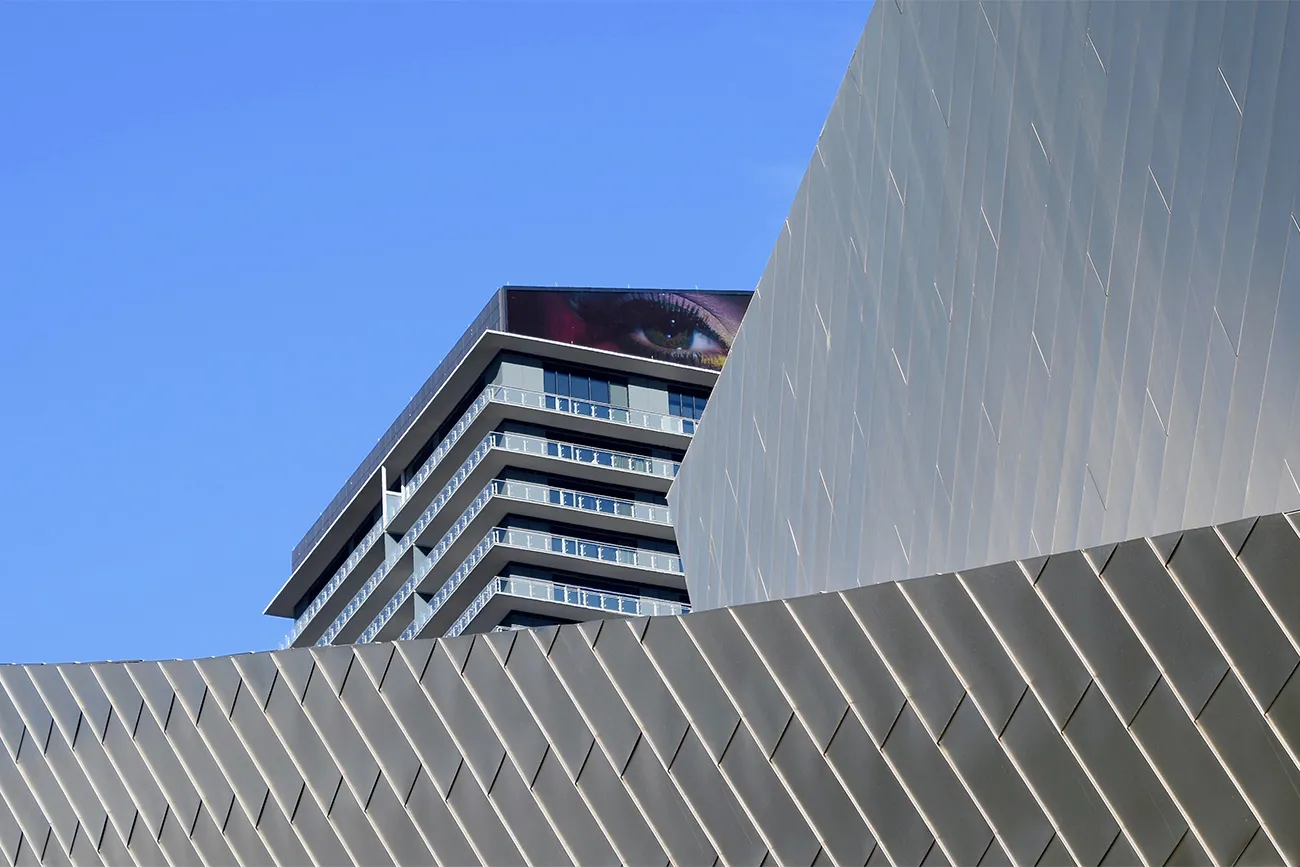
A complex recycling process
Recycling aluminium is a complex process involving several stages. First, the scrap must be sorted, then its components separated and finally shredded into metal chips. These chips must then be passed through an X-ray machine to separate the different metals and alloys. Finally, the clean aluminium scrap must be decoated before it can be remelted. The better each of these processes is carried out, the ‘cleaner’ the new raw material will be. The conclusion is clear: involving an aluminium systems supplier early in the design process is crucial to achieving a sustainable building solution. What is more, the way aluminium systems suppliers label their products can be incredibly important, as it determines just how sustainable a façade made from recycled aluminium really is. A claim such as ‘90 per cent recycled aluminium’ sounds very different depending on whether it contains a higher or lower proportion of post-consumer and pre-consumer scrap.
Question about this story? Ask your question
Keep following this
Get an email when a new story is published. No account needed.
- ThemeSustainable and circular timber supply chain
- SubjectGeneral







