











For safe painting and spraying
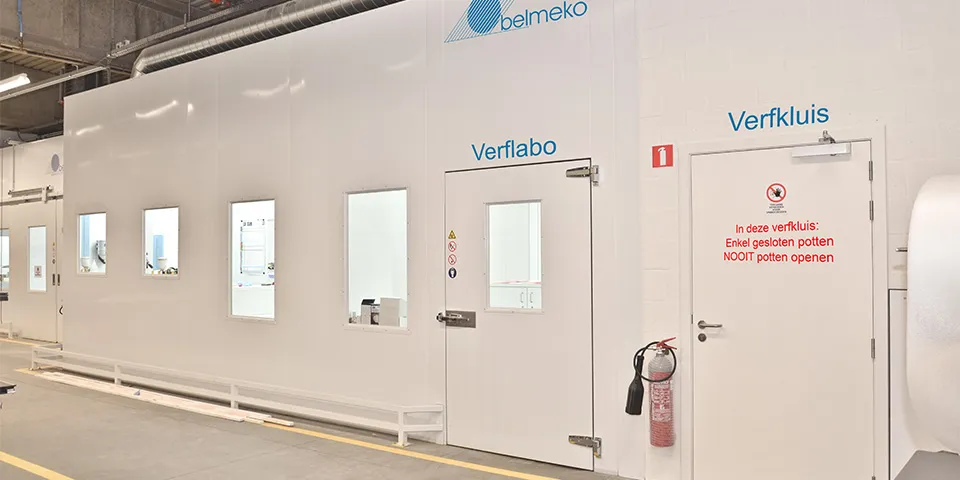
Investing in a high-quality spray booth is not the only requirement for a safe spraying or painting process. The process involves several stages, each of which must be carried out correctly. Unfortunately, the rules for storing and preparing paint or varnish, and for cleaning pumps and spray guns, are sometimes neglected. Belmeko, a manufacturer of spray and paint installations, is keen to draw attention to this.
Operators using their smartphones in the preparation area. Tins of paint left open. Paint drums placed next to sawing equipment. “Sometimes there’s even an ashtray on top,” says Hans Catry, sales engineer at Belmeko. “The consequences can be disastrous.
The spray booth itself is usually in reasonably good order. A lack of knowledge is often the root cause. So much has been written about spray and paint booths that every user has some understanding of the basic requirements. It is less widely known that there are also rules for preparation, cleaning and storage. Yet the risks of health problems, fire and explosions are at least as great. As a specialist in this field, we believe it is our responsibility to warn users about these dangers.”
Paint, varnish and thinners must not be stored in a paint kitchen.
Two weak links
Preparatory work must always be carried out in a paint laboratory or paint kitchen. “This is a separate room built from non-combustible materials,” explains Hans Catry. “It must have forced ventilation, and staff must comply with ATEX regulations. It is important that no paint, varnish or thinners are stored there. There should only be enough product for half a day’s work. In addition, every opened tin must be closed as soon as possible.”
Storage is another weak point. Few people realise that it presents a very serious fire and explosion risk. “The law states that varnishes, paints and thinners must be stored in a ‘paint cabinet’. This must provide 1 to 2 hours of fire resistance, depending on the quantity of product and its flash point. Natural ventilation is also required, and no container may be opened in this room,” says Hans Catry. “Finally, everything must be placed on shelves with spill trays. This is to prevent product from reaching the floor and seeping through the door into the building.”
Question about this story? Ask your question
Keep following this
Get an email when a new story is published. No account needed.
- SubjectGeneral







