











‘Design should serve people’
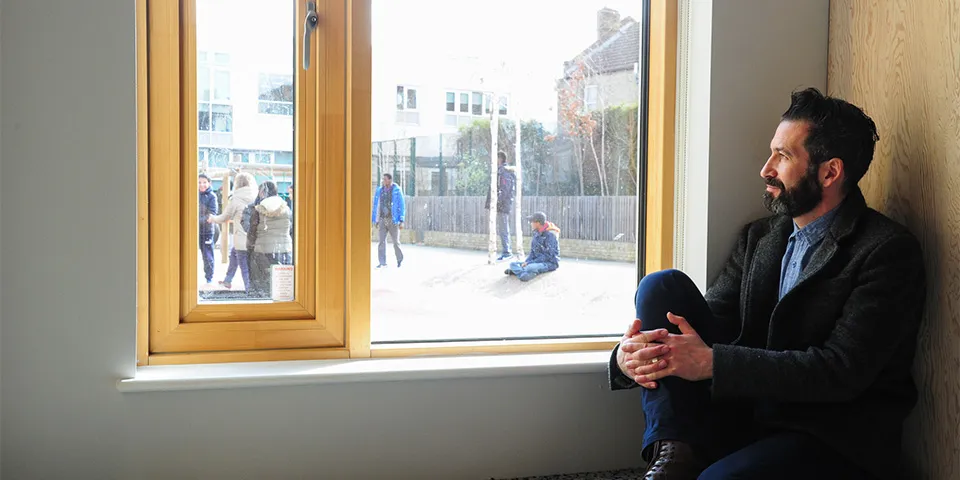
According to world-renowned architect, product and interior designer Oliver Heath, wellbeing plays an important role in this. The connection between people and nature is a recurring theme in his designs, an approach known as biophilic design. We spoke to him about his methods and philosophy.
Where do you find most of your inspiration?
“I get most of my inspiration from observing carefully. I study how people use buildings and spaces. Designers should use their senses first, and only then take action. Too often, design serves brands, power and identity, when it should be about people’s essential needs.”
“Successful buildings are designed with people at their heart. This creates spaces that boost productivity. Conversely, poorly designed spaces can also be improved by applying biophilic design. This strengthens our innate connection with nature.”
What makes a successful design, in your view?
“A building should bring out the best in people. Good design should deliver better results at lower cost. A space should make people feel good, whether it is a clinic, school or office building. That feeling should also suit the space’s purpose. A clinic should calm people so they can recover as fully as possible, while an office should motivate people to be as productive as possible. I call these ‘positive spaces’, spaces with a positive impact.”
Can you give an inspiring example?
“Not long ago, I visited Maggie’s Cancer Care Center at Hammersmith Hospital. I was there as part of the London biophilic design tour organised by flooring manufacturer Interface. Cancer centres should put people at ease during difficult times, and this building does that very well. It is almost as if the space wraps its arms around people. There are extensive views of nature. The courtyards have both sunny and shaded areas, and people can come together comfortably in the communal spaces. The views are ideal for rest and reflection.”

Have you had a similar success yourself?
“It’s difficult to say when it comes to my own work. I find satisfaction in projects where I can help people who have little experience with biophilic design. It’s wonderful to see what this design philosophy can mean for people.”
“A recent favourite is a retreat for autistic children at the Garden School in Hackney. It is a small room located right next to the school playground. We were not allowed to use plants or greenery, so instead we chose natural materials, colours and textures. We combined these with playful hexagonal nooks where children can retreat. Using simple biophilic design principles, we created a kind of quiet space where children can recover from the bustle of the playground.”
Why are you such a strong supporter of the WELL Building Standard?
“With this standard, the wellbeing of building users receives the attention it deserves. That is an important step towards the future. There is overwhelming evidence of design’s enormous impact on wellbeing. This is increasingly recognised in business, too. It makes employees healthier, happier and more productive. They feel more engaged with their organisation. Biophilic design therefore also benefits businesses.”
“This is having a visible impact on the market. Property developers are increasingly looking to stand out through biophilic design. The WELL Building Standard supports them in this. It has three levels: Silver, Gold and Platinum. At its core are seven basic features: food, water, light, air, fitness, comfort and mental wellbeing.”
Can you give an example of a building that meets this standard?
“Certainly. One of the best examples is the refurbished London office of sustainable engineering firm Cundall. Interior architect Ben Allen worked with them to give the office a complete makeover. Every possible aspect was taken into account, from catering facilities and ergonomic workstations to considerations such as paints and adhesives with lower levels of volatile organic compounds.”
“I spoke to Allen during Clerkenwell Design Week. He told me about his search for innovative ways to bring about positive behavioural change among employees. He deliberately chose smaller desks near the walls. This created more space for movement in the middle of the office, encouraging people to leave their desks and talk to one another.”
“This approach is paying off. Cundall made major gains in productivity and Die. In addition, absenteeism fell by 50 per cent compared with previous years. Staff turnover fell by 27 per cent, saving 200,000 euros. The biophilic design approach quite literally paid off.
Is the WELL Standard already common in everyday practice?
“Fortunately, the standard is becoming better known in more and more countries. But there is still a lot to do. For example, the Human Spaces research by carpet tile manufacturer Interface found that 42 per cent of employees have to make do without natural daylight. 55 per cent have no greenery in their office, and 7 per cent even have to work in a windowless room. That really is unacceptable.”
You are Interface’s biophilic design ambassador. Why did you choose this company?
“I’m fascinated by their focus on sustainability. They pay a lot of attention to sustainable production. Wherever possible, their processes are circular, so as little energy and raw material as possible is wasted. Other manufacturers can certainly learn from that. Interface is also working hard to incorporate biophilic design into its tile collections. For example, it uses natural patterns, textures and colours to give a space a natural feel. This enables designers to apply biophilic design without complicated measures. Their vision fits perfectly with my approach to design.”
What interesting developments are currently taking place in the world of design?
“I’m fascinated by the way technology is encouraging human interaction with nature. Think interactive projects or augmented reality. Technology is giving designers ever more ways to integrate natural elements into urban environments. That promises a lot for the next ten years.”
How do you see design developing?
“We are moving towards a form of design that is more complete and sustainable than ever. It is not just about reducing our impact on the environment, but also about shifting the focus towards people. We are gaining a better understanding of the direct link between our wellbeing and the nature around us. This allows us to develop designs that are truly sustainable and stand the test of time. These designs will prove most valuable to people, businesses and the planet as a whole.”
Question about this story? Ask your question
Keep following this
Get an email when a new story is published. No account needed.
- SubjectGeneral







