











Comply, Innovate, Transform!
Text Marlies DecavelImage WOOD.BE – Herman Desmet Fotografie
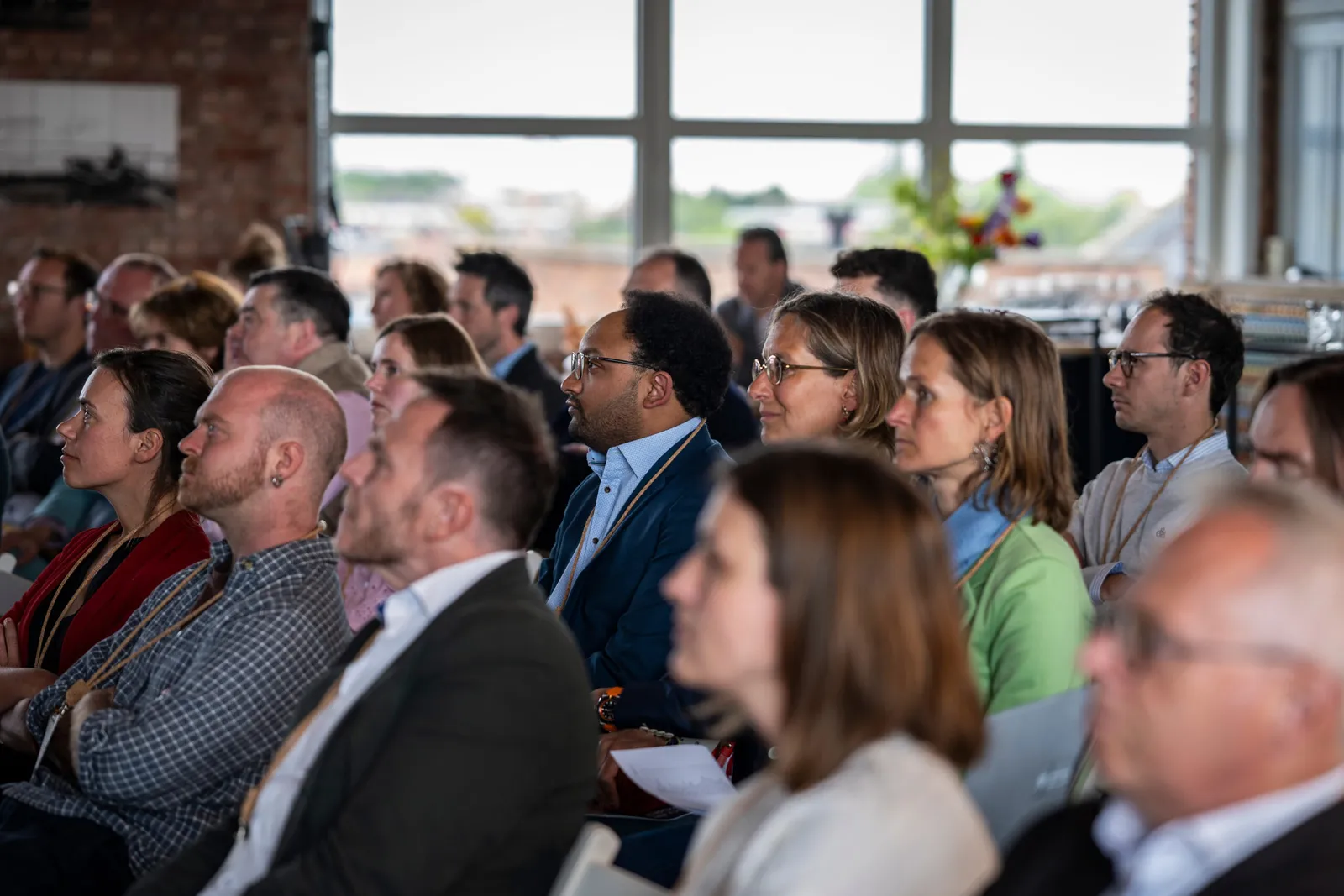
New European legislation need not stand in the way of innovation. On the contrary, that was the message at WOOD.BE Innovation Day. Timber and furniture companies discovered how compliance can itself act as a driver of change. A range of business owners and experts shared their perspectives, approaches and ideas for dealing constructively with the wave of new regulations.
On Thursday 8 May, around 50 professionals gathered at Rooftopbar Gaston in Ghent for WOOD.BE Innovation Day 2025. The theme of the day was Comply, Innovate, Transform! Although European regulations are becoming increasingly stringent, they need not put the brakes on innovation. Those who respond intelligently to tomorrow’s rules can build future-proof business models.
As a research and knowledge centre, WOOD.BE supports companies in the timber and furniture industries as they move towards a future in which sustainability, innovation and legislation go hand in hand. As usual, the innovation day gave large and small players in the sector a platform to share best practice and inspire others to put new insights on innovation and regulation into action.
Compliance and innovation: yin and yang
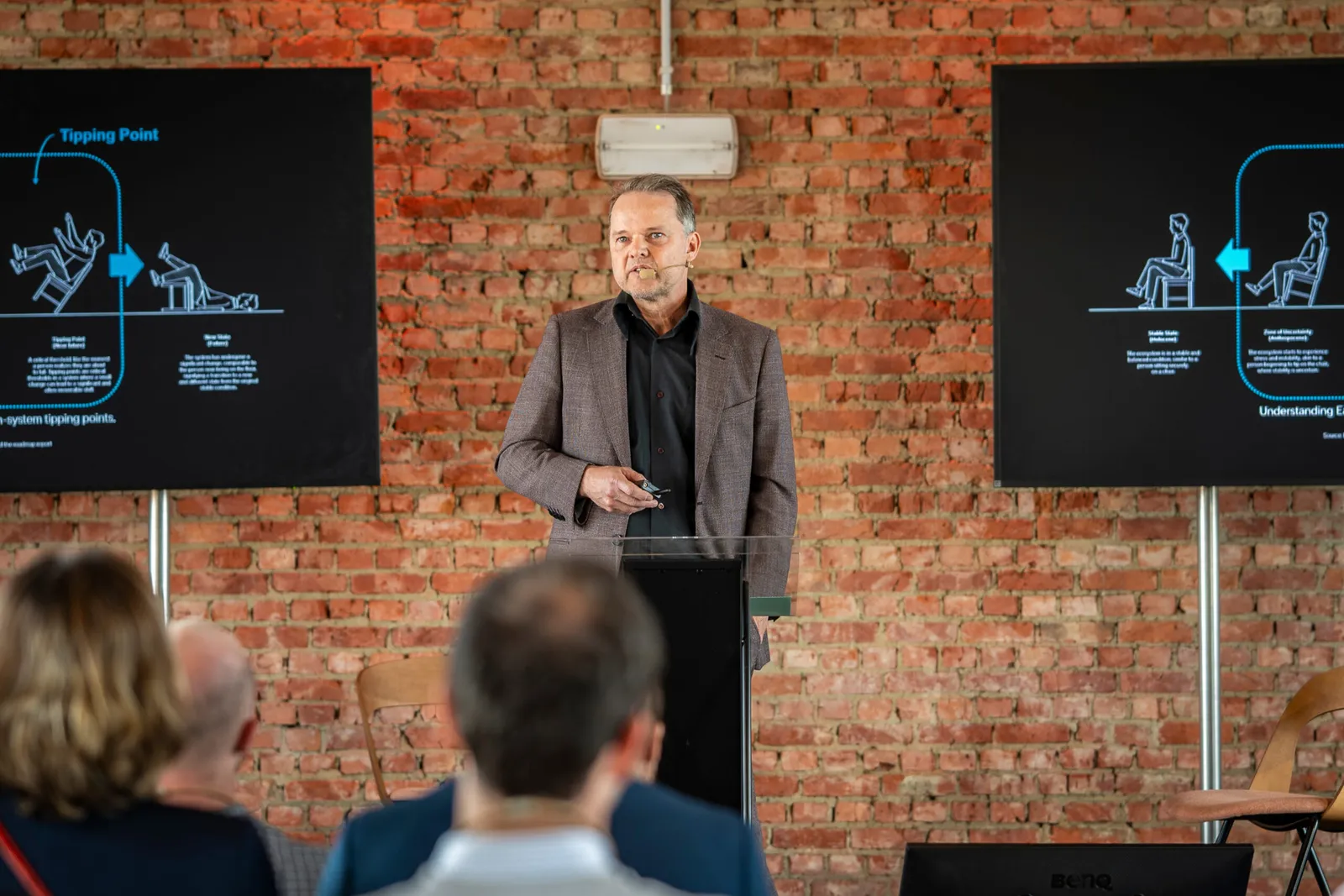
Bob Geldermans, Head of Research & Innovation at WOOD.BE, reinforced this message. He showed how WOOD.BE’s services, from laboratory testing and certification to innovation support, help companies embrace legislation. “Compliance and innovation need not be opposing forces. Reconciling the two creates a powerful synergy. That is precisely where we provide support: from European standards to projects involving reuse, circular value chains, CLT diversification and artificial intelligence (AI). We are at a turning point. We have no choice but to take control by anticipating what lies ahead, consciously and creatively.”
ESPR in practice: from regulation to profitability
The first practical case study came from Rik Holvoet, co-founder of TripleR. His company develops digital product passports (DPPs) for the mattress industry and is working with WOOD.BE on the FurniPASS project for furniture.
He explained the Ecodesign for Sustainable Products Regulation (ESPR). “ESPR is a logical evolution of the previous Ecodesign Directive. Soon, every product on the market will have to meet criteria such as repairability, recyclability and lifespan,” says Holvoet. “A DPP contains all the information needed about a product, from manufacture to disposal. Companies that embrace it can strengthen their transparency, efficiency and competitiveness.”
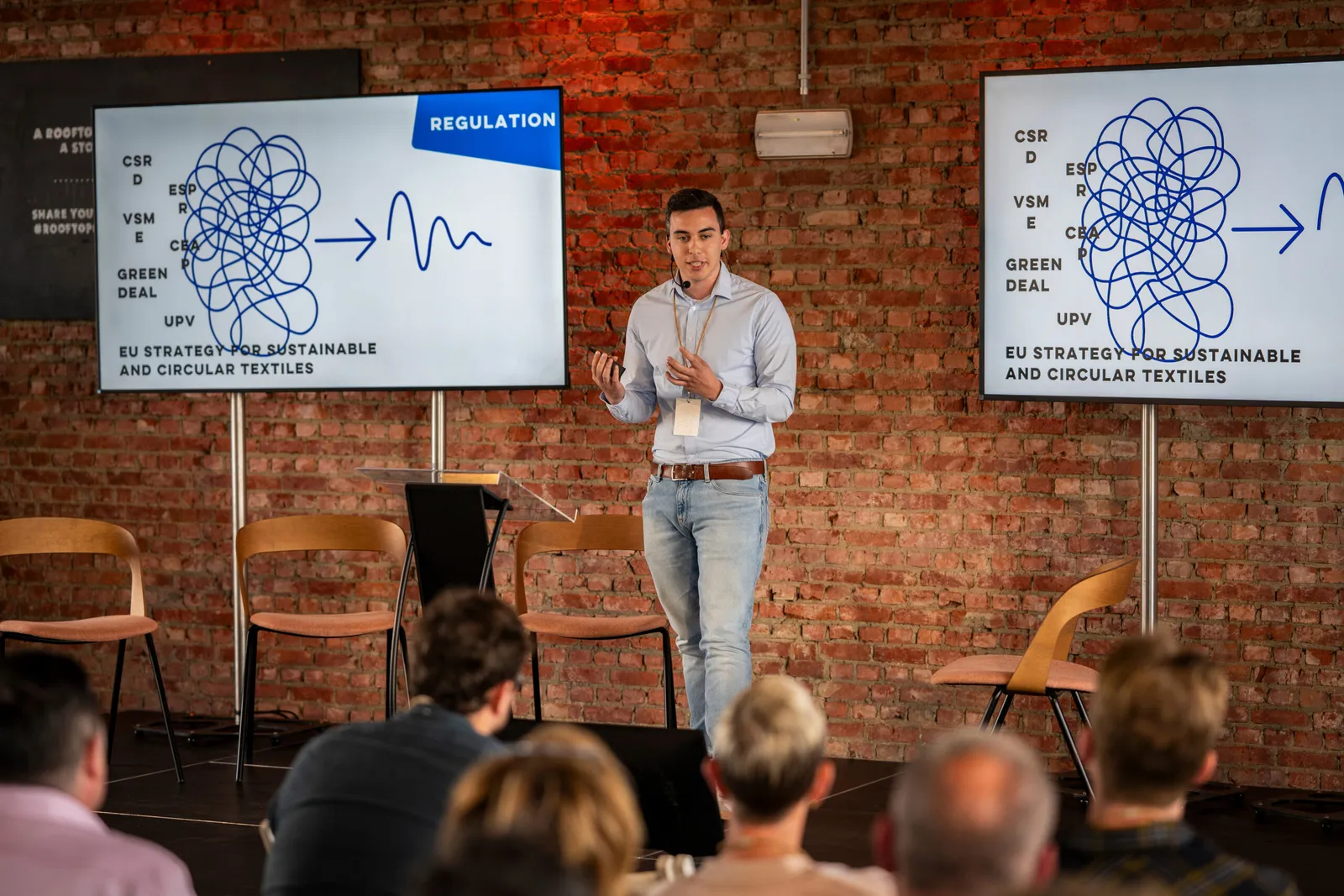
Aaron Thierens, founder of circular start-up Re-sound, also sees regulation as an opportunity. Its acoustic wall panels are locally manufactured, circular and innovative. “Legislation gives us direction and structure,” he says. “We use it every day to optimise our internal processes. We measure our impact, communicate transparently with customers and take products back at the end of their useful life. For us, a DPP goes beyond compliance. It is an excellent way to create added value.”
The EUDR: navigating the complexities step by step
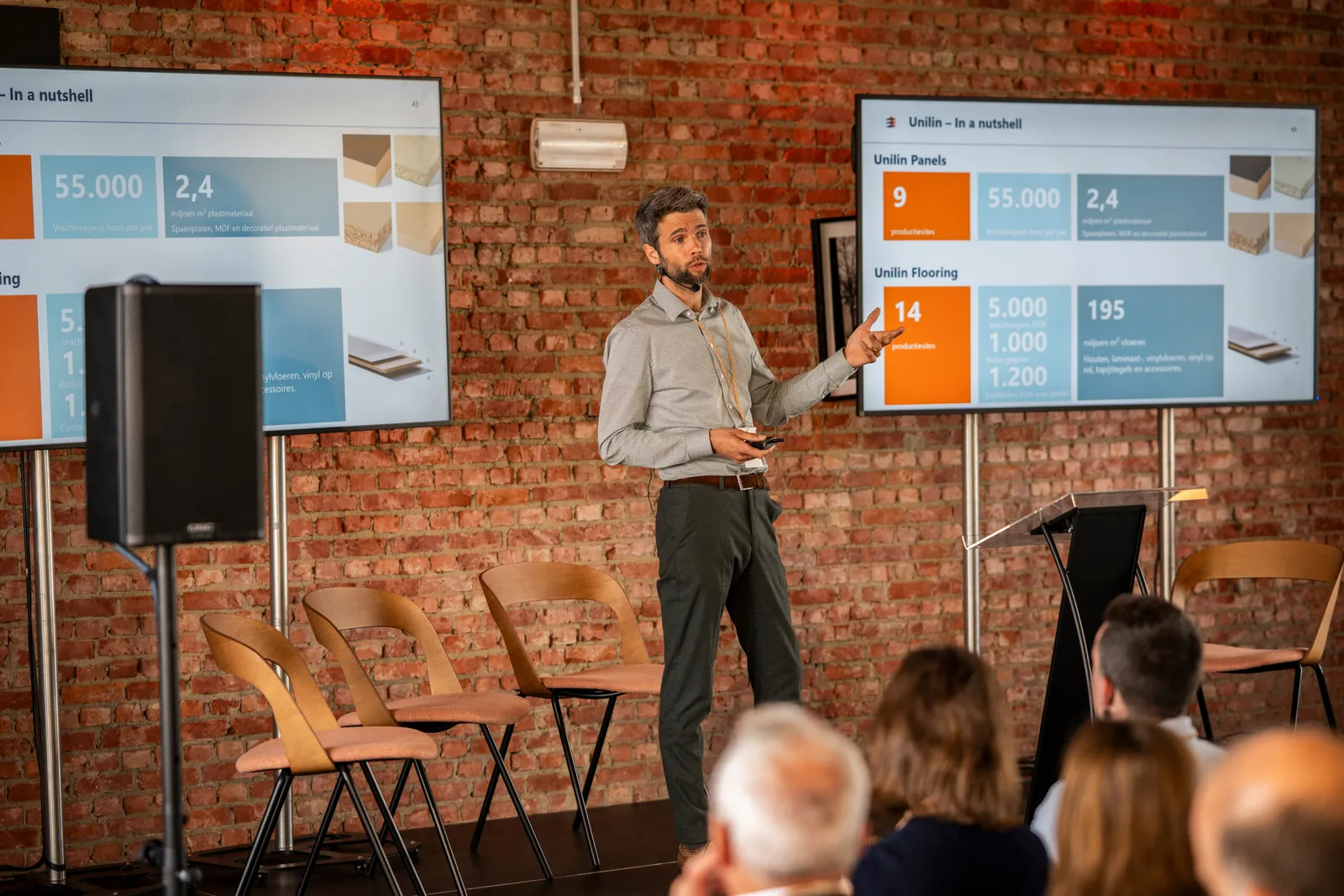
From start-up to multinational: Joris Bonheure, Technical Services Manager at Unilin Flooring, also shared a practical case study. He explored the European Union Deforestation Regulation (EUDR) in more detail. “This law requires companies to trace the origin of their timber in detail. That is highly complex, especially when working with multiple suppliers and international flows.” Unilin has therefore developed both internal systems and external processes to address the requirements. Bonheure explains: “It is a matter of finding a balance between regulation, data and practicality. At the same time, we are refining our processes, automating more and strengthening our position as a sustainable player.”
The three speakers then took part in a discussion, exploring how to turn theory into practice. While one may struggle with interpretations and exceptions, another can start from scratch and adapt with great flexibility. Yet they reached the same conclusion: the rules are well-intentioned, but implementation is complex. Start small, be transparent and build up experience. Holvoet says: “Only by giving ourselves time and trying things out can we take steps in the right direction.” Bonheure adds: “Keep communicating with all parties. Together, we can get further.”
The AI avalanche: hype or help?
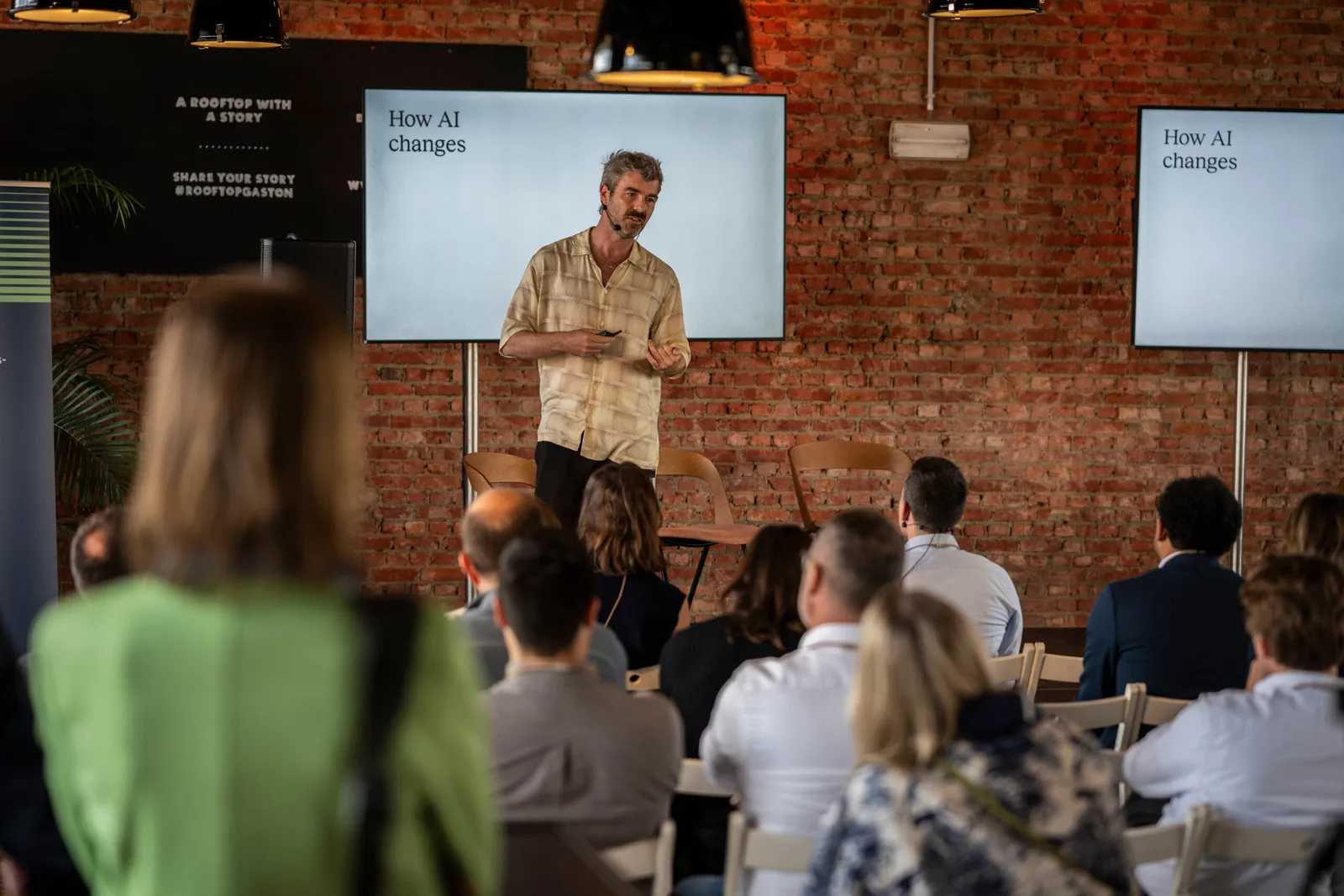
After the break, the focus shifted to a new topic: AI. Artificial intelligence is now an integral part of the news agenda. Frederik De Bosschere, Lead Strategist at In The Pocket, cut through the hype. “AI is not a magic bullet,” he said. “It is a tool that needs to be used intelligently. Do not simply buy the first, best or biggest AI system you find. Start with small, clearly defined applications that align with your strategy. Share experiences internally and build a bottom-up AI culture across departments that works for your people and processes. We need to move away from the idea that AI is solely an IT matter. Remember, we are the ones in the driving seat, with AI as a helpful co-pilot.”
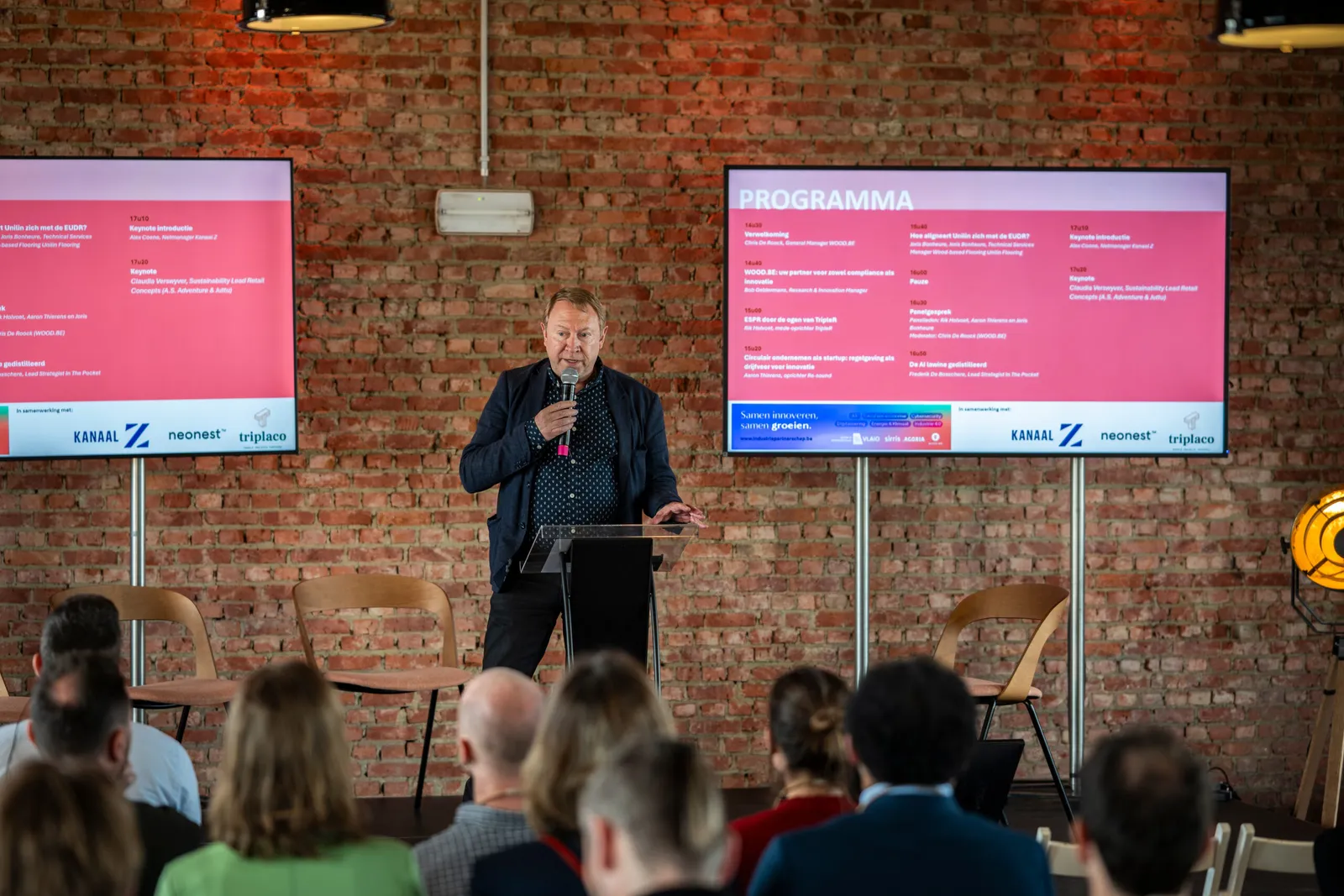
Chris De Roock, general manager of WOOD.BE, opened the afternoon with a clear message: “Europe has been highly creative and productive. But the proliferation of well-intentioned rules makes doing business more difficult. Remember, though, that you are not alone. Through this Innovation Day, and as a knowledge centre more generally, we want to give the sector the tools to adapt, keep growing and build resilience for the future.”
A circular pioneer in retail
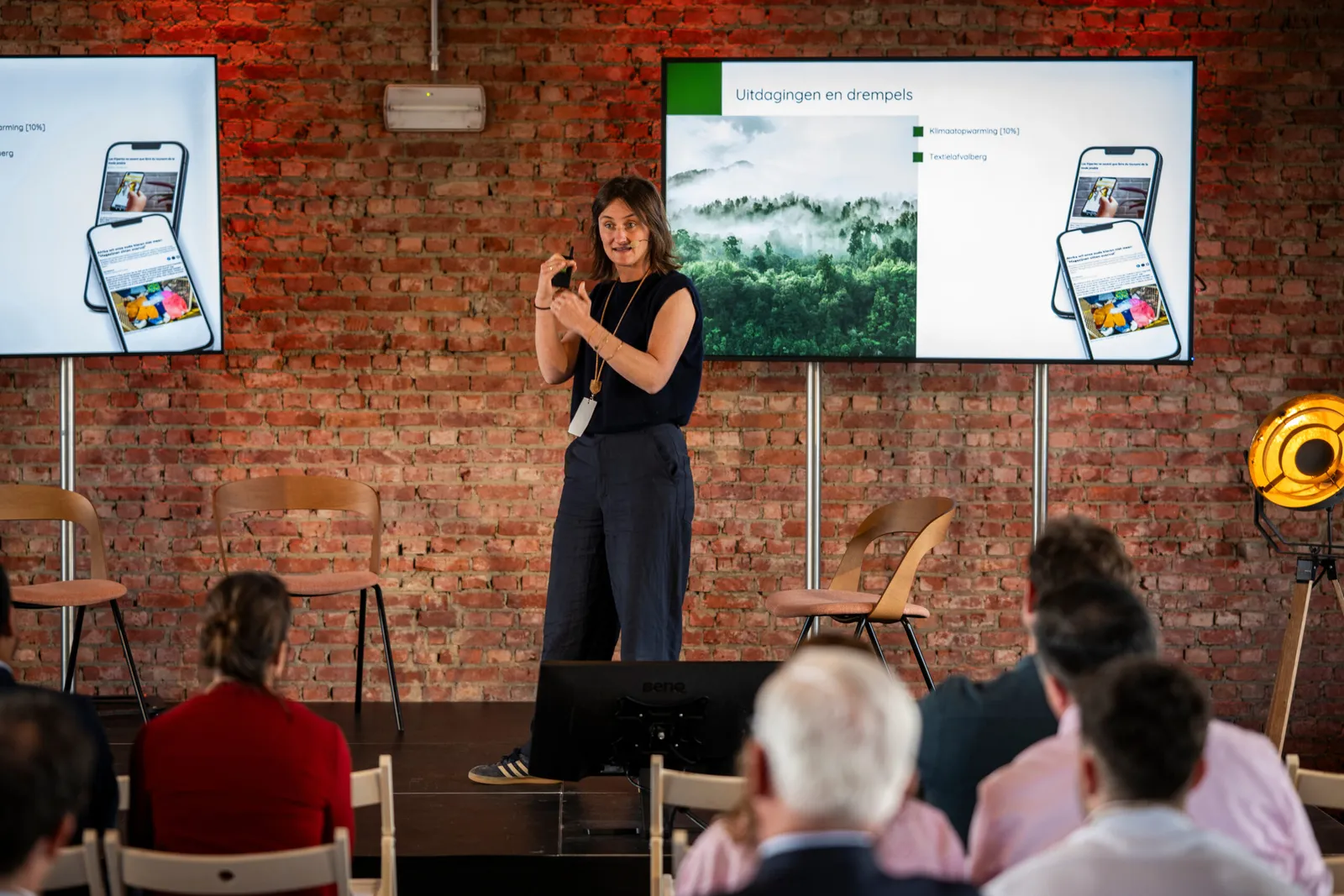
Finally, Claudia Verswyver, Sustainability Lead at Retail Concepts (A.S. Adventure & Juttu), delivered a powerful keynote. Recently named Sustainability Professional 2025, she showed how she had embedded sustainability across her organisation. From second-hand sales, repairs and rentals to sustainable purchasing policies, everything is part of a wider ecosystem. “We combine circular innovation with commercial drive. More than ever, consumers want to know where a product comes from, how it was made and how long it will last.”
Claudia’s talk brought the event full circle. From the outset, the focus had been on systems thinking: everything is part of a larger whole. Keeping the big picture in mind across all your activities makes compliance easier and more effective.
The audience also raised some critical questions. One point made was that innovative, sustainable products are still too niche today, which often makes them unaffordable for most people. Are we not missing the point? It was clearly a question on many attendees’ minds. After a lively Q&A, participants continued the conversation over a networking session and walking dinner. They left with fresh insights, practical examples and the realisation that the sector faces challenges, but above all, opportunities.
Couldn’t make it to Innovation Day but still want to catch the presentations? After registering, you can watch the recordings on the WOOD.BE website.
Question about this story? Ask your question
Keep following this
Get an email when a new story is published. No account needed.
- SubjectGeneral







