











Combining the best of MDF and particleboard
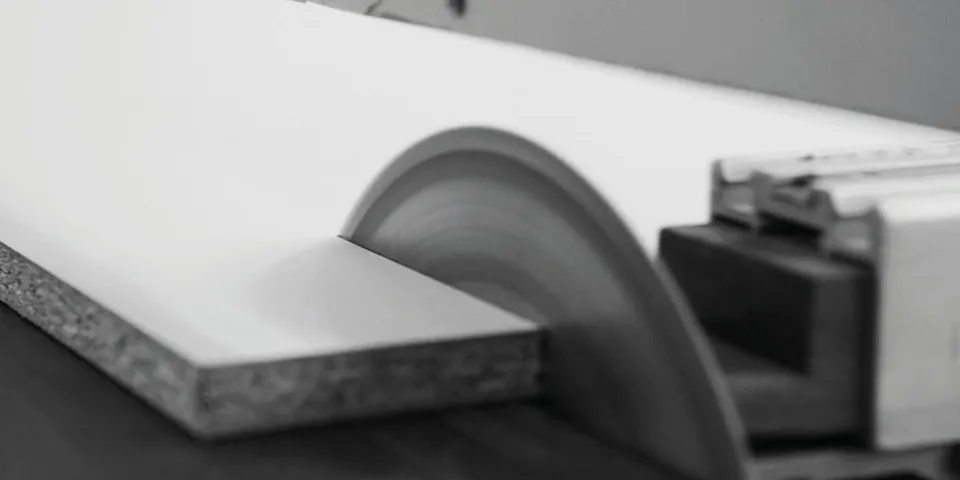
The first particleboard was developed in 1940. MDF followed twenty years later. Then came forty years of silence, until the turn of the millennium. That was when Spanish manufacturer FINSA launched superPan. More recently, this unique product has been further improved, with numerous benefits for interiors.
SuperPan consists of a three-layer core made from recycled wood particles, with HDF surface layers. It is manufactured using a continuous pressing process. Thanks to this composition, superPan offers a significant number of advantages over conventional particleboard. These benefits all contribute to the finished product and ensure a higher-quality finish for your interior.
The first benefit is improved sawing quality. With superPan, more than twice as many metres can be sawn before the first signs of chipping appear. Chipping is when particles break away, damaging the decorative surface layer. Who wants a piece of furniture that already has small marks on it when it is bought?
SuperPan is a strong material with a high load-bearing capacity.
Durability
The surface layer also provides an excellent finish. SuperPan can be lacquered directly and is more resistant to fluctuations in temperature and humidity, helping finished products last longer and retain their appearance. SuperPan also has a higher load-bearing capacity. Shelves made from superPan sag less over the short and long term than conventional particleboard. So you can, for example, fit more books on a bookcase or use heavier pans in the kitchen.
Strong material
SuperPan offers high impact resistance. The board and decorative surface layer are less likely to be damaged if something falls on them. This makes it ideal for applications such as hospitality venues, where furniture is subject to more wear and tear than at home.
The material also offers high resistance to impact on the edges. Imagine you have designed an attractive wall unit and, while vacuuming, accidentally hit its corner with the vacuum cleaner handle. It can happen to anyone. With superPan, the risk of breakage is significantly lower. In short, using superPan as a substrate board delivers a higher-quality finished product.
FINSA decorative collections
A substrate board such as superPan deserves an attractive finish, of course. FINSA offers a range of decorative finishes, including melamine, HPL and real wood veneer. Take FINSA’s decorative collection, called Gama Duo. It features more than 170 decors and ten textures, available in both melamine and HPL, with matching edging. And
the good news is that this collection will be updated early next year.
Question about this story? Ask your question
Companies in this story

Keep following this
Get an email when a new story is published. No account needed.
- ThemeSelecting timber and panel materials
- SubjectGeneral
- CompanyFINSA B.V.







