











Building more with timber requires the active dissemination of timber knowledge
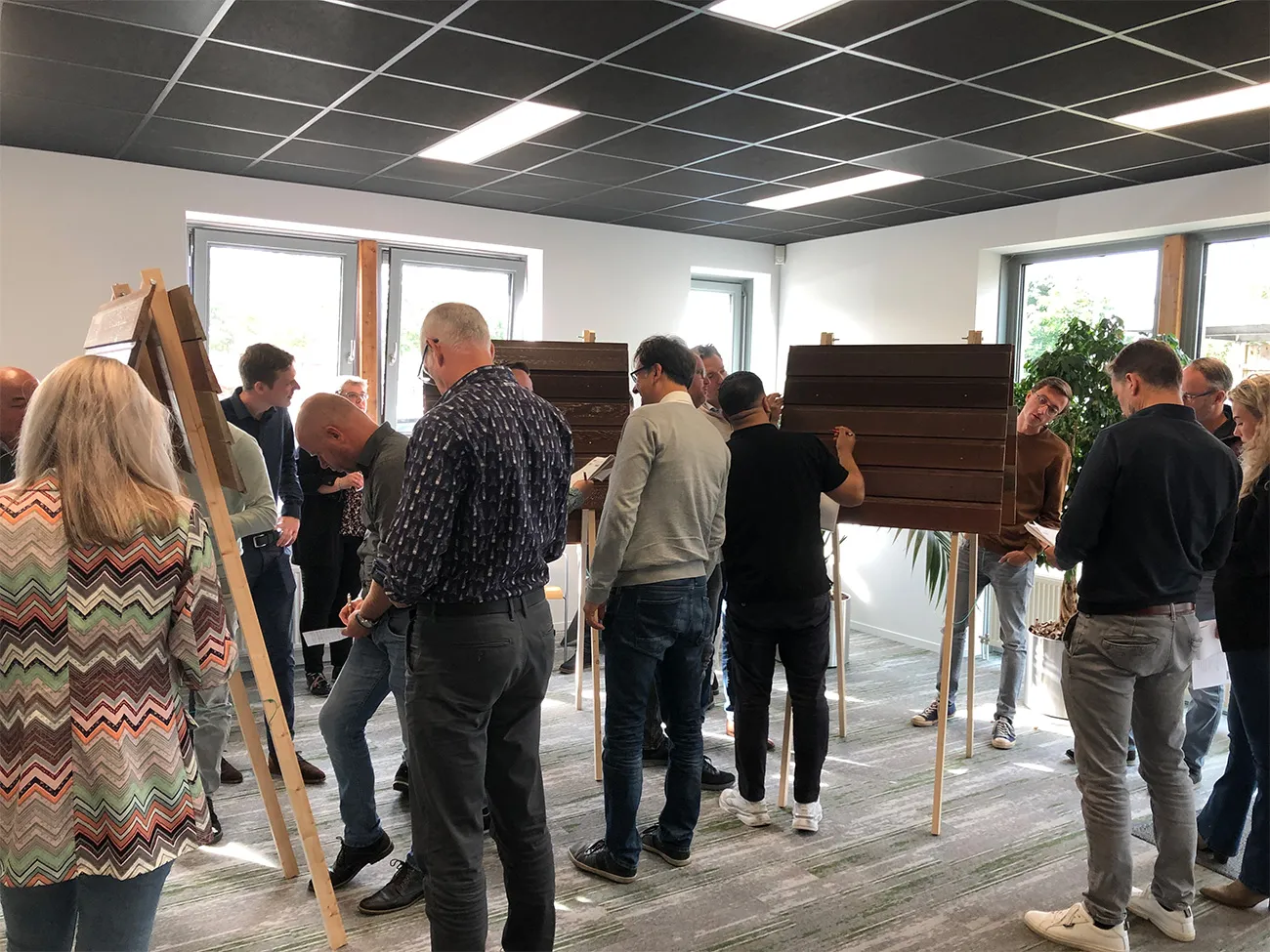
To make construction more sustainable, the use of timber in new-build projects is being encouraged, including locally sourced and reclaimed timber. The idea is that this will reduce CO2 emissions, make construction more circular and reduce pollution, all using timber produced in sustainably managed forests. More and more companies are choosing to build with timber, because it can be profitable and they believe it is an easy material to work with. On the latter point, the opposite is true. Timber is a building material that only lasts a long time when used under specific conditions. There are hundreds of timber species, in many grades, with different properties, processing requirements and potential applications, and only a limited number are suitable for building. Timber is circular because it is fully biodegradable, but that should not happen in the application. If you take into account the principles of good timber construction, timber in the built environment can last for many decades without problems. But the risk of problems is high if people are unfamiliar with the principles of timber construction at the design and production stages, and especially on site. This leads to reputational damage, meaning that well-intentioned initiatives to promote sustainable construction can sometimes have the opposite effect because of a lack of timber knowledge.
With an updated course offering, SHR aims to contribute to the steady expansion of timber in the built environment. In September, our programme will grow to include 6 technical courses.
Current training
Sustainable timber construction, timber production and forests are receiving increasing attention in the regular programmes offered by Dutch universities and universities of applied sciences. Integrating these fields is essential to achieving stable growth in timber construction. At present, the subjects are spread across different programmes, so students have to make the connections between construction, forestry and climate themselves. Construction technology courses are taught at the universities in Eindhoven and Delft, and at several universities of applied sciences. Courses in forest management and ecology are available at Wageningen University and the university of applied sciences in Velp. Meanwhile, programmes in circular construction have emerged at various universities and universities of applied sciences in recent years, but they often lack a forestry and timber component. In vocational training, Hout & Meubilerings College plays a major role, but there are other vocational programmes at MBO level. Hopefully, in the coming years, these institutions will train enough people with the knowledge and insight to increase the share of timber in the built environment sustainably, at policy level and in design and construction. Where possible, SHR contributes up-to-date practical knowledge to these regular programmes.
Improving knowledge across the existing infrastructure
It is important for policymakers to keep abreast of current developments in the forestry and timber sector, and to ensure that their sustainability targets genuinely lead to more sustainable construction. Through their designs and choice of materials, architects have a major influence on construction and, consequently, on the use of timber. If they are willing and able to combine their design and aesthetic approach with the principles of good timber construction, they can make a significant contribution to expanding the timber-built environment. Contractors play a crucial role in delivering projects, because details are decisive on site. Knowing what needs attention, having well-trained staff and providing good instructions all make a difference. Given current developments, the established timber industry, whether in prefabrication or component supply, will grow, and it will need well-trained people. With its new course programme, SHR offers all these groups ways to improve quality.
The SHR course programme 2022-2023 consists of:
1) Timber species identification course, essentially a basic course in working with timber, since the species has a considerable influence on its application. It also covers how to determine whether a species can come from a sustainably managed forest. The most common timber species are covered, and participants practise identifying them so that by the end of the course everyone can recognise at least twenty species. Those with more experience can use the course to further expand their up-to-date knowledge of timber species to 50 species.
2) Principles of sustainable cladding, covers the properties of timber façades and how to build them correctly, as well as the consequences of poor workmanship, ill-considered designs and unrealistic expectations.
3) Designing with timber, explains how to design structurally using the different timber construction methods currently available on the market. At Eindhoven University of Technology, SHR employee and university lecturer Wim de Groot devotes considerable attention to this subject. Key sections of the course curriculum are covered in this course. Participants learn how to design structures using timber products such as glulam, Cross Laminated Timber, sandwich panels and composite structures. Other topics include connections, stability, stresses and the design of durable structures, with a focus on preventing moisture build-up. Calculations for timber are important for all applications in which timber is used structurally, such as bridges, sheet piling, trusses, floors, roofs, long-span structures and timber construction as a whole (HSB, CLT, Loghouse system).
4) Timber in the ground, covers applications where moisture build-up cannot be prevented and timber must be used in a way that makes the most efficient use of its natural resistance to fungal and bacterial attack. These include posts (garden timber, fencing), bridges, outdoor furniture, bank protection and foundation structures. By choosing the right design and timber, and modifying the surrounding environment, structures in this application area can also be built to last for decades. The course is also of interest to foundation specialists and archaeologists, because the processes covered are also linked to desiccation caused by climate change. As a result, wooden components can become exposed above the groundwater level, making it important to understand the rate of deterioration and the conditions under which it occurs. The latest insights into the deterioration and protection of archaeological wooden (ship) remains and pile foundations are discussed.
5) Building with timber above ground without damage, covers the principles for structures and building components (external joinery) that can be expected to have a long service life and a realistic maintenance regime.
6) Timber and the environment, is an important subject in supporting the choice of timber as a sustainable building material. Terms such as circularity, reuse and green are used as environmental arguments to promote conventional building materials such as concrete, steel and plastics. In this course, we explain what environmental impact looks like and why timber performs better than conventional building materials. This is based on calculations required under the Building Decree and an understanding of how reliable those calculations are. The course also looks at sustainable timber production and its availability, including in the long term, all in the context of the stop cutting down trees debate. The potential for timber reuse and its environmental effects are also discussed. This broad perspective enables participants to communicate the environmental benefits of building with timber, and the conditions for doing so, effectively. This is useful when securing projects or developing environmentally friendly construction policies.
On Wednesday 14 September 2022, from 9.00 to 9.30, we will present the course content and schedule online, followed by time for specific questions. To register, email [email protected] and mention SHR courses pre-course session.
Question about this story? Ask your question
Keep following this
Get an email when a new story is published. No account needed.
- ThemeSustainable and circular timber supply chain
- SubjectGeneral







