











Atradius helps you navigate economic uncertainty with confidence
Text Kris VandekerckhoveImage Atradius
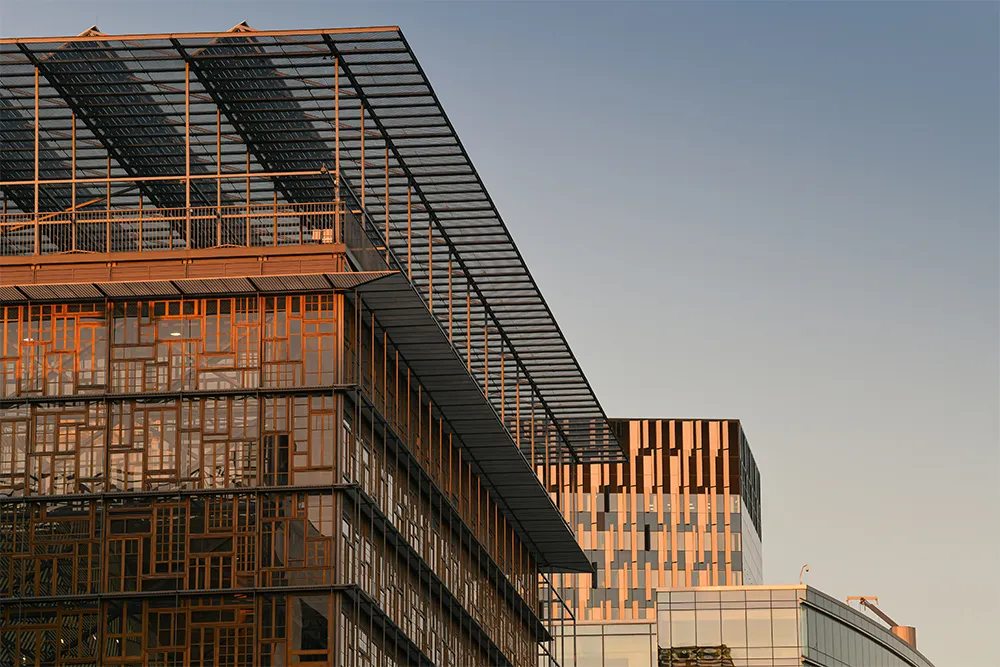
Credit insurance, surety bonds and debt collection services matter for a number of reasons, both to businesses and to the wider economy. At their heart is the management of financial risks, which is essential to stabilising and facilitating domestic and international trade. Atradius plays an important role in this worldwide, while always remaining firmly rooted in local markets.
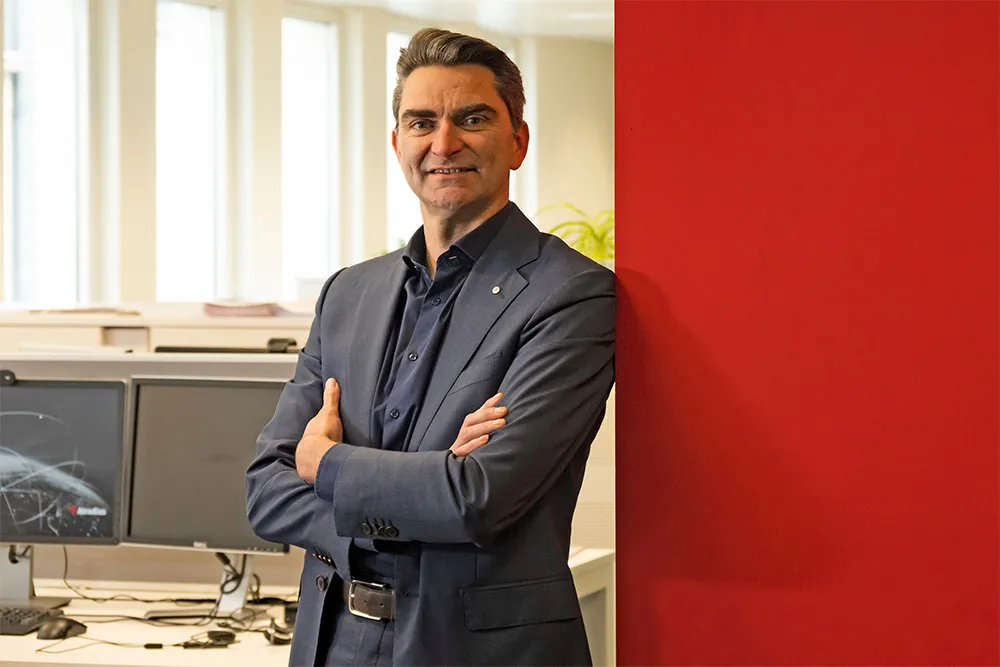
“However you look at it, there is always a risk that customers will be unable to pay for goods or services supplied,” says Dimitri Pelckmans, Head of Risk Services, BELUX. “This may be due to insolvency, bankruptcy or economic difficulties, among other things. Credit insurance protects suppliers against this risk, allowing them to continue growing their business with less concern about potential financial losses. Insuring against the risk of non-payment also helps companies stabilise their own cash flow. It makes it easier for them to obtain financing too, because credit insurance improves the quality of their receivables portfolio.”
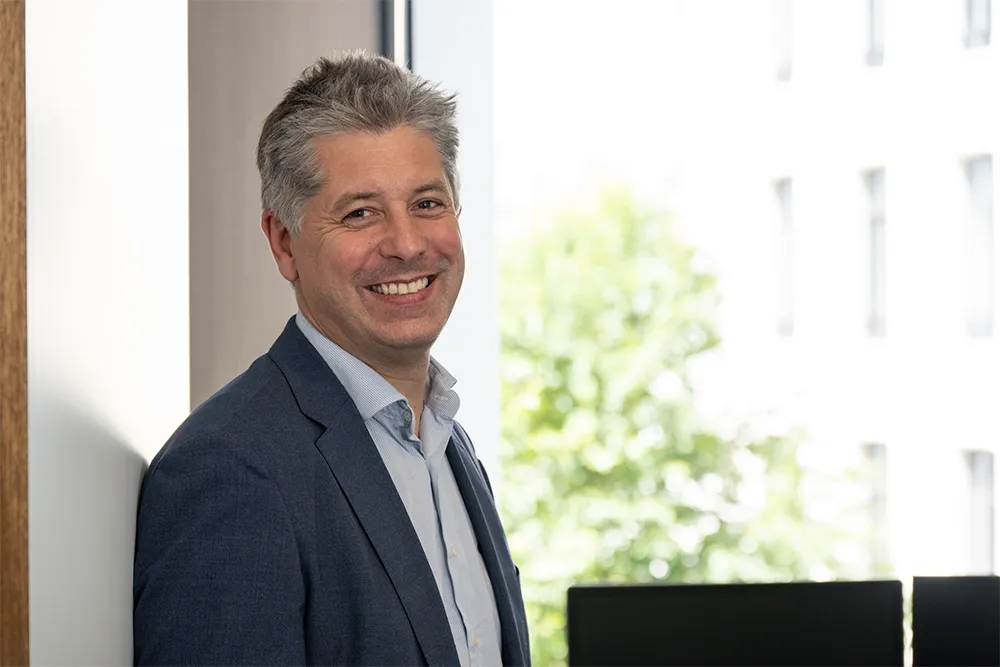
Country Manager BELUX Frederik Devooght continues: “Atradius operates in this market worldwide, while maintaining a local presence in the key countries. In Belgium, we operate from Namur and Antwerp, where 235 colleagues work every day. We have 3,400 employees worldwide, yet we have never lost our SME mentality. Our team is exceptionally stable, we are people who get things done, and we know the ins and outs of every sector.”
Prevention and cure
“Broadly speaking, we insure our clients against two scenarios,” Frederik continues. “Either a customer goes bankrupt, or customers can no longer pay their bills. The insurance has two pillars: prevention and recovery. As a preventive measure, we check every debtor of our clients. We then continue to monitor how their figures develop. We analyse the customer portfolio, as well as any prospective new customers they are looking to work with. The analysis indicates whether or not it is advisable to work with a particular debtor, or to continue doing so. In the event of non-payment, we act as a debt collection specialist to recover the money. If we cannot recover the necessary funds quickly enough, the ‘insurance’ element comes into play. We pay out a claim, usually amounting to 90 per cent of the outstanding invoice. In other words, we pay in place of the customer to whom you supplied your services or goods.”
A puzzle of economic challenges
Dimitri: “In today’s economy, we are seeing a number of very specific challenges. One clear example is finding qualified and skilled staff. This includes everyone from people who mix the mortar to those responsible for costing entire projects and site supervisors. Some work is being done on this at the moment, but we think much more needs to be done. The growing digitalisation also brings its own challenges, often in combination with sustainability. If you want to work and live in a more energy-efficient way, both on site and at home, you need technology to support you. But if there is no one to install that technology, let alone explain it properly and maintain it, practical problems are inevitable. The situation is simple: we have a big puzzle, with all the pieces, such as employment and the need for affordable housing, laid out on the table. Unfortunately, the pieces do not fit together very well. We are waiting for those five minutes of political courage to smooth off the sharp edges of certain pieces and make the whole puzzle fit.”
The impact of unpaid invoices
“Our services are generally more necessary than people may initially think,” Dimitri continues. “Even if ‘only’ five per cent of your invoices go unpaid, you still have to generate a lot of extra turnover to recover that loss in full. That is sometimes overlooked or not calculated correctly.”
“The construction sector is a very important driver of our economy, and that engine can sometimes splutter. According to Statbel, the number of bankruptcies has now reached record levels. A proportion of these are certainly in the construction sector. Property developers in particular are currently struggling. The impact then spreads to all the companies involved further along the project chain. Moreover, this phenomenon can be seen at every level. It is certainly not just the smaller businesses that are affected. We are simply seeing that, after several generational changes, rising raw material prices, automatic wage indexation and, of course, the pandemic, reserves are gradually running out. But it is not all doom and gloom. The same statistics also show that a great many permits are still being issued, and the renovation market is currently outpacing new-build. Compared with our neighbouring countries, we are doing very well in that respect.”
“One important change we have noticed is that contracts and quotes now contain a lot of clauses to protect the parties issuing them against all kinds of external factors. Businesses have, of course, learnt a great deal from the severe period of inflation we have recently been through. Combine that with our services, and many business owners can sleep soundly again,” concludes Dimitri Pelckmans, determinedly. “Whatever the circumstances, they can be sure they will get paid.”
Question about this story? Ask your question
Keep following this
Get an email when a new story is published. No account needed.
- SubjectGeneral







