











A scaffold for every job
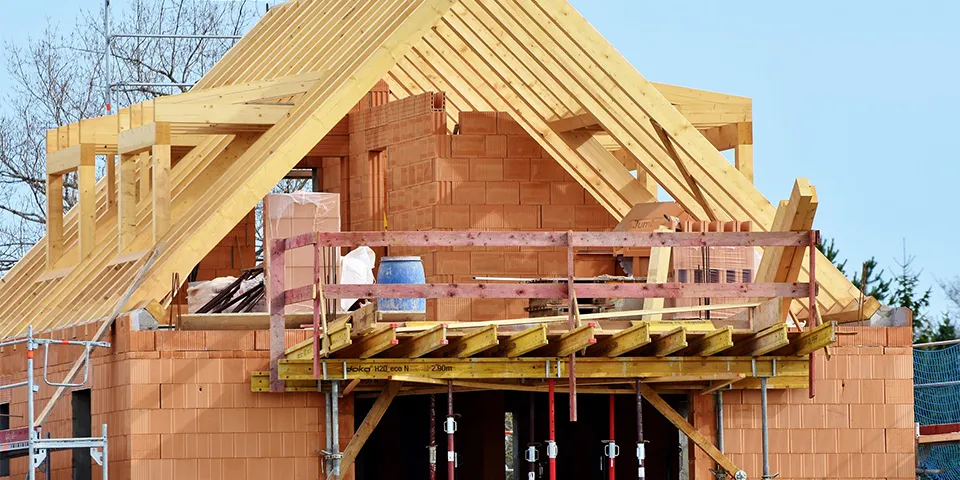
Façade scaffolds can be divided into several classes, as set out in the Scaffolding Guideline: light-duty scaffolds in class 2, heavy-duty scaffolds in class 4 and loading bay scaffolds in class 6. Specific accessories or components can also give a façade scaffold an additional function, such as extendable transoms, shrink-wrap roof structures, brackets, lattice girders, scaffold netting or full enclosure with shrink-wrap film.
Façade scaffolds
Class 2 façade scaffolds are intended for maintenance work on buildings, such as painting, façade cleaning and minor repairs. Class 4 façade scaffolds have a high platform load capacity and are suitable for a wide range of applications in new-build projects and major renovations. They are used for bricklaying, façade finishing, slate roofing, restoration and façade repairs. Class 6 loading bay scaffolds can carry loads of up to 600 kg/m2. This makes it possible to use a crane to place packs of bricks and other large volumes of building materials on the loading bay scaffolds. To ensure work can continue in optimum conditions, façade scaffolds can be covered with wind-reducing netting or fully enclosed with shrink-wrap film.
Room scaffolds
Room scaffolds are ideal for smaller projects in and around the home. Folding or room scaffolds have a working height of up to twelve metres. The different widths and wide choice of additional scaffold components make any job as straightforward as possible.
For indoor work, such as painting a ceiling or carrying out renovation work at height, it is advisable to use a room scaffold. It can be adjusted to the ideal working height and provides a safe, stable platform. A room scaffold is easy to move and simple to store thanks to its folding design. Scaffolds are available in various heights and can be extended later with a scaffold extension unit.
There are specialist scaffolds for every type of construction job, from façade scaffolds and mobile scaffolds to dormer scaffolds, chimney scaffolds and folding or room scaffolds. Whatever the type, working at height entails additional risks. Good-quality equipment and professional installation, including guardrails, are essential. Specific occupational health and safety requirements apply to worker safety at heights of 2.5 metres and above.
Question about this story? Ask your question
Keep following this
Get an email when a new story is published. No account needed.
- SubjectGeneral







