











A powerful Inspired by WOOD edition wins over visitors at Prowood
Text Marlies DecavelImage WOOD.BE
On 23 October, WOOD.BE hosted Inspired by WOOD at Prowood. At the trade fair for the timber sector, the knowledge centre for the wood and furniture industry reached a motivated audience. The programme included presentations on current legislation and regulations, digital tools and innovative practical examples. Visitors went home inspired, with practical guidance on taking their own steps towards circular innovation.
This year, the organisers of Prowood put the spotlight on circularity and timber construction. When WOOD.BE approached them about hosting its Inspired by WOOD event, the pieces of the puzzle fell into place. The event attracted many curious visitors from the timber sector, keen to learn more about circular business. WOOD.BE General Manager Chris De Roock welcomed the audience with a clear message: “Circularity is about more than construction techniques. It calls for a considered long-term vision in terms of environmental, economic, technical and aesthetic feasibility. Achieving this requires a fundamental change to our traditional construction process. With this inspiration day, we want to shift up a gear.”
Timber, climate and circularity: the fundamentals
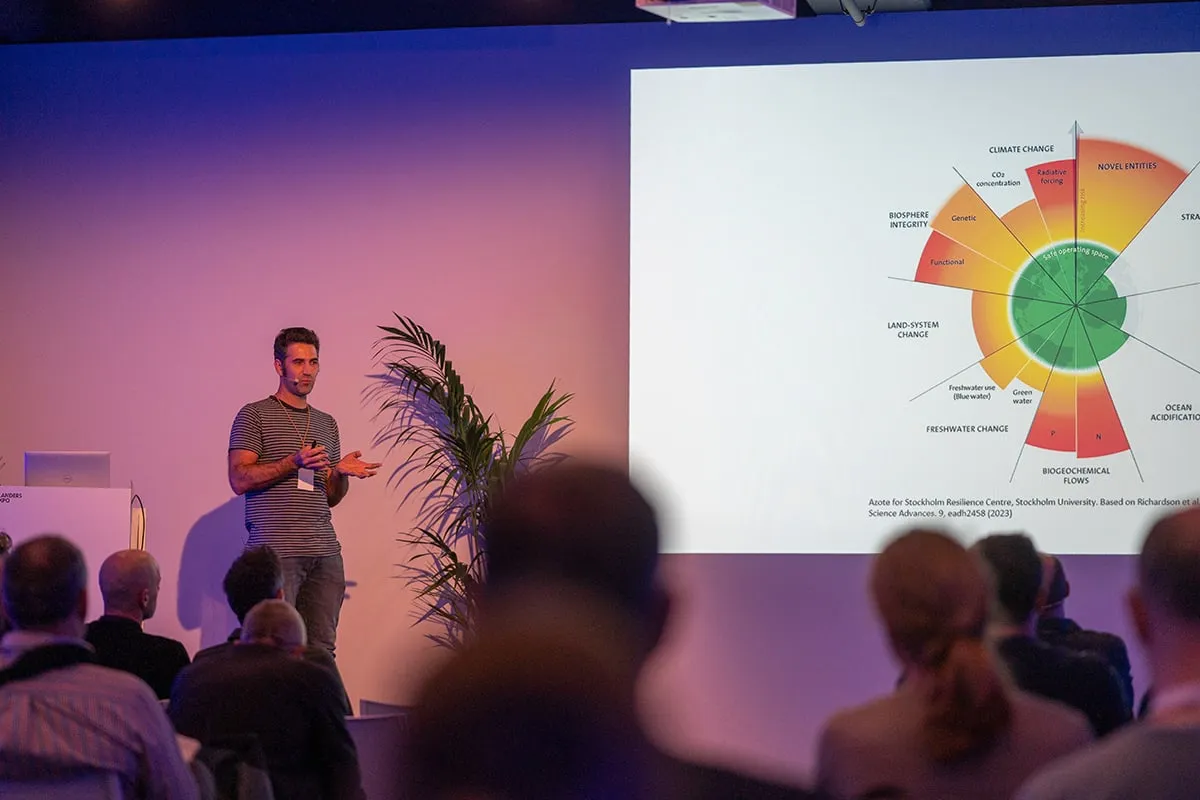
First up was Bob Geldermans. The research and innovation manager at WOOD.BE turned the audience’s attention to the foundation of circularity: our planet. Drawing on the Sustainable Development Goals (SDGs), he explained various phenomena that allow us to live on our planet as we do today. In other words, we must respect our foundations. “Embodied carbon is playing an increasingly important role in this. We need to consider the ultimate lifespan of our materials at every level of our buildings. Partnerships are also a crucial prerequisite for circularity: we need networks to achieve the SDGs.” Bob concluded with a few calls to action for the audience: “Promote circularity from the design phase, connect the circular economy with the effects of climate change, improve the transparency and comparability of modelling methods, and apply systemic, context-specific impact assessments to support decision-making. At WOOD.BE, we connect timber technology with circular design because we believe in it. We’re also here for you and are happy to work through ideas with you.”
EUDR: now and in the future
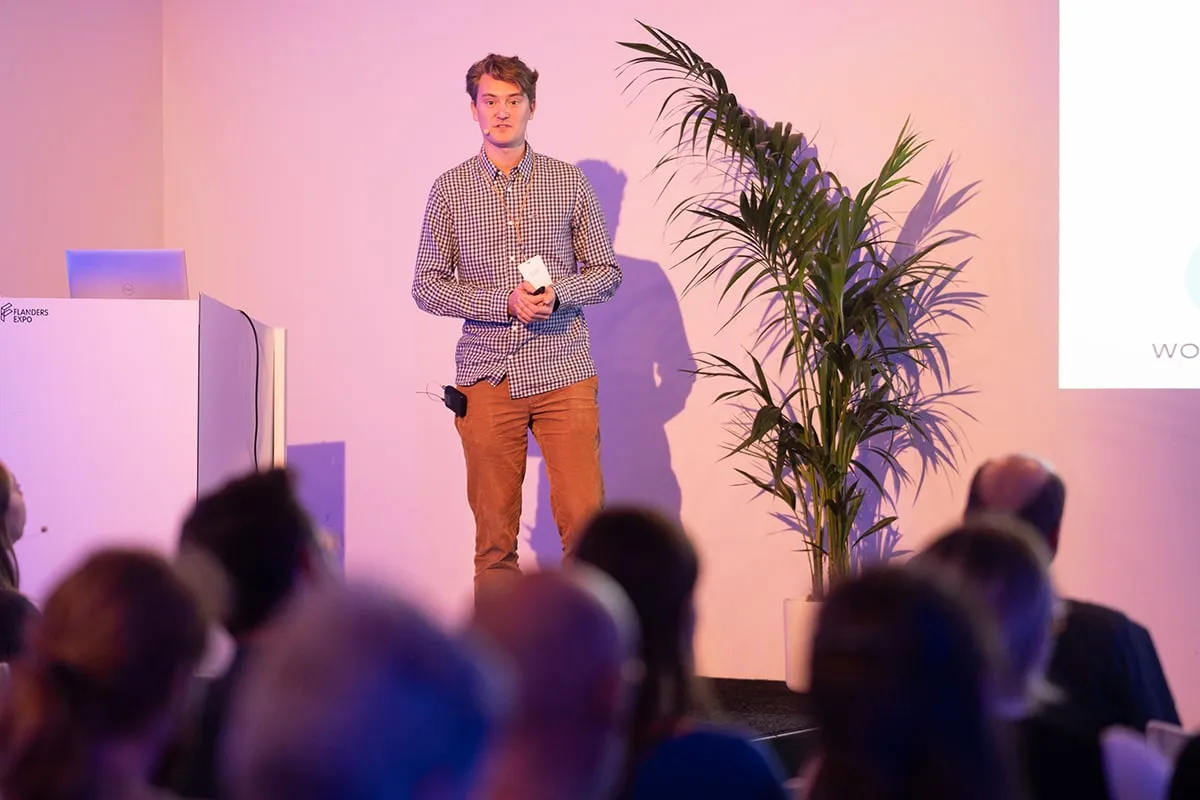
The second speaker was Arthur Pittie, R&I expert at WOOD.BE. He focused on aspects of some brand-new legislation coming our way, including the EUDR, the EU Deforestation Regulation. One important point: its implementation is very likely to be delayed by a year. Even so, it is still relevant for companies to start preparing for it pragmatically now. That is why the European Commission’s website offers a range of practical information: recent FAQs, an accompanying document, a framework for cooperation between non-EU countries and a user guide to the information system. Arthur said: “What is the key thing to know for now? Understand your role in this: importer, exporter, processor or trader. Each role comes with different obligations. The regulation will apply from the end of 2025, but it is still a good idea to consider now how best to align your business operations with it. If you’re unsure where to start or have specific questions about certification, be sure to contact WOOD.BE. We can help through one-to-one meetings or workshops.”
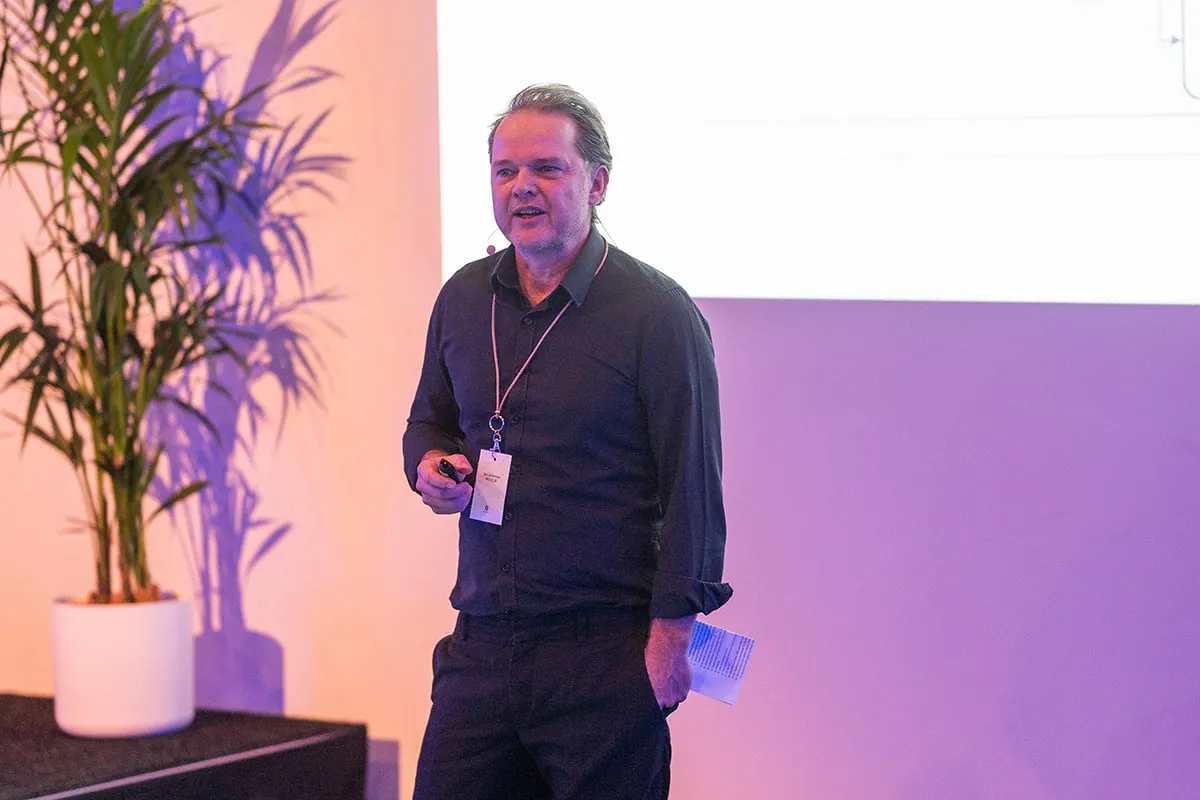
How is the Living Lab progressing?
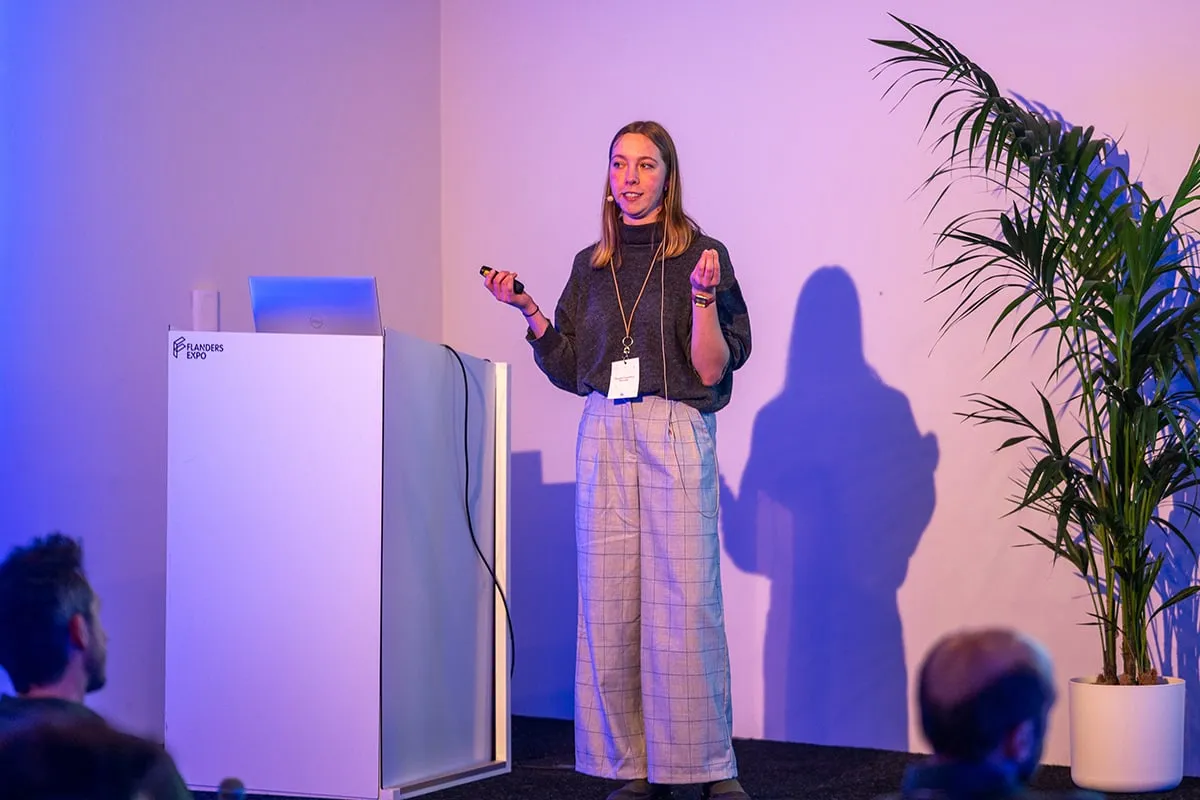
At the previous edition of Inspired by WOOD, we followed several companies in the circular timber cluster Grensland-Menen as they transitioned to circular business practices. We are now in the second year of the project, and those involved shared an update. Mathilde Depoortere, R&D engineer at Decospan, explained: “We report on our sustainability initiatives and life cycle analyses (LCAs). This makes our efforts visible and measurable. First, we improved the value of our products by testing and using alternative raw materials. To compare them properly, we focused on a circular transition indicator (CTI). It analyses which substances are in the product and which remain at the end of its life cycle. Our second area of focus is waste. We are not only trying to reduce our waste, but also to reuse the residual material in high-value applications. Finally, I would like to point out that design for circularity is the complete opposite of traditional design. You have to think about lifespan from the outset, preferably with reliable partners, to achieve the best results.”
Next to speak was Yves Lecluyse, innovation manager at Woodstockx. “In the first year, we developed decking boards from recycled material. The second year was more challenging.
Our goal was to develop quality multilayer parquet flooring from residual materials. These included end-of-line
batches, offcuts from sites and old samples. It was not easy to create an attractive parquet floor from materials with different colours, widths, thicknesses and finishes, as well as damaged boards. After an extensive search and producing two batches finished with a specific stain or colour oil, we developed a beautiful, high-quality parquet floor. We have since installed 1,300 square metres in various projects. In this way, we turned our waste stream into a sustainable, profitable product.”
Inspiring practical examples
After hearing from the Living Lab participants, it was the turn of Eurabo and murmuur architecten. The companies work together regularly and share a similar vision of circular construction. Dries Hubrechts, technical adviser at Eurabo, said: “We put our expertise in circular construction to work on our clients’ projects. We support them with advice, 3D models, and the customisation or preparation of building materials. We always think in three steps: avoiding the use of materials, using secondary and bio-based materials, and using raw materials as efficiently as possible. We apply this at building, element and material level. This enables us to achieve rational material use in every project. We also enjoy working with like-minded partners such as Mobble for modular units, Woodular on material traceability, Trovo as a pioneering wholesaler in reclaimed materials, and Kamp C, which is championing flexibility through its grow buildings.”
murmuur architecten is one of Eurabo’s long-standing partners. Architect Koen Van Delsen said: “As a rule of thumb, we aim to build CO2-neutrally on every project. We follow these criteria: anything that can remain in place has zero impact. If we need new materials, we use Totem to select those with the lowest possible environmental impact. Only as a final step do we consider how they can be used in the next phase.” One example involving both Eurabo and murmuur was the educational nature farm near Bos ’t Ename in Oudenaarde. As much of the existing shed as possible was retained, and local raw materials were used for the new materials: poplar from nearby forests and coppice-with-standards woodland, straw from grass-cutting in nature areas, and clay from the land behind the site.
Back to Totem. This application measures a building’s overall impact, including raw materials, transport, LCA and production. The tool helps the Belgian construction sector to quantify and reduce the M-score of buildings. This is highly relevant in light of the requirement for all new buildings to calculate their life-cycle CO2 impact by 2030. Koen said: “The more widely and accurately we use Totem, the better the results we will achieve collectively in terms of environmental impact.”
From pallet to palace
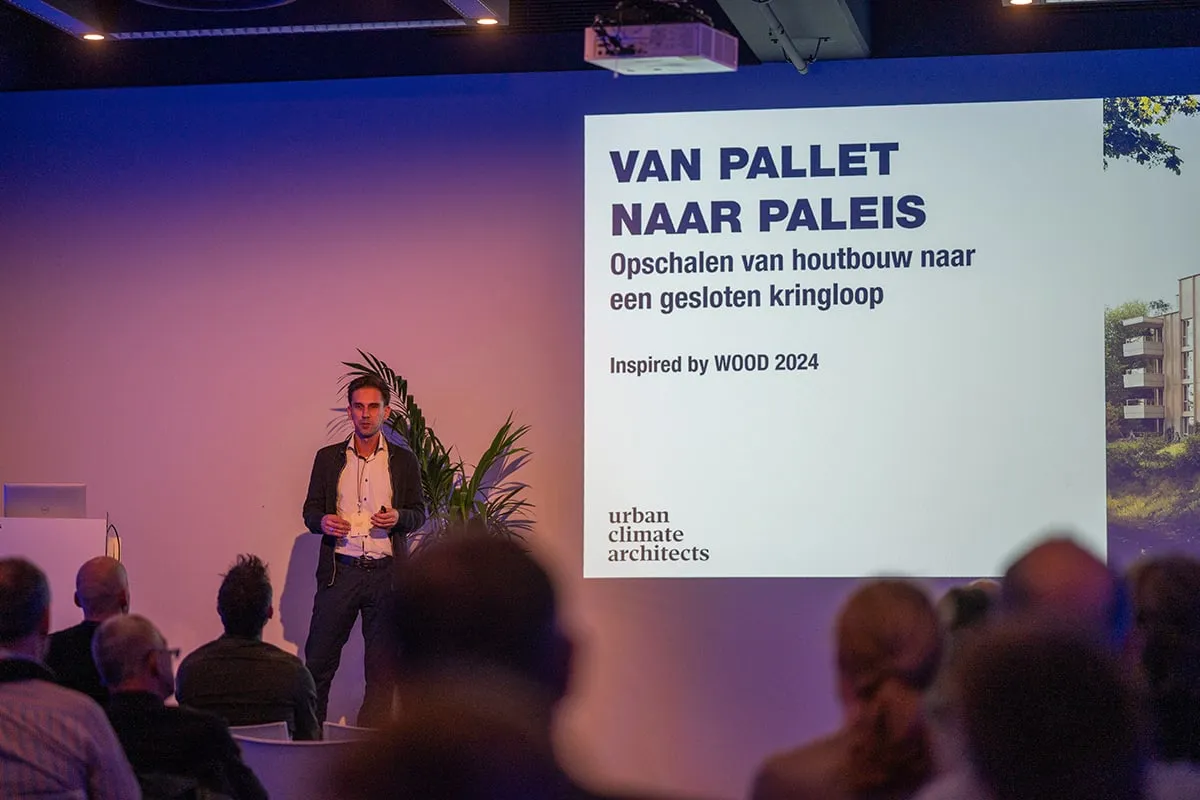
To round off Inspired by WOOD, the audience heard an inspiring keynote from Dennis Hauer and Tim Vermeend of Urban Climate Architects. They go a step further, creating sustainable ecosystems that respect people, animals, nature, residents and their surroundings, with CLT playing a leading role. “We show that timber construction can become the norm, even for apartment blocks and entire residential neighbourhoods. Considered, ecological material choices throughout the construction process keep it affordable, including for the ‘general public’. Such systems have huge potential to address the housing shortage we are facing. Timber construction offers endless possibilities. Let’s explore them together.”
Question about this story? Ask your question
Keep following this
Get an email when a new story is published. No account needed.
- SubjectGeneral







